
Hello Friend!
Last month, Eisner Award-winning artist Dustin Nguyen took to Instagram to call out Marvel Comics for their poor contract rates and how they treat the majority of their artists. His post opened the floodgates—dozens of creators joined in, sharing their own experiences and frustrations with the publisher.
When I saw the conversation unfold, I wanted to find a more constructive way to highlight what was happening. So I asked myself: what can artists and creatives learn from this?
I’ve broken this newsletter into two parts. First, a recap of what happened and what the heart of the issue is. Second, some takeaways and actionable advice to help fellow creatives navigate these waters.
First, let’s start with the initial post:
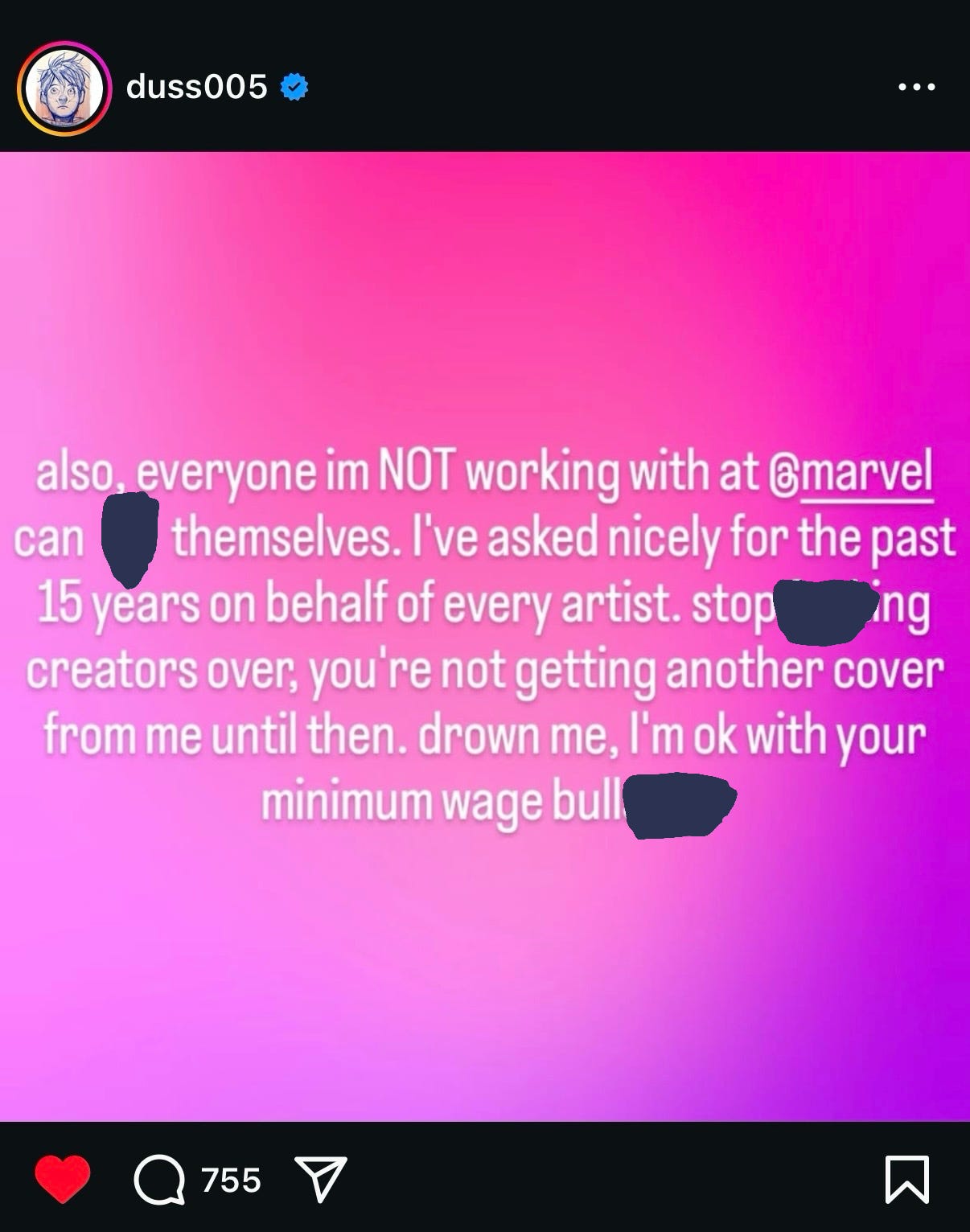
On March 11, Dustin Nguyen shared an Instagram post criticizing Marvel’s treatment of artists. In the caption, he wrote:
“Marvel has been undercutting creators from the start... They are the only one that DOESN’T pay a royalty for overseas sales.”
Nguyen went on to say that creators don’t receive a share of merchandise sales or movie box office earnings—even when their designs or characters are used. He called on the “lucky few” who are doing well with Marvel to speak up for others, but also mentioned that several people privately told him to stay quiet for fear of being blacklisted.
Nguyen says he’s only received a $75 page rate increase in the last 15 years.
His post set off a chain reaction. Here are just a few of the voices who spoke out:
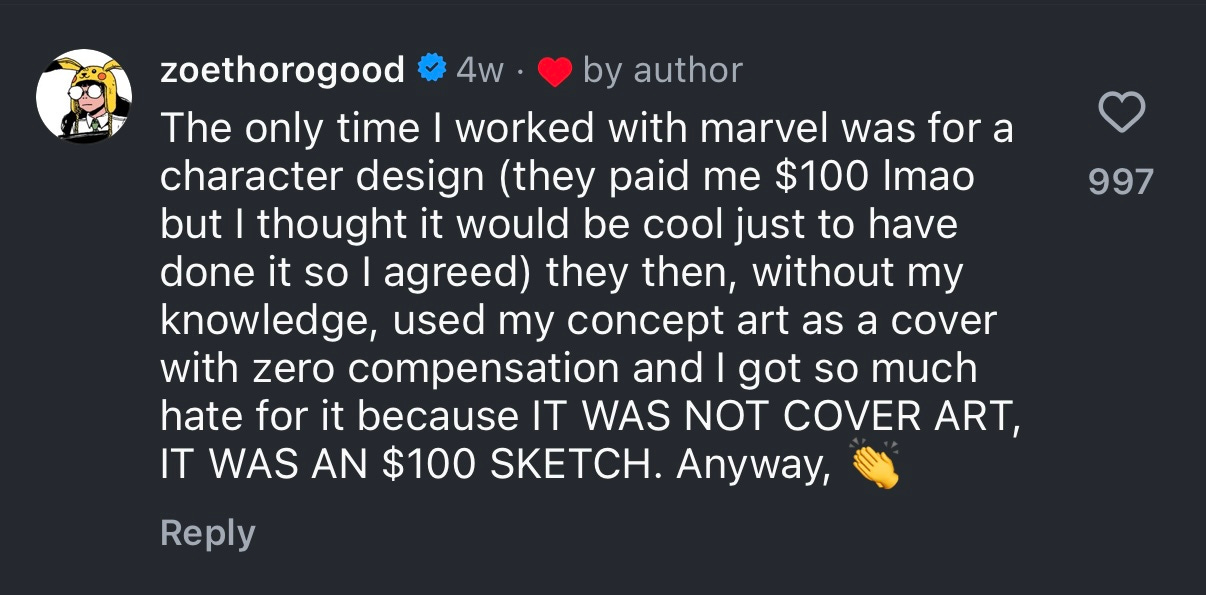
Zoe Thorogood (It’s Lonely at the Center of the Earth) revealed Marvel used her artwork for a cover without her knowledge—and paid her a poor rate.

Victoria Ying (Shang-Chi and the Quest for Immortality) called her Marvel contract the worst she’s ever received.
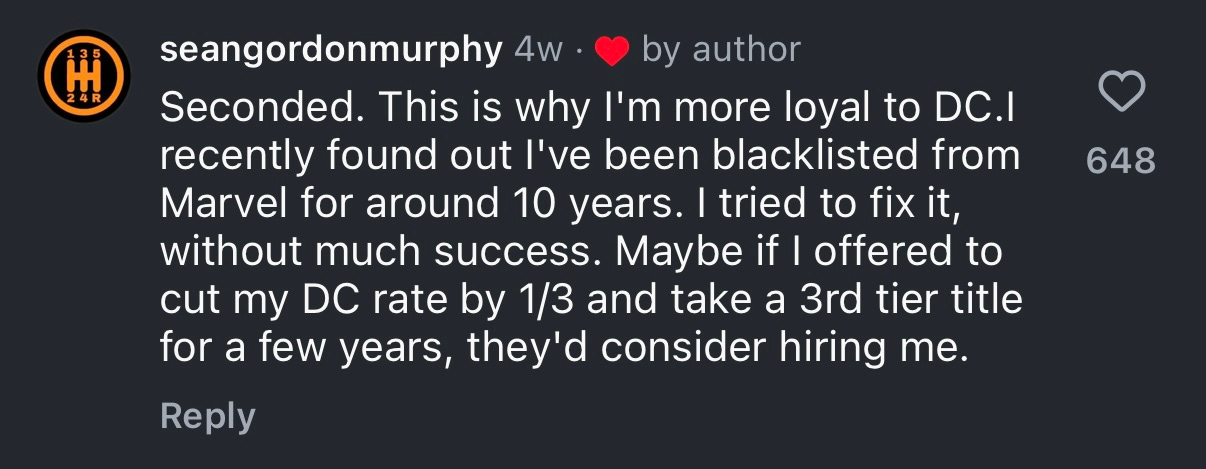
Sean Murphy shared that he was blacklisted by Marvel, and would need to accept a major pay cut to even be considered again.
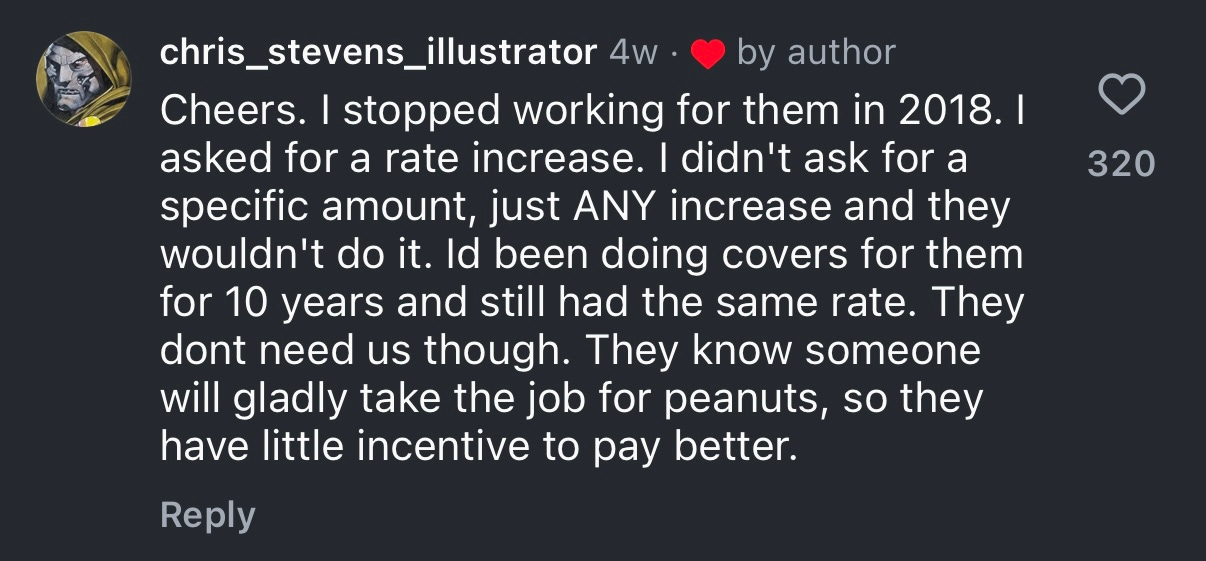
Chris Stevens, who’s been doing Marvel covers for a decade, said he’s never received a raise. Marvel knows they can find someone else hungry for a shot—and pay them “peanuts.”
These are just a few examples. There were hundreds more expressing similar concerns and backing Nguyen’s stance.
Okay, so we know the situation is rough. But how do we respond to it in a way that empowers us?
Here are a few key things I’ve been thinking about:
You might be thinking, “Wow, I should never work for Marvel.” And hey—that’s a valid conclusion! But I think there’s room for a more nuanced approach.
It’s all about your goals.
Do you want to write or draw Spider-Man because it’s been a lifelong dream? Go for it.
Do you want to own your work, build something original, and retain full creative control? That’s great too.
The key is being honest with yourself. Ask:
Does this opportunity bring me closer to my goals?
What am I hoping to get out of this job—money, exposure, experience, creative fulfillment?
Is this something I can do short-term to help boost my long-term vision?
For me, my goal is to create comics that center around Indian stories and culture. A Marvel gig might raise my profile, but if it pulls too much time from my own work, it might not be worth it. That’s a trade-off I’d have to weigh carefully.
Know Your Minimums
Before you say yes to any gig, ask yourself: What’s the least amount I’m willing to get paid? Set a floor—and stick to it. If someone offers below that rate, walk away. Even if it’s a “big name.” Exposure doesn’t pay rent.
Get Comfortable With Negotiation
Even if you’re new, you can negotiate. Things to ask about:
Page rate or flat fee
Ownership and rights
Whether you’ll be credited clearly
Timelines and revisions
Even just asking shows you’re taking your career seriously. And if someone refuses to negotiate at all, that tells you a lot about how they’ll treat you down the line.
Understand What You’re Giving Up
If you take a work-for-hire job with Marvel or DC, you won’t own what you create. That’s not inherently bad—but it’s important to go in with eyes open.
If you’re contributing to a character that ends up on lunch boxes and in movies, just know you likely won’t see a dime beyond your original paycheck. Some creators are fine with that. Others regret it years later.
Talk About Money—It Helps Everyone
One of the most powerful things to come out of this conversation? Artists talking about how much they actually get paid.
Too often in comics (and creative industries in general), people are weirdly secretive about wages. We’re told it’s “unprofessional” to discuss money. But guess who benefits from that silence? Publishers and companies who want to keep rates low.
When artists like Dustin Nguyen, Zoe Thorogood, and others openly share their rates and contract experiences, it creates a ripple effect. Suddenly, newer creators have a baseline. They can compare, ask better questions, and advocate for themselves more confidently.
So if you feel safe doing so—talk about your rates. Talk about your contracts. Share what worked, what didn’t, and what you wish you’d asked for. You never know who you’re helping by doing that.
Because when one creator gets a better deal, it raises the bar for everyone.
Final Thoughts
I’m not writing this to scare anyone away from working with the Big Two. I just want more creators to feel informed and empowered when they step into this industry.
You deserve fair pay. You deserve respect. And you deserve to make choices that serve your creative journey—not just someone else’s bottom line.
Let me know what you think—especially if you’re a creator yourself. Have you had to make hard calls about who to work with? What helped you decide?
Until next time,
Raj
Comments
Nothing yet. Say the first thing.
Sign in to join the conversation.