
Savages on the Mountain: K-2 in Winter
By Rafia Zakaria
White people’s quest to climb the highest peaks in the world is well known. Over the years I have written often about how the history of mountain climbing-particularly in the Himalayas was something that developed as an important offshoot of colonialism. The idea of “conquering” a mountain was a literal enactment of what was being done on the grand scale with the Mughal Empire. Planting a flag on the top of Everest or of K-2 stood for domination. Naturally, brown people were the dominated in this equation. Their job-given to the Nepali sherpas was to carry all the stuff and lay all the ropes for the white men so that their path to conquest would be free and clear.
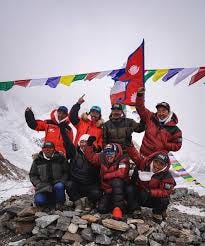
This old equation has been turned on its head in recent years. In 2021, Nepalese mountain climber Nirmal (Nims) Purja who became the first Nepalese man to summit K-2 in winter in 2021. The documentary 14 peaks told the story of Nims Purja and made him a mountain climbing hero-not least because it is the story of a brown man subverting the white domination paradigm that has been so central to the sport of mountain climbing almost since its inception.
Not everyone is happy about these reversals. Last weekend a film titled “The Last First Winter K-2” was screened for the first time at the Sundance Film Festival. Unlike most mountain climbing documentaries-and the genre has become popular and ever larger as throngs of people including social media influencers descend upon mountains like Everest in pursuit of a summit-this is not a victorious tale. The film follows Swedish climber John Snorri Sigurjonssen who recruits Pakistani climber Ali Sadpara and his son Sajid Sadpara to climb K-2 in the winter. The “last first” referenced in the title of the film refers to the fact that the first summiting of K-2 in the winter was the last title for a “first” in mountain climbing.
The film’s focus is on John Snorri and Ali Sadpara who get to the mountain first and set up at base camp. The footage used makes a great effort to suggest that Snorri and Sadpara were “friends” and thus equals. This is important to underscore for the film’s ultimate effort to deny the racial and national power dynamics at play in the quest for the summit. As a brown Pakistani watching the film, I could not help but wonder whether a Swedish climber and a Pakistani one could ever really be “equal” given that brown men have generally “assisted” white men’s quest for the summit. Sadpara is never really asked about this in the film.
The atmosphere at the mountain becomes testy when an entirely brown team of climbers, that of Nirmal Purja arrives at the mountain. This is a Nepalese team, and they are overt about the fact that they want the summit to go to Nepal and to brown sherpas who astoundingly have always helped white men summit but have never been counted as having a title. In clips Nirmal is heard saying he will absolutely not let a white man get this summit. The tone of the film-which is made by white people largely for other white people-presents this as a very negative position without ever addressing the fact that the opposite has always been the white climber’s position.
A third coterie of climbers also arrives at the mountain-this is a pay your way-team which includes many renowned climbers but is organized by a trek and tour company that happens to be owned by Nepalese sherpas. This last fact is highlighted in the film perhaps as yet another jab at the sherpas who in the wake of the popularity of climbing the Himalayas have become as capitalist as anyone else. Whomever the owners may be, the
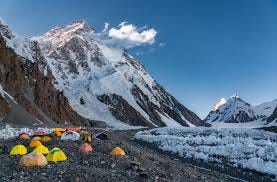
Nirmal Purja’s team of sherpas is presented almost like an invading force at base camp. The fact that there are so many of them and they make base camp crowded is mentioned more than once. The reason for all this collective white resentment soon becomes obvious. While the white westerners are busy celebrating New Year’s Eve-the secretive team of Nepalis led by Nim Purja climb the mountain and summit it. The rest of base camp wakes up to find that they title everyone is running after has been claimed.
The Last First tries to present this victory for the sherpas as something that is dubious and stolen. The tone is revealing-how dare brown people act like white people- and refuse to be the ever helpful and cooperative sherpas who help the white man or woman to the summit.
The true tragedy of course is when John Snorri and Ali Sadpara try to take a chance at summit anyway. They die on the mountain caught in a sudden storm meters away from each other and far from the summit.
Here too, the film presents a questionable narrative. Instead of acknowledging that the leader of the team, John Snorri made the decision to take a chance at the summit-it suggests that Ali Sadpara was pressured by Pakistan’s military to take the summit for Pakistan. There is absolutely no substantiation for this allegation, and it is almost certainly presented to absolve Snorri from having made a terrible decision that led to his own and Sadpara’s death.
The Last First is one of the most compelling films about white resentment I have ever seen. It reveals how uncomfortable and indignant a whole collection of white mountain climbers sutting at K-2 base camp become when they see a group of brown sherpas who are simply far better at navigating mountains than they are-outdo them and reach the summit of K-2. K-2 is known as the savage mountain-but the self-serving and egotistical white men and women on the mountain that winter reveal savagery of a different sort.
Comments
Nothing yet. Say the first thing.
Sign in to join the conversation.