
Note: The deadline to sign up for the Grown Up Contest is coming up in less than two weeks. No work necessary yet, all you have to do by Aug 1 is sign up here.
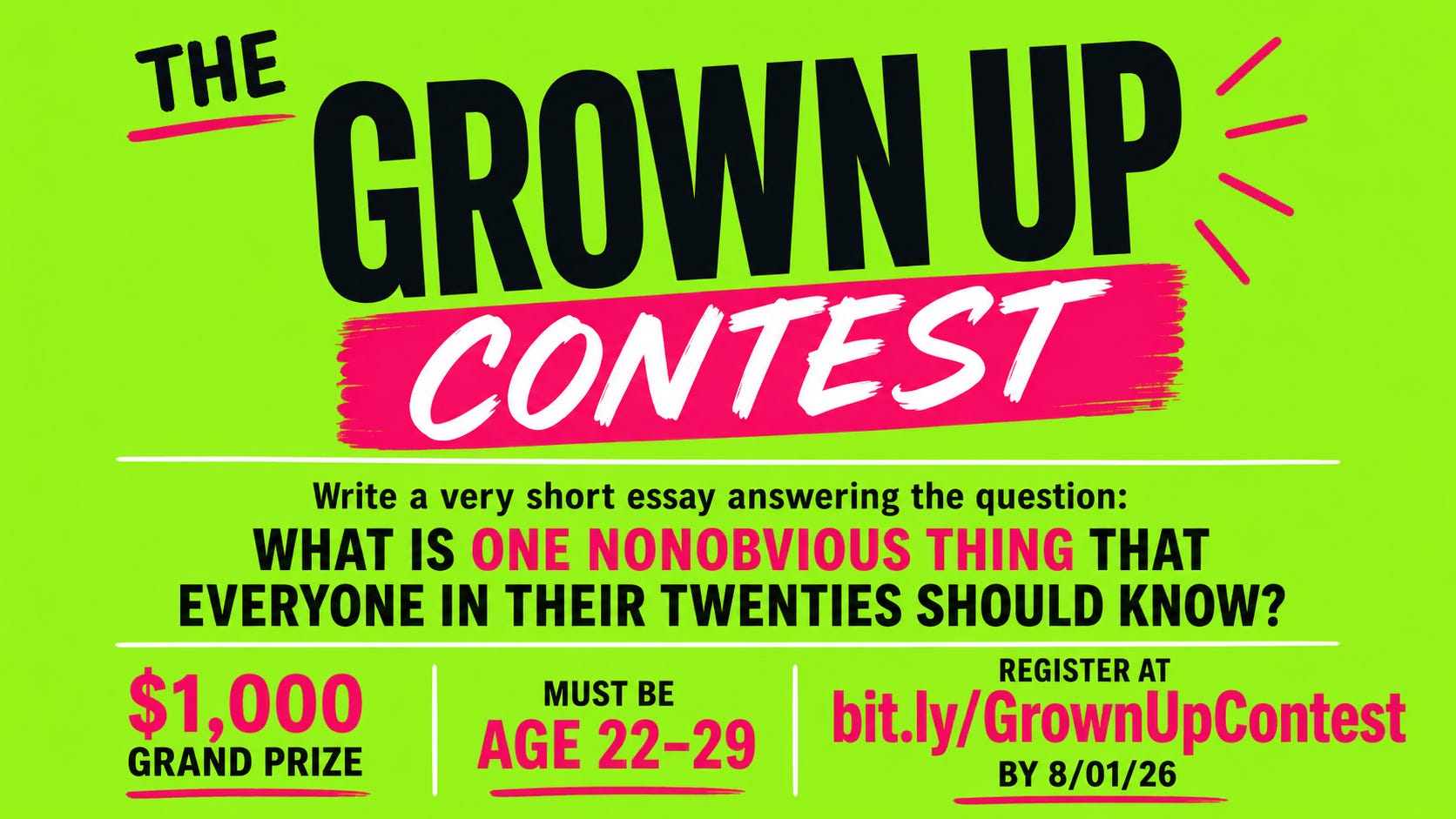
UPPING THE ANTE: I will pay $200 to anyone who refers the winner. Share this with everyone aged 22-29 you know, and just make sure they write your name in the “Who referred you” line of the submission form. If they win, you’ll get $200.
I often hear the question, “When will you write a sequel to How to Be a Grown Up?” Specifically I get asked about—since Charlotte and I have five children and a sixth on the way—a sequel about parenting. As it happens, my next book is a fantasy novel. But if I did write a parenting book, it would be called How to Be a Parent. And it would not contain one bit of parenting advice.
Not How to Parent, but How to Be a Parent.
The reason is: most parenting advice is snake oil. It may sound good, but it doesn’t do much good. Parenting books sell like crazy, I think because it is comforting for parents to think that a) there is a “right” way to parent, and b) there is something you can do to cause your child to have a good life.
Yet people have been parenting since, literally, the dawn of humanity. If there were a method that worked, even a method for one single problem—like how to discipline, how to get kids to be less picky, how to make them academically successful—every parent would be doing that.

Part of the reason advice doesn’t work is that every child is different. Even siblings are quite different from each other (if you don’t yet have multiple kids, you’ll see).
More importantly: most of it doesn’t matter!
In Selfish Reasons to Have More Kids, the economist Bryan Caplan summarizes reams of research (including many studies on twins and triplets who were raised apart), that concludes: the vast majority of people’s adult personalities and outcomes in life are determined by their nature (genes), and only a small amount are determined by their nurture (environment). As long as you are not abusive, or an alcoholic, or otherwise seriously harm your child—much of what you do as a parent won’t matter in the long term.
Two important caveats:
I think many of the studies’ conclusions are overstated—in part because of flaws in their designs, and in part because questionnaires cannot fully capture how similar or different two people are as adults. Many people who love these studies will argue that 99% of outcomes are due to nature; I think 90% is probably more accurate.
What you do as a parent still does matter in the short term. That’s why Charlotte and I raise our kids according to strong beliefs about what we think is best for their upbringing (including discipline, community, free-range, limited screens, and more).
The 10% of your child’s long-term life that is due to nurture is primarily determined by one thing: you. Kids don’t listen to what you say; they see how you act.
Which means, the #1 thing you can do to become a better parent is to become the kind of person you want your children to grow up to be. (They will not end up as a copy of you—rather, the 10% of their adult personalities that are moldable in childhood will be influenced by your behaviors.)
For example, they will emulate:
How you treat your spouse
How you respond under pressure
How much joy you find in your work
How much time you devote to friends
How you put your values into practice
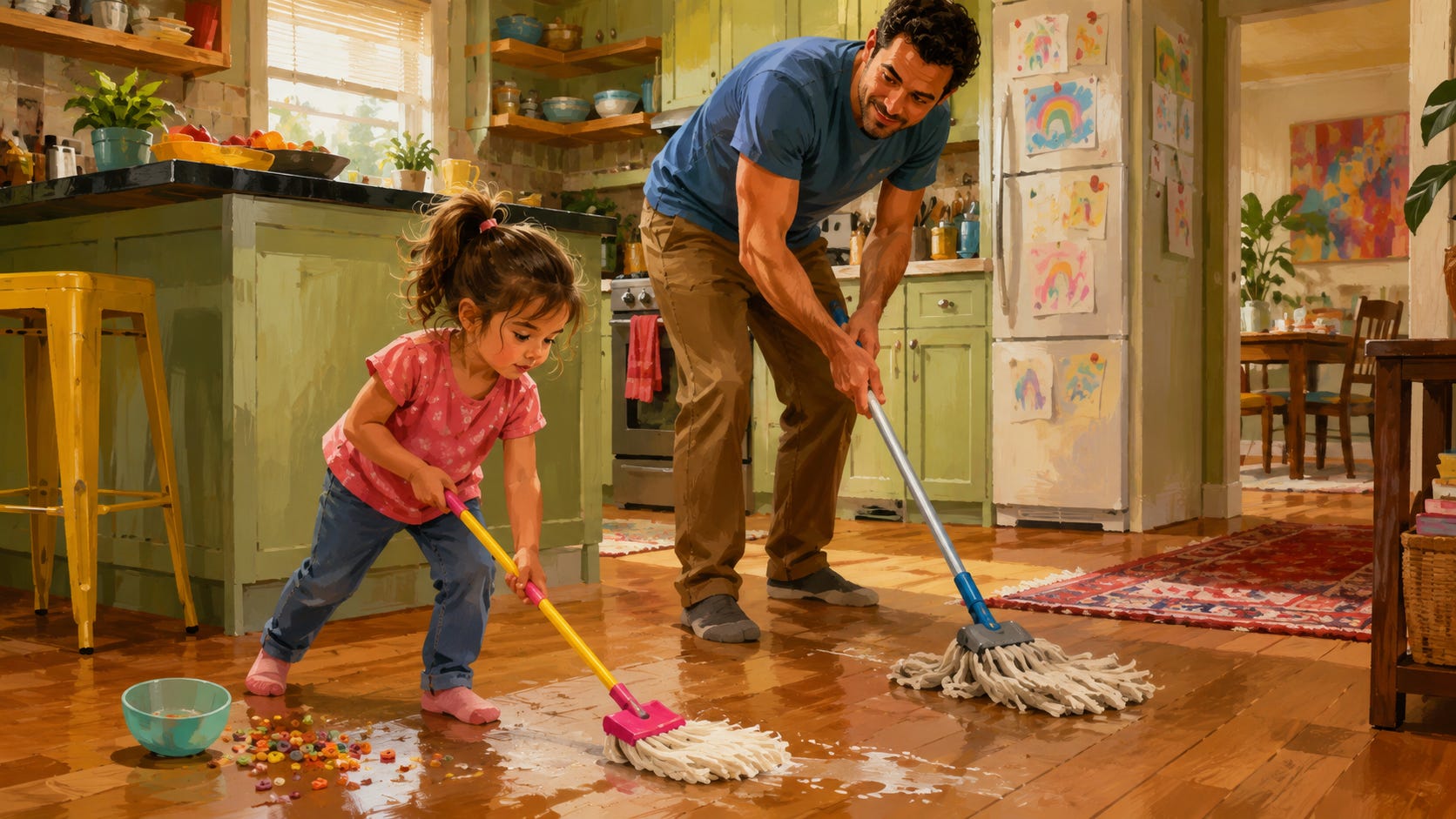
Of course, no one is (yet) the kind of person/parent they want to be.1 But the problem is, that can be an excuse for endless deferral. If you do want to have kids, but you wait until you are perfect… you will wait forever. As with many things in life, might as well start now. (And who knows, your kids may end up influencing you for the better as well; their lovingness and curiosity are contagious.)
You will never be a finished product. So wouldn’t it be beautiful to role model to your children the most important thing, which is that meta process: the never-ending, messy, meaningful act of getting closer to the ideal version of yourself.
For example, while I was writing the outline for this post, my kids kept breaking into my office; after enough interruptions, I snapped and yelled at them.
No posts
Comments
Nothing yet. Say the first thing.
Sign in to join the conversation.