
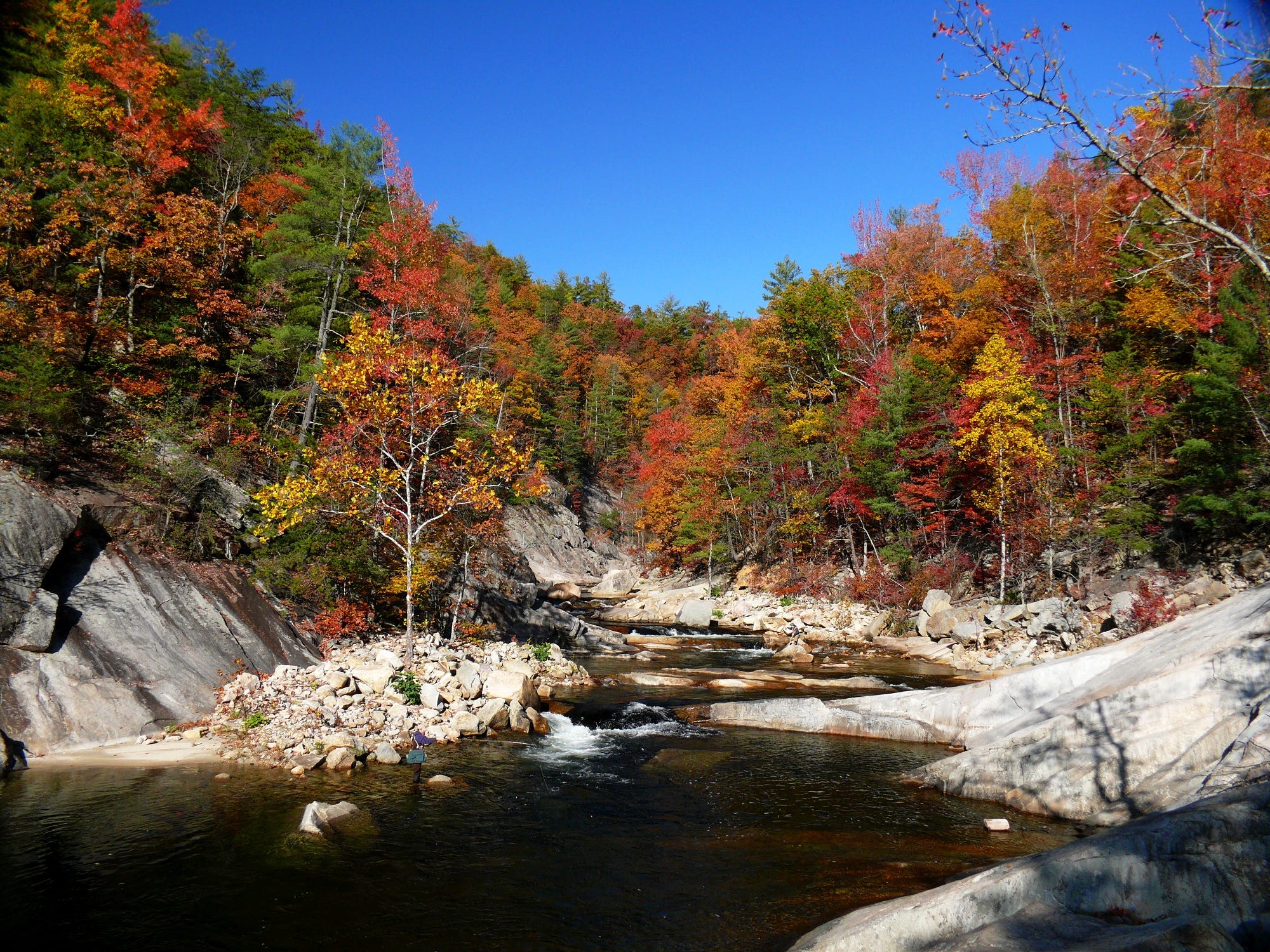
This is a picture of Wilson Creek, a designated “wild and scenic river” in Western North Carolina. As beautiful as this and other photographs of this part of Pisgah National Forest are, they can never capture the profound beauty of this 49,000 acre wilderness area. Ask anyone who grew up visiting this gorge and they will tell you, this place moves you. Its cold waters, giant rocks, white water rapids, and diverse plant communities inspire awe no matter how many times one visits.
I was fortunate to grow up near enough to Wilson Creek to spend time there every summer. I remember swimming as a child in these icy waters until my lips were blue and I was shaking, still arguing that I was not cold so I might extend my time in the creek. Like many who have spent time in this wilderness area, Wilson Creek is the site of some of my fondest memories as a child and as an adult. Full immersion in a wild place is a gift, a reminder of what it is to be human, away from all the noise and stress of the manmade world. A place removed from phones, jobs, and economic woes.
One of the best things about Wilson Creek is that it is open to all. There is no entrance fee, no membership fee, no charge at all. You just need to get there. This feature has had an egalitarian effect. As an adult, I have traveled to many majestic spots. More often than not, visitors to these areas fit a certain demographic. They are predominantly white and have some disposable income. Wilson Creek’s location within an economically depressed county allows many working class people the opportunity to spend time in an impossibly beautiful place for an afternoon, without having to travel long distances or even walk very far to do so. All who visit get the chance to cool off, relax, spend time with friends and family, all within a landscape that makes one feel small in the best way. The gorge reminds us we are part of something bigger. That our lives and travails are small compared to the massive beauty of the world. Those who find comfort there will return for this perspective throughout their lives. What a gift to live near this place!
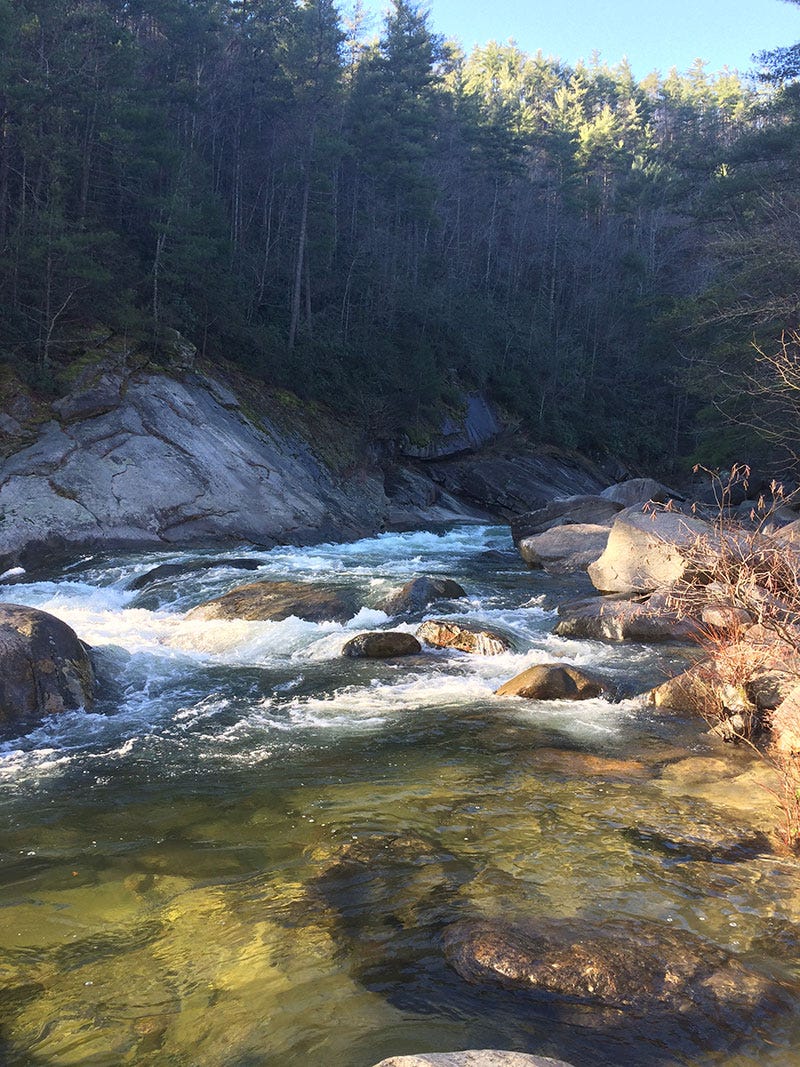
On Sunday July 26, as people gathered by Wilson Creek to swim and picnic and rest, ICE set up checkpoints on the road to and from this area. This is a remote spot, so there are few ways to leave the site. ICE took advantage of this, knowing this was a popular spot for migrant communities. What followed was hours of terror for all those gathered on the river who were not read as white by the ICE officers.
After several hours of “let me see your papers,” ICE arrested 13 people. The official line is that they were looking for people with criminal records. This, of course, is just a cover story. ICE raids are indiscriminate, happy to round up people with “clean” records, including asylum seekers and those who are moving through the immigration process.Most of those arrested that day who are now in detention centers have no criminal record, and if they have one, their only infraction is missing an immigration process deadline of some kind. Though it should not matter, many of those arrested at Wilson Creek are here legally, with driver’s licenses, work permits; many are working their way through the asylum process and show up for all their appointments. Those who have been playing by the rules are treated the same as those who do not trust the system and seek to make a life outside of it. It does not matter how “good” you are if you are an immigrant who is not read as white.
On Saturday August 1, Hudson United Methodist Church held a vigil for all those facing deportation stress and their communities. Two people directly impacted by the Wilson Creek raid spoke of their experience. One told of the chaos and stress of the raid. She spoke of children seeing their parents arrested and taken away, younger siblings left behind as their caretaker, their older brother was arrested, personal items scattered all along the road, women arrested and moved to detention centers in bathing suits and flip flops. The speaker shared how a place that she treasured had become a site of trauma, for her and so many others.
To reiterate, one of the most wonderful things about Wilson Creek recreation area is that anyone can use it. It is free. This means anyone, after a long work week in an increasingly precarious economy, can go there to cool off and lose themselves in the wildness of the place. What ICE did that day, beyond arresting 13 people, was to take away the peace and pleasure of this place for the extended community of everyone who looks like they may not be from around here. This is part of the point. Federal immigration policy and locals who support it want those who don’t pass for US citizens out of sight. Any place where affected communities might find comfort and ease is a target as they seek to make this country as inhospitable as possible to those seeking refuge..
Though ICE is less in the news these days, they are busy. In June, they detained more people than in any other month of the crackdown. Their strategy is to do their work more secretly, finding spots out of view where it is harder to find and film them. Wilson Creek is remote enough that there is no phone service. Those being targeted by the raids could not warn their communities or call for help. People who work to protect these communities could not get in to witness the proceedings. This is by design. For ICE to raid Wilson Creek required cooperation from the US Forest Service. We should expect this trend to continue and plan accordingly. A forest service that has been gutted and is less able to do much in the way of its intended purposes may become little more than an appendage of Custom and Border Patrol.
What does all this have to do with health? Everything. Holistic practitioners emphasize the importance of relaxation, of pleasure, of time outdoors, of time away from our phones, of time connecting with our other-than-human kin. These breaks are invaluable to our overall health. They help strengthen and support our parasympathetic nervous system which helps us offset the effects of the chronic stress environs most of us inhabit.
Stress is the foundational cause of the majority of our contemporary health challenges. When a group of people who are already under chronic stress from racialized policing and the threat of deportation are denied access to the healing power of wild public lands, then our society is closing off one of their only remaining means of soothing their frazzled nervous systems. As the young woman said at the vigil, a place of joy and communion has become a site of terror. This too is an aspect of health fascism.
Wellness influencers love to invoke personal responsibility when it comes to healing.Each of us, according to this framework is responsible for our own healing. What about community responsibility? What is our responsibility to each other? When our neighbors are denied access to our public lands, when they live in fear of being hunted down at school and church, when they fear the threat of detention and relocation no matter how much they have cooperated with immigration services, how can they aspire to health? When survival in a relentlessly hostile climate requires all of one’s attention, how can one do the work of attaining or maintaining health? How healthy is a community that cannot defend its own members? Health is a collective endeavor.The crisis in health care has many fronts; the fight over public lands is one of them. What if our failure to act on behalf of our neighbors is part of the health crisis? Working to create a world that allows us all to flourish is the work of this lifetime. This is not solitary work. It is not the work of the individual on their own personal journey to health. Just as our liberation is tied to that of our neighbors, so is our health.
No posts
Comments
Nothing yet. Say the first thing.
Sign in to join the conversation.