
On April Fool’s Day, I took another spin around the sun. I don’t know about you, but birthdays are sacred to me. It’s one day that, despite sharing it all over the world, somehow manages to feel entirely unique to each of us. Getting older is a privilege that not everyone will experience, and to mark this once-a-year privilege in some meaningful way, no matter how small, feels essential in the cycle of all that life likes to fling at us.
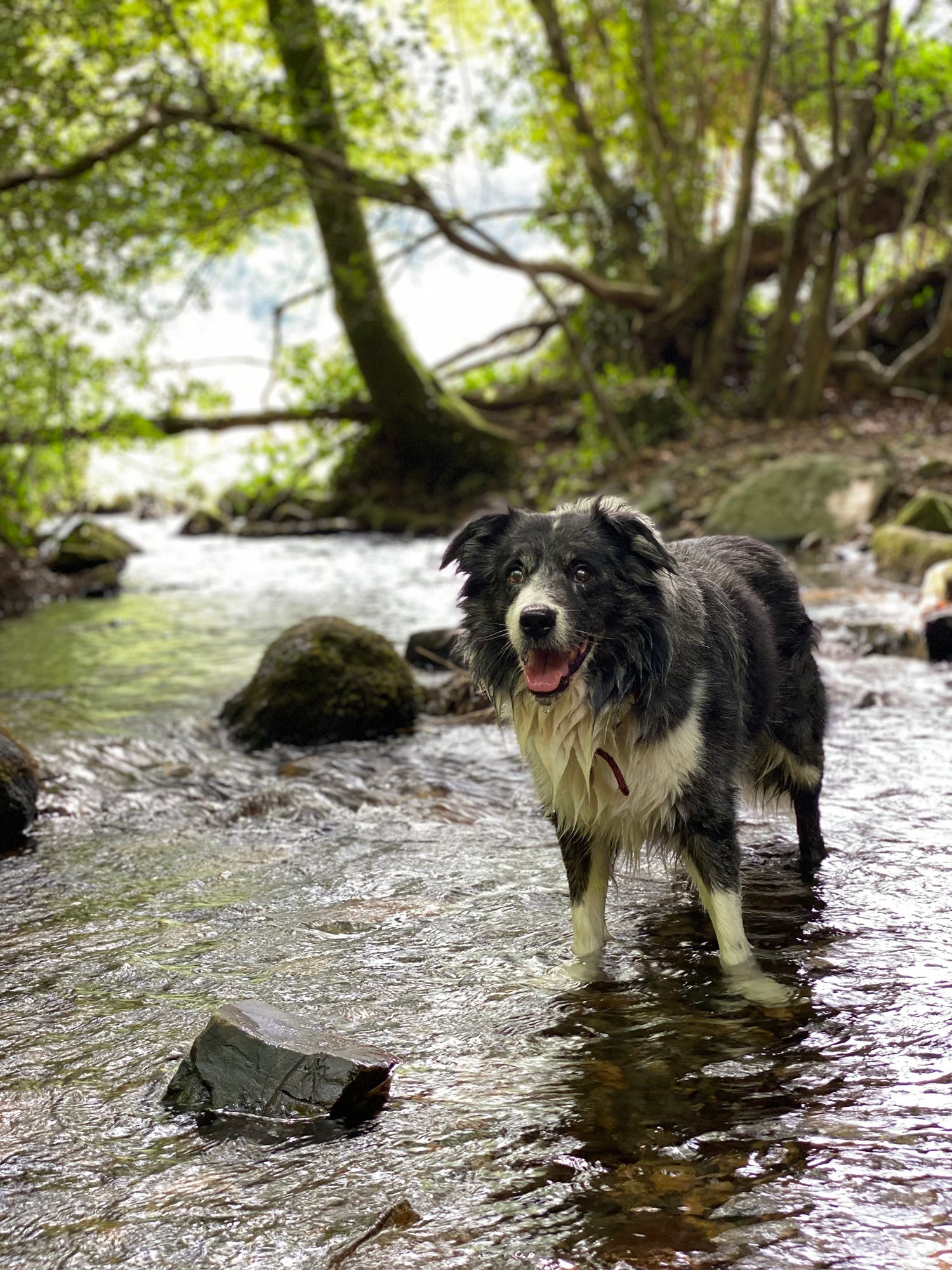
This was the first birthday in sixteen years that I experienced without Gypsy by my side. Last November’s grief has become easier to hold, tenderly, in the palm of my hand (rather than heave in great sobbing sighs on my shoulders) but the strangeness and silence is still so profound. My studio space, though stuffed to the rafters with books and tools and ink-smeared paper scraps, somehow seems to echo with the absence that only a woolly-coated best friend can fill.
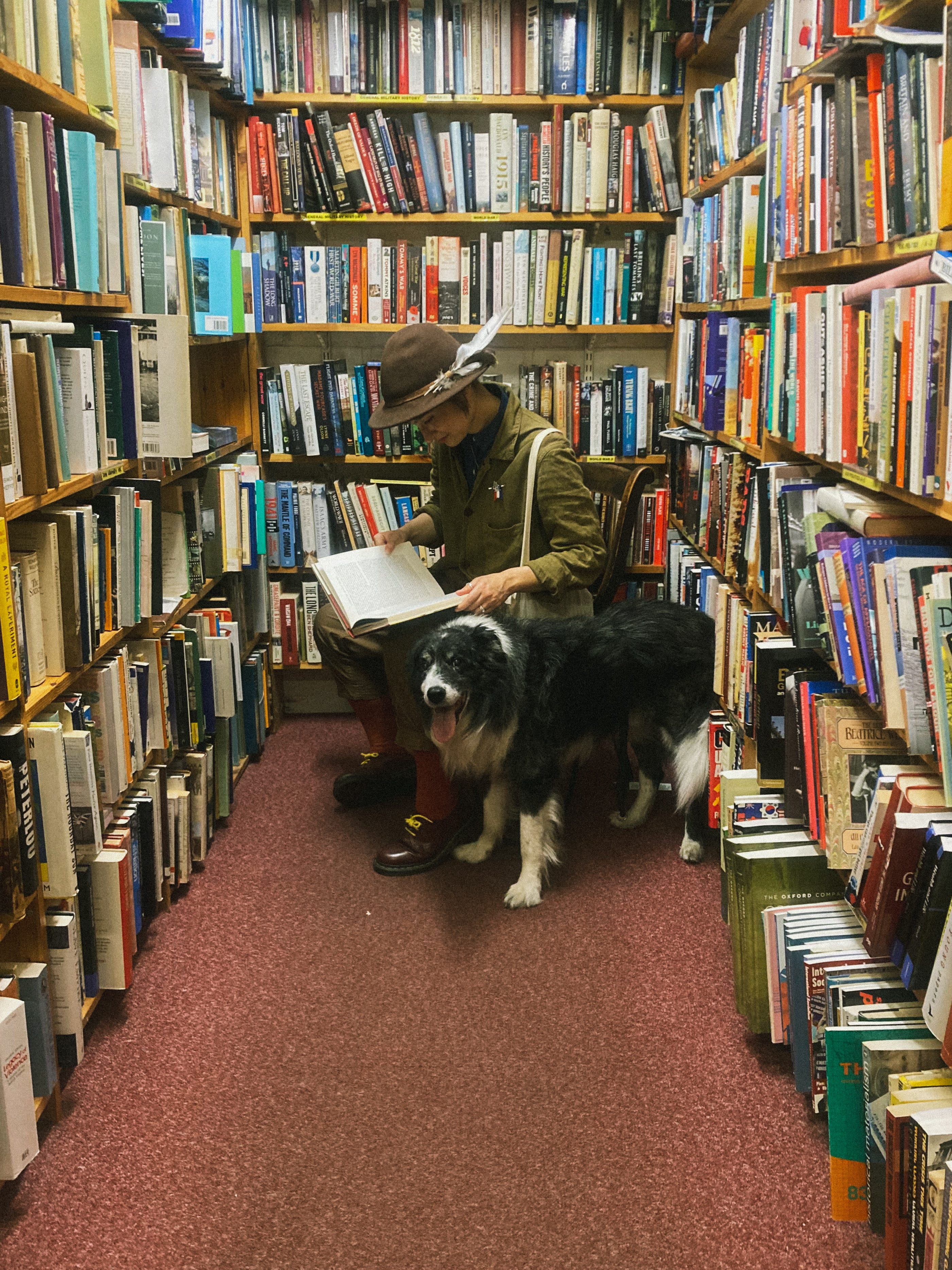
Ordinarily, our family of three would plan some great escape together - most often to Scotland where we’d hike the Outer Hebrides or hole up in a lighthouse on Hoy (that’s in Orkney). In later years, as Gypsy’s condition progressed and he naturally slowed down, celebrations would stay closer to home, to a weekend guided by the rickrack of a Cornish hedge and clouds of pink rhododendrons - I’m convinced that a Border Collie’s wag is designed for the sole purpose of disturbing petals and dust. What I’d give for one last sweep of that tail against my face.
‘On this birthday in Bair, to satisfy my sense of sincerity, I began to dissect my beliefs and motives, groping about in my own pitchy darkness.’1
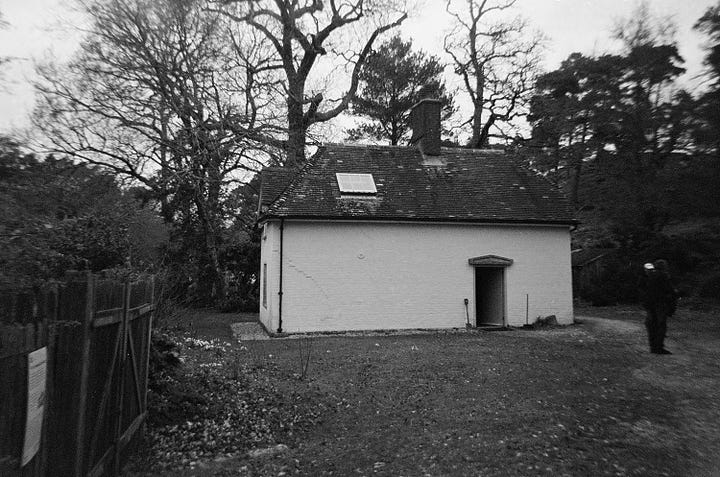
This year’s celebrations —as a much diminished duo— took us again just over the border, this time to Dorset, a county I’ve grown to love in ever-increasing circles. My gift was Clouds Hill, serendipitously open for the first day of its tourist season.
As I shuffled softly around in the dim light of T.E. Lawrence’s beloved bolt-hole, I thought about how old he was (forty-six) when the accident tragically tore him from this world in 1935, and what more he might have achieved had he grown old and ever more introspective. Now solidly in my forties, it is humbling to think of a hero of mine whose age I expect to surpass; how learning from his vast legacy might help to re-frame some of my own flaws and foibles in order that I will not continue, as T.E. expressed, and as many artists might understand, to be ‘a standing court-martial on myself.’2
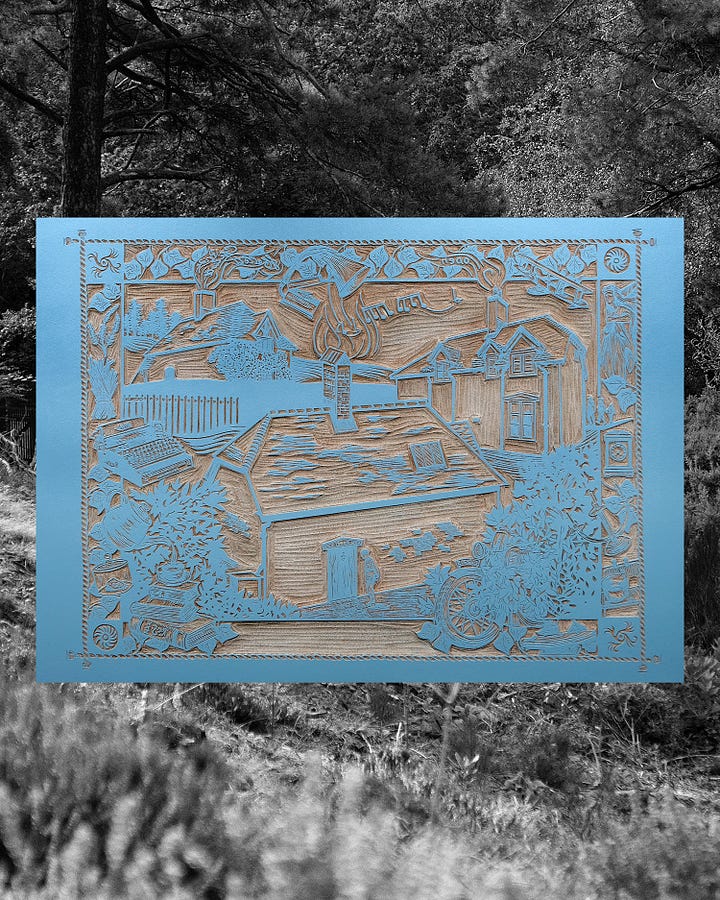
Perhaps in part because of T.E. Lawrence (thank you, friend-I’ll-never-have), my printmaking practice is slowly evolving, whether I’d want/like it to or not.
A change started just before spring, when all the daffodil greetings cards emerged in shops and the swallow linocuts soared across every social media doom-scroll. I felt at once ashamed that I could never create an illustration desirable enough to rival these steadfast motifs of our vernal equinox, and also frustrated that I felt the need to compete at all.
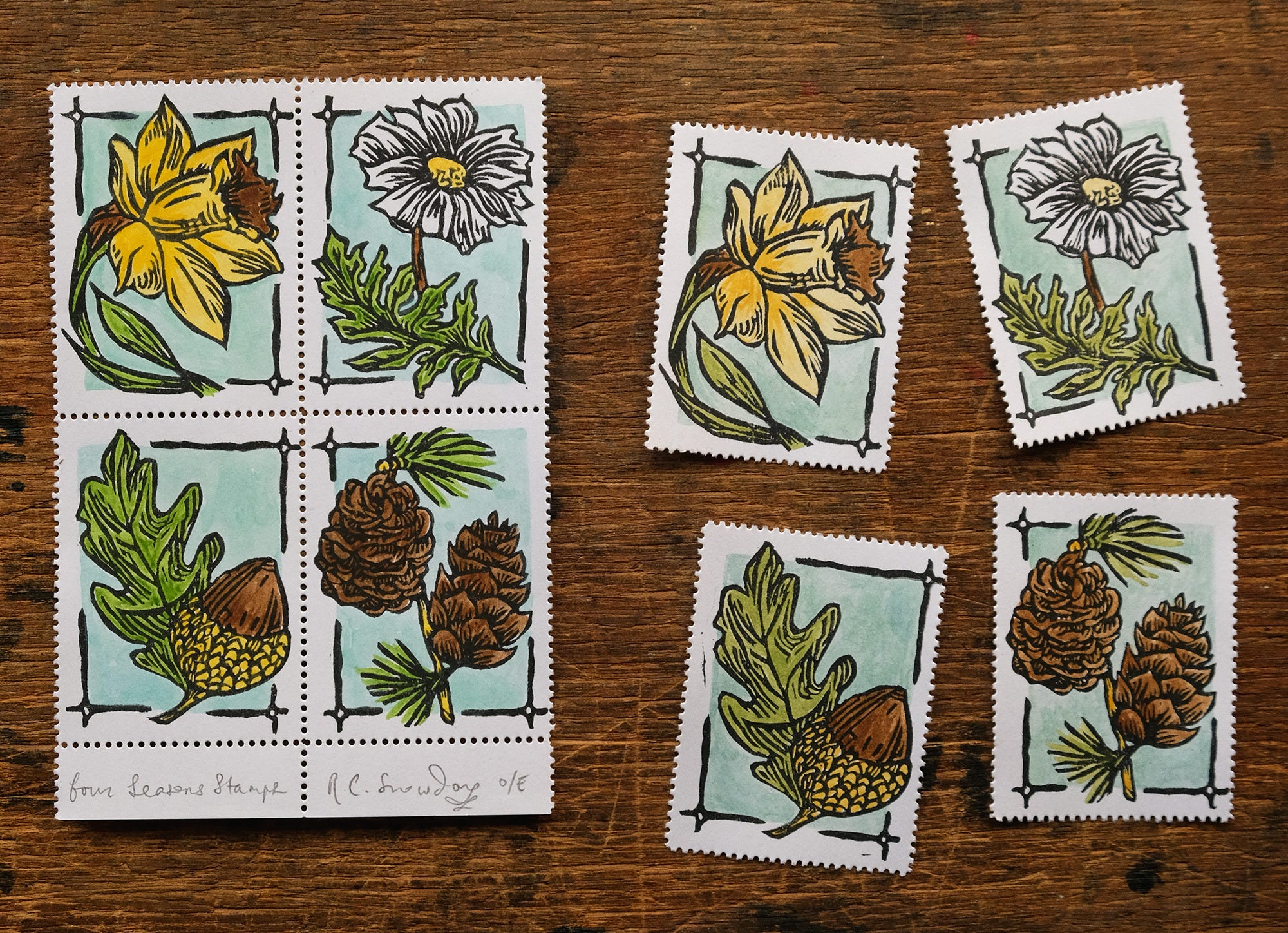
I realised the rules I kept setting around what I thought I should be making (daffodils) and how I thought they should look (like daffodils, idiot!), was because I so desperately wanted a foot in the door of that earthy, nature-centric lifestyle that feels so important in a world cloaked in the fire and brimstone of our forever mistakes. Here I was, trying to shoehorn myself awkwardly into a space that was already filled with enough brilliant botanical talent to outlast my efforts, and all in the microcosm that is the West Country art scene. Sad and unsure attempts, such as mine, stand out for the wrong reasons. Of course I’m destined to fail.
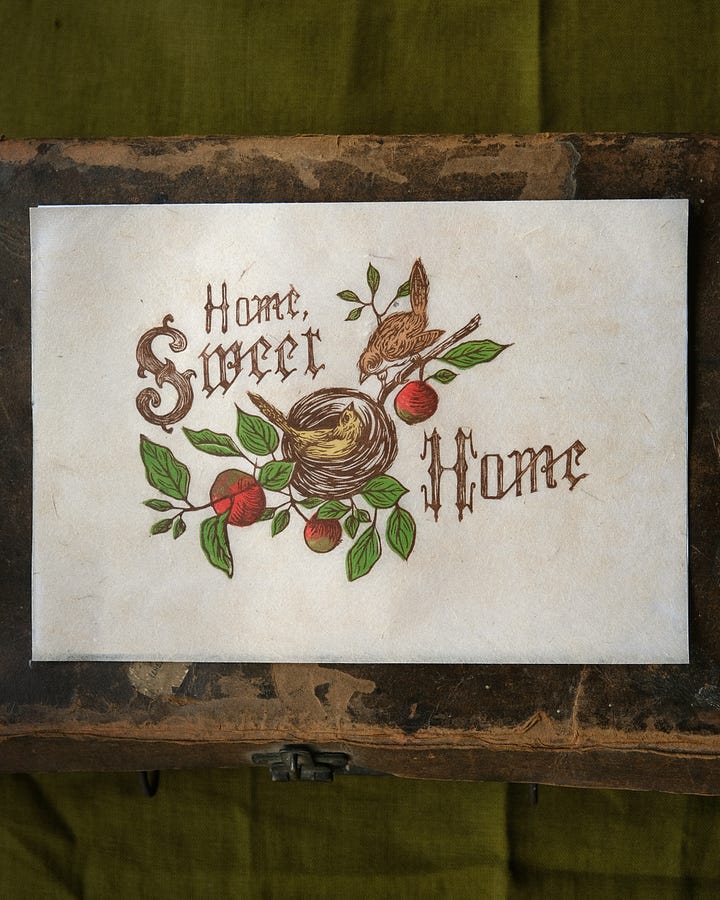
Until I ran out of wall space, I was a moderate collector of punched paper work: an intriguing mass-produced stitchcraft that emerged in the 1860s and lasted only forty years or so before suddenly disappearing. Those God-fearing Victorians designed templates to be embroidered with morality mottoes and Biblical scriptures; most turn-of-the-century homes probably had a completed punchwork hung in the drawing room. I started working on a linocut version just before Gypsy passed away; far too many months (and tears) later, it is finished and ready to find a home, sweet, home away from my own. Hopefully more in this series will emerge.

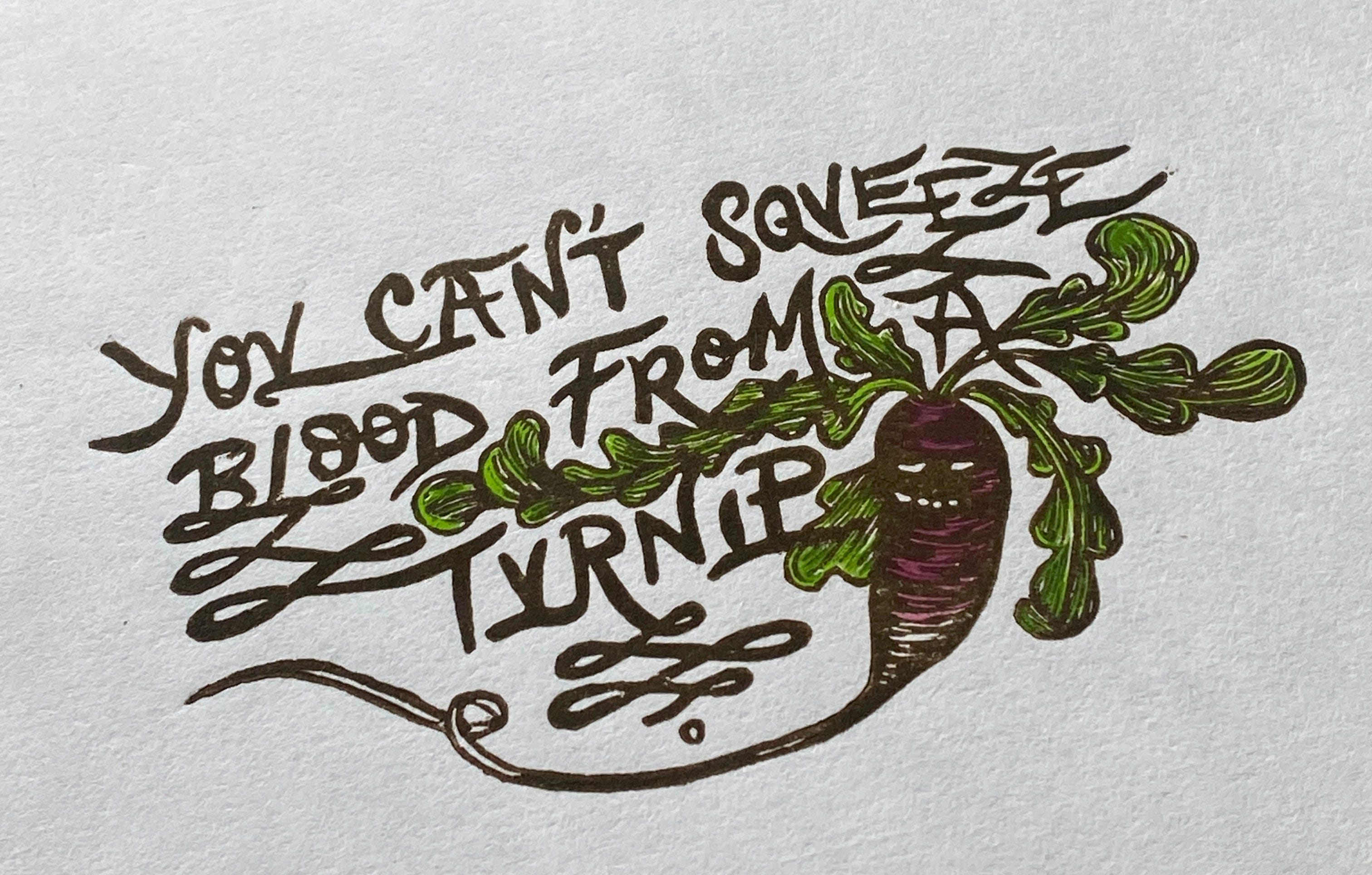
Comedic, vaguely unsettling proverbs have also been living rent-free in my mind for a while. They often suggest seasonality, local folklore, a hearsay of superstitious incidents or events recorded only ever in print. I’m slowly dedicating time to working on this deliberately self-conscious selection of illustrations - I don’t know where it will take me, but it is part of my own personal almanac of the unknown.
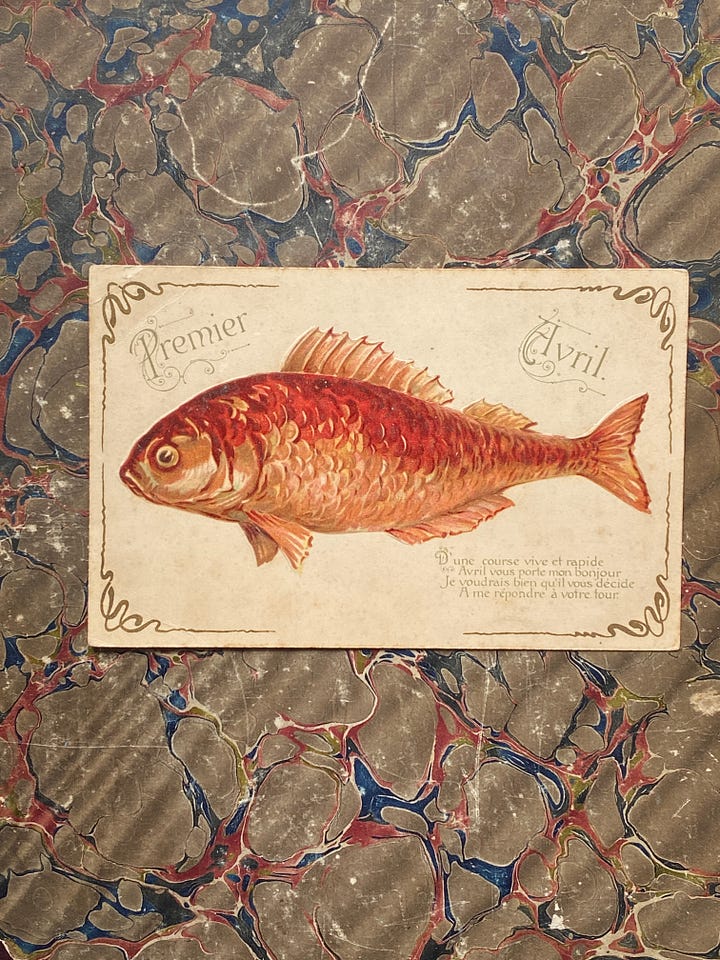
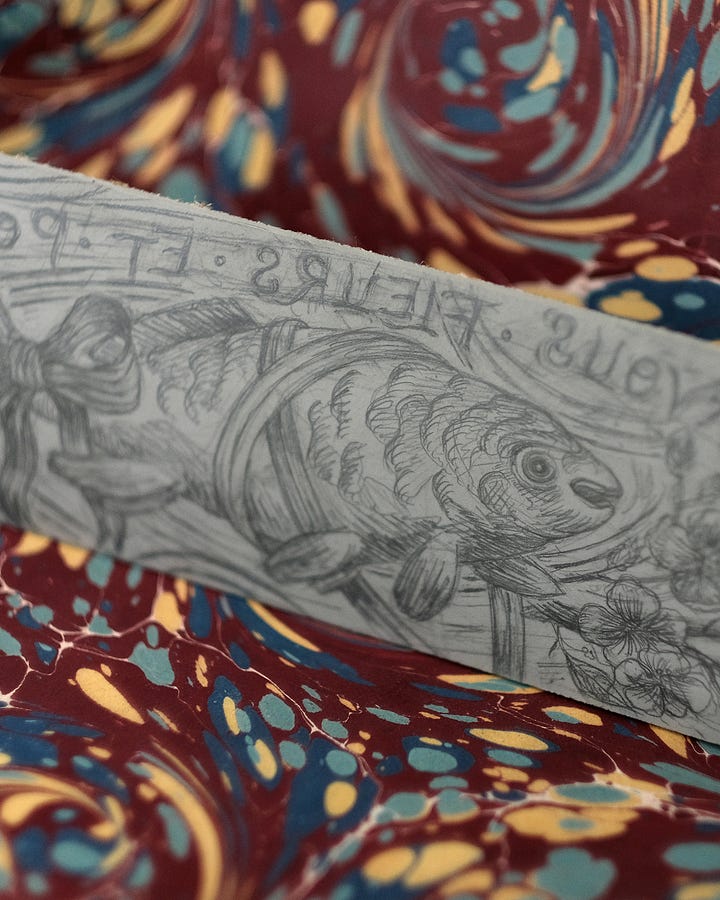
Avous fleurs et poisson. The beginnings of an April 1st print in homage to the curious French tradition of pranking unsuspecting folks with paper fish and fish-themed items. The block below was sketched out on my birthday but is yet to be carved.
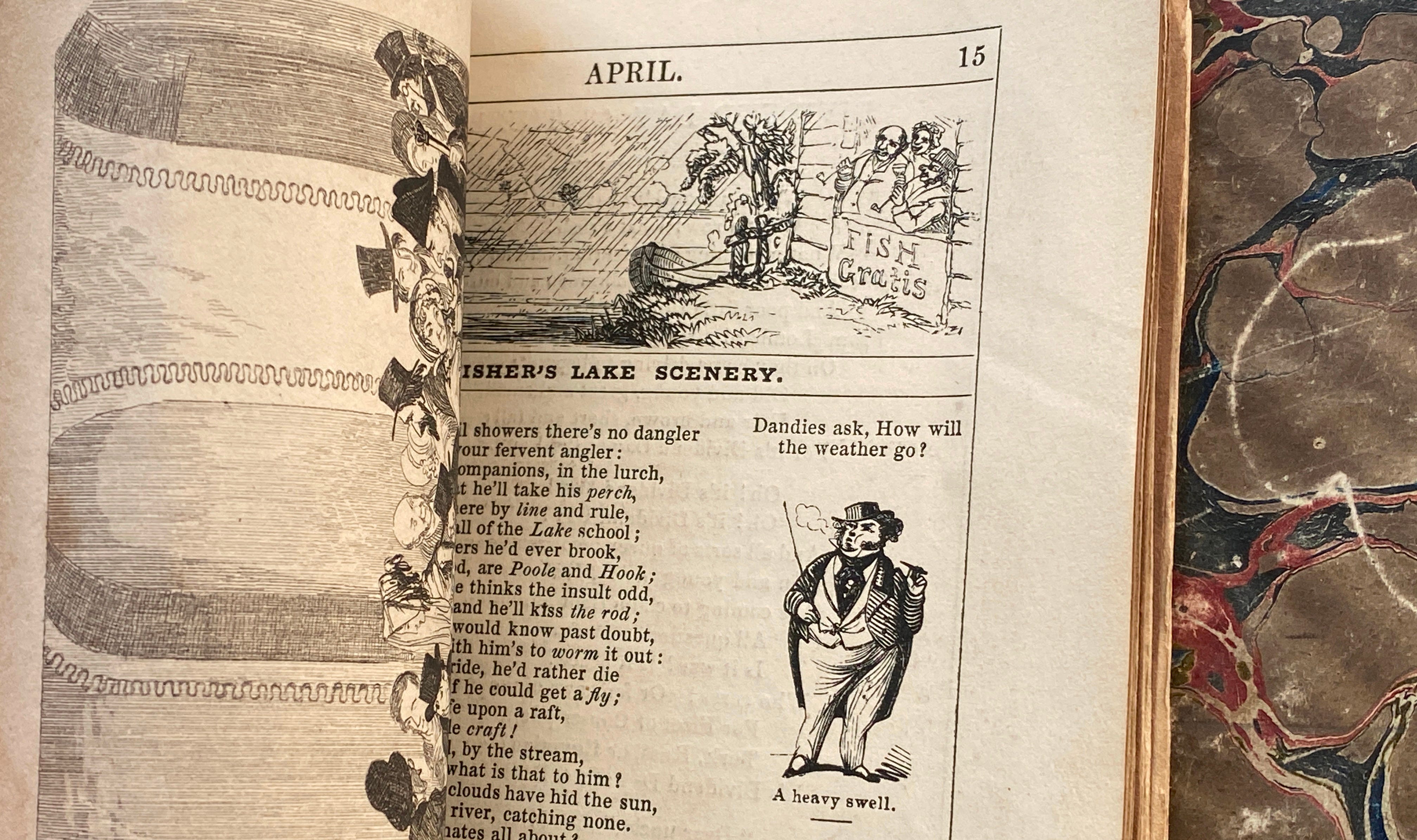
You see, secretly, my interests have never been conventional. In a past life, I sold antiques for a while. Still enamoured by mourning jewellery; folk art and paper ephemera, and all things Arts and Crafts Movement, I pondered the not-unrealistic prospect of returning part-time to the trade to allow the necessary head space (and steadier income) away from my art and this creative battle I was warring with myself.
Yet as I rooted through a few boxes of 1890s backstock and flapper dresses that I must have decided to keep for myself, I realised the sources of inspiration I love most are in those mediums that are not my own. Instead of only looking to printmakers, and to the profusion of perfect works on paper that I’ll simply never live up to, I also want to retreat into early 20th century poetry, forgotten folklore; handle objects from history and guard the stories locked within. And not only because one can learn so much from the past about society’s progression/destruction, but because these items were constructed slowly, patiently, timelessly, unaware of the impending future and the impediment of an algorithm and AI. Because if the things we craft are ancient history the moment they’re out there in the world, I want the fleeting memory, the heritage of whatever my minor creative output becomes, to remain as true to my heart in a hundred years (when perhaps another anxious artist Rachel sieves my linocut portfolio from the thrift store bin) as it ought to be true now. Daffodils and all.
‘When the time comes I may vanish before the ink is dry. I will leave behind me a great mountain of paper, and those who come after me … they will sift through what remains … they will turn the page over, and write on me.’3
If you enjoyed reading Artist's Proof, please consider sharing or recommending it to others. I would so appreciate this.
Comments
Nothing yet. Say the first thing.
Sign in to join the conversation.