
I used to have a daydream about creating a Museum of Stories.
I don’t mean a children’s museum; I mean something more adult and more fantastical. And I don’t mean a library (much as I love them) because in a library all the stories are inside books or read on screens whereas in my Museum of Stories they will be told in every which way you can imagine - painted, spoken, filmed, written, projected on to walls and floors, sewn into huge quilts, or told through paper theatres or puppets or magic lantern slides. And of course there will be storytellers in every room.
In my daydream I even dreamt up the individual galleries. There will be one for fantasy and fairy stories (so lots of dark stories of ghosts and Second Sight and the Separated Soul). A second gallery will be for Romantic Love but also for Anti-Romantic Love (there will be lots of arguments going on here, for and against). And a third gallery will be for Memoir, and here - at the gallery entrance - there will be an old woman who will ask you, ‘Would you like to leave your story with us?’ ‘What?’ you say, ‘but I don’t have one.’ ‘Don’t worry,’ says the old woman, ‘You will have one in the end. We all do. You can leave it with me then.’
Wouldn’t that be gorgeous?
But now my idea has changed. It’s the thought of all the wars out there, and all the dying Palestinian children; they have been getting into my brain, and now I want to add in an extra gallery to tell the story of War, or rather Anti-War, with every war story ever told, going back to the Trojan War and little Astyanax (Hector’s child) whom the victorious Greeks killed by throwing him off the walls of Troy. He can’t have been more than three. I mean, what kind of threat was Astyanax?
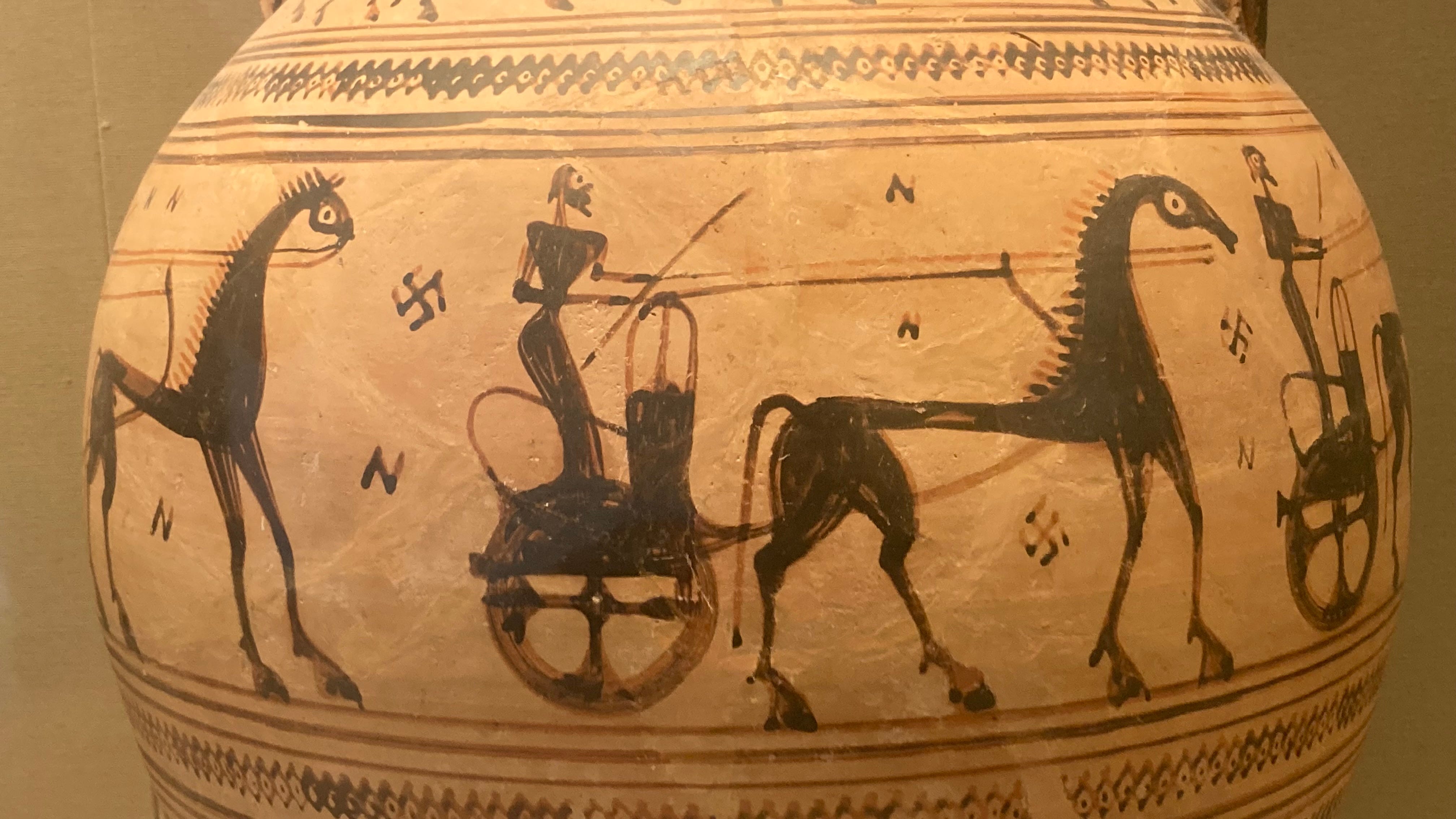
It will be a museum of light and dark. On the light side - for those times when you can’t bear the harshness of the world outside - you will find every story you’ve ever loved, including - by some magic - all the ones that you’ve forgotten. And so, for me, there will be ghost stories, love stories, stories of grief and laughter, stories inside stories (I love these), anything by Hilary Mantel, Tony Morrison’s ‘Beloved’, ‘The Shipping News’ - the list goes on and on. This will be one of those museums that you will want to visit with a friend so that you can talk about everything you are seeing. Hence from every side will come the murmur of voices - ‘Oh my God, did you ever read? . . . ‘ - ‘I loved that book’ - ‘Do you remember . . . ?’
But there will also be a dark side, namely a gallery of War Stories or rather of Anti-War Stories, a gallery so dark you can hardly bring yourself to put your head round the door, and yet somehow you do, especially on days when you are trying to understand why the world is so harsh. Here will be all the stories ever told about the madness of war, from the Trojan War through Slavery and World War One and Wilfred Owen’s poems, up to the present day, and including all the Palestinian children currently dying in Gaza. In other words, stories that tell the truth about war.
When we shape events into a story, several things happen. We make them more digestible, more easy to get into our brains. But at the same time the story shape softens us up and makes us more liable to burst into tears. This will be an anti-war gallery that will have the visitors weeping.
What would you put into a Museum of Stories. What books have you loved? What books have changed your life?
And of course what are the best anti-war books you’ve ever read? I recently read Pat Barker’s novel, ‘The Voyage Home’, showing how, during and after the Trojan War, it was the woman and children who suffered the most. I couldn’t put it down.
No posts
Comments
Nothing yet. Say the first thing.
Sign in to join the conversation.