
Every day, there seems to be a new feature to detect AI text generation, including here on Substack. Let me assure you, all my content is written by me — please feel free to scan it! The Good Newsletter has been my labor of love for nearly 20 years. Like many — you, maybe? — I spend most days trying not to get totally depressed about the state of the world. Then, each month, I sit down to write the Good Newsletter and tug out a silver lining built on facts. I hope reading it delivers some light for you, too — beginning with the news on these joyous ladies!
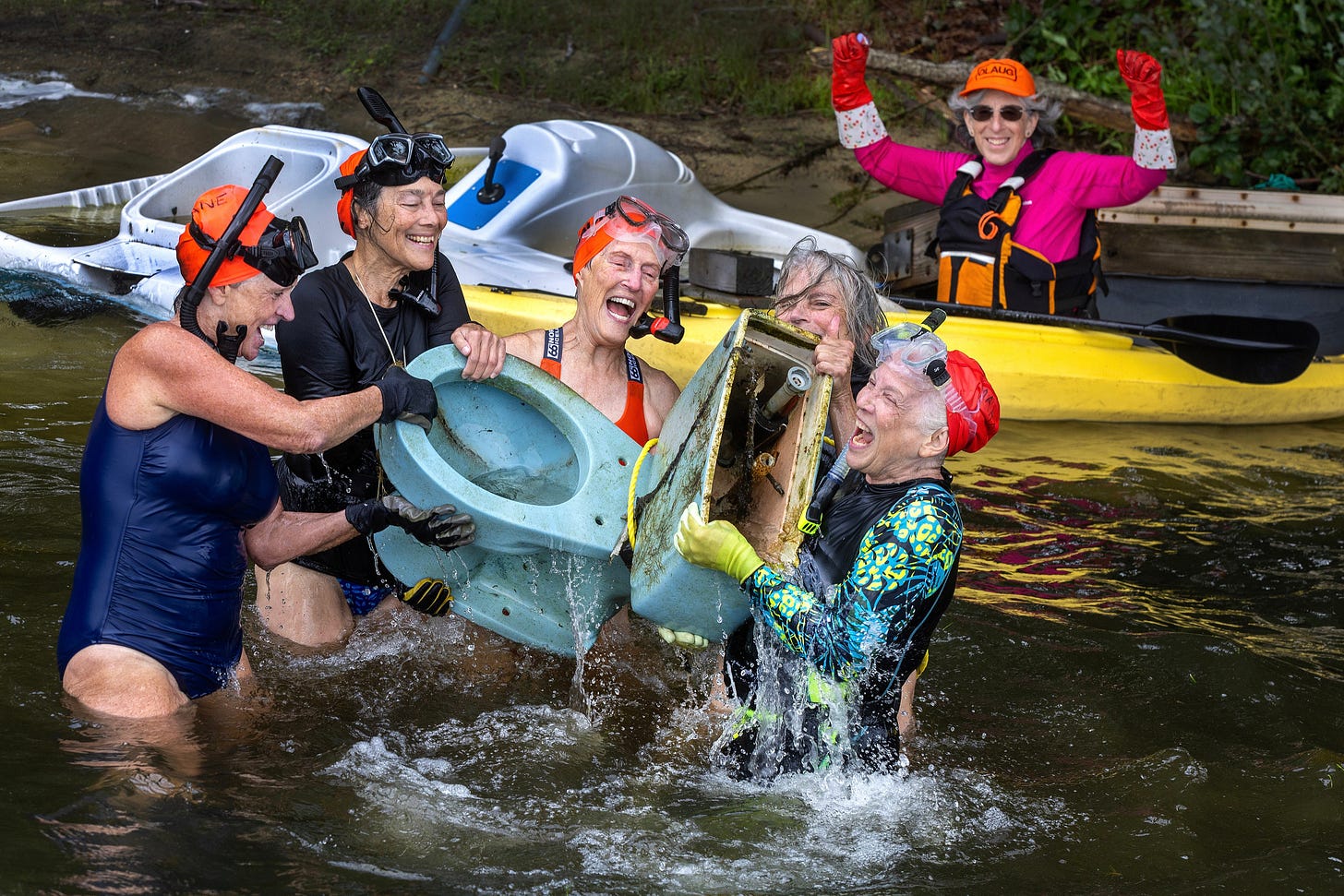
Founded by an octogenarian, with required ability to swim a half mile in 30 minutes and free dive to eight feet, The Old Ladies Against Underwater Garbage are paddling and snorkeling to clean up Cape Cod – and inspiring me to get off the damn couch. (Photo: Nice News)
As we wrap up #PlasticFreeJuly, there’s still time to sign a petition to mandate reusable products in Los Angeles before the 2028 Olympics — and no, you don’t have to live here to sign.
Researchers in Australia announced a new magnetic filter for industrial laundry wastewater that can capture microplastics, nanoplastics, and some PFAS.
As the fifth largest global economy, the impact of California’s new plastic reduction Extended Producer Responsibility (EPR) law will soon be felt globally.
Corporate Sustainability Officer ranks are falling — a new study shows a 10% decrease, the first in 15 years — but think about it this way: Their primary goal is to integrate sustainability into all areas of business, which inevitably makes a CSO obsolete.
The data is clear: a majority of Americans think the U.S. should do more to strengthen commitments to fight climate change. Here’s a snapshot of how states are stepping up:
With eight gigawatts of distributed solar energy now installed, New York State is on track to reach its 10-by-2030 goal — and has already generated more than 16,000 jobs in the process; the state also just passed the first data-center moratorium to establish environmental and community regulatory protection.
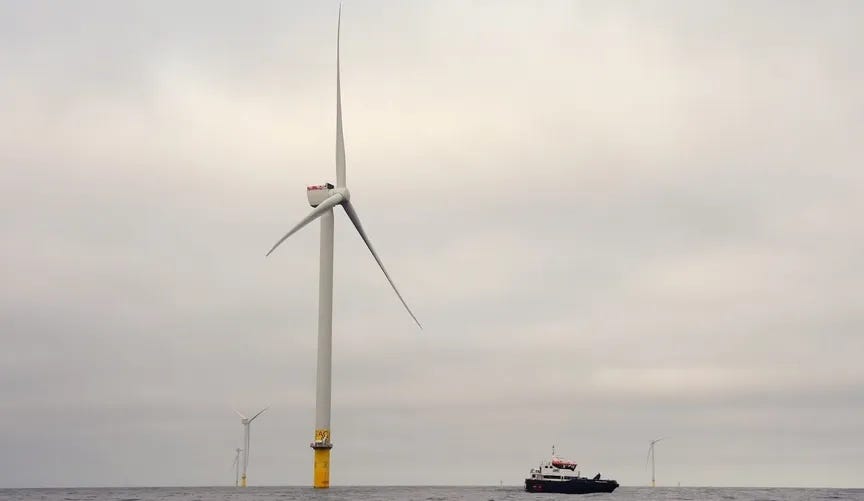
In Massachusetts, EV owners will soon get paid to power the grid, rooftop solar saved New Englanders over $130 million in electricity costs during the July heat wave, and offshore wind and hydropower also reduced peak oil use in the region. (Photo: Canary Media)
They’re efficient, affordable, and suddenly extremely popular: Nationwide, heat pumps are outselling fossil fueled furnaces.

In global good climate news, China announced goals to increase wind and solar power generation by over 50% in the next five years — for the first time the target is binding. Also, Beijing was once the most air polluted city in the world — today, thanks to rapid EV adoption, it’s one of the cleanest. (Photo: Electrek)
Direct Air Capture (DAC) to capture CO2 is inefficient and expensive, which is why it’s so controversial. But this new, simpler, and cheaper alternative might be its mic drop moment.
Remember when litigation proved Big Tobacco fully understood and lied about the health risks of their business, forcing billions of dollars in settlements? Big Oil might be next.
And the UN’s new report is a highlight reel of international laws and policies that support a just transition away from fossil fuels, ensuring those most affected are involved in the process.

People keep talking about the death of EVs in the U.S. and sure, overall sales are expected to decline by 2% this year over 2025 — but hybrids are projected to increase 9% and Kelley Blue Book data analysis shows overall sales stabilizing, too.
Yes, the new Slate truck has hand-crank windows and optional speakers — but it’s also made-in-America, cruises for 205 miles, can tow 2k pounds, and retails for $26k. (Not sponsored; photo: MotorTrend)
Globally, Chinese innovation now extends to electric cargo ships, the development of a solar-powered ambulance could be a game changer for remote communities in Africa, and having recently towed an Airstream up the coast of California, these all-electric, self-propelling RV trailers feel like a game changer, to me.
Many studies show that Americans want our government to do more to fight climate change, especially as heat and fires make its truth impossible to ignore. That’s why I’ve long been a fan of the non-partisan Environmental Voter Project, which identifies inactive environmentalists and transforms them into consistent voters.
Since 2015, EVP has contacted over 12 million non-voting folks and helped convert them into more than two million “super voters,” meaning they vote their values in every federal, state, and local election.
To learn more, sign up to join their virtual event in September, where Bill McKibben, author, activist, and one of my personal heroes, will be the keynote speakers. It’s a fundraiser, yes, but it’s free to join and then decide if you want to support.
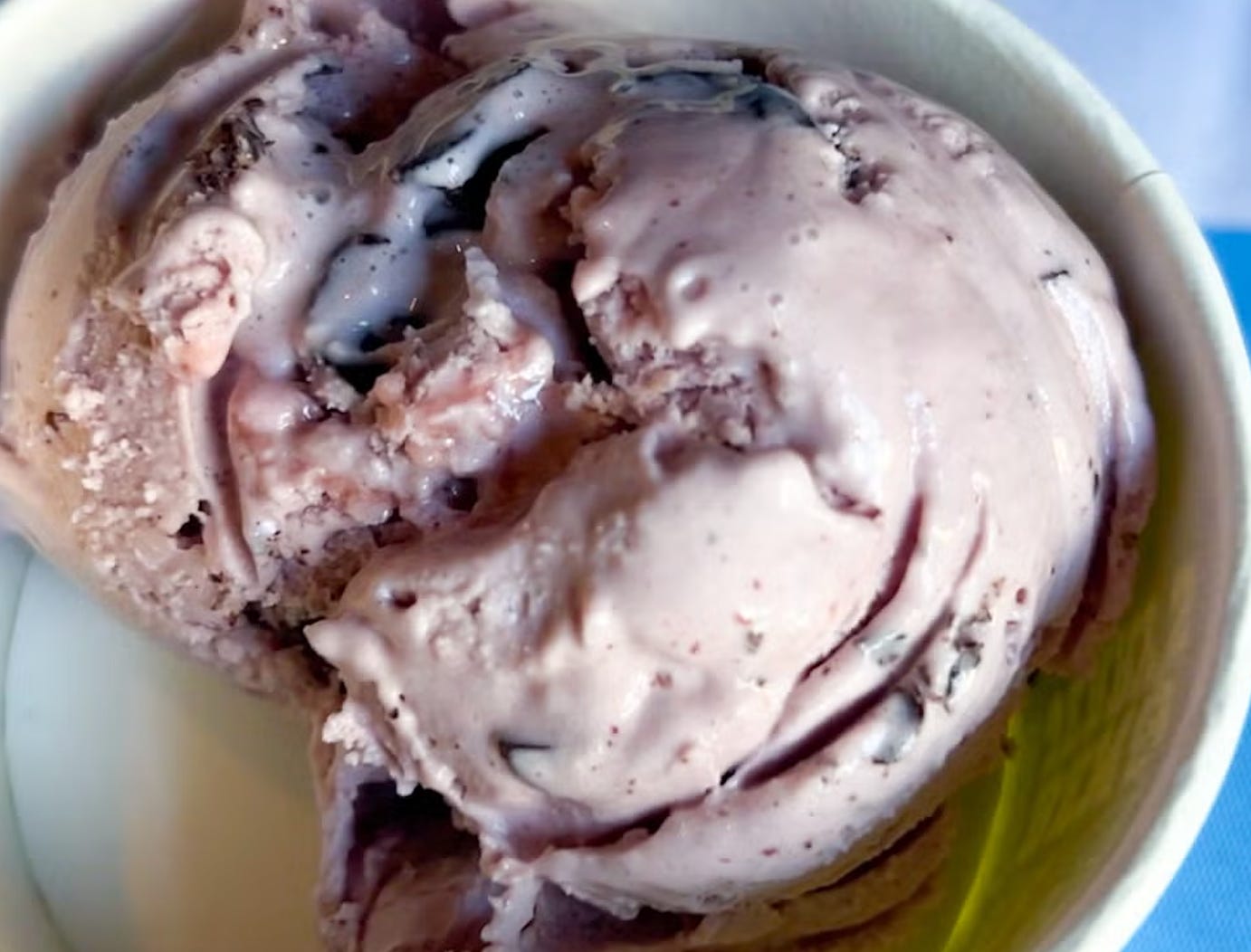
Meanwhile, Ben & Jerry’s partnered with Black Voters Matter and Community Change, among others, on a new flavor that promotes voting against authoritarianism. Razz Up! (Photo: Delish)
Big news! My family and I are working to establish the Arden Redwood Preserve, named for the magical place in “As You Like It.” Soon, we’ll be working with a local land trust to responsibly manage the forest, protecting it from fires (and development) and preserving biodiversity. Some of these trees are a thousand years old! The long game is some incarnation of communal living, with solar power and gray water, fruit trees and a garden — maybe some goats. In Shakespeare’s woods, life is simpler and richer. That’s what we’re going for.
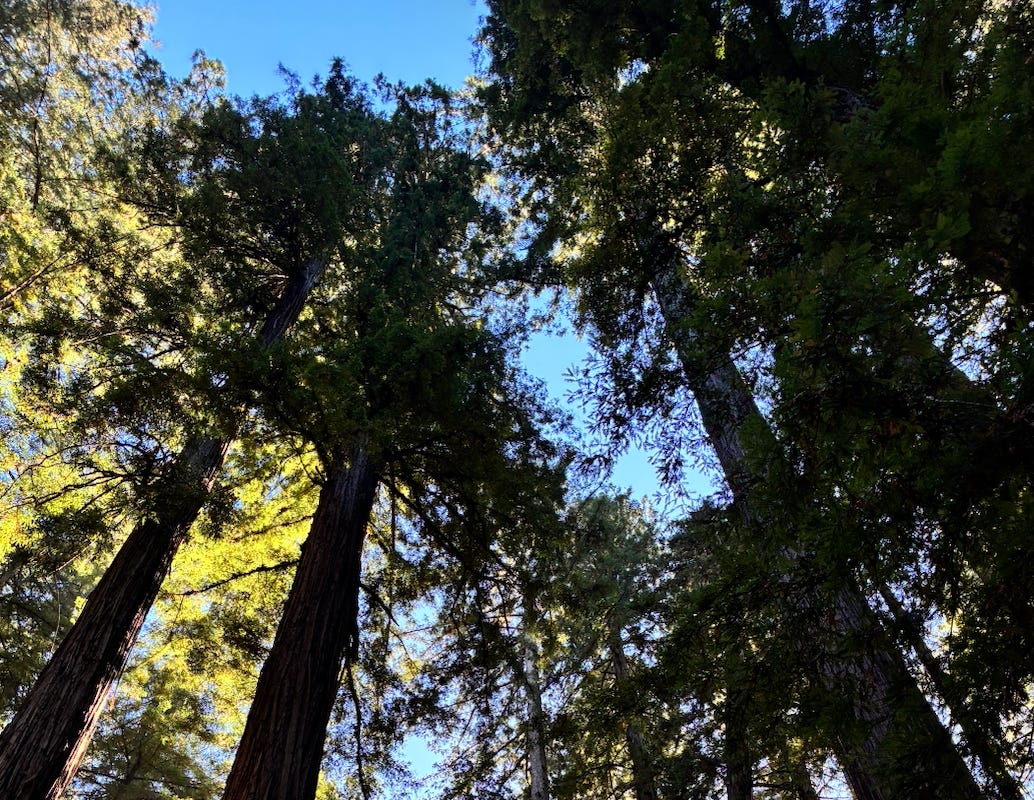
New research from UC Davis hits home to me, now that I’m living part-time in a California redwood preserve: Prescribed burns are the best way to protect these big trees from fire. This photo is from the Armstrong Redwoods State Natural Reserve, which contains paths I’ve walked since I was just learning how. Have you been to this magical place? Highly recommended.
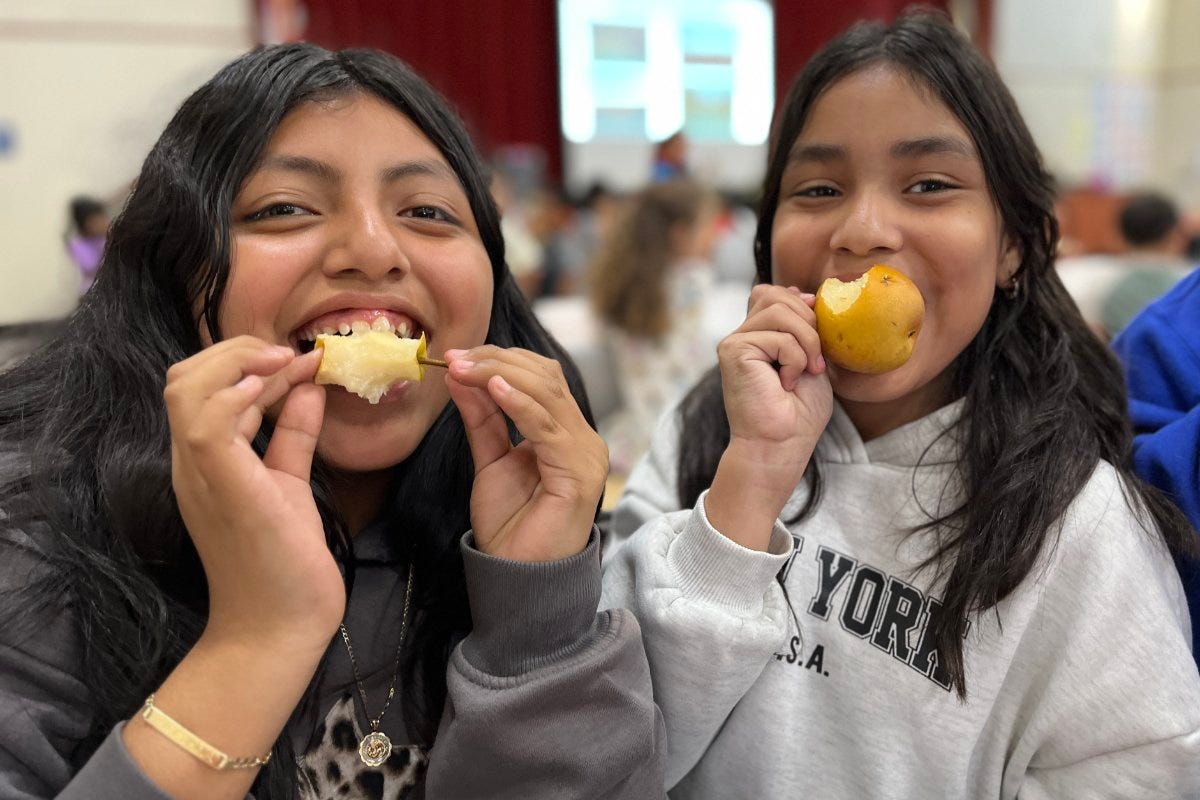
More positivity from the field: Conscious Kitchen links 100 California school districts to 50 local farms. Now, with proof of concept recently endorsed by the Food Planet Prize, they plan to feed six million students — and transform school food programs nationwide. (Photo: Civil Eats)
Dirt can protect against everything from anxiety to asthma; here are seven great tips to dig in, from how to repot cooking herbs to joining a community garden.
Once plagued by drought and famine, farms are now thriving in the African Sahel, in part because of the revival of traditional water harvesting methods.
A new Yale study shows forever chemicals could be scrubbed from soils within a decade — if these three, inexpensive interventions are combined.
Let’s rethink TP! Every day, over a million trees are cut down to make toilet paper. Who Gives A Crap offers more sustainable alternatives — like bamboo sourced from cooperative farms and 100% recycled paper — while donating 50% of profits to clean water and sanitation non-profits around the world. I love this special-edition national parks edition. No, this isn’t sponsored and yes, it’s soft.
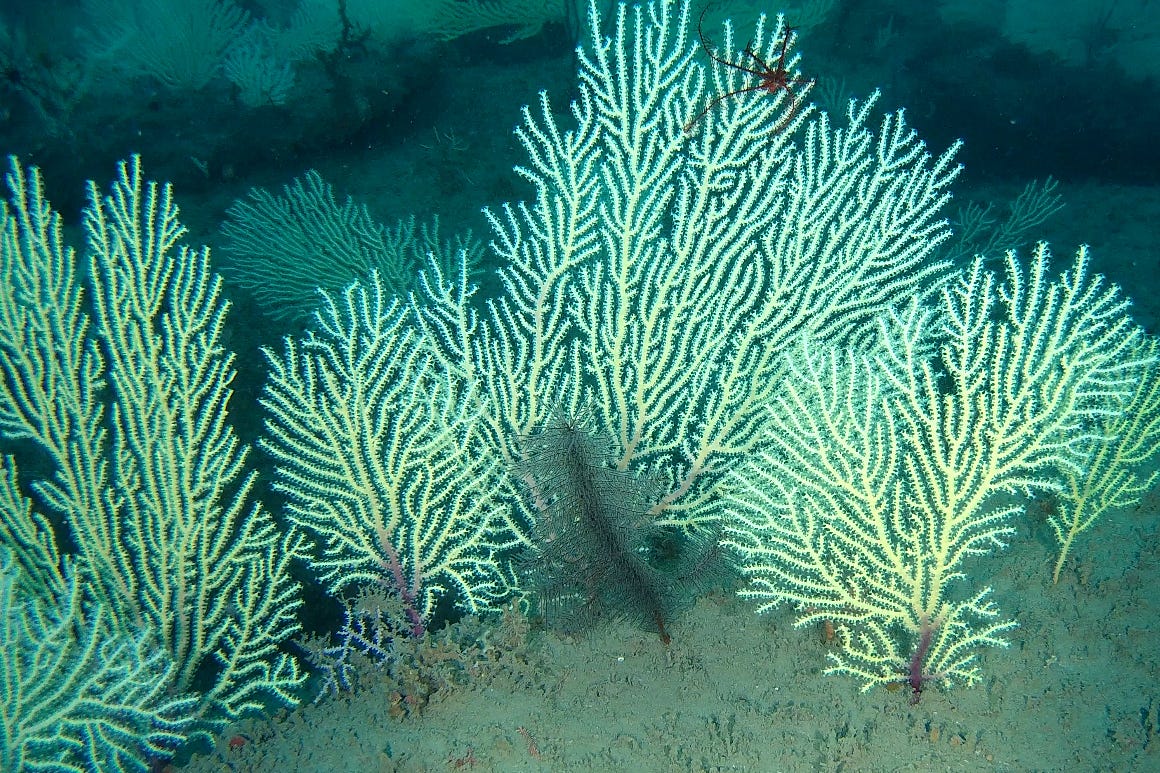
Yes, wild spaces are threatened — but conservation progress is still happening.
Mass bleaching and overfishing have decimated coral, but a recent discovery on West Africa’s Benin coast may unlock new information about reef resilience. (Photo: Inside Climate News) Also, researchers found fish are adapting quickly to warmer waters and changing oxygen levels by simply diving deeper. And the UK just set aside roughly $80m to protect over 350 threatened plants, animals, and fungi — the largest conservation investment to date in Great Britain.
More rebounding and rewilding! Hawaii’s Ae’o waterbird was recently reclassified as threatened (versus the more critical endangered); after a dam removal, the alewife — an ecosystem sustainer known by the Passamaquoddy tribe as “the fish that feeds all” — is returning to Maine; and a new satellite tracks animal behavior in Africa to protect cheetahs, rhinos, and elephants from poachers.
In Georgia, the Okefenokee swamp was just named a World Heritage Site, culmination of a lengthy litigation process to protect it from mining. In Florida, 15,000 new milkweed plants are part of a national effort to help monarchs find their way home. And when the Trump administration moved to gut the Endangered Species Act, environmental groups and tribes sued to stop him.

Talk about bucking trends. In Georgia, a 25-year-old recent communications graduate bought his home-town newspaper rather than watching the 180-year-old institution fold. And, following decades of papal warnings about climate change, Catholic sisters lead on a wide range of environmental issues (while U.S. bishops still avoid taking action).
Have you heard about Concerted? I just discovered the platform from the extraordinary band Big Thief, touring now. You can cash in volunteer hours for concert tickets — genius!
Speaking of, when it comes to change, there are three levers to pull: individual, corporate, and legislative (I’ve worked on all of them). Yet people who believe in one often discount the other, i.e. “I vote, so why should I stop using plastic bags?” A new study of nearly 3,000 people over four years proves that to achieve systemic goals, individual and collective action can (and should) be pursued simultaneously. Let’s do this!
P.S. I’m obsessed with the daily segments from the Woof News Network channel, which feature adoptable dogs doing truly adorable things. With pups this cute, there’s no excuse not to adopt.

This week, I interviewed Nayantara Roy, author of Sisters of a Halved Heart, who joined us at Silent Book Club. If you’re local (or just like to travel), sign up for the next meeting on September 1st at a location TBD — since Juneshine Santa Monica is closing :-( we’re looking for a new spot. Let me know if you have any ideas!
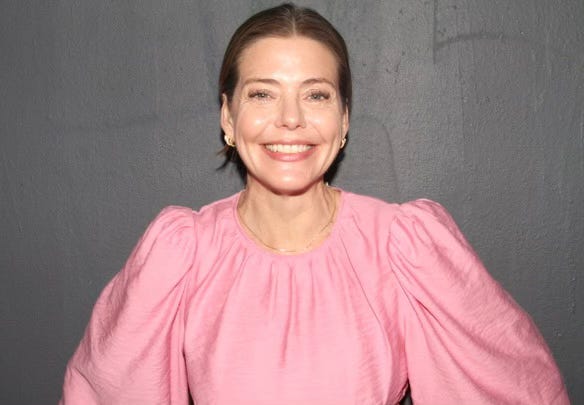
WHO’S THIS? Rachel Lincoln Sarnoff is a writer and climate communicator who hosts “Ask an Author” on Instagram, publishes the Good Newsletter on Substack, and leads the Santa Monica Silent Book Club IRL.
Comments
Nothing yet. Say the first thing.
Sign in to join the conversation.