
May has been a lot. (I say that every month, and yet.) Between wrapping up the DLC pilot (eek!), hopping across the UK …again, and trying to keep up with all of the new research (it has been a busy month for publications!), I have many things to say and a lot of links. Let’s do this.
This month I came across a fantastic visualization of something we’ve been talking about for years - that the most disruptive/toxic people online (ahem, in games) are a strong but silent minority that significantly and detrimentally impact the rest of the community. I couldn’t summarize it better than my colleague Jan Van Bavel, so I will just reiterate what he said when he shared this resource:
This website visualizes social media as a room with 100 people in it
3 people are producing most of the toxic content
Most people assume 43 are producing toxic content, because these 3 are hyperactive
Engagement-based ranking amplifies the 3 provocative, high-reaction users.
The other 97 quiet voices disappear or self-censor.
And the loud minority thinks it's the majority: the more someone posts, the more they believe the public agrees with them!
In the context of gaming communities, this loud minority can have catastrophic impacts on engagement and the bottom line. Cue my 2024 GDC talk.
The 2026 GDC talks have been added to the vault (and not just the ones on the advocacy track) which means it is time to catch up on all the talks I wasn’t able to see in real time. At the top of the list? Fleur Marty of Gearbox gave a GDC 2026 talk on the real cost of enabling toxic high-performers in game development studios, what she calls “brilliant jerks.” The talk covers how to recognize the warning signs, why tolerating this behavior damages culture and outcomes, and what to actually do about it.
Also, ICYMI I’m not going to miss another opportunity to plug my 2026 GDC talk. Yes it is about the ROI on T&S but also it features the official first public announcement of the DLC Leadership Program. This talk is also perhaps my greatest feat in crafting pretty slides.
Charity firm OKRE and UK trade body Ukie have released a new report calling for the industry, government, and academia to close a significant gap in understanding how games shape everyday life. The framework maps 50+ sub-sectors, traces games-related activities through to social and economic outcomes, and lays groundwork for a full econometric model. If you work in policy or research advocacy, this is a framework worth knowing. You can find the report here.
Professor Linda Kaye has a new book coming called Building a Career in Cyberpsychology, which will be covering consumer, health, forensic/investigative, and organizational cyberpsychology as career pathways. Worth flagging for students and early-career folks in this space. You can learn more here.
A new preprint from researchers at the University of Edinburgh and NYU introduces CONDUCTIFY, a pipeline for analyzing Codes of Conduct (CoCs) across online multiplayer games at scale. Applied to Steam’s 9,586 multiplayer titles, they found CoCs available for just 350… meaning 96% of multiplayer games operate without one, despite growing regulatory pressure from the EU Digital Services Act and UK Online Safety Act.
Among the games that do have CoCs, harassment and hate speech are consistently addressed, but protections for children are often vague or absent (with only 24% of games even mentioning child-related content) and those that do tend to frame kids as content-exposure risks rather than social ones. The paper has real implications for how we think about safety infrastructure, not just what games say they prohibit, but how specific, enforceable, and audience-aware those policies actually are. You can read the article here.
New research examines the relationship between performance-contingent self-esteem and toxic communication in adolescent video game play, finding, unsurprisingly but importantly, that it’s a feedback loop. If kids tie their self-worth to how they perform, toxic environments hit harder, and toxic behavior becomes more likely.
This piece reminds me a lot of the one that came last year from Activision + CalTech looking at the contagion loop around toxicity in games.
A new research piece makes the case for a more interdisciplinary vocabulary in games research arguing that the field needs shared theoretical language if it's going to build genuine cross-disciplinary knowledge rather than just adjacent silos talking past each other. I mean, PREACH. You can read it here.
Well Played Vol. 15 No. 1 is out, and the theme is "Well Read Games", which really means a stellar collection essays doing close reading of games as texts, from Final Fantasy VII to Stardew Valley (and everything in between, yes even analog games). If you love the intersection of game criticism and literary theory (and if you're reading this, you probably do?), this one's for you. You can check it out here (open access!)
A new preprint from researchers at the MRC Cognition and Brain Sciences Unit, University of Cambridge, challenges one of the most popular framings in the digital wellbeing space: that social media use is neurobiologically analogous to substance addiction.
Across two preregistered experiments testing three neurocognitive signatures of addiction ( elevated wanting, wanting-liking dissociation, and devaluation insensitivity) participants showed none of the patterns you’d expect if TikTok were rewiring the brain the way cocaine does. The wanting-liking dissociation they did observe was driven by lower liking of TikTok (not higher wanting), which is essentially the inverse of what incentive sensitization theory would predict. Self-reported addiction scores were unrelated to any neurocognitive marker. The paper doesn’t argue that problematic social media use isn’t real or worth addressing but argues that the addiction lens may be misdirecting both our research and our interventions. You can read the piece here.
It is worth noting that the same arguments have been made about games for as long as I can literally remember… an argument I find so tedious and exacerbating that I made my acting debut to try and explain it

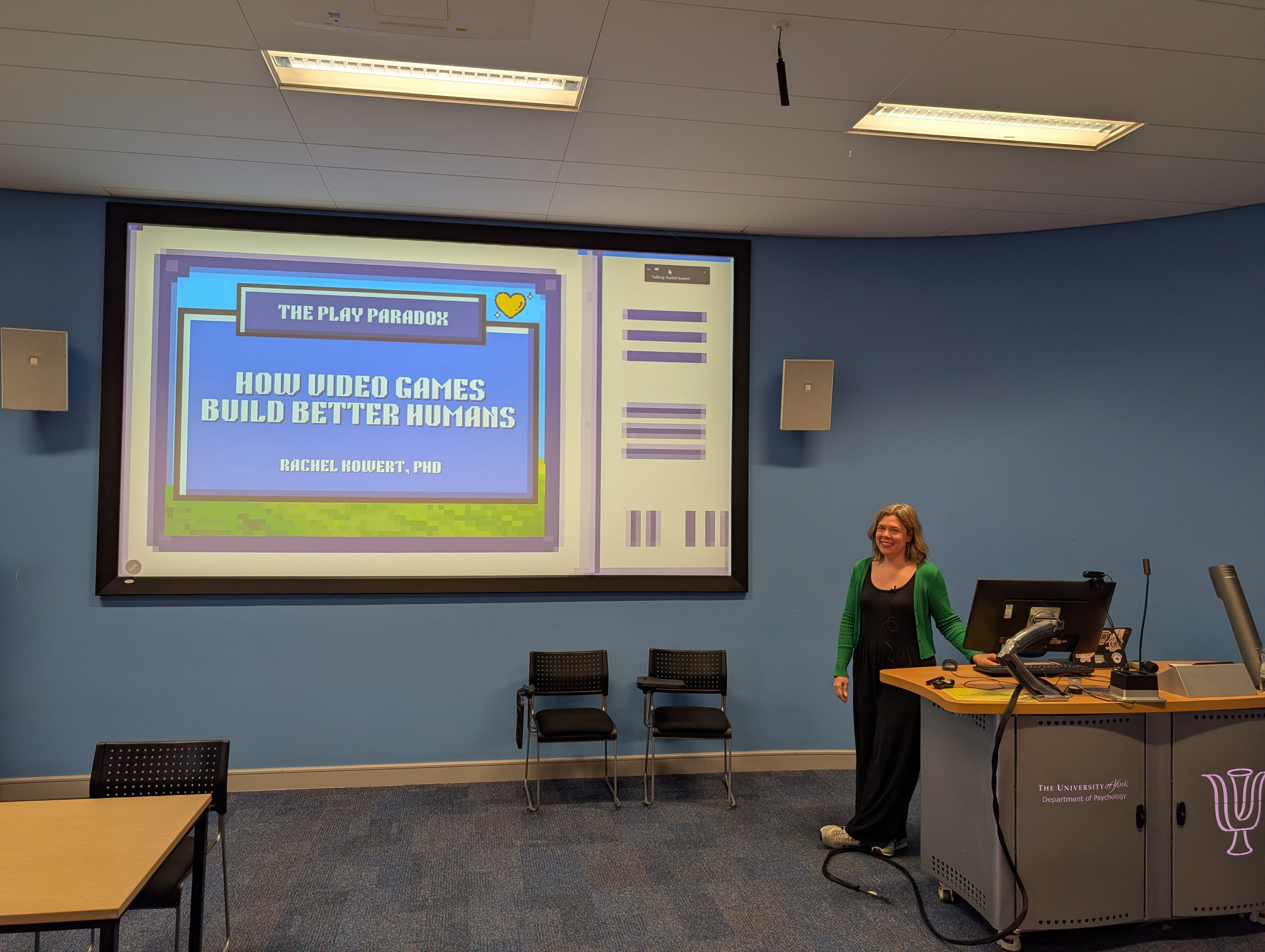
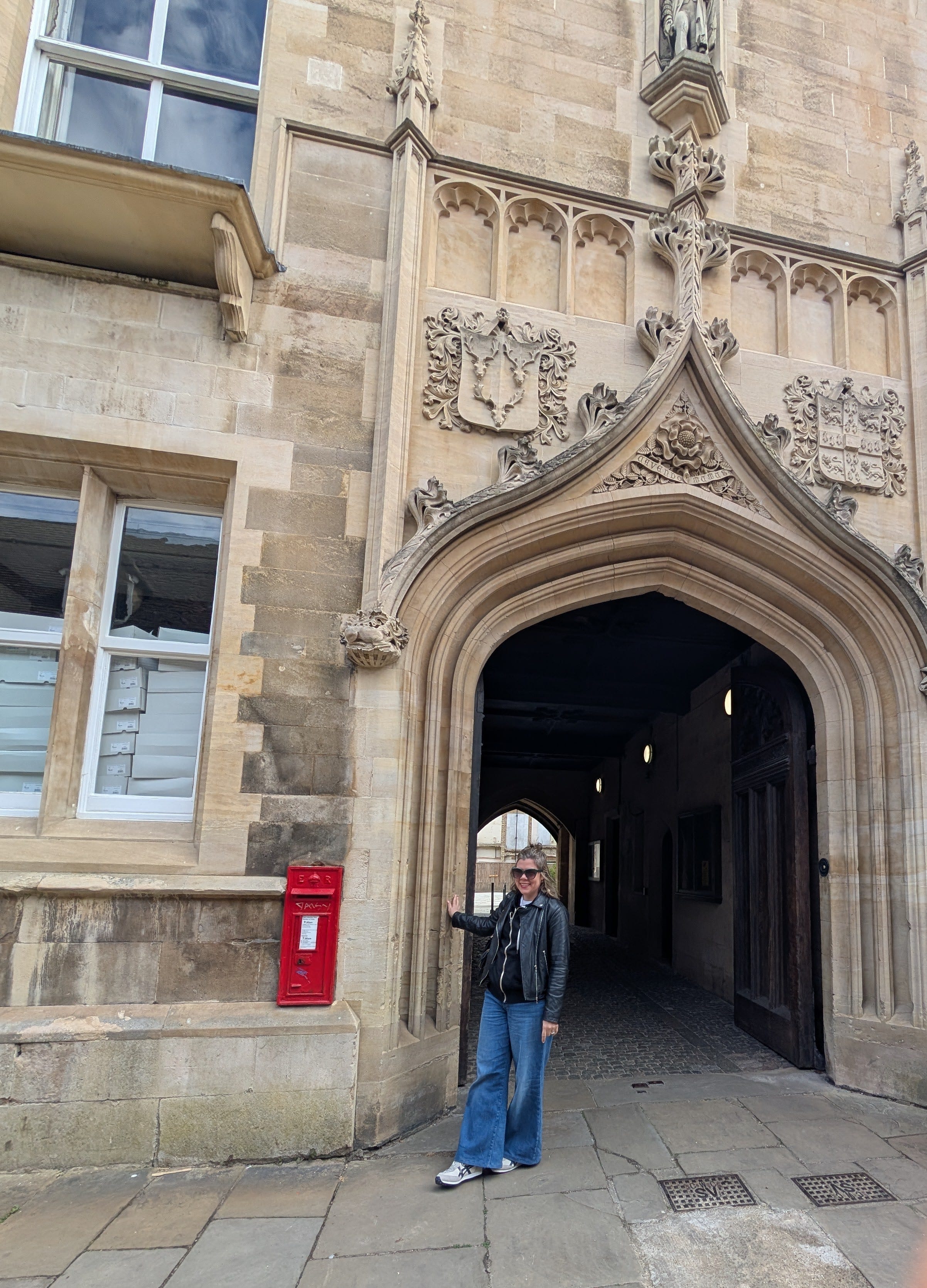
May meant transatlantic travel (any excuse to go back to the UK) which was wonderful both personally and professionally. I was able to reunite with beloved friends and colleagues, speak at two of the world’s great universities, and spend a lot of time in transit thinking about moral panic (I mean, that last part is my everyday anyway)
Both talks (Cambridge and York) were centered on pushing back against the doom narrative: the case that games make us happier, smarter, kinder, and more legendary and the evidence to back it up. It’s a message I’ve been building toward for a while, and getting to make it in those rooms felt significant.
(If moral panic in games discourse is a topic that’s been on your radar too, this YouTube video is a solid primer worth bookmarking... I’ve been returning to it a lot as I work through these ideas).
In May, I was finally able to launch something I’ve been working towards for literal years… the DLC Leadership Program. The program launched May 4th with 84 participants across 20 countries and 6 continents. You can check out our Pre-Assessment Report capturing who these leaders are, what they know, what they’re struggling with, and what they need…. the answers to which are somehow equally surprising and not.
The topline takeaway: The leaders in our pilot cohort collectively manage communities of more than 200,000 people. That’s the incredible and very real reach of just the ‘pilot’ of this program. Training one leader is never just about one leader.
The DLC Leadership Program was not built because there was an obvious blueprint to follow. It was built because there wasn’t one. Digital leadership shapes the safety, culture, and wellbeing of millions of people online every day without any formal degree programs, recognized industry standards, or established credentialing pathways. The leaders doing this work have largely been left to figure it out alone… and the DLC is changing that (SO EXCITING, RIIGHT??!).
Also, we’re now beginning to develop the second round of curriculum and actively looking for organizational partners who want to be part of building it, whether that means co-producing curriculum, adapting existing training, or something we haven’t thought of yet. If any of that catches your eye, reach out.
Last month we launched the new Psychgeist Podcast, “I have thoughts on…”. Hosted by the brilliant Christine Tomlinson, where she hosts a panel of guests as they muse on …well, things they have thoughts on. The inaugural episode was about “History in Games” and this month we have a brand new episodes looking at “Fandom”. You can check it out anywhere you listen to podcasts or, if you prefer the video form, below!
ICYMI, there are a few open calls for papers in the Psychgeist universe at the moment:
THESE BOTH CLOSE MAY 31. ….and for the new series “Games And”

What I’m Reading: We’ve Never Been Better at Child Safety (Everything in Moderation) I LOVED this month’s Everything in Moderation newsletter that highlighted two recent reports showing genuine, measurable progress in child safety online. It’s a useful corrective to doom-scrolling, while still making clear how much work remains. Recommended if you work anywhere near trust and safety. You can read it here.
What I’m Watching: Airplane movies… a lot of them. With all my travel this month I actually had a chance to catch up on some movies!
Wuthering Heights - 9/10 loved it. One point lost because I found it too incredibly frustrating that she wouldn’t just be with Heathcliff.
Marty Supreme - 5/10. It was only okay for me. Some interesting highlights/scenes but I did pause it and try to watch something else twice because I was bored.
Lady Bird - 10/10. Late to this party. Wonderful coming of age story…and gosh, don’t all teenage girls know that one boy from their teenage years that was just like Timothee Chalamet’s character in that movie.
What I wish I was Playing: Mixtape (Beethoven & Dinosaur). Well, I’m not actually playing it but really really really really really really want to be.
Psychgeist, my YouTube channel dedicated to the science of digital games. Subscribing is FREE and is the easiest way to support my work by increasing engagement and making the algorithm happy.
Socials: BlueSky, for those who have migrated over, LinkedIn, if that is more your style, I am also on TikTok (apparently)
Personal Website, for more about my research and upcoming events. Which I recently updated! Take a look if you haven’t been there in a while
Did you know I published a series of children’s books? Tales from Cloud Canyon was successfully kickstarted (as Pragmatic Princess) in 2019, raising $25,000 in 30 days. I have since expanded the universe, added new stories and characters, and made them all free to download as e-books and audio books. You can read/listen/learn about them all here.
No posts
Comments
Nothing yet. Say the first thing.
Sign in to join the conversation.