
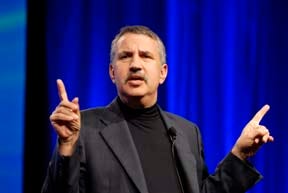
Thomas Friedman’s latest column is frustrating because he sees much of the problem and then retreats from the implications of what he has seen.
He understands, correctly, that American Jews are not merely asking politicians to protect our synagogues. We are not simply a religious minority requesting better security cameras and stronger hate crime laws. Jews are a people. We have a language, a history, a civilization, a covenant, and a national story. Friedman recognizes that American Jewish voters are looking for acknowledgment of “the right of Jews to self determination, like any other people,” and that Israel remains bound up with Jewish identity even among Jews who are sharply critical of its government.
That is an important truth.
But Friedman then reduces that truth to a political formula.
His advice to Abdul El Sayed is straightforward. Keep saying that Israelis and Palestinians deserve equal rights to peace, dignity, and self determination. Support whatever agreement the two peoples reach. Then return to Michigan and, as Friedman puts it, “leave the Mideast alone.”
It sounds reasonable. It sounds moderate. It sounds balanced.
That is precisely what worries me.
The crisis facing American Jews is not that our politicians have failed to locate the proper symmetrical sentence. Jewish voters do not simply need to hear the correct nouns arranged in the correct order. Peace for Israelis and Palestinians. Dignity for Israelis and Palestinians. Self determination for Israelis and Palestinians.
The question is considerably more fundamental.
Do you believe that the Jewish people possess an inherent right to sovereignty in their ancestral homeland?
Not because Palestinians also deserve sovereignty.
Not because the United Nations authorized it.
Not because the United States finds Israel useful.
Not because the Holocaust produced a humanitarian obligation toward surviving Jews.
Because the Jews are a people.
That claim should not require an asterisk.
Before there was Zionism, there was Zion.
Before Herzl, there was Abraham.
Before the Balfour Declaration, there was Lech lecha.
Before the United Nations considered partition, Jews had spent centuries turning toward Jerusalem in prayer. We asked God to gather the exiles. We mourned Jerusalem beneath the wedding canopy. We mentioned Zion after eating bread. We ended the Seder and Yom Kippur with the same impossible hope repeated generation after generation: next year in Jerusalem.
This does not settle the borders of the modern State of Israel.
It does not answer every question about occupation, settlements, war, Palestinian rights, or the moral responsibilities of Jewish power.
It does mean that the Jewish relationship to the Land of Israel is not simply one half of an equation constructed in a graduate seminar on nationalism.
Palestinian suffering is real. Palestinian dignity matters. Palestinian children are created b’tzelem Elohim no less than Jewish children. Jewish ethics does not permit us to look at another people’s suffering and become indifferent.
But equal human dignity does not require identical historical narratives.
Nor should the recognition of Palestinian humanity require Jews to pretend that the conflict has principally been about Palestinians seeking a state that Israel refuses to give them.
That is where Friedman’s argument becomes far too easy.
He treats two states for two peoples as though it were not merely one possible political solution, but the moral conclusion toward which all decent people inevitably arrive. He says alternatives lead to permanent war and insists that the answer is essentially uncomplicated.
But what if the Palestinian political problem has never simply been the absence of a Palestinian state?
What if powerful currents within Palestinian nationalism have objected not merely to the borders of Israel, but to Israel itself?
That is the question much of the progressive left cannot bring itself to ask.
It is easier to imagine a conflict between an occupying power and an oppressed population because that story is morally familiar. There is a villain, a victim, and therefore an obvious solution. End the oppression and peace follows.
History has been less cooperative.
Friedman himself reminds us of one of the most terrible examples. In March 2002, Arab leaders gathered in Beirut around what became the Arab Peace Initiative. The proposal envisioned normalization with Israel in exchange for territorial withdrawal and a pathway toward peace. Hamas answered by sending a suicide bomber into a Passover Seder in Netanya. Thirty people were murdered and more than 140 wounded.
That episode should complicate the story considerably.
The murderer did not enter that hotel because no one had yet invented the phrase “two states for two peoples.”
There have been Palestinian leaders, movements, and intellectual currents for whom partition itself has been the injustice because partition leaves a Jewish state standing.
This does not describe every Palestinian. It should not be used to deny Palestinian national aspirations. But neither should it be politely ignored because it disrupts an appealing theory of the conflict.
There is a difference between wanting a Palestinian state beside Israel and wanting Palestine in place of Israel.
Much of the progressive conversation intentionally blurs that distinction.
We hear endlessly about Palestinian resistance, rarely about Palestinian rejectionism. We hear about Israeli power, rarely about the ideological purposes toward which Palestinian power has sometimes been directed. We hear historical context offered with extraordinary generosity when Jews are murdered, and far less context when Israel responds.
October 7 exposed the moral bankruptcy of that asymmetry.
Before Israel had buried its dead, people were explaining the killers.
Before families knew whether their children were dead or kidnapped, activists were supplying context.
Before the full dimensions of the massacre were understood, some of the same people who have built an entire political vocabulary around trauma were explaining why Jewish trauma could not be considered apart from politics.
That was clarifying.
Not because criticism of Israel suddenly became illegitimate.
Because Jews discovered that for parts of the progressive movement, Jewish suffering is apparently one of the few forms of suffering that requires an immediate footnote.
Friedman himself rebukes those progressives who condemn Israel while behaving as though Hamas possesses no agency. He calls that tendency shameful.
He is right.
But the problem is larger.
There is now a segment of progressive politics in which Zionism itself has become the original sin. Within that framework, no Israeli border is sufficiently narrow because the problem is not really the border. No Israeli government is sufficiently liberal because the problem is not really Netanyahu. No Israeli concession resolves the conflict because the problem is the existence of Jewish sovereignty.
And yet Friedman wants Jewish voters to be satisfied when politicians repeat a sentence about equal dignity.
I am not.
Friedman notes that El Sayed has campaigned with Hasan Piker, whom Friedman quotes saying that “Hamas is a thousand times better” than Israel. Friedman recognizes why Jews might wonder what such associations reveal.
But this deserves more than a passing acknowledgment.
A politician’s moral universe is revealed not simply by what he says in an interview.
It is revealed by whom he embraces.
Whom he challenges.
Whom he excuses.
Whom he is willing to disappoint.
Almost every politician in America knows how to condemn antisemitism in the abstract. The real test is whether they recognize it when it comes from people whose votes they want.
Will progressive politicians condemn those who romanticize Hamas?
Will they reject the claim that Zionism is inherently racist?
Will they say plainly that Jewish peoplehood is indigenous to the Land of Israel?
Will they defend the legitimacy of Jewish sovereignty in a room where doing so will cost them applause?
Those questions tell me more than another carefully balanced statement about peace and dignity.
Then Friedman turns to AIPAC and J Street, and here I think his argument becomes especially revealing.
He calls J Street the “true pro Israel and pro American lobby” and argues that AIPAC chose Netanyahu’s interests over American values. He later portrays AIPAC essentially as a Netanyahu front and presents support for two states as the obvious corrective.
The word “true” is doing an astonishing amount of work.
J Street is entitled to advocate for its vision of Israel’s future. American Jews are entitled to support it.
But J Street does not possess the deed to authentic Zionism.
Nor does its willingness to criticize Israel establish its moral seriousness.
There has long been a temptation within American Jewish liberalism to mistake criticism of Israel for sophistication. The more publicly one chastises Israeli governments, the more courageous one appears. The more distance one places between oneself and the Israeli political consensus, the more comfortably one can inhabit elite American political spaces.
Sometimes criticizing Israel is courageous.
Sometimes criticizing Israel is simply the cost of admission.
And sometimes the more difficult act is telling one’s progressive allies that they are wrong about the Jews.
J Street has too often embraced the posture that it loves Israel enough to save Israel from itself. There is something profoundly presumptuous about American Jews telling Israelis which security risks they ought to take when American Jews will never bear the consequences if those risks fail.
If an experiment in territorial withdrawal succeeds, we in America can celebrate our wisdom.
If it fails, Israelis bury their children.
That reality should produce humility.
The residents of Sderot deserve a voice in deciding what peace requires.
The families shattered on October 7 deserve a voice.
The parents whose children defend Israel’s borders deserve a voice.
Peace is a Jewish value.
Two states is a political proposal.
Those are not the same sentence.
The Psalmist commands, Bakesh shalom v’rodfehu. Seek peace and pursue it.
Our tradition also teaches, Ein somkhin al hanes. We do not rely upon miracles.
Judaism demands both hope and sobriety.
Perhaps the most revealing line in Friedman’s column is his insistence that “this is not complicated.”
Of course it is complicated.
Two peoples claiming the same land is complicated.
A Palestinian society containing people who genuinely seek independence alongside movements committed to ending Jewish sovereignty is complicated.
Jewish power is complicated.
Palestinian suffering is complicated.
Security is complicated.
Moral responsibility is complicated.
The conflict between memory and hope is complicated.
Judaism is not frightened by complexity.
Open a page of Talmud.
Our civilization was built by people who understood that moral seriousness often begins precisely where slogans stop working.
Friedman would like Abdul El Sayed to say the right sentence and then leave the Mideast alone.
But Jews cannot leave Zion alone.
Jerusalem is not foreign policy in the Jewish imagination.
It is memory.
It is covenant.
It is prayer.
It is family.
And after two thousand years in which other peoples decided whether Jews would be protected, tolerated, expelled, converted, or killed, Jews should be exceedingly cautious about any politics that asks us to make Jewish sovereignty dependent upon the moral approval of others.
Hillel did not begin by asking what happens when we care only for ourselves.
He began with the prior question.
Im ein ani li, mi li?
If I am not for myself, who will be for me?
Only then did he ask, U’chshe’ani l’atzmi, mah ani? If I am only for myself, what am I?
American Jewish liberalism has spent generations teaching the second sentence.
October 7 reminded us why Hillel had the wisdom to say the first one first.
Comments
Nothing yet. Say the first thing.
Sign in to join the conversation.