
Hassan Saeed

Read time: 2 minutes
Before we start, did you know the Quran uses the word “جُبّ” instead of “بئر” to describe the place Yusuf’s brother threw him into?
The word “بئر” (pronounced: Bi’r) refers to a constructed well, lined and maintained for regular use.
The word “جُبّ” (pronounced: Jubb) refers to a deep, rough-sided, unlined well that is not maintained. Unlike a regular well, it has no stone or brick lining.
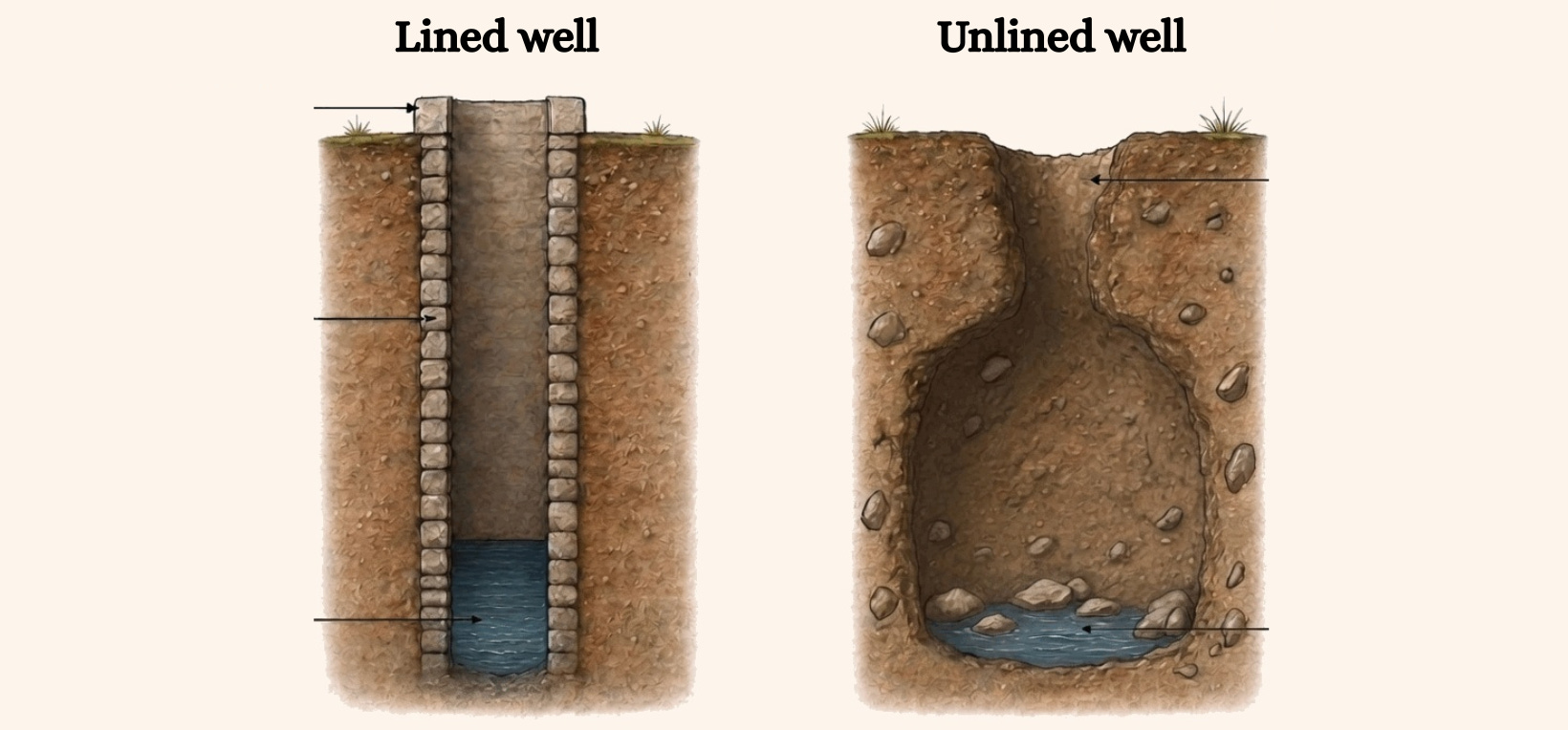
That single word choice is the kind of detail that disappears in translation.
Surah Yusuf is dense with these details. Most of us read past them on the way to the plot.
Here are three more worth stopping for.
When young Yusuf tells his father Yacoub (peace be upon them) about the dream of eleven stars, the sun, and the moon prostrating to him, he tells Yusuf not to share that with his brothers because they might devise a plot against him.
Read quickly, this is a single line of dialogue on the way to the real story.
Read slowly, and you become aware that sharing your actual successes (not dreams) with an audience made up mostly of strangers (not family) on social media is not a good idea.
When Yusuf interpreted the king’s dream, the king asked for him to be brought before him. Yusuf refused, telling the messenger to return to the king and to ask him about the case of the women who cut their hands.
Yusuf did not simply want out of prison. He wanted to leave it proven innocent.
After the investigation, the women admitted they knew nothing indecent about him, and the wife of the Chief Minister confessed that she was the one who had tried to seduce him.
Only then did the king call for him again, and by that point the king had already decided to employ him exclusively in his service, before even meeting him.
When Yusuf was finally brought before the king, he said: “Put me in charge of the store-houses of the land, for I am truly reliable and adept.”
What makes this worth pausing on is the absence of hedging. No false modesty or waiting to be discovered. Yusuf names his own competence plainly and asks for the position that matches it, in the same breath.
He was not chasing personal glory. He knew he was the one best placed to serve people from that position, and he said so.
~~~
It’s easy to think we know Surah Yusuf because we’ve heard it so many times.
But familiarity often hides depth. The more slowly you read, the more you realize the Quran is saying far more than what you already know.
That is the real reward of rereading. A story that keeps opening up the more attention you give it.
The difference between “جُبّ” and “بئر” : Watch on YouTube
🔴 Support Quran Mind Maps:
No posts
Comments
Nothing yet. Say the first thing.
Sign in to join the conversation.