

Quinten’s Quiet Quest
Artworks. Stories of Failure. Ideas for Success.
(8 min read)
(20th of June 2025)
Isn’t money the root of everything evil?
The stranger next to me turns to me with his hand held up, ready to give me a high-five. I hesitate for a moment, but his enthusiasm is too contagious. As if we had rehearsed it before, our hands clap loudly while we shout synchronously: “You have a Millionaire Mind!”
I look around me. In this gigantic conference hall of the Sheraton Brussels Airport Hotel, hundreds of people are doing exactly the same.
This is so weird. It almost feels like a cult.
Colourful lighting, a big stage at the front, and the word “Millionaire” echoing from the walls.
How did I end up here again?
I definitely don’t feel like I have a “Millionaire Mind”, but I will do my best to have an open mind.
There must be a reason why she recommended this…
…
(a few months earlier)
I’m sitting on a bench with Nadiyah (not her real name) in the Leuven city centre when she asks me:
“Do you want to go to a Millionaire’s Mind weekend? I’ll pay for you!”
I am surprised… Not because she wants to gift me something, but because of the word “Millionaire”.
How could she think that something like that would interest me? I don’t want to associate myself with these kinds of egoistic people…
“I think it could be valuable to you”, Nadiyah fills in the silence. “I went last year and I learned a lot about the psychology of money while also getting to know some new, inspiring people. I just thought that both of these things might be interesting for you and your project”
Maybe she has a point. But still, would it be worth it?
“Uhmmm…”
“Look, this is something I want to gift to you,” she says, indicating this is her last try. “The Talking to Strangers event that you organised was very valuable to me. I just want to give back."
…
“Okay fine, I’ll give it a try.”
For a long time, the fact that I went to this Millionaire Mind Intensive weekend was one of my best-kept secrets.
Because what would my friends and family think of me if they knew?
With the passing of Mr Time, however, I now feel more comfortable talking about it.
I could write pages and pages about this experience:
The good and the bad. The people. The dancing. The lessons.
The sadly easily avoidable absence of hummus.
But for the scope of this newsletter, I’ll only talk about one thing:
The Giving Jar.
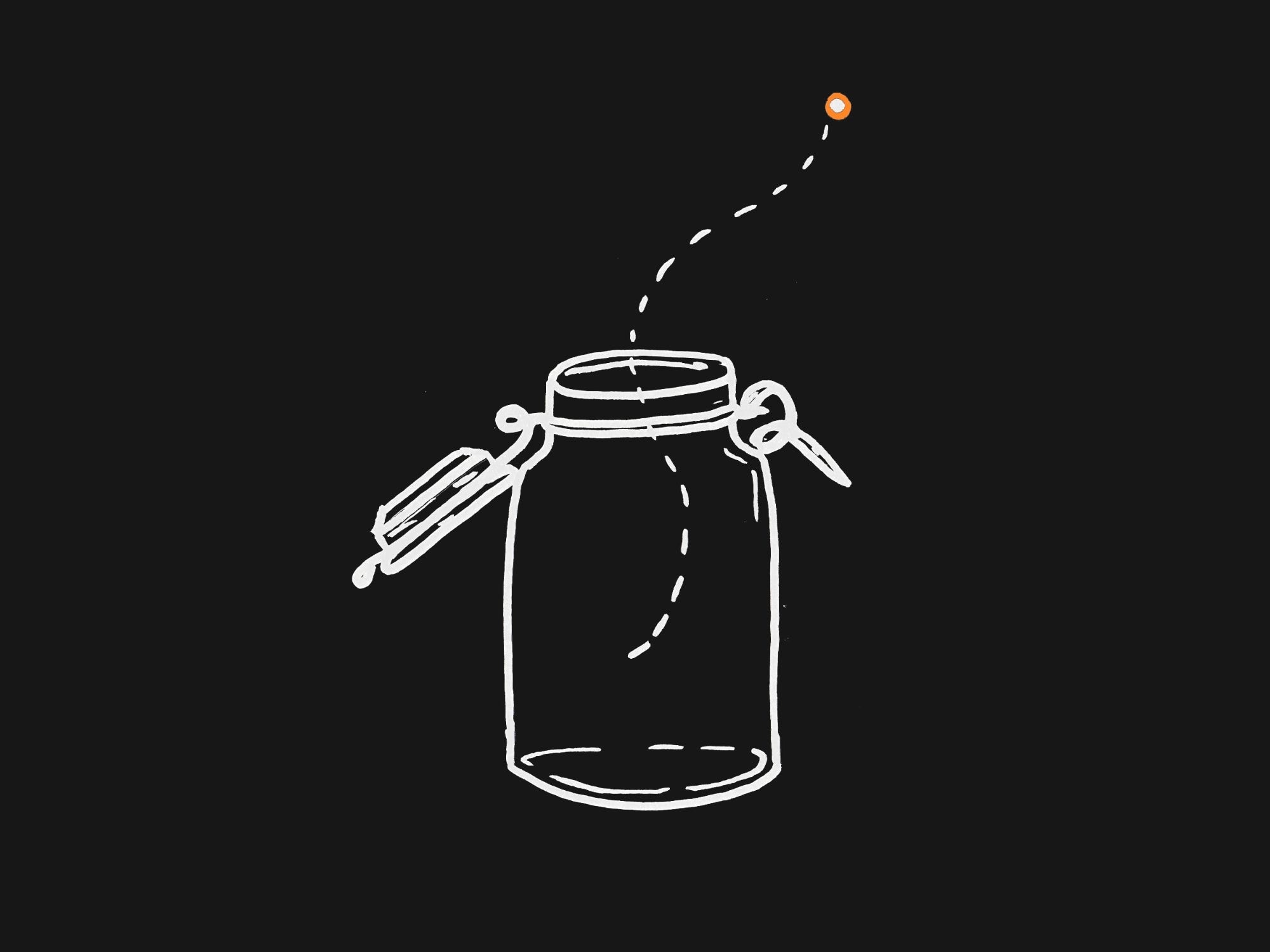
At a certain point during the weekend, they introduced the six jars. A simple money management system that divides income into six jars (accounts), each with a set percentage and specific purpose.
One of them is for Education (books, courses and coaching), another one for Necessities (rent, food and a jetski for transportation), but the most interesting one to me was the jar for Giving.
In other words, money for charity.
Wait a second…
Wasn’t money the root of all evil? Weren’t millionaires by default egoistic maniacs?
Those were my beliefs.
Hearing about a “Giving Jar” in the Millionaire Mind Course was to me like hearing about the need for rubber gloves at a lobster gathering. A bit ‘unnatural’.
But I was very happily surprised!
So that means that if I earn more money, I can also donate more money to organisations that are making the world a better place? Interesting…
This Giving Jar, as simple as it may sound, poked a hole into my balloon of beliefs about money and very rich people. Beliefs that unconsciously had even made me feel scared about earning money from my own projects.
If I ask for money → I’ll be seen as someone who has the dream of becoming rich → thus, I’ll be seen as an evil person who only cares about himself.
Oversimplified, but honestly, that was how I thought about money.
But what if earning and spending money could be a source of good?
When I came back home, I tried using the Giving Jar. Every time I earned some money, 5% of it would go into a separate bank account used for donations. However, an important question popped up:
To which charity should I donate? There are so many options…
I had donated a few times in my life to local charities like Rode Kruis, Natuurpunt, and De Warmste Week. But I couldn’t help but think: “Are these having a real, effective impact?”
Or could my small contributions have more impact elsewhere?
…
You have probably once had a young person with a T-shirt from WWF, a badge from UNICEF, or any other well-known global charity come up to you in public or ring your bell asking you for a donation.
A good friend of mine used to be one of them.
However, after doing it a few times, he decided to quit.
Why?
To be clear, he wasn’t volunteering for WWF or UNICEF; it was his paid student job at a local sales agency.
These sales agencies recruit young, ambitious people, give them a short sales training and send them out on the street to raise money for a charity.
Soon he realised that a big chunk of the raised money disappeared into the pockets of the sales agency and his own paycheck. Less than he liked actually ended up going to charity. It didn’t feel right to him anymore and he decided to quit.
When he told me this story, I wondered:
“How much of our donations actually ends up at the charity?”
And a step further down the line:
“How much of the money that arrives at the charity is actually used for impact in the real world?”
Of course, we can decide to donate directly to the charity to avoid paying the middlemen. Of course, it’s “nice” that these young people and sales agencies help charities raise money. I guess it’s better than nothing and I guess that some of the people raising money actually are volunteers.
But still, it doesn’t feel optimal.
Thinking back upon my previous donations, I became curious:
How can I donate money in a way that most, if not all, of my donated money ends up having a real, positive impact on our world?
Let’s find out.
SPOILER ALERT: I did find a few ways to donate effectively.
I’ll walk you through a few gems I found on my journey.
“Bring clean and safe water to every person on the planet.”
Although this is already an inspiring goal of charity: water, there is more to it under the surface (no pun intended).
This was the first charity I donated to from the moment I used the Giving Jar.
I love this charity because they don’t only work on the clean water problem, they are also innovating “giving”. They make giving a fun experience and make sure that a 100% of your donation actually goes to clean and safe water, not to the marketing budgets or salaries of the people working in the charity.
To be able to pull this off, they had to use a specific strategy. They asked a small group of philanthropists to cover the costs of the organisation, so that the donations from the general public can go 100% to the clean water projects.
I also highly recommend the very inspiring book called “Thirst” which is the story of Scott Harrison, a former nightclub promoter, who became the founder of charity: water.

After donating for a while to charity: water, I found out about the Effective Altruism movement. A movement that, among other things, cheers for the idea of Effective Giving.
How can I get the most evidence-based, positive impact for every dollar (or any other currency) I donate?
That’s the central question of Effective Giving.
The GiveWell website lists a few charities for which they found a strong evidence and high impact per dollar in their research. Here are two examples.
Against Malaria Foundation: They mass distribute insecticide-treated nets to prevent malaria in low and middle-income countries - it costs only about $6 to provide one net. The founder, Rob Mather, also has a super interesting story and, similarly to charity: water, a 100% of your donation goes directly to the distribution of nets.
Helen Keller Institute VAS program: Possibly the “cheapest” evidence-based way to save a life through donations. In their VAS program, the Helen Keller Institute reduces child mortality in low-income countries through mass distribution of Vitamin A supplementation. It costs only about $2 to provide a kid with Vitamin A supplements for one year.
Although I love GiveWell and I have donated quite some money to the causes they recommend, I noticed that their recommendation list is quite limited and focused on human health & wellbeing.
I wanted more options.
What about animal welfare? What about potential future existential risks, such as AI and pandemics?
That’s why I like Giving What We Can.
GWWC recommends the same charities as GiveWell + some others related to animal welfare and potential global catastrophic risks.
You might remember GWWC from a previous newsletter, in which I shared my realisation of being in the top 7% of richest people on earth.
GWWC didn’t only do that for me, it also made me realise that if I donate to highly effective charities, even small contributions can still have a big positive impact on the world.
After sharing with you my journey from believing that money is evil to experiencing that even small donations can have a big positive impact, I wonder: “What now?”
I recently talked about this topic of “impact” with a friend. His response:
“Wow, we think about such different things in life.”
He went on to tell me that his life is filled to the brim with his intense job, renovating a house and taking care of their young child. It made me realise that even within our already privileged society, I’m especially blessed with the time and energy to think about these topics.
I just feel like the bare minimum that I can do with this privilege is to keep giving, to keep experimenting and to keep sharing my journey.
If some questions arose while reading this newsletter, feel free to ask them!

Comments
Nothing yet. Say the first thing.
Sign in to join the conversation.