
Before I introduce you to this week’s essays, I must address a story which many of you will have followed, and which we have covered.
Former Cambridge professor Jason Arday was found dead at his home in south London on Friday. He was 41. Police have said the death is being treated as unexpected but not suspicious.
Last week we published Andrew Hammel’s essay on the furore around his academic appointment. And this week we published Rosalind Arden’s essay on Cambridge’s handling of Arday’s appointment hours before that news broke. The piece is still up, with an editor’s note. Its central argument is that the story is one of institutional failure: as Rosalind writes, “Cambridge has a case to answer for putting Arday in an untenable position.” We stand by that position. Our sympathies are now with Arday’s family.
How do we know a charity is what it says it is? How do we know whether something was written by a person or by ChatGPT? What underpins economic growth? Trust—in particular institutional trust—is our theme this week. And we start with a devastating investigation from a former editor at Human Rights Watch on the world of NGOs.
In July, Amnesty International published a briefing mapping a nationwide “anti-rights ecosystem”—a list that included the Edinburgh sexual-violence service J.K. Rowling founded in 2022. Rowling went to war, and within weeks Amnesty had withdrawn the document and apologised, explaining that it had been uploaded by “mistake.”
Danielle Haas does not believe it was a mistake at all. Her account of what actually happens inside the world’s most trusted NGOs—drawn from internal documents and the testimony of more than seventy current and former staff—is one of the most damning things we’ve published all year.

J.K. Rowling vs. Amnesty, Danielle Haas — Is this the reckoning that human-rights NGOs have long avoided?
Australia has had roughly zero productivity growth in a decade. Every bit of our economic growth has come from population growth and from people working harder. Chris Bradley of the McKinsey Global Institute has a blunt diagnosis for what has gone wrong.
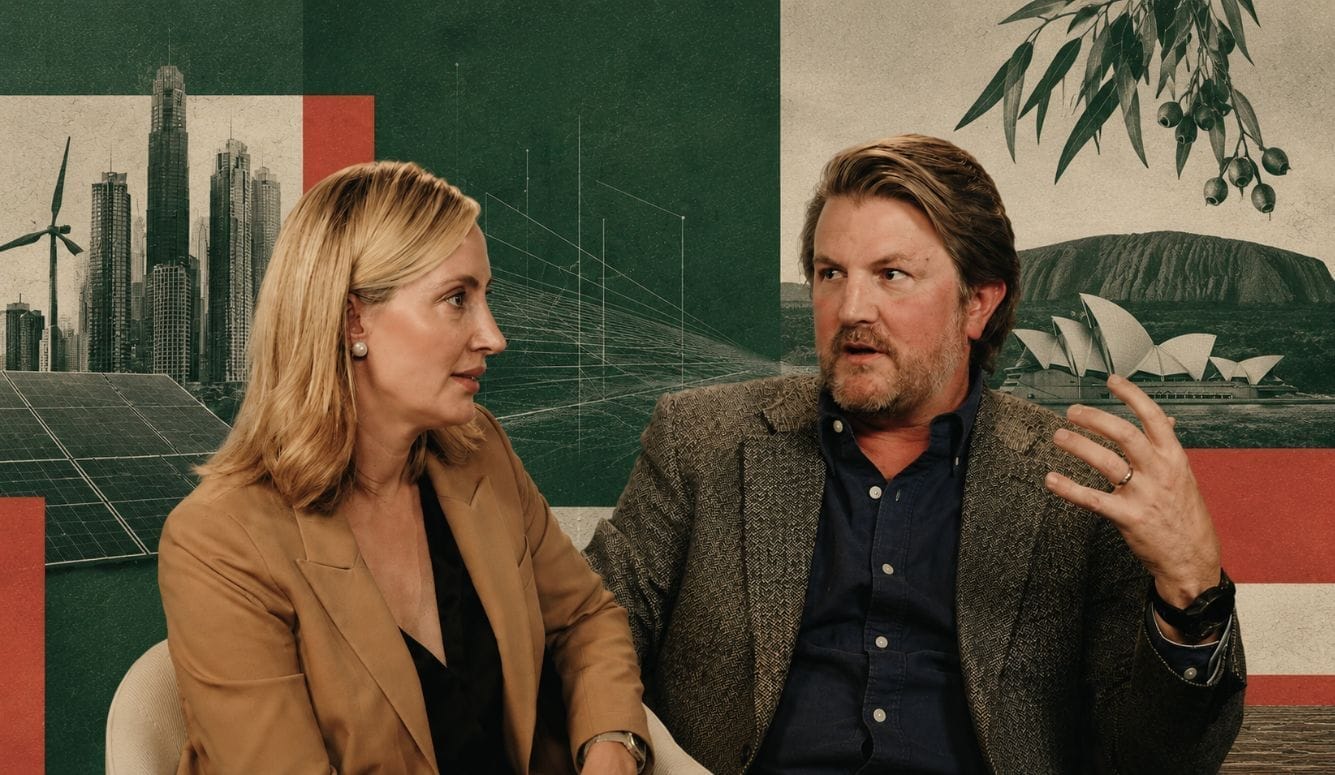
Why Australia Gave Up on Getting Richer, Claire Lehmann
McKinsey's Chris Bradley on the machine of economic progress and why Australia's has stalled.
Between Iraq and a Hard Place, Aurele Tobelem — Amid a regional scramble to shape the “day after,” Jordan appears to be the only country without a plan of its own.
Institutional Failures in the Garden of Great Intellects, Rosalind Arden — How Cambridge handled two scholars, and what the contrast reveals.
Together Alone, Craig Clifford — American individualism and the western, from Fred Zinnemann and John Ford to Larry McMurtry and Taylor Sheridan.
Cambridge and the Stigmatisation of Intelligence Research, Richard J. Haier — A long line of researchers punished for unwelcome findings about group differences.
A university rector opened the academic year with a speech that was likely written by ChatGPT, with three of its four quotations hallucinated. Maarten Boudry argues that what makes machine prose so persuasive is that it free-rides on our good faith; we are used to assuming that coherent prose means a human wrote it. But that world is gone now, and Boudry has a proposal for what we should do about it.

Show Us the Prompts, Maarten Boudry — How AI prose exploits the charity that makes reading possible.
That’s all from us this week. A reminder that Quillette is entirely funded by its readers, and we rely on your support to keep doing the work we do. The essays we publish can’t be found anywhere else. As always, if you think we’ve got something wrong, write to us at letters@quillette.com, or for membership queries, members@quillette.com.
Until next week,
—Claire
No posts
Comments
Nothing yet. Say the first thing.
Sign in to join the conversation.