
Alice Pung OAM is a proud Asian Australian, born to Teochew Chinese parents who fled from Cambodia as refugees. She is an award-winning writer based in Melbourne, and the bestselling author of the memoirs Unpolished Gem and Her Father’s Daughter, and the essay collection Close to Home, as well as the editor of the anthologies Growing Up Asian in Australia and My First Lesson. Alice was awarded an Order of Australia Medal for services to literature in 2022.
A qualified lawyer, Alice still works three days a week at the Fair Work Commission in the area of minimum wages and pay equity. Alice is also an ambassador for the Les Twentyman Foundation, the 100 Story Building and Room to Read; organisations that support the most marginalised and disadvantaged youth around Australia and the world to build literacy skills.
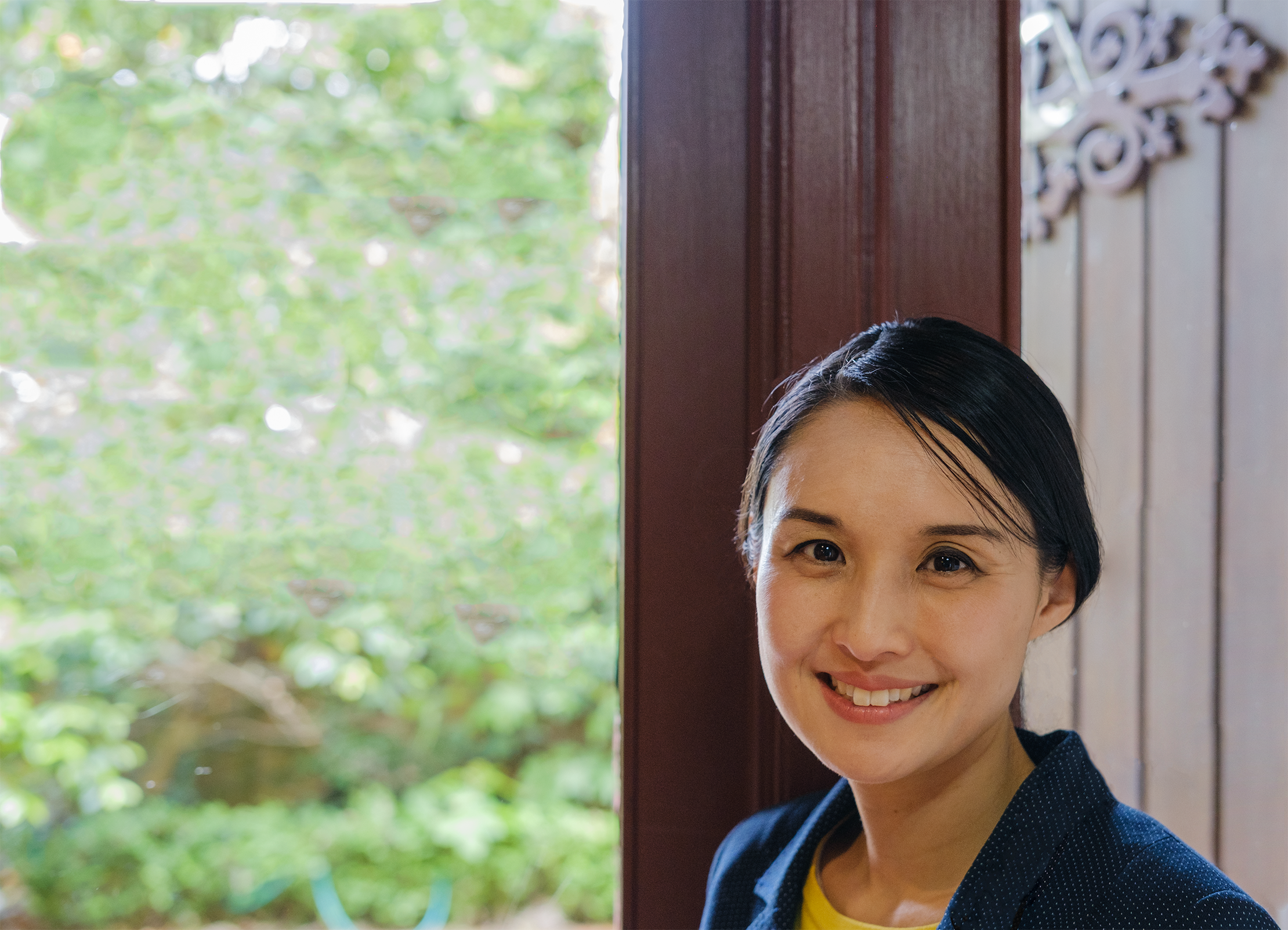
Photographed by Yoshitomo Sonoda. Interviewed in July 2023.
I published my first book when I was too young to have the skills of self-editing - I don’t mean in a literary sense, but in the way that adults with a bit of life experience under their belt might be more ‘diplomatic’ or guarded or craftier in the way they told a story about their own family. So in this way I was lucky to be so young and reckless. There were many things in my first book, Unpolished Gem, where I look back now and think, oh crap, I would definitely have not written that now in my forties! But here is the thing - that first book set the bar for my future writing: I could not lie about how I felt, or what I thought, and every book since has stuck to that with great tenacity.
That Australia is full of rich, wonderful diverse voices! And I am very proud to say that that book helped launch the burgeoning careers of some beloved Asian Australians whom we couldn’t imagine not existing in our culture today. I cannot imagine the past decade without Benjamin and Michelle Law for instance, or the joys of getting to know as true friends the many wonderful Asian Australians in that book, some famous trailblazers and others happy to live rather private lives afterwards. That book connected me to a community I didn’t know existed. And it started Black Inc’s whole Growing Up series of books.
At the time Asian Australians weren’t known as a collective noun. I am sure there are people today who would have an issue with the title: Growing Up Asian in Australia. Such a huge umbrella term for people from East Asia, South Asia, Southeast Asia!
Previous immigration policies, in their good intentions to be anti-racist, identified us by our distinct national heritages - Malaysian Australian, Vietnamese Australian, Sri-Lankan Australian, for instance. So we never really had a sort of united national presence. I suppose the irony is that Pauline Hanson probably gave us a united sense of identity by lumping us all as ‘Asians’ - not unlike how the civil rights movement in America started, when Asian-Americans were conscious that they were stronger as a unified group than a disparate assemblage of separate interests and identities.
Back when the book was published fifteen years ago, I had no submissions from international students, and very few from Indian or South-Asian writers. Only one (thankfully, excellent and moving) piece from a gay Asian Australian woman. No trans submissions. So I suppose if the book were published now, it would be even more diverse and representative of society. However, it is going strong in secondary schools, and many of the stories from older Asian Australians who grew up in the 40s, 50s, 60s and 70s are invaluable for their insight.
It doesn’t influence the work I do as an author and vice-versa. Writers can be so cocooned in their work and identities. It is good to have a job where I am part of a team, and do work that I find meaningful in a different way. One of the things I’ve learned over the years is that the simplest way to write something - whether it’s a sentence, a book or a draft decision - is usually the best.
I am never confident about my voice as a writer. I never know how people will respond, and whether they will conflate me with my characters - particularly when I write fiction. I am not sure my voice is really my own either. I think this might be the healthiest attitude to take - the less ego you attach to your voice, the more fluid it can become. Anyhow, my voice changes every four years or so (which is how long it takes me to write an adult book), because my world view sort of changes. If it didn’t, then I would have no need to write my books.
There are so many but the journal I was discovered in, which has been around since 1940, was MEANJIN. It is still going strong, and I would suggest looking into that, or the Griffith Review, or magazines such as the Monthly. For younger writers, a great magazine called Voiceworks. But if you are at university, you can start writing for the student magazine. And enter as many competitions as you can. You can find them all on the Writers Vic or Writers NSW websites. Even winning the $500 short story prize at your local library is a huge deal - and the prize money is probably equivalent to how much you might be paid to have a short story published elsewhere anyway. Never underestimate the power of the short story - it’s where writers show off their prowess, the command of form, structure, story and language. Book editors read short stories and take them seriously!
In my teens, I was not particularly proud of being Asian because we didn't have the internet. Instead we had magazines showing what attractive, confident and successful teens should be (Miranda Kerr essentially). In my twenties, when I went to university, I discovered that being Asian was actually quite a good thing! I went all out - wore all sorts of weird and wonderful and often ridiculous outfits to classes, like a sort of Oriental peacock to signify that I was Asian and proud dammit. :-) But I also met some seminal remarkable people who changed my life, including my lecturer Dr Jackie Siapno, who gave me a deeper sense of identity and taught me about the lingering effects of colonisation.
I’m pretty proud to be Asian Australian. All of my books have Asian protagonists in them - not a deliberate ploy for diversity - but because these are the characters I know best, so I can write them best.
My memory isn’t so good these days. I had three kids in five years, so they are still quite young. But my earliest cultural memories were of my grandmother. I loved her so much. She was the matriarch who brought the family together. Chinese new years used to be huge and festive.
My mum’s cooking. I dont know how she does so much with so little. But she buys live barramundi from the Springvale market. They kill it for her and gut it, and then she steams it with ginger and soy sauce and garlic. It takes her around 25 minutes from start to finish. She’s a whizz, super-fast. And it is fantastic. There’s also another fish dish I quite like, called Prahok. That’s distinctly Cambodian. It’s like anchovies. But I can never have it around my father, who survived the Killing Fields - he tells me it smells exactly like decomposing human bodies.
I can’t answer this! There are dozens and dozens and they inspire me in countless ways every single day. However, I will tell you a cool historical Asian Australian, so far back that I cannot be accused of favoritism! There was an actress named Alice Lim Kee (who also went by several stage names and married names, eventually becoming Mrs. Fabian Chow - Mr Fabian Chow was many years her junior!) who was born in 1900 in Rutherglen, Victoria. She was an actress, radio presenter in Shanghai, as well as a pioneer for Chinese women’s emancipation, the first Chinese Australian woman elected as a member of the Kuo Ming Tan, was a personal friend of Madame Chiang Kai-Shek, was feted upon her return to Australia, even visited Calcutta in her lifetime. I mean, look at this stunner!
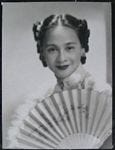
You can find out more about Alice on her website
No posts
Comments
Nothing yet. Say the first thing.
Sign in to join the conversation.