
Every so often I blog in the third person, an exercise in notes towards a third person diary or memoir of these times. The first letter, from the London series, is here and the first in the American Letters series is here. Letter 6 is here. Letter 5 is here.

My country keeps me up at night, he used to say. It still does, but differently somehow, though tonight it is cool and the wind in his office window smells of the lilac bush outside. There’s a moon jauntily swathed in clouds, rakish and sly.
What is the difference, he wonders.
Sometimes he tries to use the insomnia to do work, which does get some things done, but then he feels terrible the next day, sleepy, a slow and creeping despair spreading over him for the rest of the day. He is usually tired enough to fall asleep by midnight most nights but now he wakes up at 4AM many days and struggles to get back to sleep. In those moments he feels like something that belongs under that water but he cannot manage to sink back down. And yet he is desperate to sink, desperate to get back under the waves.
In the closet across from his desk are boxes of notebooks in which he has written I really need to get more than six hours of sleep, beginning in the 1980s, then continuing into the 1990s, the 2000s. And it is still true. He still needs to remind himself to do that. The diaries are all full of his attempts to write about his own problems, many of which simply have not changed.
He is not particularly a praying man. If he did it would just be Hey God, you absolutely suck right now. Like the notebooks in his closet with decades of notes to himself telling himself to go to bed, his prayer is another drumbeat pointed at the sky.
*
The new novel is typically the kidnapper of him, leaving whatever else it is he thought he would do left undone, but now it fights savagely with his teaching, which is ironic as it is partly about teaching. His desk fills with coffee cups, phone chargers, books, and of course the manuscript pages.
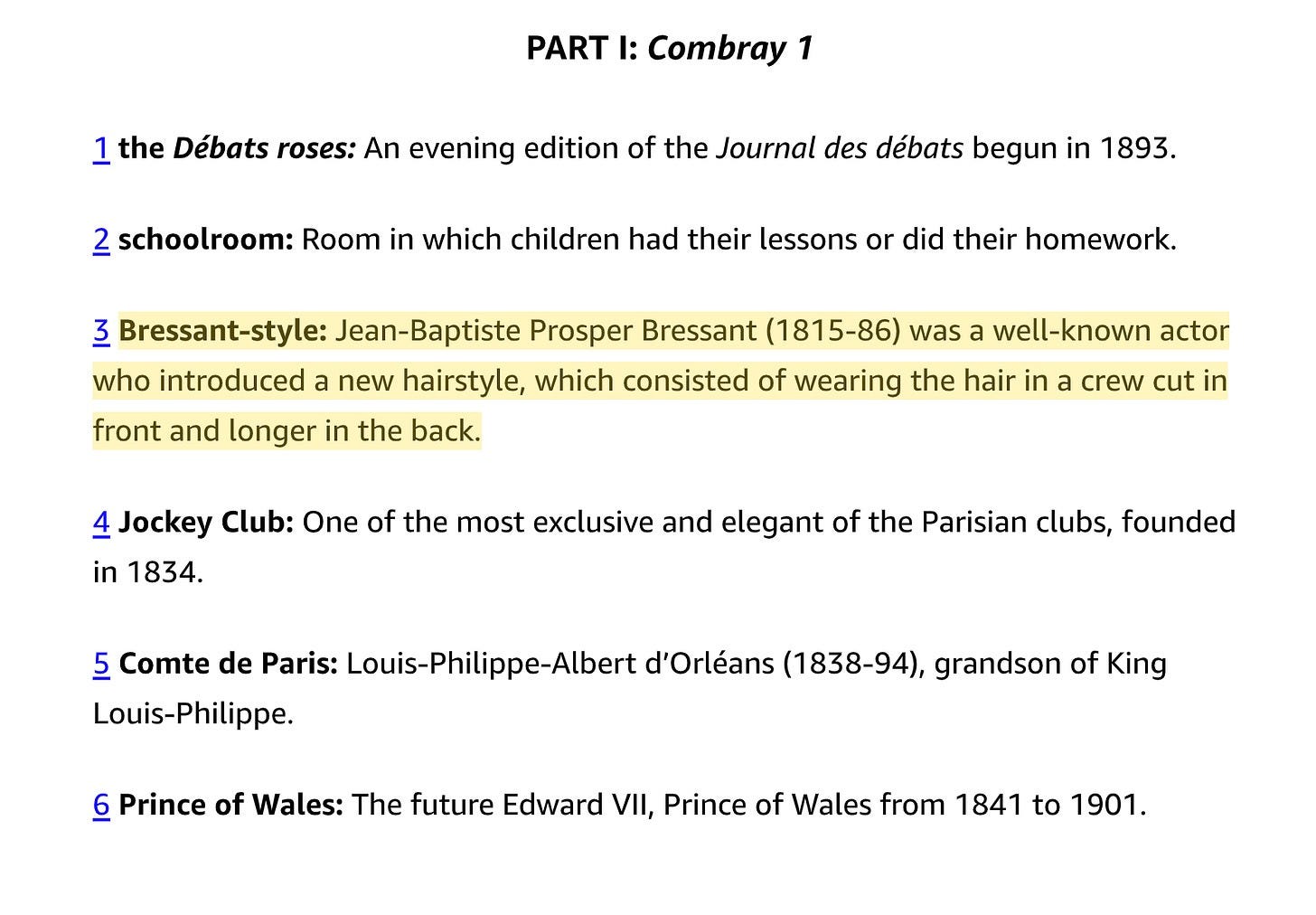
He has been making character notes for the novel in the way Emile Zola did, a practice he discovered while reading the introduction to the Penguin edition of Nana. He had never much read introductions before reading novels for research on his second novel, The Queen of the Night, but the research soon taught him that whatever a translator felt the need to explain was more often what he needed than what he found in history books. Footnotes and bibliographies held these riches also. It was where you could find details like the 19th century haircut that probably inspired the mullet, as he’d found in a footnote for Lydia Davis’ translation of Proust’s In Search Of Lost Time. He never did find a way to use the detail in his novel about an opera soprano but he is happy to have found it all the same.
George Holden’s introduction to Zola’s Nana contained a craft lesson from Emile Zola. He describes the way Zola constructed his characters, finding them first with their habits, their little personal histories, the sorts of things a living person might not tell a biographer or a reporter about themselves or other people, like their first sexual experiences and who they were with, when they left home, if they went back. First job, first lover, second lover, third. Zola was also after details like their sense of humor, the jokes they would tell or would never tell, their superstitions, the beliefs they may not even know they held. And the gossip told about them as they go about their lives, gossip that they do not hear, spoken of by people they do not know but who it seems know them. Gossip as world building. This became like the aura of the person, he understood—the not necessarily logical mix of who they are, who they were, who they want to be, and who they don’t know they are to themselves much less to others. And invisible to them, inaudible, inaccessible except in narration like this.
He undertakes this act of making the character cards now as a consolidation of the story, like a character bible for a writer’s room with just one writer, meant to guide him as he revises the novel’s manuscript. But as he finishes work for the day, he pauses.
What would it be like to write a self-portrait this way, he wonders. A student had asked him last year how to make a character of oneself. He meant to answer her before now but the year keeps wiping out whatever he planned to write here. This method, it occurs to him, this would be one way to do it.
So he tries.
Alexander Chee.. In 2026, he is 59, a Korean American bear in the parlance of gay culture. A husbear, as a friend put it. Salt and pepper beard but lately, more salt than pepper. His nose is small, his forehead a ‘fivehead’--he sometimes holds his hand up to his head to count the fingers that fit between his brow and his hairline. He has hazel eyes, green at the center, brown at the edge, and sometimes people notice and look intensely into them, as if they might find something. Sometimes people don’t notice at all. They are not his mother’s eyes but many in her family have them.
He is the son of a white American home economics teacher mother from an old White settler family and a Korean immigrant engineer father from an old aristocratic Korean family. He is the oldest of three siblings, oldest male of his generation on his father’s side, the 42nd generation. His mother’s side does not keep track the same way but his mother and younger brother have charted her family’s history all the way to the Mayflower, with six relatives who fought in the Revolutionary War, almost a baseball team.
Freckles cover his nose and cheeks all year but especially in summer. He started to wear sunblock young and while he left off for a few years he has mostly kept a smooth complexion. A faint crescent scar from chicken pox sits between his brows as it has for decades. He often smiles a lopsided smile for the camera, mostly because he has never trusted cameras, but in person he laughs with his whole face. He wears his hair short, buzzed down at the nape in what’s called a “natural back” at the barber shop: faded, no sharp lines. His hairline is in the shape of the Iberian peninsula and has been for many years now. The departure of his hair has halted, as if it all is waiting for something to happen.
He wears glasses, what he calls gym teacher specials, and has broad shoulders that help carry his big head. He has the short Korean legs with calves too big for most knee-high boots. Sometimes these are called soccer legs. When he wears athletic knee socks his husband calls that his Pugsley Adams outfit. He is still flexible but he cannot do standing splits as he once did up until his 40s though he is preparing to do them again before he turns 60.
He was just fifteen when his father died. All of his grandparents are dead, all of his uncles too, except one. The first of his aunts has died, his father’s eldest sister. He is preparing to move his mother to California.
He is sarcastic and naive both, guided too often by a literalism that could be said to be if not a worldview, then an existential reflex. Guided is probably the wrong word for it. He often feels the urge to say what he feels everyone else is feeling but is afraid to say, as if he is doing everyone a favor. He goes silent when struggling. His husband describes him as patient, which makes him a little proud given he was prone to storms of temper as a child. He was the kind of son who packed a bag and stood at the corner of the driveway, vowing to run away from home. Go ahead, his mother would say, angry that he would even suggest it. He never did. He was the designated confrontationalist of the family, always sent out to say the angry thing.
A parapsychologist tested him as a child for psychic powers, and he passed the test for clairvoyance, which he is still proud of, even if it has proven to be the most useless kind of psychic power, capable of telling him very little that matters to making money though it may be it has helped him survive. Was that a gift? Maybe so.
He often has dreams that are dull, dreams about checking his email or walking down a sidewalk or that someone is mad at him on Twitter or Instagram. These have not been foretelling dreams even once. That is not how his clairvoyance works. And now he has deleted his Twitter. He never has dreams that someone is angry at him on Bluesky.
He has taught creative writing for almost 30 years and is the author of two novels and a collection of essays. He knows the next five books he wants to write but he is not sure if the world will give him or anyone else the time. We pick up with him as he is close to finishing his fourth book, his third novel. He is a professor at a school he didn’t apply to as a young man, afraid of what it was then. Some of his best friends from ACT UP SF went to this school and he tries to help make it into the school they might have wanted it to be. The idea that this is the school that has given him tenure and promoted him would be something the younger version of him might ponder in amazement or even mistrust.
His clairvoyance did not predict this.
No posts
Comments
Nothing yet. Say the first thing.
Sign in to join the conversation.