
AI continues to dominate conversations. But now people have actually implemented ideas with it and are starting to share the real lessons learned.
One of the lessons learned: I’m seeing more and more about AI being used to close the communication gaps.
Communication gaps lead to compounding problems which can lead to tragedies:
My network is sharing this article by Trang Nguyen, “It’s Standard Practice to Let the Fabricator Design the Connection” — Is It, Though?” Read it here → https://www.linkedin.com/pulse/its-standard-practice-let-fabricator-design-though-trang-nguyen-tzwic/
Edward Tufte highlighted similar problems when he was asked to investigate the Challenger disaster. I talk about it here → https://deeneyenterprises.com/qdd/podcast/about-using-slide-decks-for-technical-design-reviews/
It extends to marketing design, too. In this case, AI seemed to be blindly used and the checks and balances removed. “From National Gift to National Insult: How Starbucks Korea Destroyed a Legacy in a Single Day” by Gangnam Rive Gauche. Read it here → https://www.linkedin.com/pulse/from-national-gift-insult-how-starbucks-korea-destroyed-tz0ve/
Can AI close these gaps? My guests, co-hosts, and experts think so.
Dianna
Quality during Design has been brought to you since 2021 from Deeney Enterprises and Dianna Deeney. This is the monthly digest sent on the first Friday of the month: gain insights, podcast highlights, and resources for engineering and product development professionals.
📅 Coming in August — Mike Fedorov from Applied AI Labs joins us to share lessons from AI implementation, what many of us get wrong, and what to do instead.
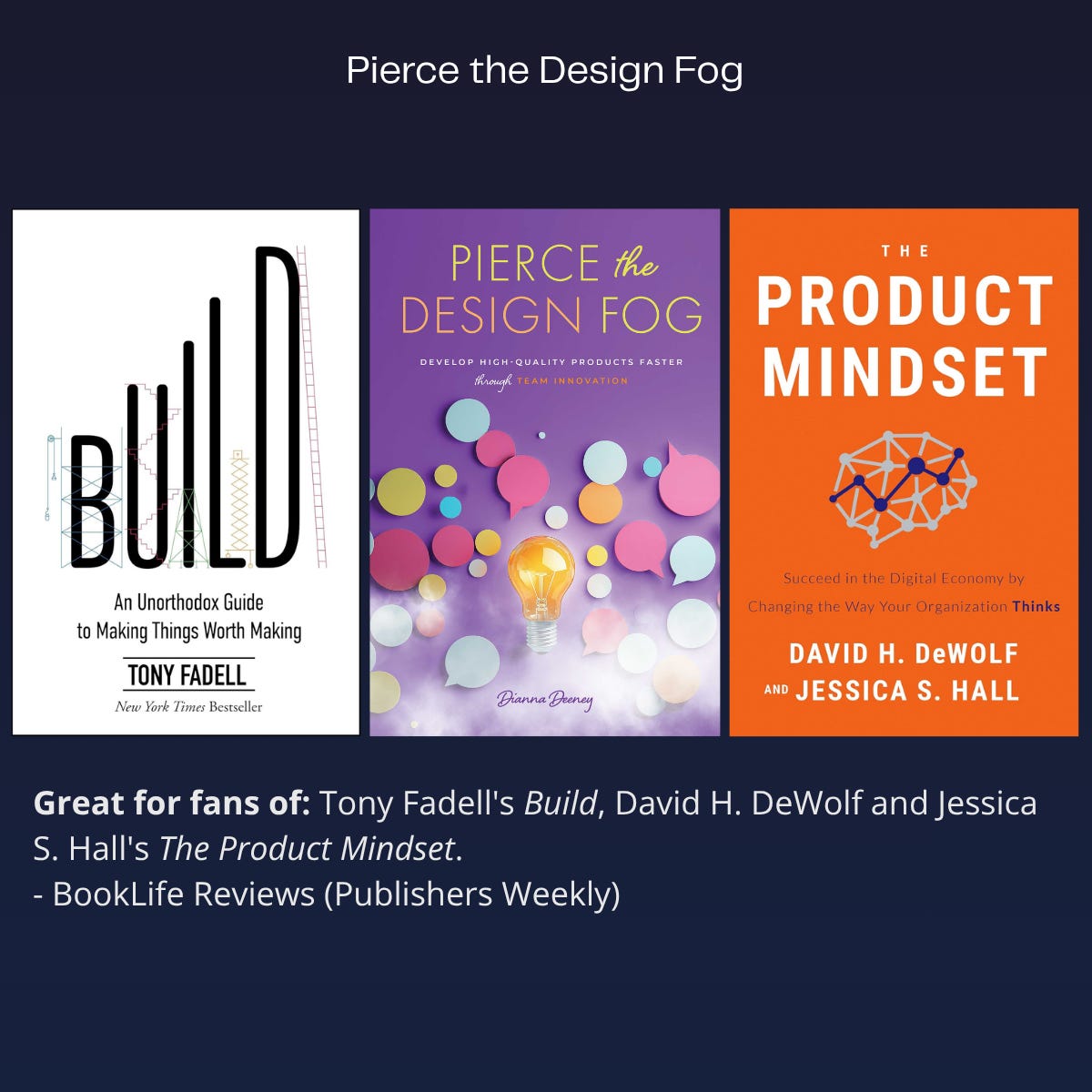
🚀 PTDF on the Bookshelf — If you’re a fan of these books, you’ll likely like Pierce the Design Fog.
📋 July’s Recap — A celebration of 200 episodes! Plus, how to influence without authority with expert Jenny Wanger.
FMEA — Prioritizing, where to use AI, and what (still) needs a human touch.
I hop on the mic for a solo episode to explore an insightful article I read on LinkedIn about the Decision Room Carry problem.
Mike Fedorov joins us on the Quality during Design show to talk about the most common operational challenges he’s seen in his 26 years, including at Mars and Accenture. He breaks down a complex idea into actionable steps, and reports from the front lines of enterprise AI implementation. He has great advice - tune in to listen!
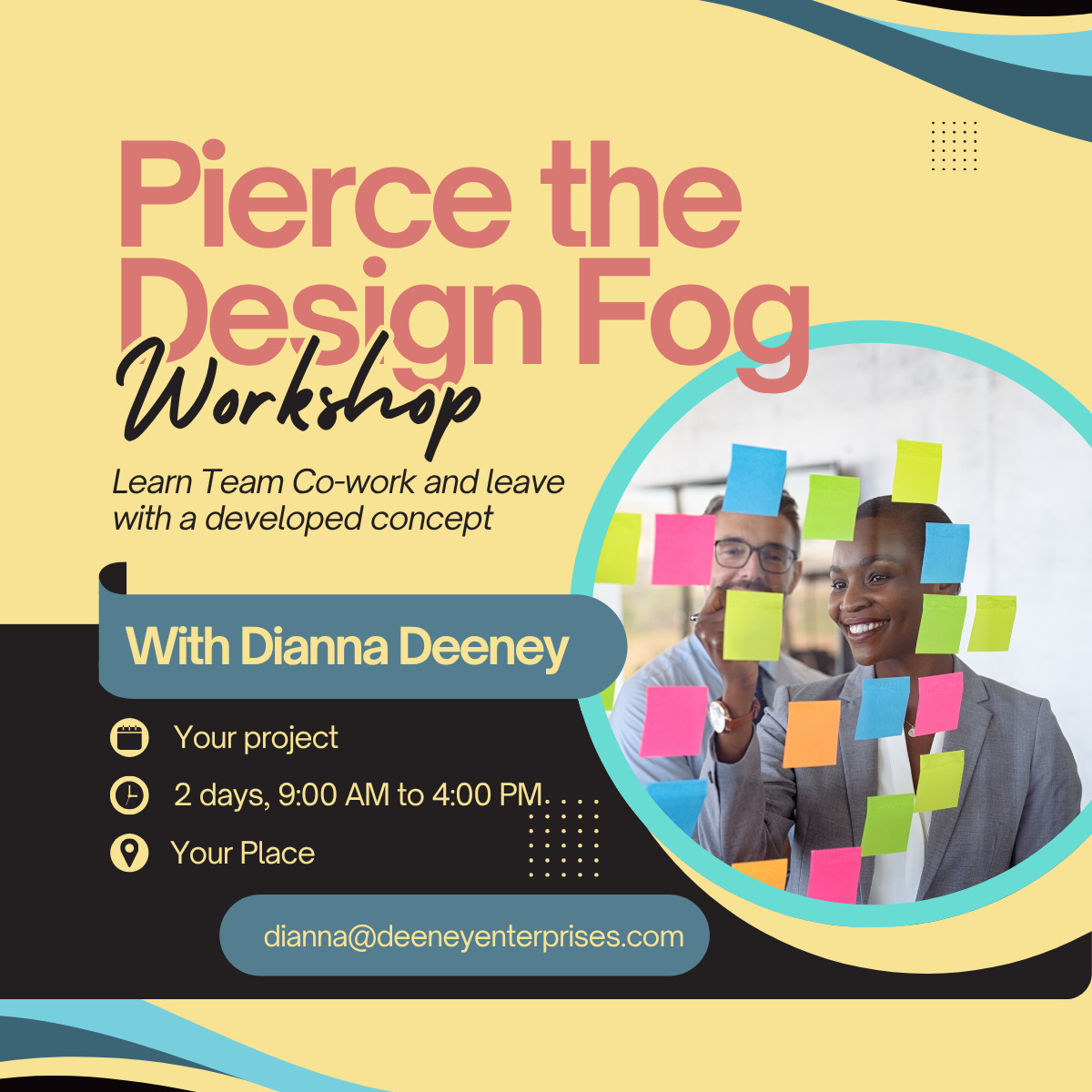
Do you have a cross-functional team of 5-8 people? Want to use the ADEPT framework and use the Concept Space Model on your project?
I’ll travel to you. We work together for 2 days (6 working hours each day, 9:00 AM to 4:00 PM with lunch break). You’ll walk away with completed concept development packet, next steps, and a repeatable process you can use on future projects.
I’m accepting 2-3 workshop engagements this quarter. If this fits your team, let’s talk. dianna@deeneyenterprises.com or https://qualityduringdesign.com/talk
I’ve been experimenting with AI in ways that go far beyond “AI layered onto an existing tool.”
The case studies where AI Agents stood in as a consistent cross‑functional team, See them at https://www.youtube.com/@qualityduringdesign
I trained AI chat bots for https://deeneyenterprises.com and https://piercethedesignfog.com Try it and tell me what I missed.
Sales and Marketing agents that help me vet ideas, prioritize work, and keep the business side moving.
I’ve also been talking with Chris Jackson and Carl Carlson on the Speaking of Reliability Podcast about AI (links follow). And my guest interview in August is about enterprise-wide AI.
The theme running through all of this: Reliability, engineering, and product work don’t get easier by skipping steps. They get easier by strengthening the steps that already work. And, I’m seeing AI increasingly becoming a tool to communicate the data and knowledge between the gaps, helping to bridge silos and coordinate better/faster.
BookLife (Publisher’s Weekly) Reviews Pierce the Design Fog.
Though the ideas Deeney introduces are often technical and complex, the guide capably breaks them into digestible steps. She pulls no punches when insisting that readers pay as much attention to what fails as to what succeeds. Great for fans of: Tony Fadell’s Build, David H. DeWolf and Jessica S. Hall’s The Product Mindset.
Why I loved it: Whereas PDMA works in this space and know what works and what doesn’t (see their site for their review), an editor that likely doesn’t still understood it and placed it on the bookshelf in the place I am proud that it sits.
🎙️ Podcast Episode: From Tools to Teamwork – 200 Episodes of Rethinking Quality during Design. It’s a milestone episode! When I started the Quality During Design podcast in 2021, I wanted to answer a question I’d seen throughout my engineering career: Why do capable teams build products that miss the mark? Looking back, I saw that the progression of topics we covered had become clear… Listen → https://deeneyenterprises.com/qdd/podcast/from-tools-to-teamwork-200-episodes-of-rethinking-quality-during-design/

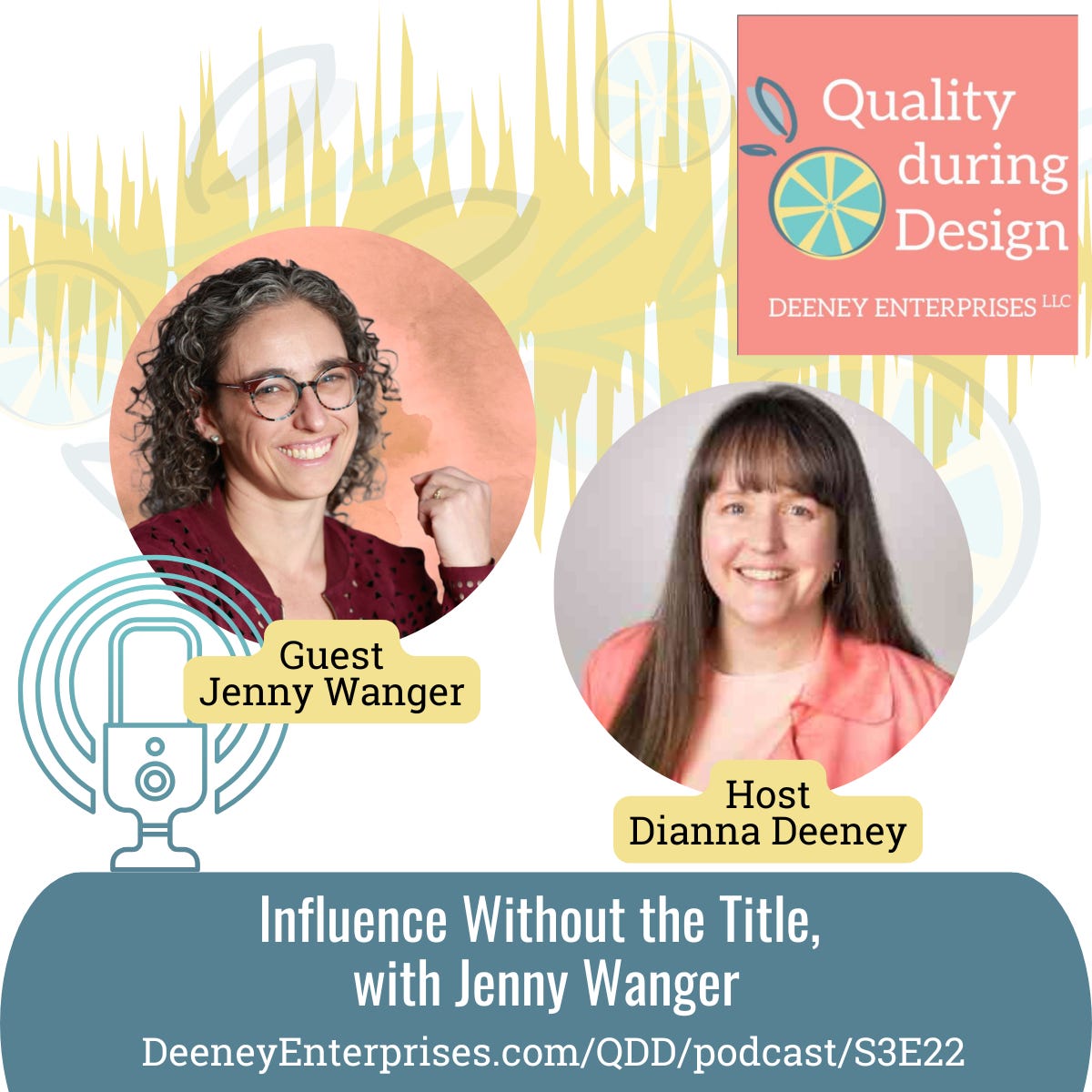
🎙️ Podcast Episode: Influence Without the Title, with Jenny Wanger. Jenny identifies a structural problem: efficiency-focused handoff workflows that strip away customer context, lock leaders into circular strategy conversations, and leave cross-functional teams scrambling to fix decisions they didn't help make. Listen → https://deeneyenterprises.com/qdd/podcast/s3e22/
I’ve been chatting with many folks, lately, about FMEA. It’s definitely an analysis that’s not going out of style.
On the Speaking of Reliability Podcast, I talked with Chris Jackson and
SOR 1195 AI Techniques and Projects: Chris Jackson and I talk about a specific AI-driven approach to FMEA that bridges the communication gaps.
SOR 1197 How to Select FMEA: Carl Carlson and I talk about how to select FMEA strategically, focusing on how to move beyond random or checkbox approaches to provide real engineering value.
SOR 1198 FMEA & AI: What is the Human Role? Carl Carlson and I talk about, well, the human role in FMEA.
In my Udemy course “FMEA in Practice”, a student asked a great real-world question:
What do you do in a PFMEA when a corrective action fails after you’ve already updated the S/O/D/ based on that action?
They had implemented a corrective action, documented it in the “Actions Taken” column, and revised the Severity, Occurrence, and Detection ratings. A month later, they discovered the action didn’t actually work. Now what?
Here’s the short takeaway:
When an action turns out to be ineffective, don’t delete it. Keep the record of what you tried, note that it failed, and document the new action you’re taking instead. That history is essential for traceability, audits, and preventing future teams from repeating the same dead‑end.
If your PFMEA only gives you one action cell, you still have options:
• Add a new row for the updated action, linked to the same failure mode/cause, or
• Use a notes/text section to record the timeline:
“Action attempted [date], found ineffective [date], reason, superseded by [new action].”
And revise S/O/D only after the new action is implemented and proven effective.
I’m traveling to the DVIRC Reimagine Manufacturing Summit in October. Going? Let me know and I’ll meet up with you.
What's the biggest design decision your team is wrestling with right now? Hit reply or comment below - I read every response.
If your organization is tired of firefighting what could have been prevented, let’s talk. https://qualityduringdesign.com/talk
No posts
Comments
Nothing yet. Say the first thing.
Sign in to join the conversation.