
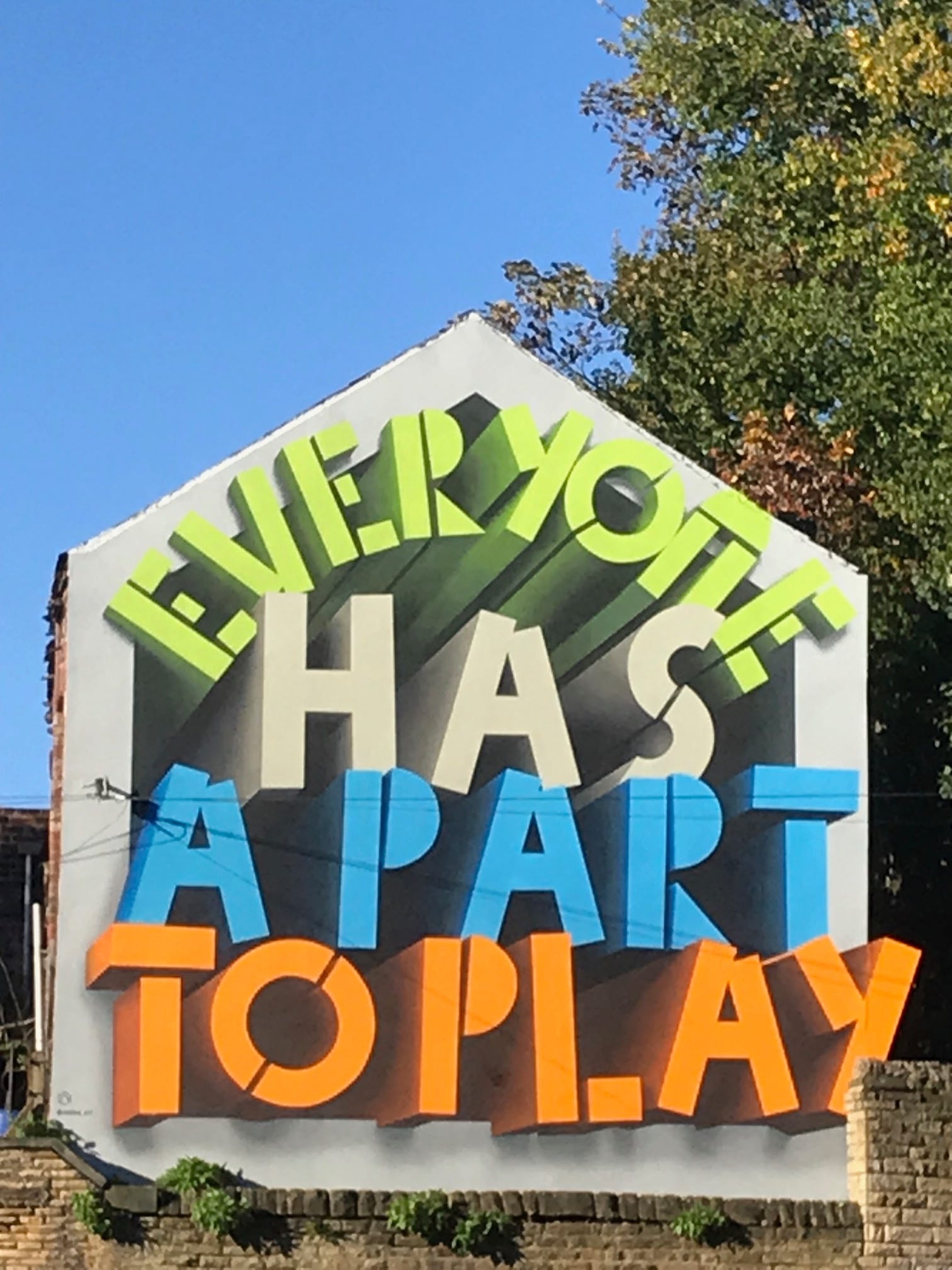
The travelling Quaker minister Emily Provance once described the original Quaker message as having two parts; first, that everyone can experience the guidance of God directly; and second, that none of us perceive this guidance perfectly, so we need each other to live well and to choose rightly. Emily said that in the 17th Century it was the first part of this message that was counter-cultural, but today it is the second.
When we describe what is important in the Quaker way, we usually emphasise the individual’s experience of silent worship, or perhaps the values or beliefs that motivate them to work for peace or social justice. We usually miss out the second part of the Quaker message; the counter-cultural insight that we need each other to choose rightly and to flourish. This is the promise of Quaker community.
A life that is shaped by the guidance of the Spirit is not an individual project. It grows from participation in a living faith community. The Quaker way is a communal enterprise; something we do together that shapes us, and that reveals the world in certain ways as we take part in it. A living Quaker community opens up new possibilities of experience and shapes how we perceive and act in the world. It forms us in relationship with others.
The core Quaker practices of worship, discernment and testimony are all collective; we need each other to learn and to practise them. In a community that worships, discerns and witnesses together we can learn to listen to the Spirit within. We can grow in maturity, responsibility and cooperation. We can practise a form of collective decision-making and social organisation that demonstrates an alternative to hierarchy and manipulation.
As we practise the Quaker way together, we are pursuing alternative goals and nurturing different qualities to those celebrated by the wider culture. Quaker meetings are communities of resistance, where we encourage each other to cultivate integrity and sharing instead of success and status. A community that is rooted in the leadings of God will nurture the faithfulness of Friends who are led to challenge injustice in the world, to work for peace, and to bear witness to our collective Quaker testimony.
In a Quaker community that is worshipping together, sharing joys and struggles, exploring faith and doubt, recognising each other’s gifts and discerning leadings, we can encourage each other to greater integrity. It is a place where we know each other and are known, where we are challenged as well as accepted. This doesn’t happen just by sitting in worship together once a week. Community emerges as we choose to spend time together; being open about what is most important in our lives, sharing meals and conversations, walks, holidays and celebrations.
Quaker communities are also an important source of mutual aid in difficult times. Friends share childcare, bring meals to new parents or those who are struggling, and are alongside each other through illness or bereavement. This network of caring can be an important bridge across generational and social inequality.
When my adult daughter moved to Milton Keynes some years ago, older Friends invited her for meals, gave her lifts and practical help, as well as welcoming her into the life of the meeting. Many young adults don’t have access to this kind of wider support network, and as a result they are often vulnerable to social isolation, precarious housing, poverty and anxiety.
Most Quaker meetings are not like this, but some are, and all of them could be. In many meetings, nurturing the community is an afterthought at best. Meeting house maintenance and routine business receive all the attention, leaving little energy for learning, sharing or reflecting together. In some meetings, Friends firmly avoid sharing their spiritual lives or spending time together beyond an hour on a Sunday morning, and discourage any opportunities for more meaningful connections.
But community is not an optional extra. The Quaker way can only be practised together. If we withdraw into the comfortable privacy of our individual beliefs and choices we are missing the extraordinary promise of Quaker community.
Those who are attracted to a deeper experience of community should not allow it to be squashed by Friends who are resistant to change. The desire for community is already a sign of the activity of the Spirit within us, inviting us towards greater faithfulness. A Quaker community is not just a group of individuals with common interests. We are being drawn together by a shared encounter with the same inward Guide. A living Quaker community enables us to experience a profound spiritual reality; that we need each other, that we were made for sharing and mutual service, and this is where our flourishing and the peace of the world can be found.
Comments
Nothing yet. Say the first thing.
Sign in to join the conversation.