
My white paper collaboration with the Cornell University Biomedical Device (CUBMD) team, Building Equity in Medical Device Design Control, was released last week. This is a 32 page paper, so if you don’t have time to read it, I will be releasing weekly articles to discuss each section of the white paper right here on my substack platform along with a separate newsletter on LinkedIn.
Did you know this is the first comprehensive paper of its kind? We researched and could not find another white paper source to present a comprehensive proposal on how to build equity into all stages of the FDA and ISO (international standards organization) requirements of the medical device design control process.
So let’s dive right into it!
The Introduction of the paper presents critical facts such as:
The US Census Bureau predicts that within 30 years, the nonwhite proportion of the American population will shift to more than 50% but these communities only make up 6% of clinical trials.

During the COVID pandemic, racial bias was exposed when people of color received misdiagnosed oxygen levels which are pivotal in determining respiratory conditions related to COVID.
Patients with darker skin tones are at a significantly higher risk of pulse oximeters missing low oxygen saturation (SpO2) levels.

The FDA does not have regulation on requiring equitable practices for medical device development.

Currently, the mitigation of bias is predominantly accomplished through equitable clinical studies which occur during the design validation stage. In fact, the FDA did release excellent guidance documents on the equitable selection of patients for clinical activities. However, these activities are performed during the design validation stage, which happens after the product prototypes have been designed and tested in the laboratory.
It is important for medical device manufacturers to know how opportunities for bias exist at every stage of the medical device development process.
Design requirements that do not account for user diversity lead to biased products.
Insufficient diversity in sampled populations taints data collection.
Failure to implement anti-bias mitigations causes issues during model development.
Lack of developer awareness about bias and equity results in inadequate model and prototype evaluation.
Insufficient regulations and regulatory guidance related to equity prevents FDA review and approval from being an effective guard against inequality.
Companies can follow the current FDA guidance documents (many of them are listed at the end of the paper). However if they did not build in equitable user and product requirements that can be verified (tested in the laboratory) and/or validated (tested on humans or simulated human testing), then they will experience failures during the clinical (design validation) activities because they will be testing products that were designed with built in bias. Since they are only following guidelines related to equitable practices during the clinical evaluation stage, the failures would more than likely be reported as anomalies and companies can proceed with transferring the manufacturing processes to commercial manufacturing. As far as they are concerned, no love lost! After all, they followed FDA regulations. This is how products like oximeters and so many other devices with built in bias can still receive FDA clearance.
The white paper proposes how to build equity into all phases of the medical device design development process, starting with design planning phase and then threading principles throughout every stage of the development process.
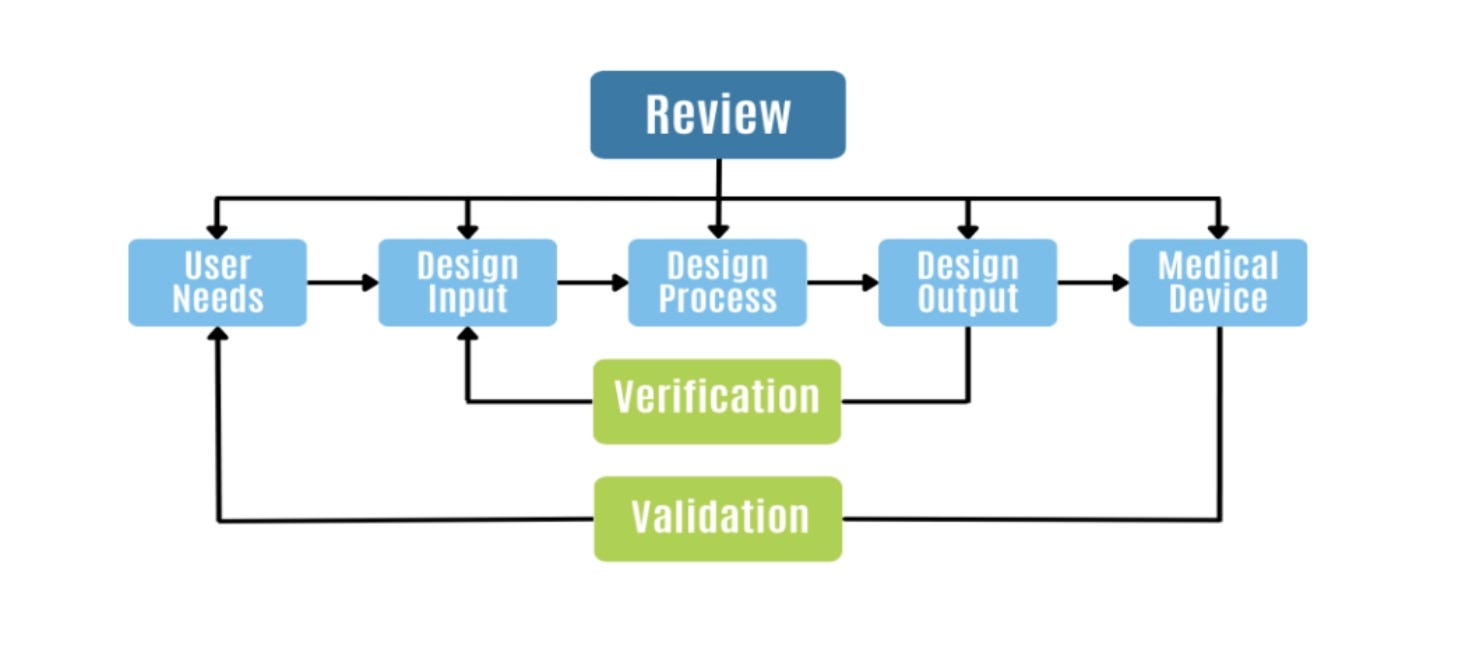
A case study of MelanOxi, an updated calibrated pulse oximeter design created by the Cornell University Biomedical Device (CUBMD) team is presented in the paper to show an example of equitable medical design development requirements that are traced through to the clinical and human factors studies and into the beyond (post commercialization monitoring).
Now that you have some good background information., take a journey with me and keep a lookout for article summaries of the next section of the white paper: Design Planning. In the next series of articles, I will walk you through all of the NEW PROPOSALS on how to build cost effective equitable principals into this phase of the development process.
Stay Tuned!
Comments
Nothing yet. Say the first thing.
Sign in to join the conversation.