

For years, most conversations about financial infrastructure focused on exchanges, trading venues, and execution. Yet one of the biggest shifts happening across financial markets is taking place somewhere far less visible: distribution.
Financial data is no longer consumed only through terminals built for human users. Increasingly, it flows directly into trading systems, AI applications, prediction markets, fintech platforms, and automated financial software.
As markets become increasingly software-native, the way data moves becomes just as important as the data itself.
Recent announcements across the industry all point in the same direction. Exchanges are looking beyond traditional distribution channels, prediction markets are expanding into traditional assets, and financial institutions are searching for new ways to bring their data closer to the applications that use it. This marks a structural shift in how financial infrastructure is built.
One consequence of that shift is that market data businesses are evolving beyond a single commercial model. Rather than relying solely on subscriptions, they’re beginning to combine direct data access, institutional distribution, and new financial products that scale alongside customer adoption. The result is a more diversified, software-native approach to market data.
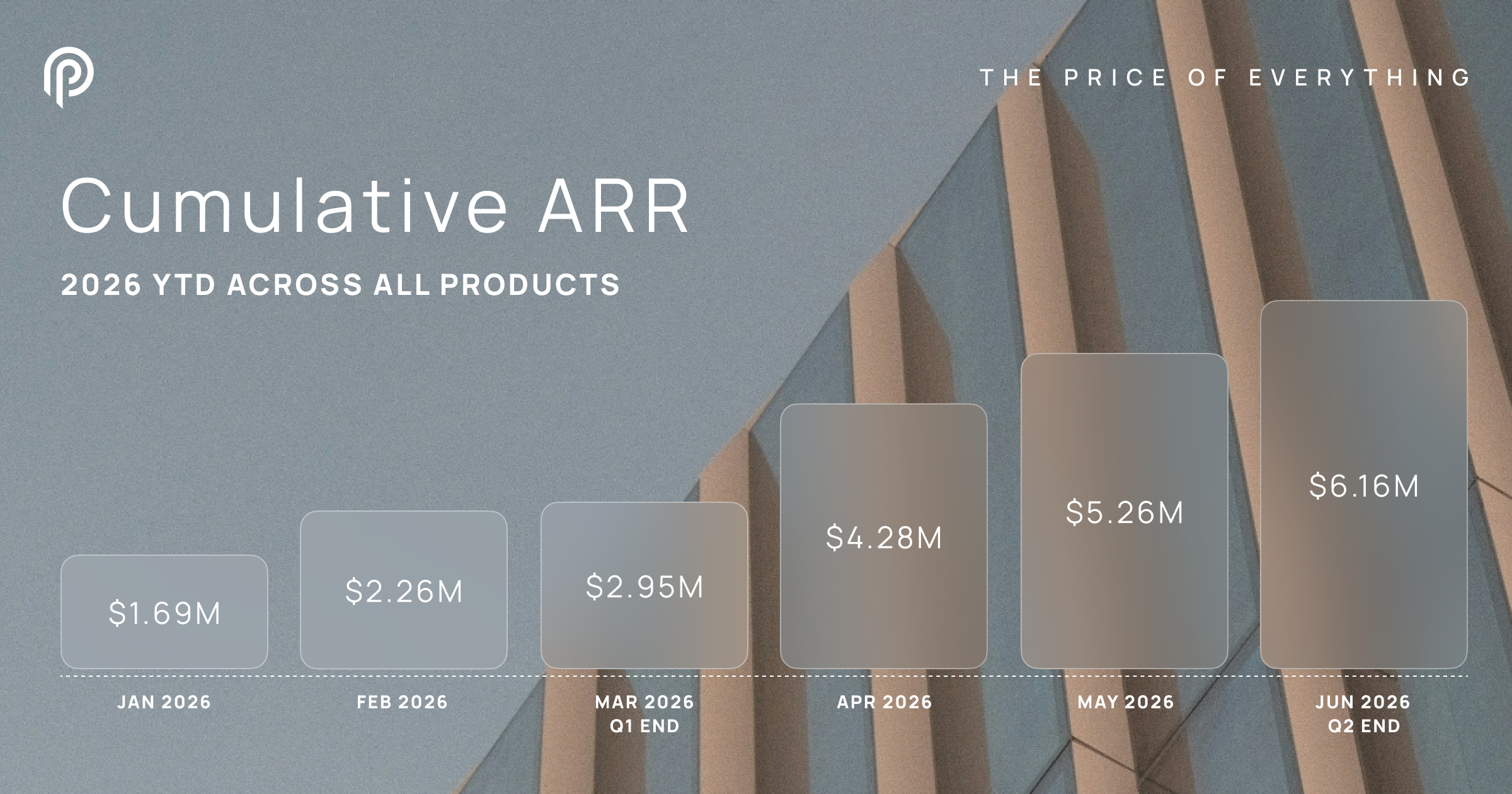
We’re seeing that evolution play out across Pyth as well. Over the past year, the network has continued to expand across multiple product lines while maintaining strong customer momentum, averaging more than 30 new Pyth Pro trials each day, growing recurring subscription revenue by roughly 45% month over month, and steadily expanding market coverage across asset classes. Those metrics are meaningful not only as indicators of Pyth’s growth, but also as evidence of a broader trend: institutions increasingly want financial data infrastructure that is programmable, scalable, and built for modern markets.
It’s a topic explored in more detail by Mike Cahill, CEO of Douro Labs and one of the project’s principal contributors, looking beyond individual product launches to examine where financial infrastructure is heading—and why the next phase of growth won’t be defined by a single application, but by an ecosystem of complementary products built around the same underlying network.
Read Mike Cahill’s latest article, Three Engines, for a deeper look at how distribution and multi‑product models are reshaping financial infrastructure.
Comments
Nothing yet. Say the first thing.
Sign in to join the conversation.