
Several months ago, I suggested the Middle East had stopped being a binary conflict - Saudi Arabia against Iran, the Abraham Accords bloc against the axis of resistance.
I argued a third force was quietly forming underneath it, driven by the chaos of the Iran war and a growing sense across the Muslim world that American security guarantees could no longer be counted on. It was not, at the time, a popular reading.
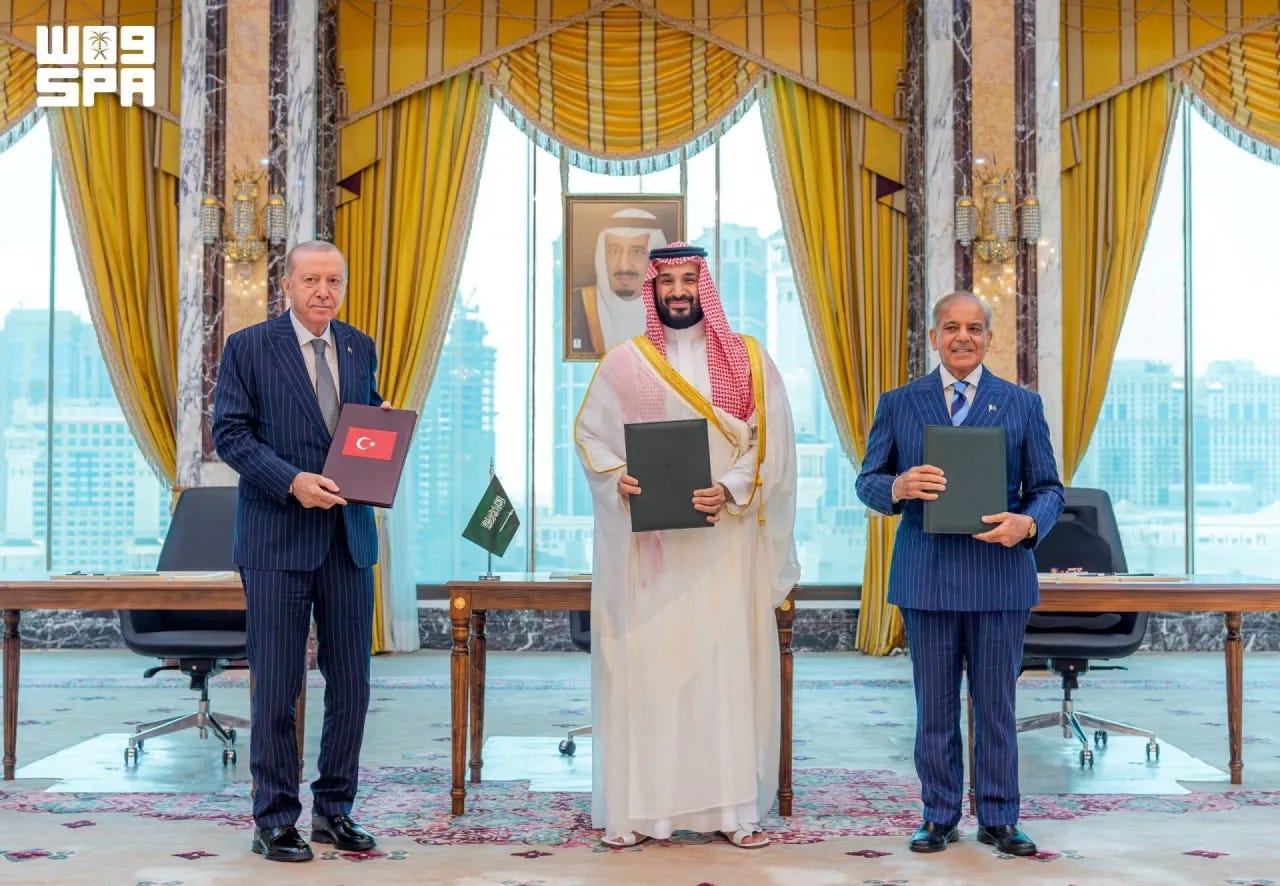
On Friday, in Mecca, that third force signed its name.
Turkey, Saudi Arabia and Pakistan - NATO’s second largest military, the world’s top oil exporter, and the only Muslim-majority nuclear power - signed the Mecca Joint Defence Pact, formally binding three of the largest Muslim-majority populations on earth into a collective security agreement.
Under its terms, an attack on one should be regarded as an attack against them all.
The press release version of this story is straightforward enough. What it actually means - for the Middle East, for America, for Israel, for Iran, and for the balance of power in a region that has just changed shape - rather less so.
The pact did not come from nowhere.
It is the product of a fairly specific causal chain, one that compressed years of gradual drift into a single decisive moment.
Start with Israel. Since October 7th, Netanyahu’s government has shown little interest in the regional normalisation the Abraham Accords once promised, pursuing military dominance instead — in Gaza, in Lebanon, in strikes on Iranian proxies across the region, and in the strike on Doha in September 2025.
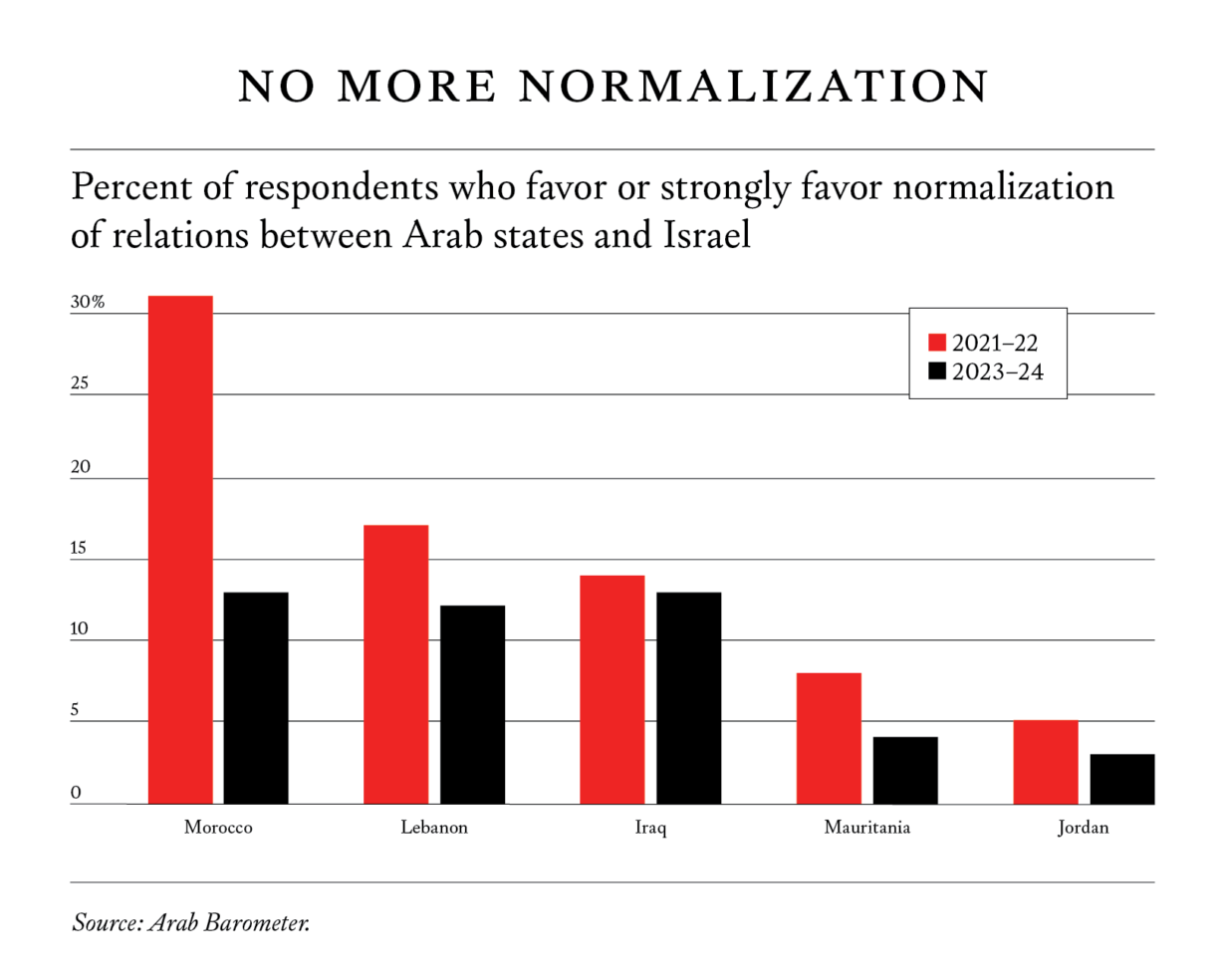
Every Sunni-majority government in the region drew the same conclusion from that pattern: Israeli behaviour had become unpredictable, and Israeli expansion had become a direct regional threat in its own right.
Iran remained a parallel and separate threat throughout. Saudi Arabia has been struck repeatedly by Iranian-backed groups since the war broke out in February, and it hosts American military assets that make it a target — without the cover of a formal mutual defence agreement with Washington.
And then there is Washington itself. The Trump administration’s prioritisation of Israel above every other regional relationship, and its rather blunt message to allies that they ought to fend for themselves, left a gap nobody in the region had much expectation the US would fill.
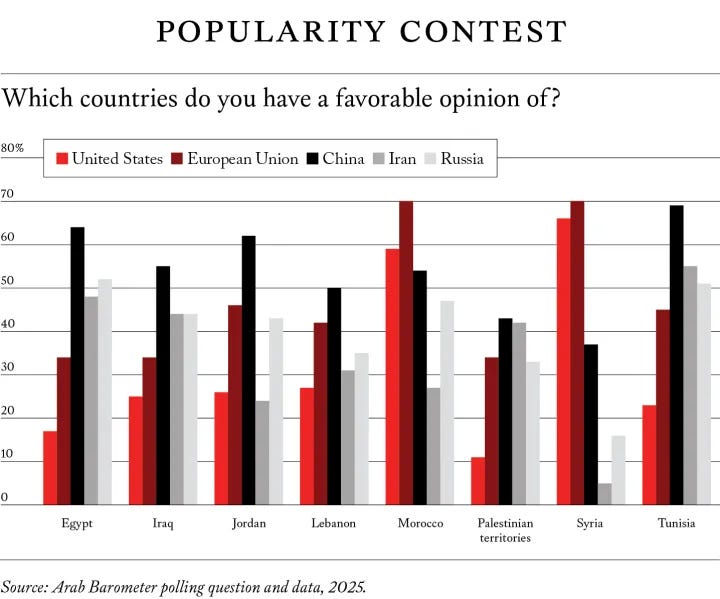
Faced with Israeli unpredictability, Iranian pressure and American disengagement all at once, governments across the region arrived, more or less independently, at the same question: what happens if America simply isn’t there when it matters?
The Mecca Joint Defence Pact is the answer they arrived at — not a replacement for the American relationship, but a hedge against its unreliability.
Coverage of the signing has swung between two extremes, treating it either as a transformative NATO-style alliance or dismissing it as largely symbolic. The substance sits between the two.
Structurally, the pact establishes a framework for collective security, intelligence sharing, defence industrial cooperation and energy coordination. It builds on a bilateral agreement already in place between Pakistan and Saudi Arabia, signed in September 2025, extending it to bring in Turkey’s considerably larger military and defence manufacturing base.
What each partner contributes is genuinely complementary rather than duplicative.
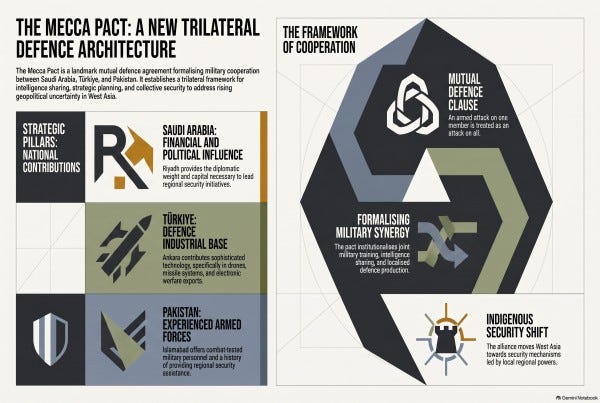
Turkey brings NATO’s second largest military, battle-tested drone technology, and a defence sector built deliberately to reduce dependence on Western suppliers.
Saudi Arabia brings the financial weight of the world’s top oil exporter.
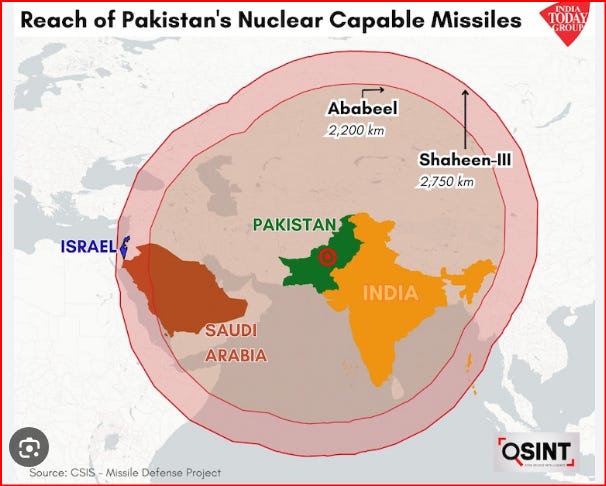
Pakistan brings something neither of the others can: nuclear weapons capability.
That makes the pact, on paper, the first formal collective security agreement involving a Muslim-majority nuclear power — though Islamabad has been careful not to confirm whether that capability itself extends to its new partners. That’s a question worth watching rather than one that’s been settled.
But there is one word in the agreement that complicates almost everything I’ve just described: should.
An attack on one should be regarded as an attack on all. That is not the same thing as NATO’s Article 5 — and understanding the distinction changes what this pact actually means.
Comments
Nothing yet. Say the first thing.
Sign in to join the conversation.