pv magazine Australia, the leading solar and energy storage trade media platform. Industry news covering market trends, technological advancements, expert commentary, and more.
New Zealand enjoyed a record year for solar additions in 2025, buoyed by the commissioning of seven utility-scale plants. An additional 930 MW of solar is due to come online over the next three years.
IEA PVPS Task 12 has released a major update to the life cycle inventory data underpinning photovoltaic life cycle assessments, covering modern TOPCon and PERC silicon supply chains, CdTe modules, inverters, mounting systems, and updated reference installations. Based on 83 factory-level datasets and new simulation-based inventories, the report establishes a more comprehensive and current baseline…
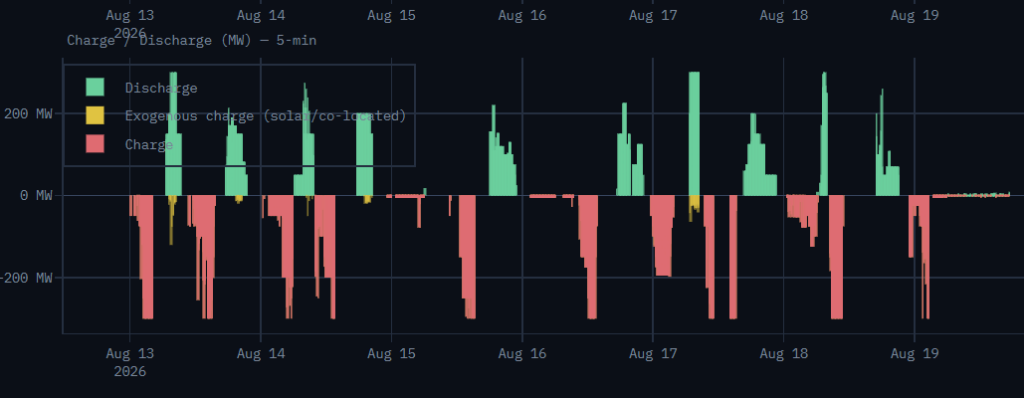
Realized battery arbitrage spreads plunged 84% in the second quarter of 2026, with pointing to increased renewable output and growing battery capacity as the primary drivers of falling power prices and compressed project returns.
The Solar Neighbourhoods program, covering the councils of Newcastle, Maitland and Lake Macquarie in New South Wales, is open for a second round of applications until December 20.
The Australian company has reached a final investment decision covering a 72 MW solar project and 52 MW/104 MWh battery energy storage system in Mount Isa. An energy supply agreement with a local mining company is already in place.
South Australia’s grid operator will complete its annual test of its ability to temporarily curtail rooftop solar generation on August 25. Solar systems in the state will be curtailed for up to one hour, expected to cause the loss of around 1.5 kWh of generation per installation.
UNSW and DAS Solar used Quokka3 simulations to identify cut-induced losses in back-contact TOPCon cells, finding that gap-region cutting reduces efficiency losses by around 50% compared with emitter-region cutting. They recommend an optimized 0.3 mm gap width, particularly important under low irradiance, to minimize edge recombination and resistive losses without additional edge passivation.
An automated I-V screening method identified 58.1% of decommissioned PV modules as suitable for second-life use, with those passing the screening showing a median estimated residual useful life of around 12 years. However, about 14% of modules that passed combined I-V and EL screening failed wet-leakage tests, highlighting the need to assess insulation safety separately from performance.
UNSW researchers developed a defect-engineering strategy for wide-bandgap CZTS solar cells that suppresses copper out-diffusion and harmful defects, achieving a 12.6% efficiency and 852.8 mV open-circuit voltage. The certified device reached 12.36% efficiency, highlighting the potential of improved defect control for kesterite and tandem photovoltaics.