Hack the Box - Most common TTPs the HTB platform teaches students
Learning cybersecurity for the first time is a very difficult task. Possibly just as challenging is the task of teaching it to those new to the concepts, processes, and technologies. Many reasons contribute to this present reality. A few of the most obvious offenders are the rate of change within technology, the prerequisite knowledge that should be obtained before learning about information security/cyber, the vast amount of concepts, topics, and domains that encompass “cybersecurity,” and the challenge to overcome/address the fact that many experts do not have the same opinions on how cyber is best done. Ask 15 people how to secure a network, and you’ll likely get 15 unique answers.
One belief that a majority of cyber practitioners agree on is that cybersecurity is one of those trades that are best learned by doing. Books, lectures, and videos just never will compare to the skills and information gained from working through concepts in a hands-on system fashion. Some domains of industry cybersecurity programs may be less technical than others, but it is always incredibly useful to understand systems and the technical restrictions and concepts that rule them.
A fairly effective method to teach cybersecurity topics in a hands-on manner is through Capture-the-Flag (CTF) events. These are educational exercises in the form of challenges that require users to perform certain actions to find hidden flags or answers within a “box” (computer, website, file, etc). These challenges are very popular for teaching students skills as they take advantage of the gamified style of learning. One difficulty with CTFs is identifying the overlap between what is done in a CTF box and cybersecurity actions at the industry level. Sure, some skills will fit nicely into both the education and workforce/industry realms (such as recon and network traffic analysis), but for the 95% of cyber professionals who are not working in penetration testing, it takes a little more work to realize the overlap.
One way I think we could better develop useful skills and knowledge with CTF-style learning is to clearly identify tasks relating to real-world cyber activity. This could be achieved by utilizing a common understanding of what actions were taken to find the flag, how that task is most commonly accomplished in the real world, and how it could be defended within a corporate infrastructure. This information could be accomplished by identifying and listing MITRE ATT&CK TTPs within CTF challenges. It is one thing for a student to be able to say they found the flag, it is quite another for them to explain how they utilized Active Scanning, Gather Victim Host Information, Search Open Websites/Domains, Valid Accounts, Command and Scripting Interpreter, Exploitation for Privilege Escalation, to identify the hidden flag. This will create a better knowledge grasp of industry terminology while enjoying the fun nature of a CTF.
MITRE ATT&CK (Adversarial Tactics, Techniques, and Common Knowledge) is a knowledge base of real-world tactics and techniques used by cyber adversaries to compromise systems. The framework aims to help organizations across industries better understand threats and protect their critical systems. ATT&CK has standardized threat behavior and also offers intelligence regarding specific APT groups, software/malware, cyber attack chains/campaigns, data sources for detections, and much more. It is based on real-world observations and acts as a behavior model for cyber adversary activity. With the ATT&CK matrix, organizations can plot each step of a cyber-attack and effectively describe the goals and methods an adversary has executed during an incident.
The ATT&CK framework consists of Tactics, Techniques, and Procedures, which all sound very similar to the normal person. To fully grasp the ATT&CK framework, knowing the distinction between these three terms is critical. It can get confusing, so let’s define TTPs:
Tactic – The technical goals of an adversary. Examples are: Reconnaissance, Initial Access, and Privilege Escalation
Technique – How those goals are achieved. Examples are: Phishing for Information (T1598), Scheduled Task/Job (T1053), and Data Encoding (T1132)
Sub Techniques (Procedures)- *Mostly* specific implementations of a technique. Examples are: Spear phishing link (T1598.003) and SSH (T1021.004).
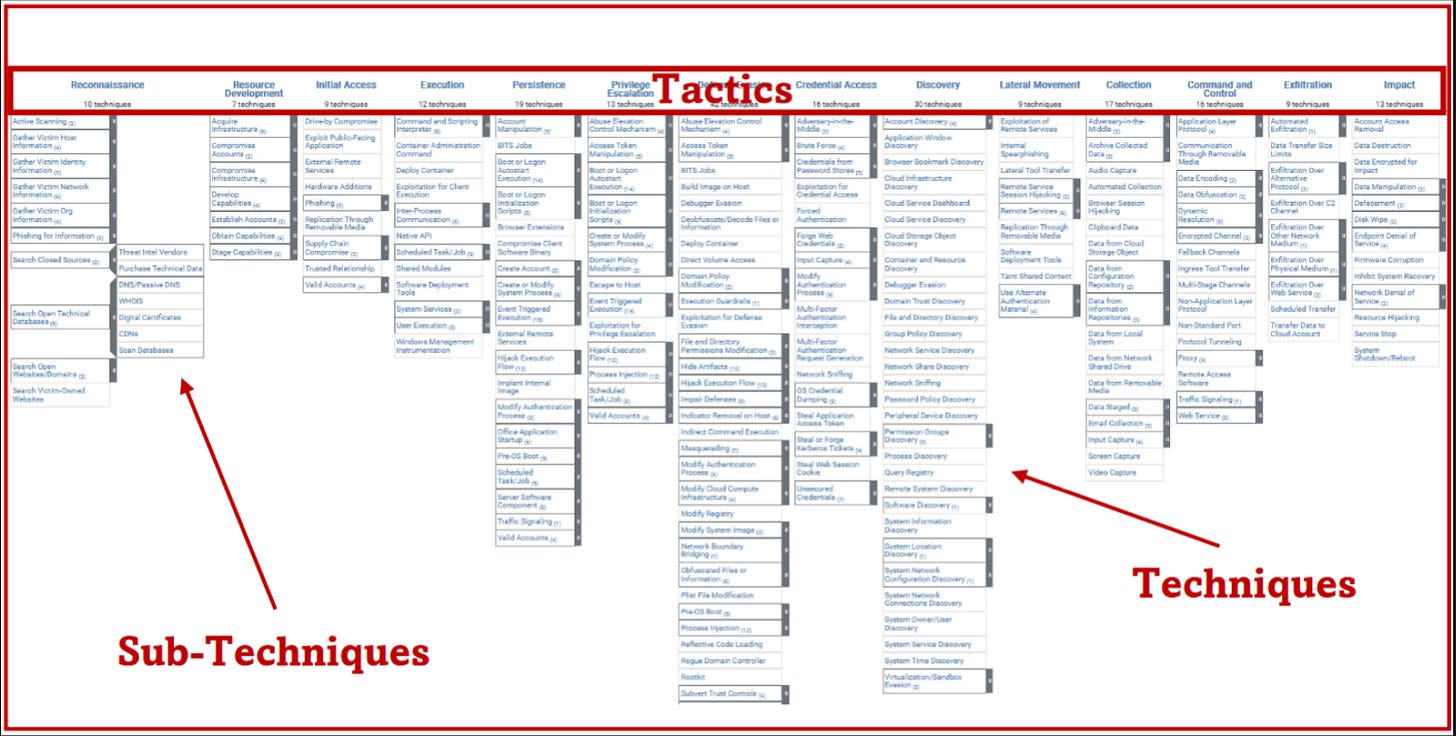
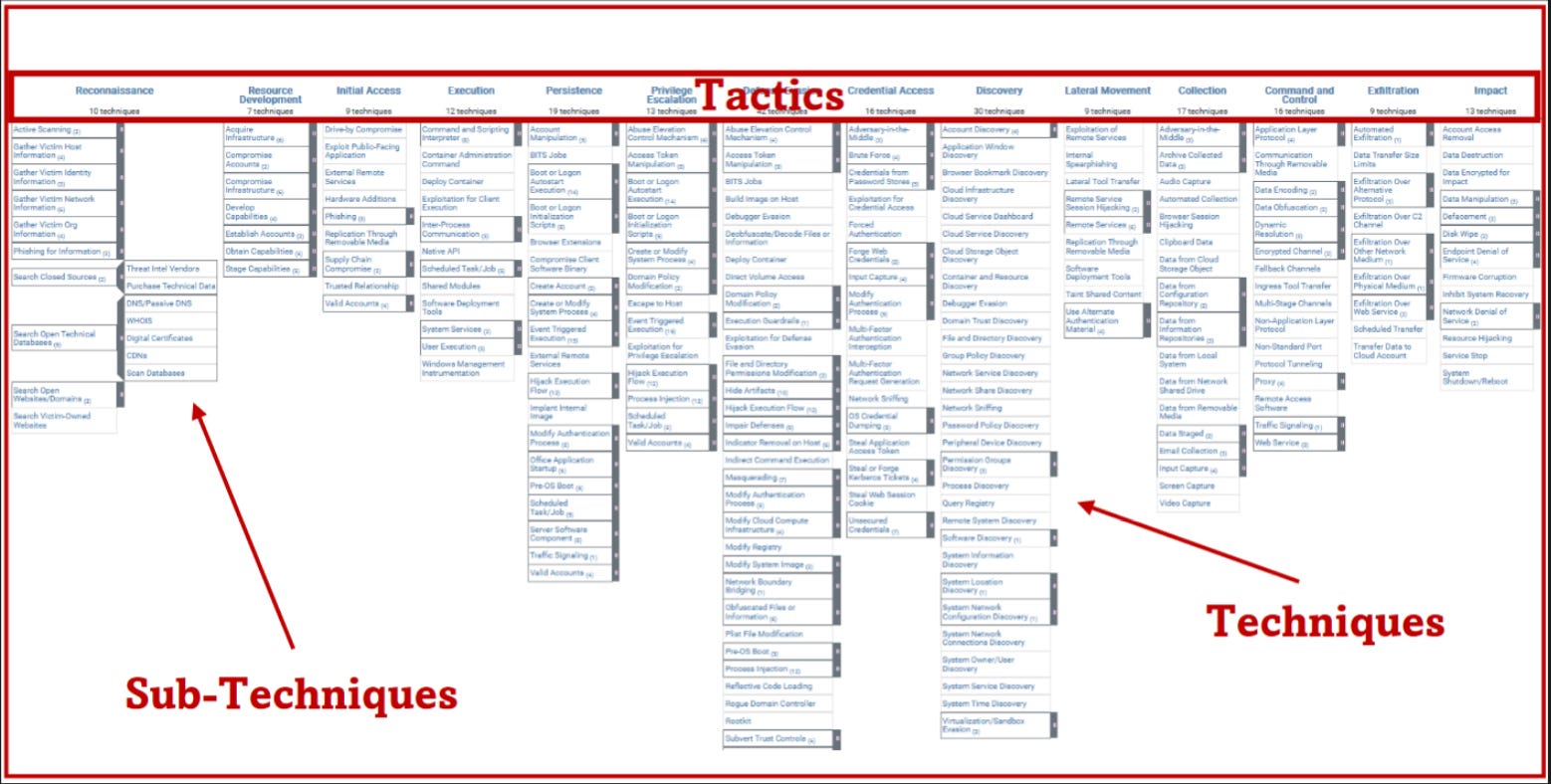
ATT&CK currently supports Enterprise, ICS, and Mobile systems matrices. A portion of the ATT&CK Matrix for Enterprise is shown below. The top row lists the Tactics, each Tactic column lists the associated Techniques, and Sub-Techniques are seen by expanding certain Techniques. As of March 2024, there are 14 Tactics, 201 Techniques, and 424 Sub-techniques in the Enterprise ATT&CK matrix. The enterprise matrix can be sorted by platform, offering a matrix for Windows, macOS, Linux, PRE, Azure AD, Office 365, Google Workspace, SaaS, IaaS, Network, and Containers. There are also matrices for ICS and Mobile (iOS and Android) devices
The ATT&CK matrix for Enterprise
Cyber Threat Intelligence Enrichment: The framework can help organizations enrich their cyber threat intelligence by identifying context on specific attacker TTPs, as well as knowledge of potential artifacts, targets, and indicators of compromise (IOCs). This enrichment allows for threat-informed decision-making and more effective threat mitigation strategies. ATT&CK can be mapped to finished reporting and raw data for CTI analysis and targeted defensive recommendations based on the analysis.
Detection and Threat Hunting: ATT&CK enables SOCs to develop detection, response, and hunt plans based on most commonly recognized adversary TTPs, allowing security teams to nail down potential dangers and proactively implement countermeasures. MITRE notes that “Organizations can utilize knowledge of adversary TTPs as described in ATT&CK to develop, test, tune, and employ robust analytics to detect and investigate malicious cyber activity. The ATT&CK Framework can assist organizations to develop hypotheses, determine data collection requirements, identify and mitigate collection gaps, test and tune analytics using purple-teaming, and conduct a threat-informed hunt.”
Red Teaming and Adversary Emulation: The ATT&CK framework presents a systematic way to replicate genuine attacker techniques during red teaming exercises and adversary emulations, ultimately assessing an organization's defensive capabilities. ATT&CK offers adversary emulation concepts and how to research, implement, and ethically execute adversary TTPs based on ATT&CK.
Security Evaluation and Gap Analysis: ATT&CK can be utilized to locate the strengths and weaknesses of organizational security posture, allowing gaps to be seen, and the ability to prioritize security control investments that will effectively defend against relevant threats.
SOC Maturity Assessment: The ATT&CK framework supports organizations with assessing their Security Operations Center (SOC) maturity. This process includes measuring the ability to detect, respond to, and mitigate various TTPs within ATT&CK. Similarly to a gap analysis, the assessment provides visibility into areas for improvement and prioritizing resources to strengthen the overall security posture.
Behavioral Analytics Development: By mapping the TTPs in the ATT&CK framework to specific user and system behaviors, organizations can develop behavioral analytic models to identify anomalous activities that may be indicative of potential threats or concerns. This proactive approach enhances detection capabilities and helps security teams to mitigate risks.
Training and Education: By maintaining an up-to-date and accurate catalog of adversary TTPs, the framework makes for a useful resource for training and informing security members on the latest adversarial tactics and methods.
The team at Hack the Box explains that “the MITRE ATT&CK framework is an indispensable asset for security operations, offering a shared language and structure for describing and understanding adversarial behavior. It is vital for enhancing various aspects of security operations, from threat intelligence and behavioral analytics to SOC maturity assessment and cyber threat intelligence enrichment.”
Now that we know what ATT&CK is and how it can be used, I want to provide a list of 50 of the most common ATT&CK TTPs that are used in CTF challenges. I got to work with Christopher Haller (he knows a thing or two) on the project and receive some expertise from his many years of experience. Chris is the current RedvBlue coach of the US Cyber Team. He also writes some cool stuff over on Medium.
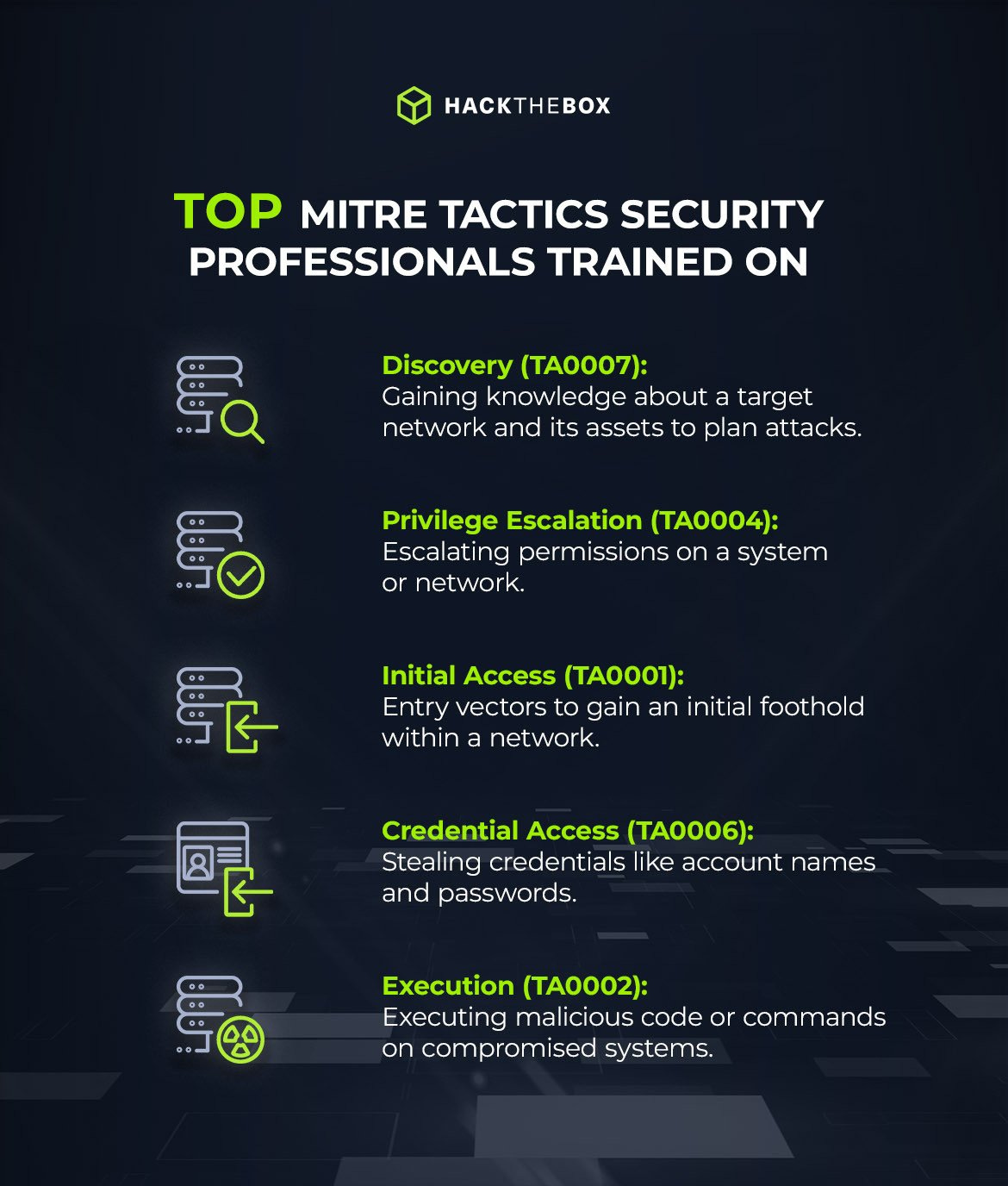
The TTPs below are either methods used to hide flags by challenge developers or actions that need to be taken to retrieve/find the flag. They are grouped by Tactic here for easy organization.
Here are just a few of the reasons why it would be beneficial to learn cybersecurity through CTF challenges within the context of ATT&CK TTPs.
Relate to real-world cyber-attack TTPs
Understand how to better communicate the skills and knowledge gained in CTFs
Better preparation for industry terms and understanding of how to categorize cyber attacks
Develop a ‘purple team’ mentality by identifying attack and defense measures
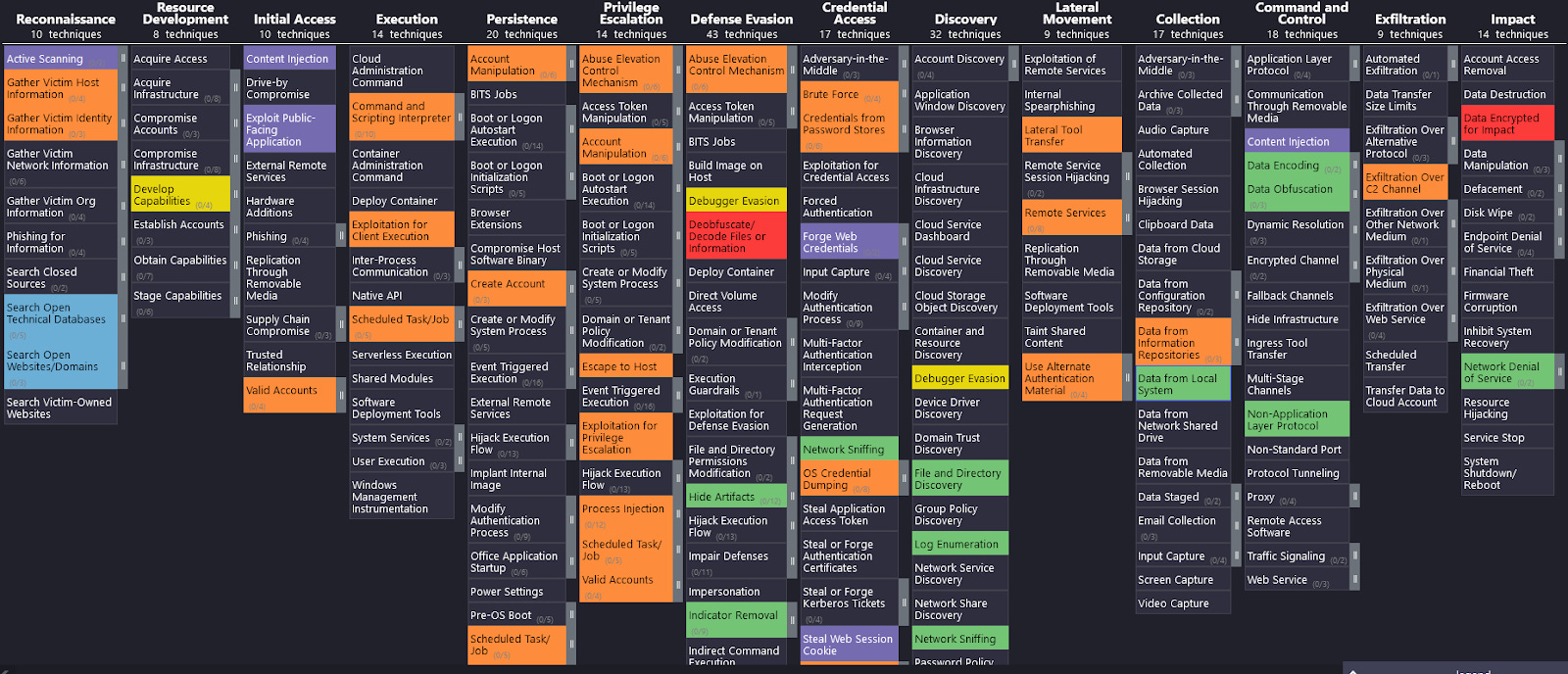
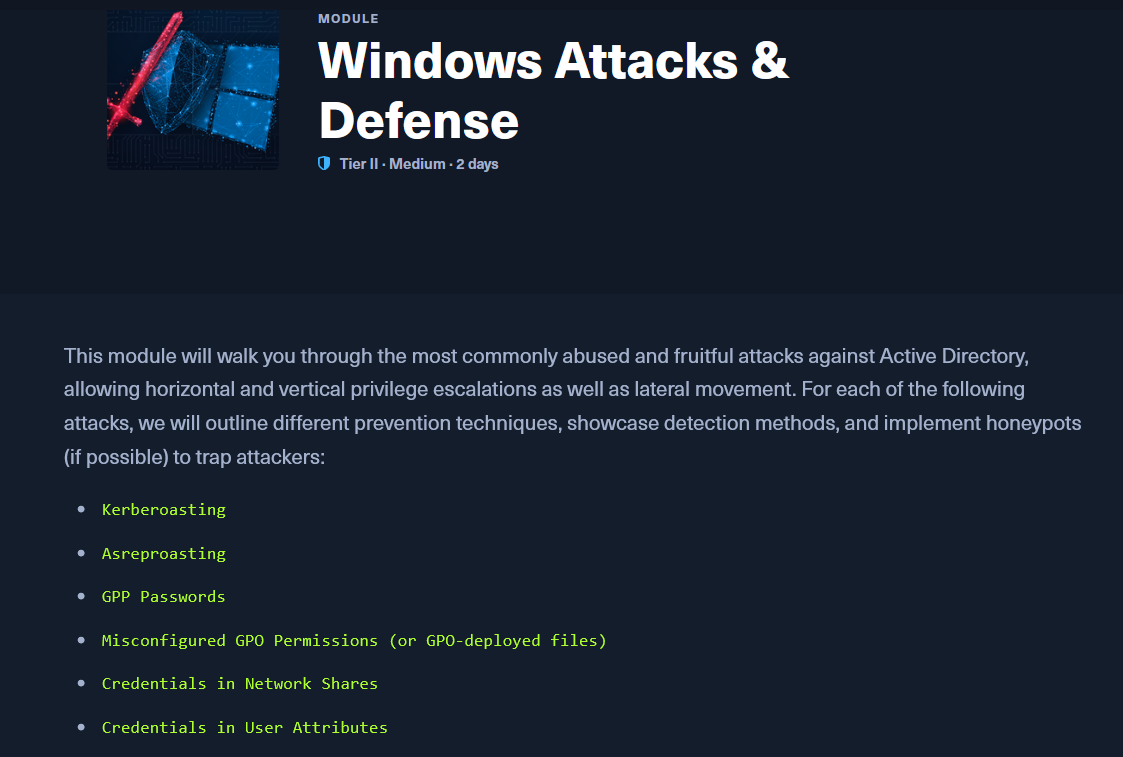
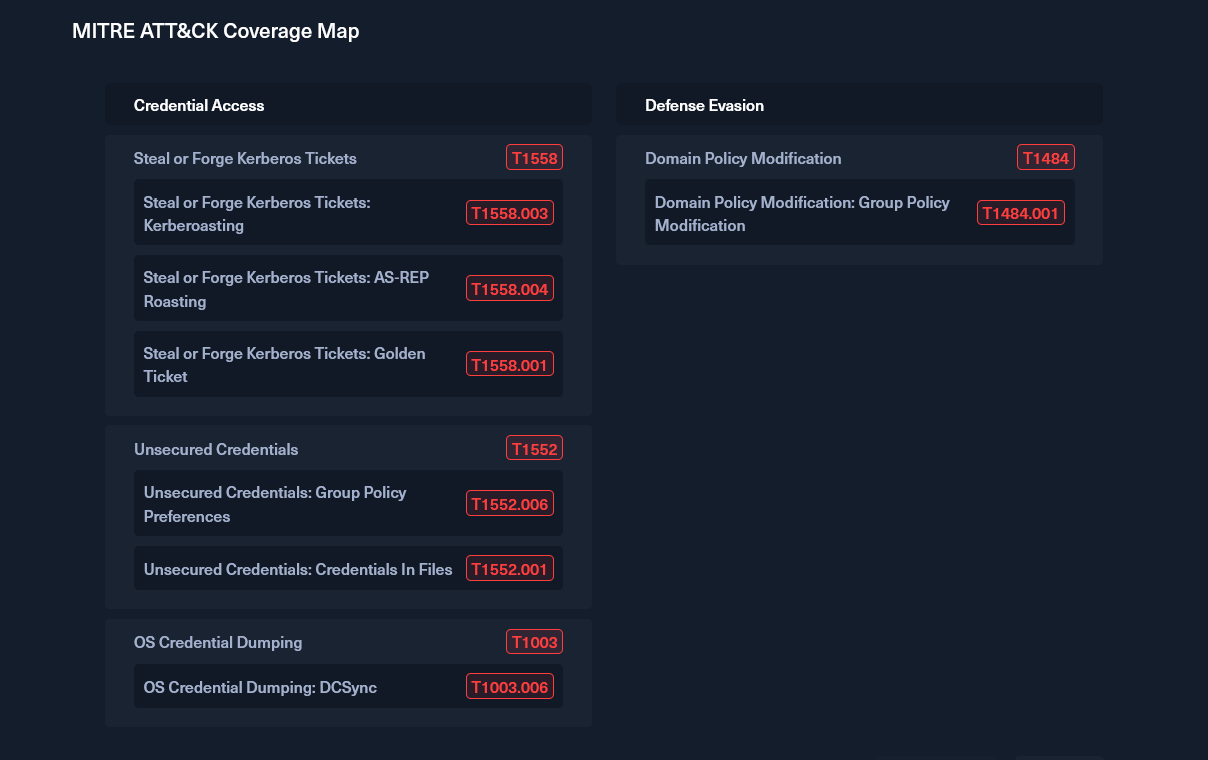
There is at least one resource that already maps challenges to ATT&CK TTPs. Hack The Box Academy is one training site that does a great job of identifying ATT&CK coverage for challenges and training provided. They specify both Techniques and Sub-Techniques, offering even better information than some vendors/DFIR reports out there. Below is an example of the TTPs found in the Windows Attacks & Defense module.
HTB Academy Windows & Defense module
I don’t think this is an effort that will “solve” cybersecurity education, but I do think it is something that could help, if even slightly, better prepare people to work in the field while still in school or on the self-education route. The quicker we can get people ready for the field the better.

Comments
Nothing yet. Say the first thing.
Sign in to join the conversation.