
AI is everywhere.
Every week, a new tool promises to help you write faster, design better, automate work, create videos, or grow a business.
It feels exciting at first. You open new accounts. You watch tutorials. You save long lists of tools. You may even test a few prompts.
But after all that activity, one important question is often left unanswered:
How can I turn these tools into a service that someone may actually pay for?
That is where many beginners get stuck.
The problem is usually not a lack of tools. The problem is a lack of direction.
You may know how to use ChatGPT, Canva, or another AI platform. But you may not know what service to offer, how to package it, what price to set, or how to contact a possible client.
Without those answers, AI stays interesting but does not become useful.
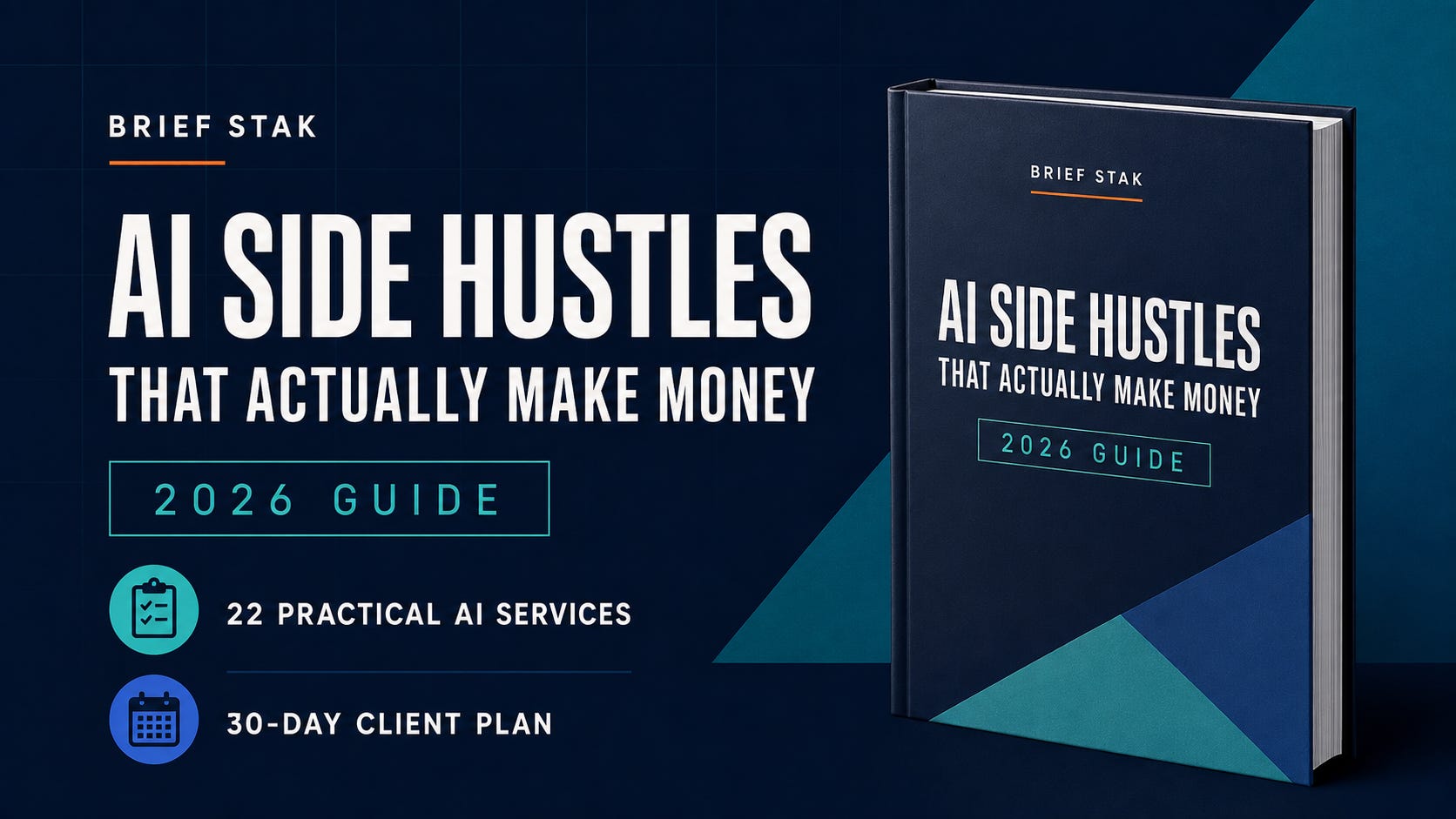
That is why we created AI Side Hustles That Actually Make Money: 2026 Guide.
This beginner-friendly guide is designed to help you move from confusion to action. It gives you practical service ideas, simple workflows, pricing examples, outreach scripts, and a 30-day plan.
It does not promise fast money. It gives you something more useful: a clear place to start.
Most beginners think they need to learn more before they can begin.
They believe they need another course, another tool, or another month of research. They keep preparing, but they never create an offer.
This creates a common cycle:
Find a new AI tool.
Feel excited about its features.
Watch several videos.
Try a few prompts.
Become unsure about what to do next.
Move to another tool.
The cycle feels productive, but it rarely creates a real business opportunity.
A client does not usually care how many AI tools you know. A client cares about a problem you can help solve.
A local business may need social media content. A creator may need short videos. A consultant may need a newsletter. An online store may need product descriptions. A busy team may need meeting notes or simple workflow automation.
These are clear problems. They can become clear services.
The book helps you make that connection.
You do not have to stare at a blank page and ask, “What should I sell?”
The guide gives you 22 practical AI services to explore. The ideas cover different types of work, including content, marketing, design, research, video, audio, productivity, and automation.
This gives you options without forcing you to become an expert in everything.
You can look at the services and ask three simple questions:
Which service matches my current skills?
Which service solves a clear customer problem?
Which service could I practice this week?
The goal is not to start 22 side hustles. The goal is to find one service that fits you.
That one decision can remove weeks of confusion.
A list of ideas is not enough.
You also need to understand what you will do, which tools may help, and what the client will receive.
Each service chapter explains the work in simple language. It shows the basic workflow and gives you a clear picture of the final delivery.
For example, “AI content service” is too broad. A clearer offer might be four blog posts, twelve social media captions, or a weekly email newsletter.
The clearer the delivery, the easier it becomes to explain your offer.
This helps you stop selling “AI” and start selling a useful result.
You do not need advanced coding skills to start every AI service.
Some services require writing, organization, research, or basic design. Others may require more technical knowledge. The guide helps you see the difference so you can choose a realistic starting point.
If you enjoy writing, you may explore email newsletters, blog content, or product descriptions.
If you enjoy visual work, you may explore presentation design, social media graphics, or short-form content.
If you like systems, you may explore simple automation, research support, or meeting summaries.
You can start with what you already know and improve as you work.
Pricing is one of the hardest parts for a new freelancer.
Charge too little, and the work may not be worth your time. Charge too much without proof, and a new client may hesitate.
The book includes simple starter pricing examples to help you think about your first offer.
These are not fixed rules. Your price will depend on the work, your experience, the client, the market, and the value of the result.
But seeing examples gives you a starting point.
You can also learn how to package a service instead of charging for random tasks. A package is easier for a client to understand and easier for you to deliver.
Clear pricing reduces stress. It also makes your offer look more professional.
Knowing what to sell is only half the job.
You also need to find people who may need it.
Many beginners avoid outreach because they do not know what to say. They write long messages, talk too much about themselves, or send the same generic pitch to everyone.
The guide includes simple outreach messages you can adapt.
These scripts help you:
Start a conversation without sounding pushy
Show that you understand the client’s problem
Explain your offer in a few clear sentences
Follow up without sending the same message again
Ask for the next step
You should always personalize your message. But you do not need to write every email or direct message from zero.
That makes outreach feel smaller, easier, and more repeatable.
Getting a reply is exciting. But what happens next?
A client may ask about the process, timeline, revisions, files, or price. If you are not prepared, the conversation can quickly feel confusing.
The book includes client intake questions and delivery checklists.
These help you collect the right information before starting. They also help you define what is included, what the client must provide, and when the work will be delivered.
A simple process can prevent many common problems.
It can reduce missed details, unclear expectations, endless revisions, and late delivery.
You may be a beginner, but your process does not have to look unprepared.
Information only becomes valuable when you use it.
That is why the guide includes a practical 30-day plan.
The plan helps you move through four simple stages:
Week 1: Choose one AI service.
Review your skills, interests, and possible customers. Select one service instead of trying to do everything.
Week 2: Build a simple offer.
Decide what you will deliver, who it is for, how long it will take, and what starter price you want to test.
Week 3: Create a sample.
Make a small example that shows the quality and style of your work. A useful sample gives a possible client something real to review.
Week 4: Start client outreach.
Build a focused list of possible clients. Send personalized messages, track replies, follow up, and improve your offer based on what you learn.
You do not need to complete everything perfectly. You need to complete the next clear step.
That is how momentum begins.
AI can save time, but it can also create problems when used carelessly.
Generated information may be wrong. Images and text may create copyright questions. Client files may contain private information. AI output may also sound generic if you deliver it without checking.
The book includes practical reminders about accuracy, privacy, copyright, and human review.
The basic rule is simple: use AI to support your work, not to replace your judgment.
Always check the output. Protect client information. Follow the rules of the tools you use. Be honest about what you can deliver.
Trust matters more than speed.
This guide is made for people who want a simple and practical starting point.
It may be useful for:
Beginners who feel overwhelmed by AI
Freelancers who want to add a new service
Students who want to build practical experience
Creators who want to package their skills
Job seekers who want to create portfolio samples
First-time service sellers who need a clear process
You do not need advanced technical skills.
You do need curiosity, patience, and a willingness to practice.
The book uses simple English, short explanations, clear examples, and actionable steps. You can read one chapter, choose one idea, and begin testing it.
Imagine opening your laptop and knowing exactly what you are working on.
You are no longer comparing twenty tools. You have chosen one service.
You know the type of customer you want to help. You have a simple package. You have a sample. You know what message to send.
That does not mean success is guaranteed. It means you have replaced confusion with a plan.
This is the biggest benefit of the guide.
It helps you move from:
“I want to make money with AI”
to:
“I offer this service to this type of client, and this is how I will start.”
The second sentence is more useful because it leads to action.
AI Side Hustles That Actually Make Money: 2026 Guide includes:
22 practical AI service chapters
Simple tool and workflow explanations
Offer and starter pricing examples
Example scenarios
Client outreach scripts
Client intake questions
Delivery checklists
A 30-day client plan
AI safety, privacy, and copyright guidance
It is a complete beginner roadmap, not another random list of AI tools.
This book does not promise quick money, passive income, or guaranteed clients.
No honest guide can make those promises.
Your results will depend on your skills, effort, market, offer, communication, and consistency.
What the book gives you is a better starting point. It saves you from having to organize every step alone. It helps you avoid common mistakes. It gives you a structure you can follow and improve.
You do not need to master every AI tool.
You do not need a perfect website, a large audience, or a complicated business plan before you begin learning.
You need one useful service, one clear offer, one good sample, and a plan to contact possible clients.
The guide helps you build those pieces in a simple order.
If you are tired of saving AI side hustle ideas but never choosing one, this book was made for you.
If you want practical steps instead of more hype, this book was made for you.
If you are ready to stop collecting tools and start building an offer, this is your next step.
You do not need to wait until you feel completely ready. Confidence often comes after you begin, not before.
Start with a small service. Practice on a sample. Show it to real people. Listen to their questions. Improve one part at a time.
Even if your first offer changes, the experience will teach you more than another week of watching videos. A small action today can give you useful feedback for tomorrow.
Choose one service. Build one offer. Create one sample. Start taking action.
Educational use only. Income is not guaranteed. Results depend on your effort, skills, market, and consistency.
No posts
Comments
Nothing yet. Say the first thing.
Sign in to join the conversation.