
Pulp is having a bit of a renaissance in the 21st Century, and thank God for that. The classic entertainment of yesteryear can still provide plenty of thrills and chills today, and there’s a ton of authors and other creators putting out new genre stories every day. This stuff is more accessible now than at any other point in history, so let’s dive in with a quick primer on what pulp even is, why it’s important, and where you can go to get your fix.
What Is Pulp?
I think all of us here at P3 have at least a general concept of what pulp fiction is. It’s popular entertainment in literary form, the antithesis of high-minded literary fiction. While literary fiction seeks to explore philosophical ideas about our world and the nature of men, pulp seeks to entertain. Horror, westerns, romance, action, historical adventure, hardboiled crime, and countless other genres hit their zenith in the pulp explosion of the 1920’s and 30’s. People were eager to escape from the drudgery of the Depression and cheap pulp magazines offered a way to do that. The literary establishment at the time shook their heads and even sneered at these magazines, regarding them as some kind of trashy, violent pornography that no decent man would be seen reading.
Yet the format took off. People did read them and even more, they loved them. These magazines also offered an income to countless young writers who were interested in writing something other than literary fiction. Robert E. Howard, for example, was a true lover of both history and action. His El Borak stories allowed him to indulge his love for the history of Afghanistan as well as his love for swashbuckling swordplay. I highly doubt Howard would have been able to get El Borak published in hardcover by a “serious” publisher of the time. Today, writers like Howard and Lovecraft are revered for the talented scribes they were, but the existence of pulp magazines was the only reason they were able to get their work out there.
The pulp era is long over, yet its influence is everywhere today. Lovecraft is right up there with Stoker, Poe, and James as one of the greatest horror writers of all time. The hero pulp magazines, which gave us such characters as The Lone Ranger, The Domino Lady, The Shadow, and Doc Savage, basically created the template for the comic book superhero. Indeed, many of the most famous comic heroes, such as Batman and Superman, ‘borrowed’ VERY liberally from established pulp heroes. Sometimes the ‘borrowing’ was more along the lines of ‘straight up plagiarized.’
But still, the question remains; what is pulp? How exactly do we define it? In my article last week on The Naked Jungle, I mentioned that the story it is based on is pure pulp. A man vs vicious animals in the jungle, the type of thing you saw all the time in pulp mags such as Argosy. Except that story wasn’t published in a pulp mag such as Argosy. It was published in Esquire, which was regarded as an upper-market magazine, not a tawdry rag. So is The Naked Jungle’s original story pulp? It depends on how you define the term.
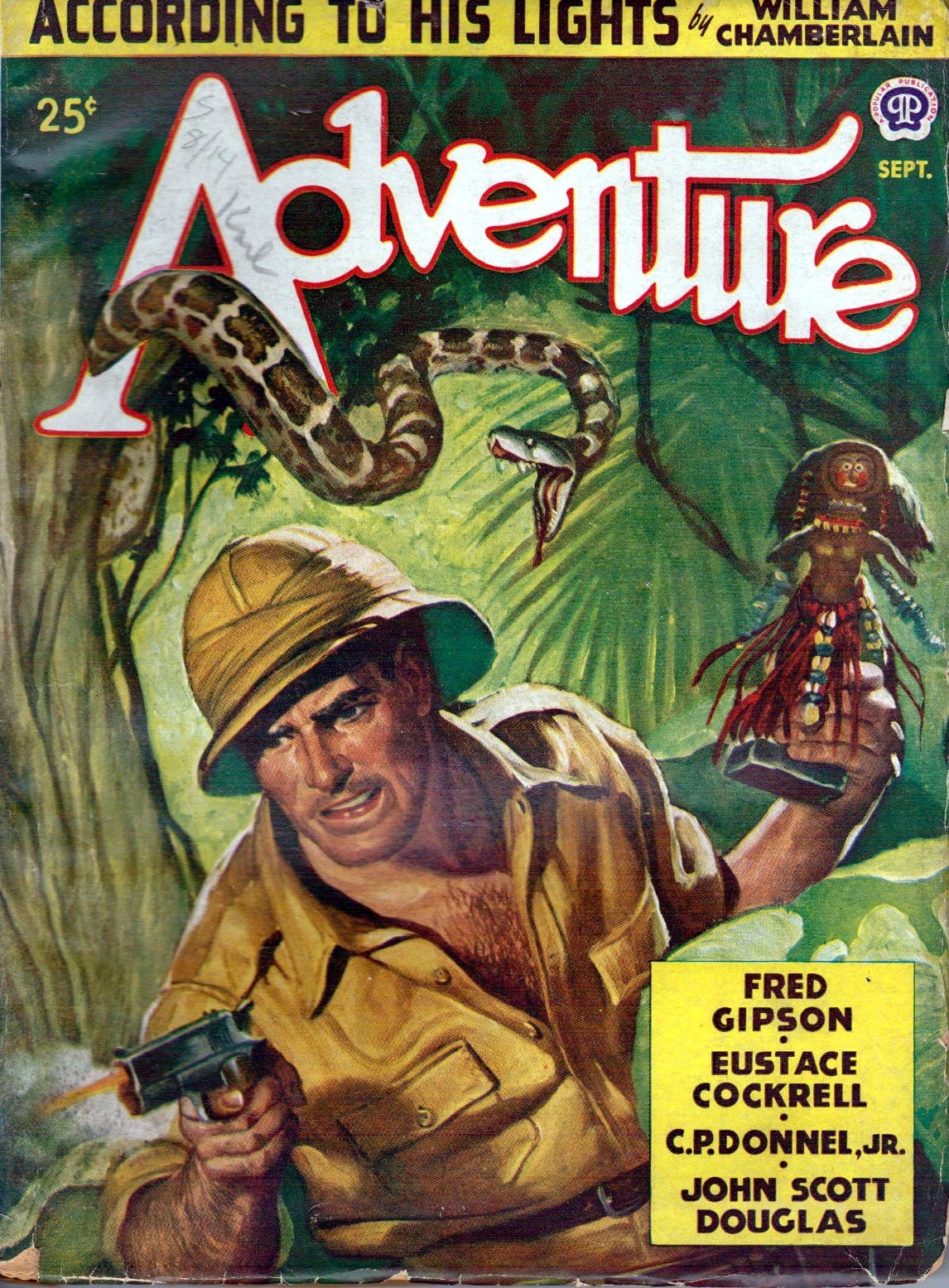
Some people delineate pulp by magazine size. Standard pulp magazines from the heyday were 7 X 10 inches. Printed on cheap wood-pulp paper, hence the use of the word ‘pulp.’ In the early 1950’s most publishers discontinued that size and style of magazine, and many of the classic pulp mags ceased publication altogether at that point. Some of them, however, continued in the digest format. A digest magazine is sized 5.5 X 8.5 inches, printed on cheap, but much better quality paper than wood-pulp. A few original pulps made the valiant effort to carry on in the digest format before fading away completely, to be replaced by the Men’s Adventure Magazines. There are some purists who will tell you that a story isn’t pulp unless it was published in a pulp magazine format back in the day. And strictly speaking, they aren’t wrong. Pulp wasn’t just a bunch of genres, it was a term used in the industry to describe a specific size of magazine. By that logic, no, The Naked Jungle’s original story isn’t a pulp story because it was published in a different format.
Most people these days tend to define pulp by style or genre, however, not by magazine size. By that logic, The Naked Jungle, both story and film, is pulpier than the Tropicana that made Tony Soprano so mad. The Phantom and The Rocketeer are both characters that originated in comic books, not magazines, but both of them are considered iconic pulp heroes. Why? Because they fit the trappings and style of the pulps, even though they come from comics. For that matter, The Shadow and The Lone Ranger both debuted as radio characters before their pulp magazine counterparts hit the newsstands. They’re still pulp characters all the way. They were made to entertain a mass audience and they succeeded. Pulp is about fun, first and foremost.
Why Should I Care?
Reading rates are currently extremely low around the country. Children barely read at all. Adults aren’t much better. Reading has increased among women, driven largely by the romance and romantasy trend, which is a good thing. But what about men and boys? Their reading rates are in decline. In addition, many people lack both the time and the mental fortitude to actually read full-length novels these days. Kids in school are regularly given excerpts from books to read. They don’t read whole books anymore. Trying to get someone to read a full novel can be difficult, in part because of lack of practice, and in part because everyone is pressed for time.
This is the big advantage of genre fiction. It’s often a lot shorter than literary fiction. Pulp magazines were dominated by short stories, novelettes, and novellas. Rarely would you find something longer than 40,000 words. Most modern paperbacks you encounter at Barnes and Noble today are gonna come in somewhere around 80-90,000 words by contrast. Pulp writing emphasizes story, action, and keeping things moving. There’s a lot of modern people that might be intimidated by the thought of attempting to read a 500 page book, but they might feel comfortable braving a 200 pager.
Plus, reading fiction is good for you. Seriously. Reading and writing fiction activates parts of your brain that are not typically activated by reading nonfiction. We can’t afford to have a society full of people that don’t/can’t read. We should reject that as acceptable right from the start. Pulp or genre writing is not seen as particularly sophisticated or intelligent stuff, but it’s still reading. Writing it is still writing. The brain is still developing when engaging with it, and even better, it’s actually entertaining. A lot of people are probably bored reading the whaling dictionary parts of Moby Dick, but are very much into the sections describing encountering a giant squid and then battling a huge evil whale to the death. If it gets people reading, particularly young people, what’s the problem?
Perhaps you’re worried about genre stuff feeling juvenile or not suitable for a sophisticated adult with a job. Well…
Is Pulp Inherently Juvenile?
Like I mentioned above, the literary critics of the pulp heyday looked down their noses at the format and the content both. However you define pulp, it wasn’t seen as ‘respectable.’ And in fairness, you can see why. Just take a look at the covers on some of these lurid magazines. Cowboys shooting each other to pieces, half-naked women everywhere, vampires, werewolves, and other monsters of the night, romance covers that heavily imply a lot of physical action between the attractive leads, taglines that promise excitement and adventure instead of thought provoking introspection. Pulp magazines were viewed as being juvenile at the time, similar to how comics books came to be viewed.
In fact, there was a bit of a moral panic over it. Teachers and parents across the nation were concerned at just how many young kids were reading pulp magazines. At one point in the early 30’s they were estimating that something like 90 percent of schoolkids were reading pulp mags regularly. Moby Dick? The Grapes of Wrath? Crime and Punishment? Nah. Kids were busy reading stuff with titles like The Horror at Red Hook, or Iron Shadows on The Moon, or Children of The Bat. Real thinking man’s fiction. What’s funny about that is that kids today mostly don’t read at all. They’re entirely captured by their devices and the brain development that comes with reading fiction (ANY fiction) consistently does not occur from texting all day. Imagine if we could get kids reading the old pulps again. Not a single teacher in their right mind would complain.
Back to the topic at hand. Are pulps juvenile? Absolutely not. Some of the writers for these magazines actually did put very thought provoking themes and ideas into their stories. HP Lovecraft is widely loved for the Mythos he created. People love Nyarlathotep, Cthulhu, Yig, and the various other monsters he gave us in the pages of Weird Tales. But look deeper. Lovecraft had a philosophical view of man’s place in the universe, which he called ‘cosmicism.’ His horror stories were the vehicle in which he put those ideas out into the world. The most consistent running theme of his work is that mankind is blissfully ignorant of just how insignificant we are in the grand scheme of the universe, and that we should be grateful for said ignorance because the universe is in fact actively hostile to us when it’s not utterly indifferent. Heavy stuff that touches on religion, philosophy, and the nature of mankind and the world we inhabit. There’s nothing juvenile here.
It’s worth noting that not every pulp author was putting the level of academic thought into their writing that Lovecraft did. Most didn’t. But plenty of them had interesting ideas and philosophical beliefs, and those ideas and beliefs inevitably made their way into the fiction they were writing. Popular fiction reaches the masses in a way that literary fiction generally does not, and the benefit of that for the writer is that someone writing pulp or ‘genre’ fiction can present said masses with interesting and challenging ideas. If you are a writer who has looked down your nose at certain genres, I urge you to reconsider. There are plenty of mass market stories that have managed to infuse exciting tropes with genuine literary talent.
Where Can I Read Pulp Stuff Now?
Friend, do I have good news for you. It’s never been easier to find this stuff. Original pulp magazines are highly sought after collectors items and can be found just about any place that sells stuff. I’ve seen them on Ebay, Etsy, Amazon, and even in used bookshops. However, they can be VERY expensive and many of them are in delicate condition. They simply weren’t made to last for very long and I’ve seen examples that are literally crumbling apart in their wrapping. If you want to buy old pulp magazines, go right ahead. Those things are awesome and you can own a piece of genuine history. However, if you actually want to read the things and not have to worry about being as careful as possible, consider getting reprints.
Reprints of old pulp magazines are widely available. Check Lulu.com, which is a print-on-demand site, and you will find hundreds of them. These are literally modern printings of the classic magazines, printed on modern paper that you can be a little rough with and not worry about. I have a reprint of Weird Tales from January 1937 that I brought to the beach this summer. It got thrown around in my bag, dumped in the sand, and generally treated disreputably. It’s fine. A real pulp mag would have disintegrated before I even got to the beach. Reprints are also available cheaply, frequently costing between eight and fifteen bucks.
There’s also paperbacks. The Shadow and Doc Savage were both widely reprinted in paperback formats, sometimes with the books even having two stories in one. You can find tons of these available online for cheap. HP Lovecraft and Robert E Howard’s works are widely available in both paperback and hardback. I will say that only the most popular pulp authors and characters consistently got reprinted in paperback, so if there’s a story or writer you really like that isn’t a literary legend, you may be out of luck on the paperback front. Another advantage of reprints. An advantage for the paperback format, however, is that you can zero in on specific stories and characters that you like, without having to flip through a magazine full of stories you may not care about. You only want to read The Shadow? Check out the paperbacks with his stories and you can skip anything else that would have been in the OG magazine.
How about modern pulp? We are living in the new golden age. You can find tons of westerns, horror, sci-fi, fantasy, romance, mystery, thriller, and hero genre stories being made by new authors today. Veritas is one of many small publishers keeping that classic literary spirit alive. Authors such as Charles Milhouse, Jim Beard, Leonard Apa, and countless others are working to keep genre fiction going. Amazon has opened the floodgates and allowed a ton of authors to get their work out there, so you have an ocean of choices.
Pulp is a lot of things. It’s a type of fiction, it’s a style of magazine, it’s a way of writing. But most of all, pulp is about having fun. There should be room on everyone’s bookshelf for serious fiction that examines big ideas. The classics are classics for a reason and we should all take some time to read and understand the western literary canon. But there’s also a time to walk on the dark side of the literary tracks. To venture into worlds where anything can happen and nothing is too lurid or unrealistic. To the land of gunmen, flying aces, horrible monsters, costumed heroes, beautiful women, tough men, and dastardly villains. If any of that sounds appealing to you, congratulations, you’re a pulp fan.
2026 has had its share of challenges for readers and writers. We’ve grappled with the news that traditional publishers are discontinuing the mass market paperback format, which was the successor to pulp mags in many ways. We’ve struggled to address the increased prevalence of AI and the suspicion and paranoia that has sprung up around its potential use. But, we’ve also seen more and more people opening themselves up to reading for pleasure. More new writers are coming into the field all the time, bringing fresh talent and perspectives. Pulpfest 2026 was the biggest event of its kind thus far, and all signs point to next year being even bigger. The future is not set and I can’t promise only good things to come, but I think we have much to look forward to as we work to keep genre writing alive
.
No posts
Comments
Nothing yet. Say the first thing.
Sign in to join the conversation.