
Public Discourse is the Witherspoon Institute’s online journal of religion, education, and culture. If you enjoy our work, please subscribe to receive our (free) daily and/or weekly essay drops, or better yet, share this newsletter with a friend.
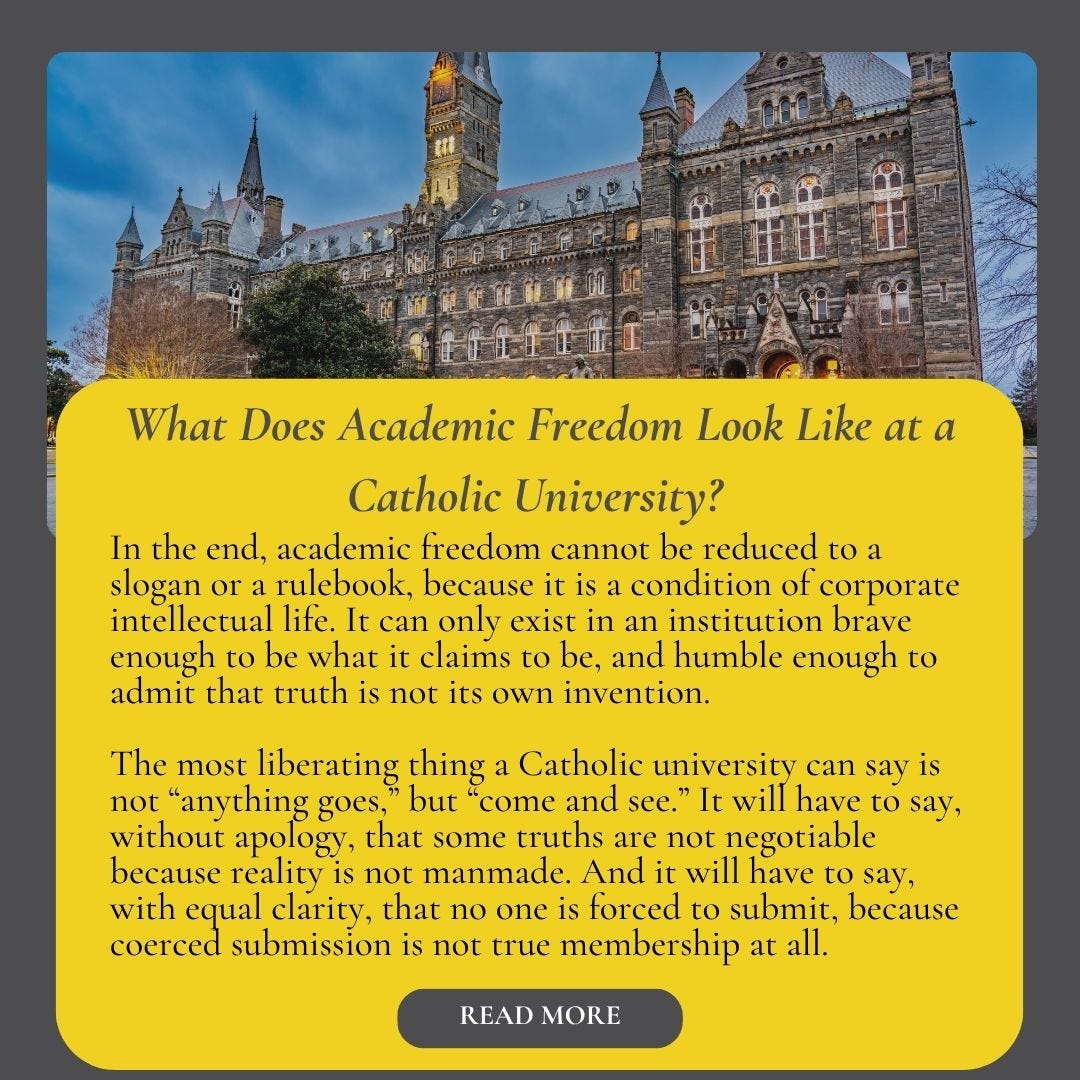
In this month’s featured long read, Dr. Santiago Schnell explains what true academic freedom looks like at a Catholic university:
In the end, academic freedom cannot be reduced to a slogan or a rulebook, because it is a condition of corporate intellectual life. It can only exist in an institution brave enough to be what it claims to be, and humble enough to admit that truth is not its own invention. The most liberating thing a Catholic university can say is not “anything goes,” but “come and see.” It will have to say, without apology, that some truths are not negotiable because reality is not manmade. And it will have to say, with equal clarity, that no one is forced to submit, because coerced submission is not true membership at all.
Read Dr. Schnell’s full essay here.
Elizabeth Corey writes the first in a three-essay series exploring the new gatekeepers of meaning on the political right.
It’s easy enough to be a critic, sniping from the bleachers as a journalist or prophet, when you’ve left the institutions of civil society or have little to do with them. But we who live and work in them must take a different approach. It is irresponsible and dangerous to call for attack and revolution without considering everything that has gone into our existing social order, which still has much health in it—especially at the local level; especially among people who live and work together in “analog” communities.
You can read Elizabeth’s full essay here, and the other two essays in the series, written by R. J. Snell and Andrew Walker, here and here.
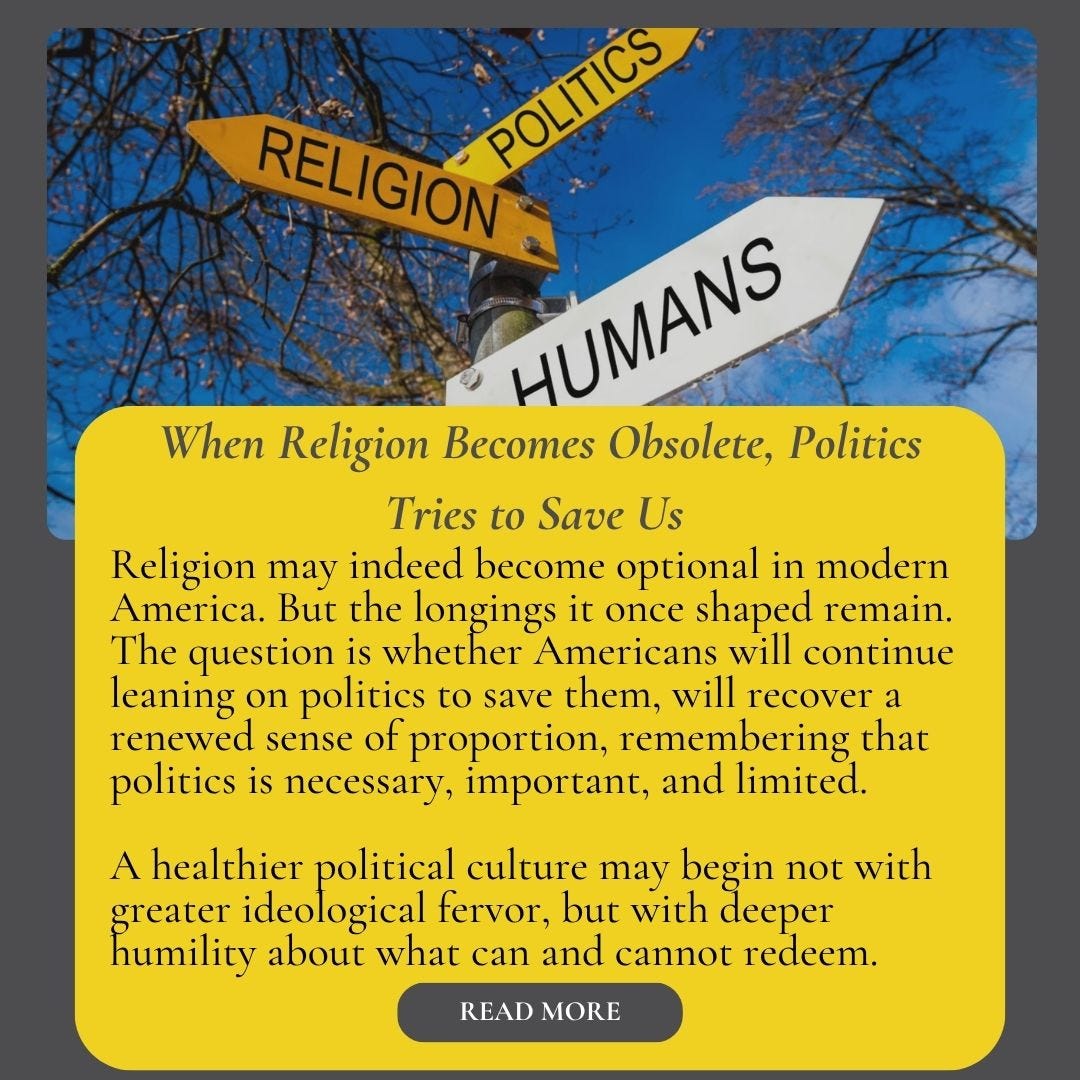
Russell Lackey and Mark Mattes reflect on what is left behind once religion becomes altogether obsolete in our society:
Religion may indeed become optional in modern America. But the longings it once shaped remain. The question is whether Americans will continue leaning on politics to save them, will recover a renewed sense of proportion, remembering that politics is necessary, important, and limited. A healthier political culture may begin not with greater ideological fervor, but with deeper humility about what can and cannot redeem. For when politics becomes our highest love, it will also become our cruelest disappointment, leaving our homes colder, our holidays lonelier, and our common life harder to sustain.
And only when our hopes are rightly ordered can our shared life endure without demanding from Caesar what belongs only to God.
You can read the full essay here.
“The Mirage of the ‘Conservative Cosmo’,” Mary Rose Somarriba, Fairer Disputations
“New Study Shows Declining Maternal Mortality Rates in States with Strong Pro-Life Laws,” Michael J. New, National Review
“Allegiance, Birthright, and Citizenship,” Phillip Hamburger, Law & Liberty
If you enjoy this newsletter, subscribe to receive our (free) daily and weekly essay drops!
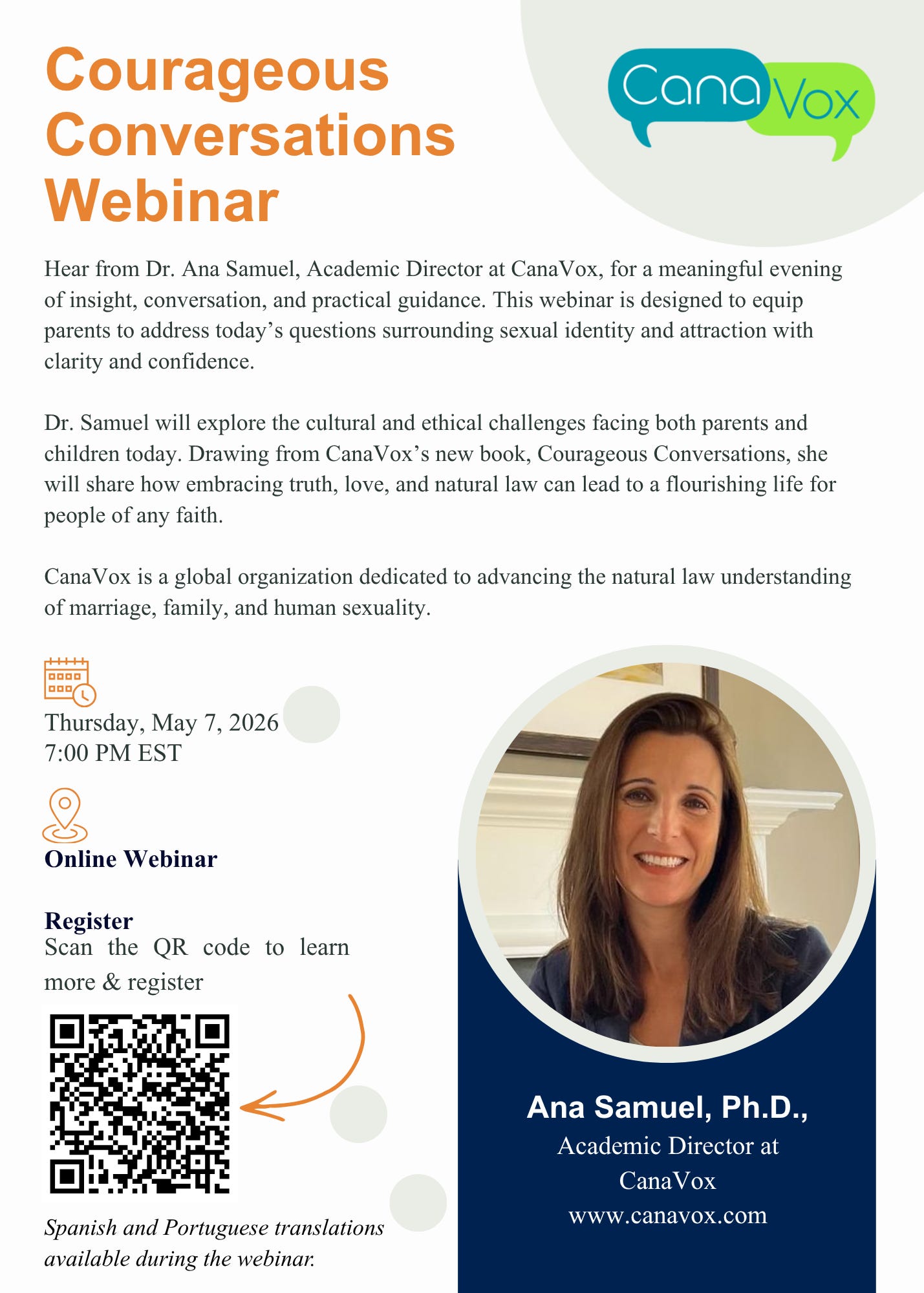
CanaVox, an organization seeking to give a voice to the natural-law view of sexuality and marriage, is hosting a webinar on the cultural and ethical challenges facing today’s parents. Learn more and find registration information below!
No posts
Comments
Nothing yet. Say the first thing.
Sign in to join the conversation.