
Uh-oh. You had a feeling. In fact, you noticed something wasn’t quite right before you could name it. There was a pattern beginning to form.
The good-morning texts stopped. Replies come slower, shorter, later. Date night got moved twice with reasons that sounded fine, but felt off. Nothing obvious or definitive, just a general feeling that something shifted.
If anything like this is happening in your relationship, it’s an uneasy feeling and you want to do something…right now, before you lose this relationship forever.
Solid instinct, but you also want to be sure you’re not overthinking it and about to make things worse.
When the distance starts to build, there are two natural reactions.
Some chase. Chasers are problem solvers who take aggressive action to close the gap. They text more, call more, ask what’s wrong three different ways, float the idea of a serious talk, try to decrease the distance any way they can. It all sounds so logical.
If you have ever run after a dog that slipped its leash, you already know how this ends. The faster you move toward them, the faster they move away. Pursuit reads as pressure, and pressure encourages flight.
Others protect. Protectors are cautious and careful. They don’t want to endure any more pain than necessary. They pull back first, on the theory that distance hurts less when it’s your idea. They withhold warmth, share less, match the silence and add to it. Get to the exit before you’re asked to leave. Self-preservation like this also feels logical.
Both feel like reasonable approaches for dealing with distance. Both make the situation worse.
The distance often isn’t the problem, but your reaction is. So, before you decide this is a relationship emergency, make sure you haven’t misread what the space means.
It might be nothing. Anxiety runs on confirmation bias or the tendency to find information that agrees with your viewpoint. Confirmation bias is efficient. Go looking for evidence that they’re disinterested, cheating, or done, and you will find it. A slow reply, a cancelled plan, a quiet dinner could all signal certain doom. Or, nothing at all. Independent, busy, or tired is not the same as pulling away, even though your anxiety and overthinking register the danger of growing distance.
You may be reading the signals correctly, but misjudging the source. Yes, they’re pulling back, the relationship is cooling down a bit, but it might not be about you at all. Work might be crazy busy, a parent is sick, they slept badly for a week, or the stock market is crushing their retirement plans. People go quiet for a hundred reasons that have nothing to do with the relationship, and the anxious mind converts every one of them into a judgement on your worth. It feels personal, even when it isn’t.
The final possibility is the one anxiously attached people never see coming. The distance might even be a good sign.
Early on, partners put on their very best performances. Constant contact, big gestures, and outsized effort designed to seal the deal and address any concerns. It takes extra time and effort that are difficult to maintain at such high levels for long periods of time. More importantly, it starts to feel less and less necessary. As the relationship flourishes and the bonds solidify, all of that effort feels wasted. Good news!!
When partners trust the relationship, they stop auditioning.
Consider what the research says about the space you’re eager to close.
Missing your partner can be a good thing. A little space and distance creates an opportunity that couples don’t always get. It lets partners miss each other, which boosts committment (Le et al., 2011). In our study of how people experience missing a partner, missing was associate with greater feelings of closeness and investment in the relationship, not with a desire to drift away or end the relationship (Le et al., 2008). Let the distance work for your relationship, by giving you a chance to miss each other. It can make the reunion that much better.
Space isn’t always the crisis it feels like.
But you have to give missing a chance to work. Too often, people get impatient. They sense distance and force closeness to repair the perceived problem. Research finds that partners react in one of three ways: they lean in, they get hostile, or they withdraw further (Fleischmann et al., 2005). Only one of those helps you. Withdrawal, the most common of the three, is the exact outcome you were trying to prevent. So the chase is completely counterproductive because it encourages the distance the chase was meant to cure.
That’s a bad cycle to find yourself in.
Your fear of abandonment causes the abandonment.
This is what makes dealing with a partner pulling away so difficult. Every instinct tells you to move. The evidence says every one of those moves makes your situation worse. The distance is not the crisis. Your response could become one.
The solution is a simple strategy that’s going to feel like the opposite of help.
Stay still.
Not because you’re lazy or don’t care. Because stillness is the one action that provides clarity about your situation. The moment you chase or retreat, you contaminate the data. You can no longer determine whether they were pulling away or whether they were reacting to you chasing or pulling away yourself.
Your stillness is the one move that lets the real signal come through.
There’s a specific protocol for the moment the spiral actually hits, the thing that keeps you still when your thumb is over the send button at 11pm. Paid subscribers get it right here: what to do with the message you’ve already rewritten four times, how to borrow calm when you have none, and the three-column script that turns an anxious reaction into a secure one before you feel remotely secure.
When you stay still, the situation provides its own answers.
If your partner was pulling away because they feel more certain about the relationship, your stillness shows them you’re feeling confident as well. This isn’t about making them stay, but it tells you if that was their plan all along.
If they react to your stillness by pulling away even more, you have your answer too. No, it’s not the answer you probably wanted, but it provides the clarity you need to move forward. You don’t want to waste months auditioning for someone who doesn’t have space in their life for a real relationship. You don’t want them at any cost. What you really want is the truth, because you deserve someone who’s truly all in.
Holding on tighter doesn’t make people want to stay. Even if it did, that’s not what you want.
You want volunteers, not hostages.
Hope this helps,
Dr. L
If this helped, a like, share, or restack helps more people find it.
Have a comment? Please share. I read every one.
Dating is tough. Know someone who needs a little help? Forward this to them. It might be the most useful thing you share with them this year.
Share Psychology of Relationships
Here are other ways to learn more about the Psychology of Relationships:
My podcast: Love Strategies
My website: www.PsychologyofRelationships.com
References
Bartholomew, K., & Horowitz, L. M. (1991). Attachment styles among young adults: A test of a four-category model. Journal of Personality and Social Psychology, 61(2), 226–244.
Fleischmann, A. A., Spitzberg, B. H., Andersen, P. A., & Roesch, S. C. (2005). Tickling the monster: Jealousy induction in relationships. Journal of Social and Personal Relationships, 22(1), 49–73.
Le, B., Korn, M. S., Crockett, E. E., & Loving, T. J. (2011). Missing you maintains us: Missing a romantic partner, commitment, relationship maintenance, and physical infidelity. Journal of Social and Personal Relationships, 28(5), 653–667.
Le, B., Loving, T. J., Lewandowski, G. W., Jr., Feinberg, E. G., Johnson, K. C., Fiorentino, R., & Ing, J. (2008). Missing a romantic partner: A prototype analysis. Personal Relationships, 15(4), 511–532.
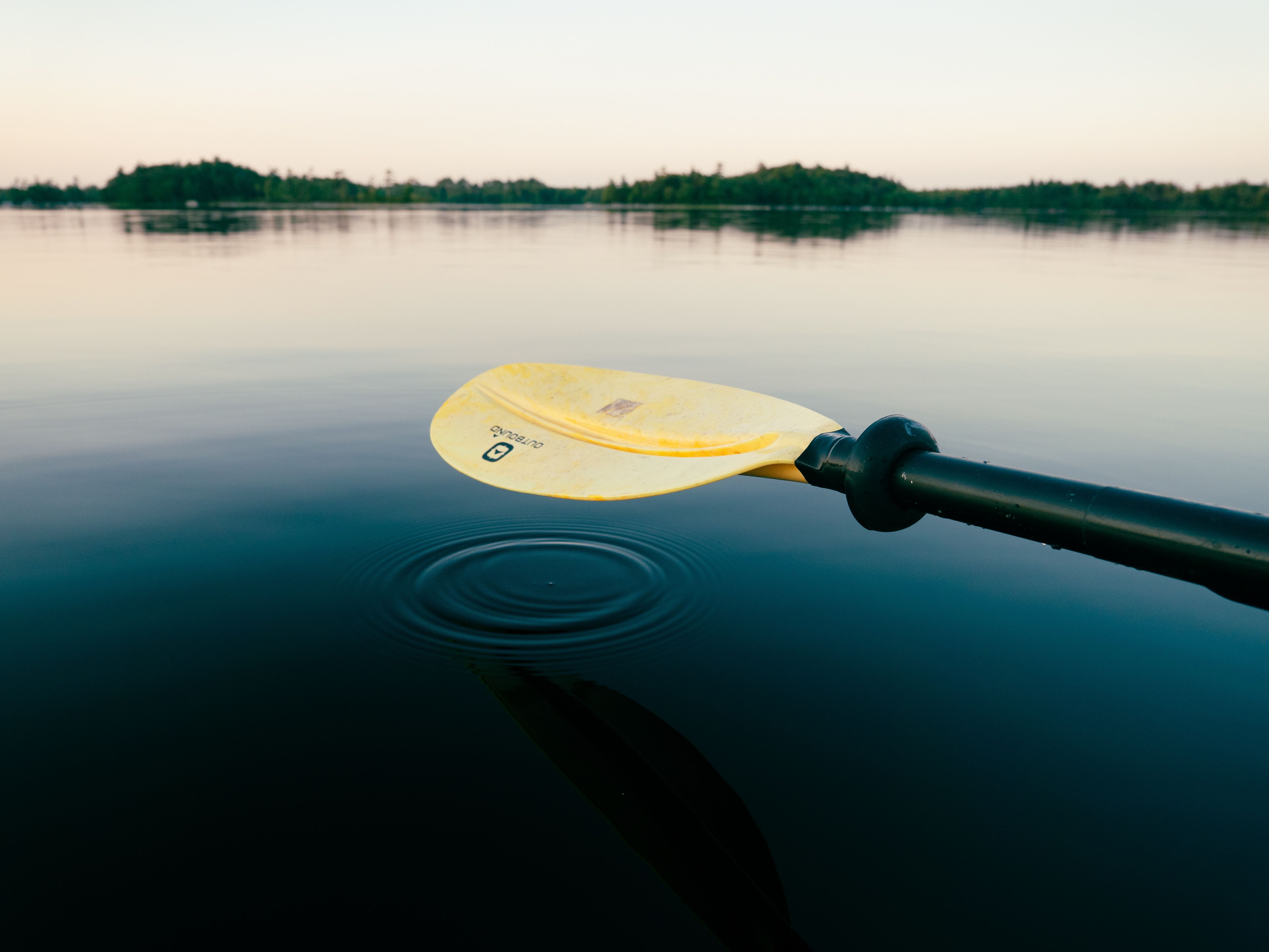
Photo by Courtney RA
Note: Please forgive any typos or errors. Non-AI writing has its imperfections. Consider it the patina of a personal touch.
Comments
Nothing yet. Say the first thing.
Sign in to join the conversation.