
If you were to ask me: What is evolution? My mind would probably travel to a bearded man’s obsession with beak shapes. But is that all evolution is? Or is there more?
To find out, I chatted with Gunnar De Winter. He is a science writer and storyteller based in Ghent, Belgium. He has written both fiction and non-fiction, with pieces published in Clarkesworld magazine, Tractor Beam, Heartlines Spec and The Deadlands. He has a PhD in Ecology and Evolutionary Biology, a Master’s in Philosophy and works as a science communicator for a biotech research institute.
Perhaps slightly awkward to admit, I have fallen in love with Gunnar’s Substack, Subtle Sparks. He has a way of writing unlike anyone I have come across. So I wanted to talk to him about the origins of his writing style, how science and writing can go together and the upside of the long way round to evolutionary thinking.
(Gunnar’s Substack recommendations are: Lessons on Drugs, Cognitive Wonderland & Reminders for Humans)
Choose your experience:
Full video conversation
Edited transcript for length and clarity
Alex Mendelsohn: Welcome, Gunnar. Very happy to have you on and lovely to see you.
Gunnar: Thank you. Thanks for having me.
Alex Mendelsohn: So our society sort of splits the arts and the sciences, the stereotype being that you kind of have to choose between the two. But your career involves both. Was your interest in science and writing a chicken or egg situation, or did one interest start before the other?
Gunnar: I think it’s been both from the start. Even when I was very young, I was fascinated by animals and bugs, but I was also fascinated by stories and books. And I’ve been fortunate to grow up in a house with a lot of books. So it’s been both eggs, I would say.
Alex Mendelsohn: So did your parents then encourage you to read?
Gunnar: Yeah. My dad was a voracious, still is, a voracious reader. So he definitely encouraged it. Whenever I wanted a book or wanted to read something, there were plenty of options available. I always had books to lose myself in and that’s been part of my life since I was, I don’t know, three years old or something.
Alex Mendelsohn: Do you experience a particular emotion when you pick up a book? Is there something specific about books that captivates you?
Gunnar: I’ve always felt excitement when I pick up a book. I’m always excited about what the story might be or what I might learn. There’s always this sort of excitement of, in some way, the unknown. Something is in that book that I don’t know yet or haven’t encountered yet, and I’m excited to find out.
Alex Mendelsohn: Do you think there is a connection between the excitement of discovering new things when you’re reading a book and the excitement of discovering new things in science?
Gunnar: Yeah, I think for me they’re very similar, if not identical. It’s all about finding out what life is all about, what the universe is about. I think it’s probably a mistake to think that one can give the full answer, that it’s either science or art. I think they both are very complementary. And they each have their own approach to the question.
Alex Mendelsohn: I’m quite intrigued by your experience of finding that books are a way of discovering new ways to think about the universe. How do books tease out the nature of how things work, how things are?
Gunnar: That really depends on the book. Nonfiction is pretty clear in this case. But in fiction, I often feel a sort of connection with the person who wrote it, as well as the characters in the story. And that kind of gives me the feeling of… I don’t want to say something universal because that sounds a bit “New Agey”… but there is this connection that I feel to the writer, to the characters, to the story. And that’s a very similar feeling to me as it is when reading a non-fiction book or learning something entirely new.
Alex Mendelsohn: In terms of science now, when did your interest in the subject start? What was it that spurred you to want to be involved in science and particularly biology? Why biology rather than physics or chemistry or something else?
Gunnar: Again, it started really young. I was always fascinated by animals and even like bugs around the house or stuff like that. And then, you know, you get books with animals and it sort of, it gets perhaps unknowingly encouraged. But I just, I’ve been fascinated by animals in the living world and that has never gone away. So going through high school, university, for me it was always kind of clear. I want to know what’s behind all of this diversity, what’s behind animals, the living world. So biology was pretty much a given for me since I was pretty young.
Alex Mendelsohn: It sounds really quite innate. That it’s something that you couldn’t help but do.
Gunnar: Yes exactly.
Alex Mendelsohn: To be personal, I’ve never had, even with myself being a physicist, I’ve never had that innate positive feeling. This might be a difficult question to answer. What is it like to have that feeling? Is it something that is with you all day? Is it something really, really innate so that you don’t even really notice? If you can, can you please try to describe what it’s like to live with these two passions inside you?
Gunnar: It’s very quiet. It’s not this overwhelming positive feeling. It’s more like I notice a lacking feeling if I don’t engage in those two things. It’s almost like it’s nutrition or something. I need a little bit of both. And then some moments when I’m really into writing something, the feeling peaks a little, but it’s more like a background hum basically.
Alex Mendelsohn: Let’s then move on to when you get to university. What does biology look like at university?
Gunnar: In my case, at least, the bachelor’s is really broad. You get a taste of all kinds of different subfields, animal behaviour, cell biology, lab techniques, statistics, computational stuff. You get a taste of everything. Then in your master’s you can start picking more of what you are interested in, which in my case was the behaviour and evolution part. I think because evolution is so common ground for a lot of biology, I think that’s why I was always able to find stuff that interested me in many different subfields of biology.
Alex Mendelsohn: So evolution was something that particularly interested you out of all the other subjects.
Gunnar: Yeah. That was the first course in my first year, I think. Where I was like, yep, this is so cool. This is what I’m going to do.
Alex Mendelsohn: This might be a silly question. What is evolution? Fundamentally, what is it?
Gunnar: Fundamentally, evolution is, it requires just three things. It’s a heritable variation in fitness. So it’s kind of like no two organisms are perfectly alike. So you have some variation in traits.
Alex Mendelsohn: Sorry, what does “heritable” mean?
Gunnar: You pass it along to the next generation. So it’s a trait that to some extent is genetic and is passed along from parents to children and so on. And those traits can differ because there’s no perfect duplicate of an organism. Some of those traits affect how well you reproduce, how well you survive. And if those traits have a heritable component or a genetic component, that affects the distribution of that trait in the next generation and so on and so on and so on. And if you repeat that for a few billion years, you go from a little cell to all the diversity we have on the planet right now. And that’s, for me, that’s both very simple and very profound because it’s such a strong explanatory framework for a lot of things in biology and beyond.
Alex Mendelsohn: What kind of things is evolution an explanatory framework for within the biology field?
Gunnar: Honestly, almost everything. There’s a saying in biology, nothing in biology makes sense except in the light of evolution. So it’s sort of biodiversity, but also how specific traits work, tools we use in biotechnology. Almost all of them come from evolved mechanisms in bacteria and things like that. Disease, ecosystem functioning, it’s very… Everything that has to do with life has evolved. All life, everything that life does, has evolved. And so understanding the process or understanding the mechanism behind it can help you in a way trace it back or understand why it became the way it became.
Alex Mendelsohn: It’s like… the picture I’m getting in my head is like a map…
Gunnar: Yeah. It’s so funny that you say that. There’s a concept called a fitness landscape. And that’s what you imagine a 3D landscape with peaks and valleys. And the peaks correspond to a combination of traits that has high fitness. The valleys are low fitness. And so animals can crawl up a peak by evolving more fit combinations of traits. But if it doesn’t go wrong or negative mutations happen, they can descend more to a valley. So it’s funny that you say map because it exists… it’s a concept that exists.
Alex Mendelsohn: So you’ve done the biology degree, and you’ve then moved on to a master’s, but not in, from my understanding, not in biology. What did you pivot to?
Gunnar: Yeah, I pivoted to philosophy of science. It was a program specifically for people with a science background as well. And that’s sort of my interest in the sort of the conceptual parts. Like I wasn’t, I wasn’t the guy who needs to spend time in a lab or I’m not necessarily the guy who needs to spend time doing fieldwork and stuff like that. I was more interested in the theory behind it, assumptions behind it and all those things. I just thought, I’m not done studying yet, so what’s the next thing I can do? And this was like a nice pivot.
I also have a biology master’s. I have the straight trajectory in biology, but then like the little side quest. Why the side quest? Sheer interest. I noticed in the biology part, there was always the more theoretical conceptual side that you didn’t really have the time to dive into because you needed to do science. And I thought to myself, I want a year where I can just work on the ideas, where you have the time to just look into the theory or the assumptions and the concepts behind it.
Alex Mendelsohn: I get the impression from reading your writing, where you often talk about concepts and theories, that a lot of it comes from philosophy. When you started your Substack, Subtle Sparks, was that side of you, the philosophy side of you, the main driver in your writing?
Gunnar: I don’t know if it comes from the philosophy, because I started playing around with writing before that, but it definitely helped when I make an argument or when I structure an essay. Philosophy is all about making a convincing argument or how structure affects how your argument feels. So it’s definitely in there. But the writing started sooner. So it doesn’t come from the philosophy, but philosophy definitely helped refine it into what it is now.
Alex Mendelsohn: What was it then… the reason why you started to write?
Gunnar: I think originally I started writing because I wanted to tell stories. I have a very vivid imagination. And at some point I was like, I need to write this down! And so that’s how it started. But then you go on to study science and I started to see like, hey, this is also really interesting to write about. And there are ways to write about this that are really interesting in contrast to some kinds of science writing, especially academic writing. In academic papers and stuff, the writing is kind of boring. I thought there was a better way to communicate really cool stuff. That’s where I started to play around with trying to bridge the gap a little bit. Write about science, be accurate, include nuance, but also make it fun to read, play with metaphors and just enjoy it, make it fun.
Alex Mendelsohn: Is that… the mixture of the imagination, the metaphors, the playing around with words, as well as including factual information… Is that hard? Do you find that a difficult process or is it something that just comes completely naturally to you?
Gunnar: At this point it feels kind of natural, but I am aware that when I do that or when I try to do that, I can go overboard in either direction. So I try to find a balance.
Alex Mendelsohn: Was it hard to start when you started writing? Do you remember it being difficult? What was it like when you started to try?
Gunnar: The first pieces… this must be when I was, I don’t know, 14 or 15, something like that… The first pieces weren’t great, but they also weren’t bad because I read a lot and I continue to read a lot.
So you kind of develop a feeling for when it doesn’t work, when you write something and it’s just like, nope, this, this is not going to read well. You kind of get a feeling for that. And then over time, you just keep trying and trying and you start to develop a way of writing that feels like your own. And that’s sort of for me that, when was that? I want to say that maybe just before I came on Substack or something, when I started to write and send out short stories and get published here and there. That’s when I started feeling like, okay, there’s a style, there is a voice to my writing that feels like me.
And this combination, sometimes between hard science… I’m never going to make a scientific claim that I can’t back up… but also like having fun, playing with words, including a metaphor, I think that’s sort of when it clicked. That’s where I was like, okay, this sounds a lot like me when I’m writing.
Alex Mendelsohn: Your style is a personal fascination of mine, because you somehow get the… it’s the smoothness of the language in your writing. And I can’t quite put my finger on why, why I find it a very good and different type of voice.
Gunnar: That’s so amazing to hear. Thank you.
Alex Mendelsohn: Other scientific writers often have that hard quality, hard hitting quality to the language. But with your writing… the picture that comes to mind is, I don’t know, you’ve had a rough day and then there’s this sort of gentleman you’ve hardly noticed that just taps you on the shoulder and just quietly talks you through what’s going on and what’s happening. That’s the feeling I get when I’m reading. You’re the quiet, softly spoken sort of person who’s just going through the problems, but they don’t feel like problems when I’m reading it.
Gunnar: That is an amazing description. That’s so good.
Alex Mendelsohn: I’ve not been obsessively looking over it, but it’s something that I just can’t quite been able to put my finger on. How? With the scientific facts as well, with the input of science, I have not seen it anywhere else. So, my question is a very simple one. How?
Or rather, do you have any inspirations? I suppose is the better question. Do you have any inspiration of someone who’s written in a similar type of style to you? Or is it something that has come completely organically?
Gunnar: I think it’s a little bit of everything. I think part of it is organically because it’s fairly close to how I would speak in real life or how I would address things in real life. And I think it’s because I draw inspiration from both nonfiction science writers, as well as more literary writers. So it’s not just that I take the science and use the science and explain what’s happening, but I also pay attention to how it sounds, like literally how the words sound together and how sentences flow from one to the next. So there’s sort of this… I hate calling myself literary because I don’t really feel like that… There’s a sort of, I pay some attention to the lyricism of what I’m writing.
Alex Mendelsohn: Phonetic. It sounds sort of like a phonetic way of thinking about writing.
Gunnar: Yeah. I think I don’t consciously think about it like that, but that definitely adds to how it sounds and how it flows and how it feels.
Alex Mendelsohn: You’ve also been interested in writing fiction, specifically science fiction. Why science fiction, rather than fiction?
Gunnar: Part of that is just interest. It’s always been my favourite genre. But also for me, it’s a playground. It’s a playground for ideas. It’s fun. You can take what you learned from science, but just say, okay, let’s dial it up to 11 and shoot a thousand years forward and see what happens. It’s almost like a testing ground for ideas. Like, what if this would happen? What, what would that be like? How would that change the world, life, whatever?
Alex Mendelsohn: So thinking interdisciplinaraly, inter-disciplin-arilly, it’s a very difficult word that one, interdisciplinarily, if you could take an idea from one area of biology and implant it in another area of life, what would that idea be?
Gunnar: That idea would for me be evolution, like variation, selection and replication or iteration. And implant that on honestly almost anything. Because I think it’s such a powerful, powerful framework or explanatory framework. And you can apply that to culture, you can apply that to health, markets, business, product design, language. I think it could be valuable in a lot of fields.
Alex Mendelsohn: So we’ll have 20 minutes to go through everything. We’ll be fine, we’ll be fine Gunnar!
Okay, let’s start with culture. First of all, what is the larger framework surrounding evolution that you are talking about?
Gunnar: That not everything works, and some things work better than others, and the things that work will become the basis for whatever comes next. So in culture, for example, you have certain rituals or certain foods or something, and there’s going to be regional variations in those. But they’re not all going to be equally popular. Then as generations pass along, some will become more popular or less popular. That’s a very simple example of how cultures evolve. And then especially when they meet other cultures and they integrate parts of another culture and their customs change again. So it’s sort of this constant, almost, iterative design or subconscious iterative design.
Alex Mendelsohn: So you say it’s subconscious, is it ever conscious? Or is the framework you’re talking about always going to be this subconscious natural selection type thing that’s going on?
Gunnar: I think in many cases it will be subconscious, but I think it doesn’t have to be. There are fields where they’re almost harnessing evolution. There’s directed evolution in biology where you start with a test tube of bacteria and you impose a very specific selection pressure and you do that over and over and over again. And eventually you end up with bacteria that eat plastic or stuff like that.
But you can do the same in genetic algorithms in computer science where you start with an almost random algorithm. You spin off numerous variations and you try to make them do something and some will fail completely and some will fail only 99%. You take the one that fails 99% and you start over.
I recently saw an interview with Demis Hassabis from DeepMind and that’s basically how AlphaZero worked. So it started learning, playing the game Go with no rules, and almost everything it tried failed, but a few things worked really badly, but they kind of worked. And then the next generation started with the “kind of worked” trials, spun off many variations of those and kept going and kept going. And a day later, it could beat, like, everyone.
So you can harness it if you’re aware of it. And if you have enough constraints you can choose a specific selection pressure.
Alex Mendelsohn: Right, so in terms of its usefulness, could a selection pressure be a policy? I think I can think of potentially an example. So in the UK, more than 10 years ago, when people shopped in supermarkets they would get to the till, take like five disposable plastic bags, put all the groceries in them and then trundle off home throwing out the plastic bags when finished. So the government put a five pence charge on plastic bags and slowly but surely people stopped using these disposable bags and started like bringing their own reusable ones.
In my own mind I imagine this was an instant behaviour, but I don’t think it was. I think it was kind of this progressive process.
First of all, does my example match the idea of evolution? And secondly, do you think there might be other policies which, which we could use and implement by our understanding of evolution?
Gunnar: Yeah, I think it’s a great example. I think it wasn’t done with evolution in mind, but I think it’s a great example of you change something that’s relatively small, like a 5 pence charge, and over time it causes this major shift in a certain trade, as in what people take or use to carry their groceries. I don’t think it was done with evolution in mind, but it’s a good example.
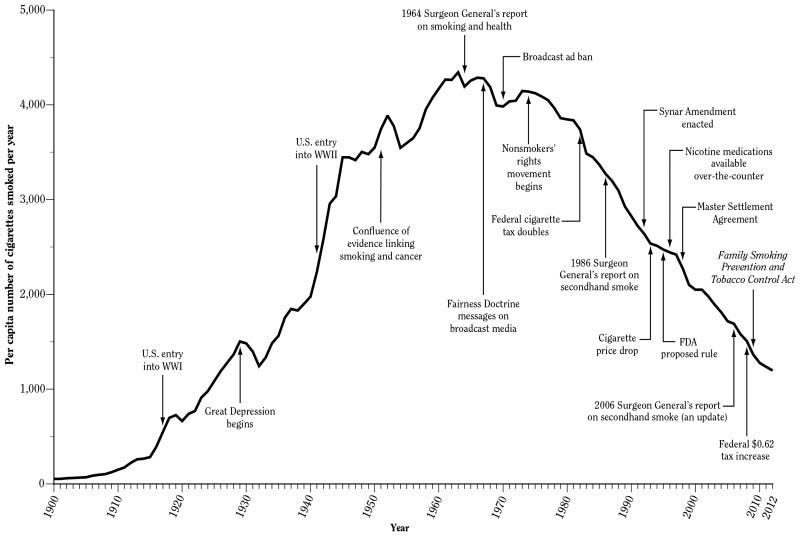
I think a lot of long-term policies, which we’re very short on these days, but I think a lot of long-term policies probably can use small behavioural nudges to over time really shift the trade. I’m thinking stuff like smoking. In the 1950s, everybody smoked, right? And you can still buy cigarettes, but it’s just, it’s very discouraged. You can’t do it wherever you want anymore. It’s gotten probably more expensive or is taxed more. Those are all small things that really do have a profound cultural effect. Like in the 1950s, 1960s, everyone was smoking. Everyone was smoking in movies.
We’ve had a cultural change that has happened for the benefit and health of a lot of people, but it’s still this cultural shift that in hindsight you could probably analyse with methods from evolutionary biology if you wanted to.1
Alex Mendelsohn: I personally understand evolution as something that’s slow, that will happen over millions of years, but the example you just described happens in, well, 70-80 years or so…
Gunnar: Cultural evolution goes a lot faster than biological evolution. Because the important part is the “generation time”. A generation of a person, a human is a lot longer than let’s say a cultural generation, which is a fad that maybe lasts a few months, for example. So it’s about how quickly you can generate variation, how strongly you can select and how quickly you can iterate the process. So, yeah, that’s faster in culture and even a lot faster in machine learning, for example. That’s why AlphaZero and similar machine learning programs can evolve really quickly because they can just iterate like crazy.
Alex Mendelsohn: Are there any other ways which you think that the framework of evolution could help?
Gunnar: Yeah. I think language is part of culture, but language has also evolved. An interesting one though is medicine. And one I’m thinking about specifically is cancer treatments. Right now it’s chemotherapy and like just blast away and hope that the bad things die and the good things don’t. But there is sort of a burgeoning field of looking at a tumour as an evolving population of cells. And not every tumour cell is the same. They have different traits. So if you can suppress the more aggressive traits by encouraging the more beneficial ones, you could technically control the growth of a tumour or stop it from spreading. But it’s still very, very speculative.
Alex Mendelsohn: That’s so fascinating, so you’d have like a conglomerate of tumour cell empires?
Gunnar: For example, yeah.
Alex Mendelsohn: You say the evolutionary framework is something that would be very useful to us. I’m curious, how is it that we’re not really thinking about the framework? What is it that we’re not doing which you think evolutionary frameworks would help with? I think you mentioned briefly long-term thinking. Can you expand on that?
Gunnar: I think that’s a big one. Evolution, like you said, it’s usually a slower incremental process. Cultural evolution can go a lot faster, but it still takes time. It feels like everything needs to go faster these days. Like even with policy, it can switch from one election cycle to the next. But if you really want to have long-term beneficial stable effects, it’s probably going to take more than one or two election cycles. There is a lack, I feel, of long-term thinking in general, and that prevents that evolutionary framework from really being used as much as it probably could be.
Alex Mendelsohn: Going back to earlier about the map and the positive pressures and the negative pressures, I’m wondering perhaps, do we not then account for the negative, the bits where evolution feels, from my understanding, like a messy process. It’s not something where it’s a straight line to utopia. There’s going to be periods of downturn. Do you think that part of the problem is that when those periods of downturn happen, we then panic and try to change? When what you’d actually want is, in terms of thinking about the long term, to stick to your guns? Or is it more complicated than that?
Gunnar: I would say it’s a bit more complicated, but there’s definitely a point of truth in that. When things aren’t going well and whatever metric you want to use for that, economically, culturally, whatever, we have a very understandable reaction of we need to fix this now, like we need to fix this yesterday, which is totally understandable from an individual life’s perspective. But things like investing in public transport or other areas, it’s going to be uncomfortable at first, right? There’s going to be a lot of changes, new infrastructure. It’s going to suck for a while, you don’t want to be in a downturn at all and you definitely don’t want to be in a downturn for too long. Of course not. But it’s finding that balance of thinking about the long term and then charting a path toward it that doesn’t have too many downturns and that has downturns that are understandable and I want to say sort of equitably dispersed, which is also probably never going to be the case.
But yeah, I think panic and trying to turn around a downturn as fast as possible is totally human. But in the long term, in terms of sort of society, evolution, population, whatever. Sometimes you have to get through a bit of a valley to go to the next peak. But it’s hard. It’s hard to put that into policy or it’s hard to convince people of that. Personally, it’s hard to go through that.
Alex Mendelsohn: A lot of the problem that I see with scientific communicators is that they don’t really tell stories. They will say, if you just understand the facts, you will be convinced. And it works in academia to some degree. But with the general population, I found that almost never works. And you love telling stories. What’s the story that you’d, if you wanted to sell the framework of evolution, what is the story you would tell to sell it to the public?
Gunnar: That’s a great question. I would try to tell the story of humanity so far. As we’ve come so far to show that evolution has shaped us to where we are. Then I would try to explain that it’s not done. We’re not finished. This is not the peak of humanity. We have several different routes that are open to us. Being able to think in the longer term, being able to see ourselves as one species among many, as part of an ecosystem, as part of nature, those things will help us build a future that feels more, I almost want to say more balanced or that feels more in line with long-term objectives that most people I hope would agree on. Like less pain, better healthcare, all the good things. Those are long-term objectives and the evolution of humanity so far up until this point doesn’t contain anything that says we can’t reach those. We can, but we just need to think about things that last for maybe a decade, maybe two, maybe three. That’s sort of the shape of the story that I would go for.
Alex Mendelsohn: It’s a good start. Very good start. So we’ve covered culture, we’ve covered policy. Do you have any other areas burning in your mind that you think that we could cover with evolution?
Gunnar: Well, I also already mentioned machine learning and things. There’s definitely robotics as well. That’s a very specific part, but there’s a lot of work on robots as they learn to move naturally. That’s an evolutionary process. They fumble around at first and then they take the moves that work and build on those.
To some degree or some extent, I want to say it can help people personally with mental health as well. Which sounds a bit out there, but I think it could help, because there’s work on things like depression and schizophrenia and other conditions. They’re not random evils, right? Depression is sometimes, in some theories, seen as an adaptation of having to meet demands that you can’t, and you sort of shut down to conserve energy. But I think it’s more on a sort of metaphorical or conceptual level, like understanding that a downturn is not the end. It doesn’t mean that you will inevitably end up in the valley, for example.
But also evolution is the antithesis of the idea that perfection is achievable. And for someone who struggles with perfectionism like myself, that’s a good reminder. Like sometimes you need to try stuff. Sometimes you just try stuff, and if it fails, you learn something. And if you try it again and try it a bit differently, maybe it fails a bit less. I enjoy writing, which is why I’m still writing, but I’ve been writing for more than a decade and the first seven years it didn’t go anywhere. So you just keep trying stuff and you keep going. And that sounds so, so silly and simple. But for me, that’s sort of an evolutionary mindset. Like, okay, you vary your approaches. Most of them will suck. Some of them will work. You build on the ones that work and you try again.
Alex Mendelsohn: I’m interested in, you said evolution is the antithesis of perfection. Can you expand on that? How is evolution the antithesis of perfection?
Gunnar: Yeah. Firstly in evolution in biology, there’s no end point to any organism’s evolution. There’s no perfect form. There’s no perfect shark, even though sharks are probably close to it! But there’s no perfectly adapted organism. And because the environment is never completely stable and things change, everything changes all the time, there is no perfection. All you can do is the best you can and try to adapt to whatever you are facing. And that’s hard and exhausting, but it’s also kind of freeing in the sense that there is no, there is no perfect Gunnar that I get to shoot for. He doesn’t exist. So I can do the best that I can with what I have now and see where that goes. And if it doesn’t work, try something else.
Alex Mendelsohn: I wish we could cover so many more different topics, but if you could say that, click of our fingers, everyone is fully onboard about the framework of evolution… What does that world look like?
Gunnar: I think we would value diversity a lot more than we would now. I think, I don’t want to get too political, but I think that the current climate of let’s reduce diversity, diversity is bad, or promote our culture above any other culture. I think, and this plays into a lot of things, but I think conservative movements would be less powerful if we can avoid misunderstandings of social Darwinism and eugenics and things like that.
But I think evolution is so powerful because it has variation to work with. So if you live in a world or an ideology or a system where we are being pushed into a monoculture, whether it’s crops or human culture, if you’re pushed into a monoculture, that’s inherently evolutionary and an incredibly fragile place to be in. Because it just takes one thing to drop you in a deep valley and you’re not going to get out of it because there’s no variation. I think the biggest thing probably beyond the long-term thinking is valuing diversity and understanding that diversity can bring variation in culture, in ideas, in people, and those things are a substrate for solutions to whatever we may have to face as a culture or a species even.
So I think the big things, if people would adopt a more evolutionary mindset, is more long-term thinking, like more actually thinking about stuff that’s beneficial, not just tomorrow, but in 10 years. That is kind of reminiscent of sort of the indigenous, I think Native American idea, of the seven-generation principle. As in you only change a policy if it is going to be beneficial for at least the next seven generations. For me, that’s an example of evolutionary thinking. There’s a lot of politics and people and countries that would benefit from that right now, I would think. So the long-term thinking and the diversity, the embrace of diversity, I think those would be two very big changes in a world with more evolutionary thought.
Alex Mendelsohn: I think that is a wonderful place to end, a very optimistic place to end. As always, the final question for this series. What are three Substacks, publications or individual articles that you’d recommend to our readers?
Gunnar: Lessons on Drugs by Lauren Cortis, which is about pharmacology and medicine. But not just the science. It’s also about the social aspect and pop culture. It’s also very fun to read.
Cognitive Wonderland by Tommy Blanchard is a very good newsletter that sits right at that combination of neuroscience and philosophy. He also combines those two really well.
And then the last one would be Reminders for Humans by Sarah Quirk. She’s an environmental scientist, but also writes very well. She combines insights from biology with personal essays and beautiful writing, all wrapped into one.
Those would be my three to suggest to people.
Alex Mendelsohn: It was absolutely a pleasure to have you on, Gunnar. Thank you so much for coming and having a chat with me.
Gunnar: Yeah, thank you for having me. I really enjoyed it as well.
Editor’s note: I found a 2014 Surgeon General report by the CDC, which contains a figure that illustrates how smoking declined through the introduction of many long-term policies:
No posts
Comments
Nothing yet. Say the first thing.
Sign in to join the conversation.