
Editor’s Note
Some publications arrive as if they were always supposed to exist. DoubleBlind is one of them.
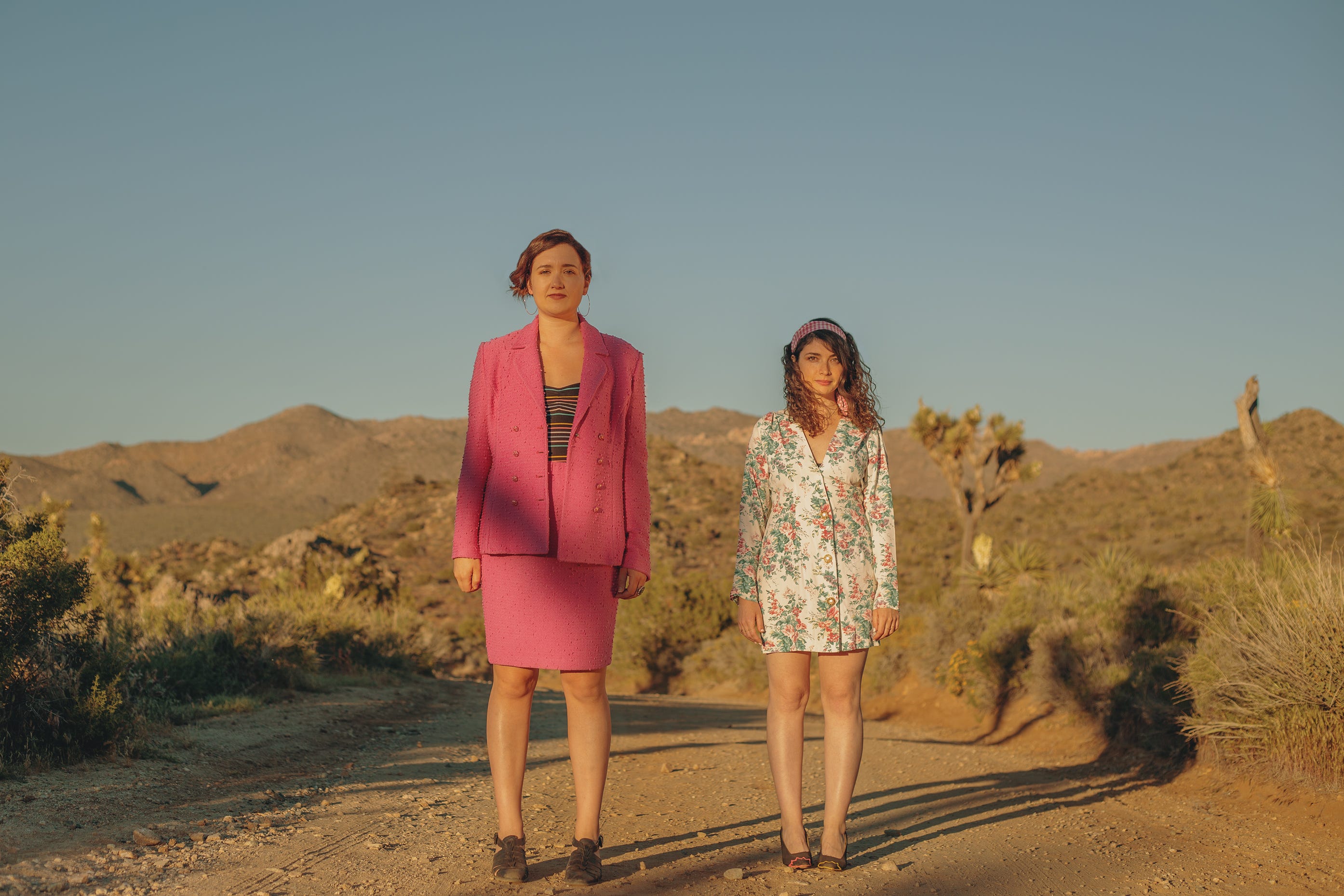
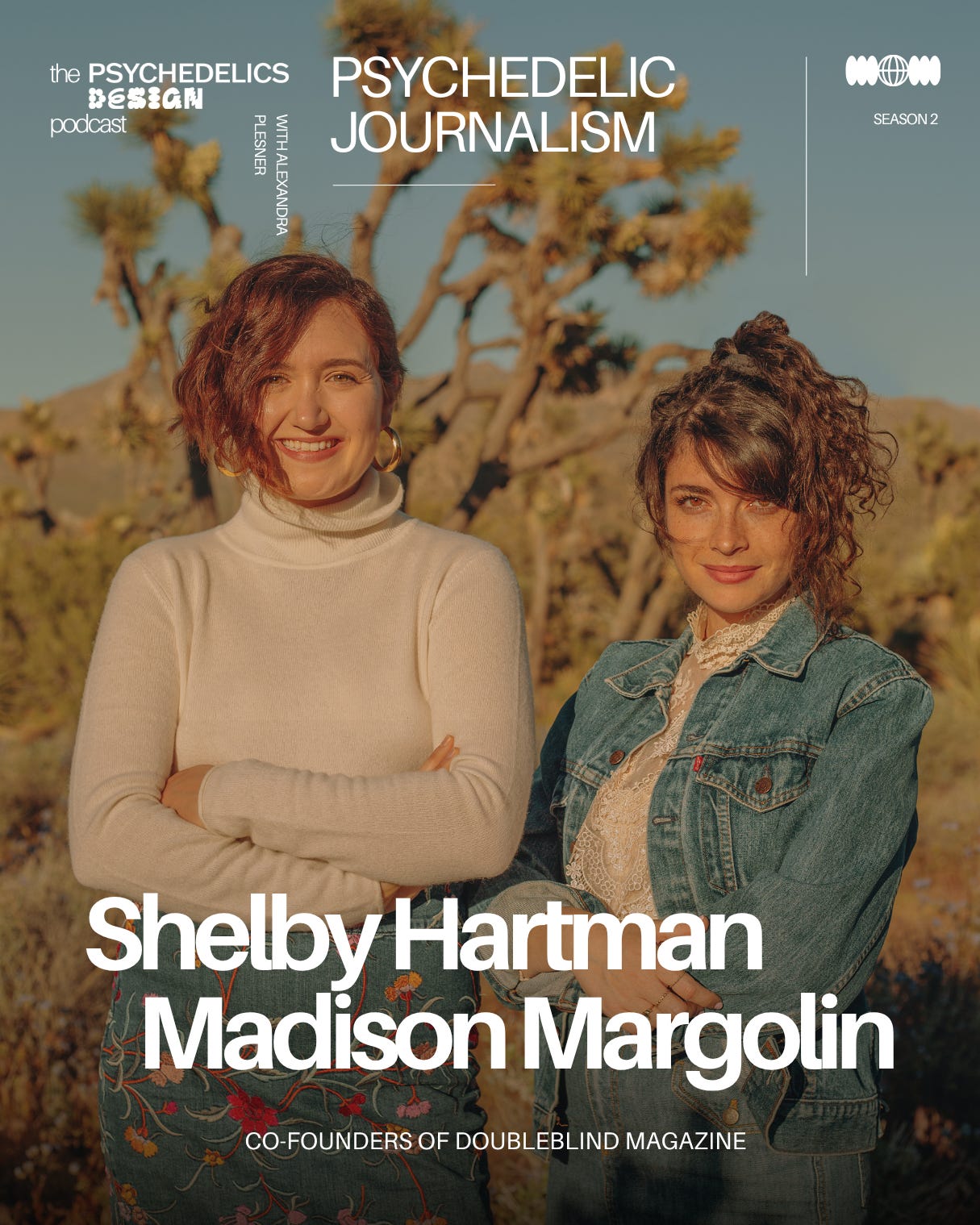
Shelby Hartman and Madison Margolin co-founded DoubleBlind in 2019 — a print magazine and media platform that has, against considerable odds, maintained a commitment to real journalism in a space that often prefers advocacy. Both came from rigorous editorial backgrounds: CBS News, Rolling Stone, LA Weekly, Vice, Columbia Journalism School. Both had been covering cannabis and psychedelics long before it was fashionable. And when Shelby had the idea — arriving, as she describes it, during a morning meditation with a quality of knowing she calls “noetic” — she called Madison, and they built something.
What drew me to this conversation was how clearly they hold the tension this field demands: being part of a movement while also being willing to investigate it. Covering something you care about deeply without becoming a mouthpiece for it. Designing a magazine that refuses most psychedelic cliché while remaining unmistakably of the culture.
DoubleBlind just published their first book — this felt like the right moment to talk.
Three weeks left. Submit your work.
The Psychedelics Design Awards 2026 close in three weeks. Nine categories. $45 submission fee. Student scholarships available. If you've been thinking about it — now is the time.
The name came before the magazine did. Shelby and Madison had previously discussed a podcast — tentatively called DoubleBlind, after the clinical trial methodology — but it never quite landed. Then one morning in 2015, after years of daily meditation practice that Shelby had started following her first ayahuasca ceremony, something shifted. “There was a stillness there, and when the idea came, it just felt very true. There was no doubt there.” She describes it as noetic — that quality of knowing that people also report under psychedelics. The podcast idea came back as a print magazine, and the rest followed.
Madison, who had been covering the same terrain across the same outlets, was an immediate yes. “I was really excited by the prospect of something that would be both informative and at a journalistic standard that Shelby and I had learned — as well as having an aesthetic to match that standard.”
In clinical research, a double-blind trial is one where neither the researcher nor the participant knows who has received the active compound versus the placebo. For a magazine covering psychedelic science and policy, it's the right nod. But Shelby points to a second layer: "What are you blind to in your regular life? What's the sort of deeper truth?" Psychedelics, she notes, have a way of removing blinders — of revealing layers of reality that weren't accessible before. The name holds both meanings at once.
Shelby and Madison came to psychedelics through cannabis journalism — which meant they arrived with a clear-eyed view of what can go wrong when an emerging industry encounters commercialisation. Madison’s first article in DoubleBlind’s inaugural issue examined the lessons the psychedelic industry could learn from cannabis’s missteps. The ethical impulse was there from the start. “We weren’t just advocates for psychedelics as a panacea for mental health. We were talking about the limitations, the potential harms — what happens when a sacred plant or fungi goes through the FDA approval process and becomes more about sterilisation and marketing than spirituality, therapy, community.”
The first issue also included a story about awe — not about psychedelics directly, but about how the brain responds to expanses of blue, to oceanic experience. “We were using psychedelics as a jumping-off point to explore policy, science, culture, spirituality, all sorts of other topics.”
Being a journalist covering a field you’re personally embedded in brings a particular kind of pressure. Madison describes situations where leaders in the psychedelic space — sometimes people DoubleBlind had partnered with on events — became the subjects of stories that needed to be reported with full independence. “Someone whose company was under scrutiny would try to go around the journalist and get to me or Shelby. And I saw a lot of it as really about identity — knowing which hat you’re wearing when.”
The journalism, whatever gets published in the magazine or online, is held to a standard that’s independent of any partnership or relationship. Shelby adds that peyote has consistently been the field’s most charged topic: conservation, access for non-Native people, the difficulty of covering Indigenous communities without an Indigenous journalist.
DoubleBlind has been removed from Instagram three times. They got back on each time through persistent campaigns and, ultimately, a contact at Meta who personally walked the situation to the relevant department. The argument that worked: they’re a California-registered company, with employees on payroll, liability insurance, and a consistent record of declining opportunities to sell anything illegal. “We’ve been given plenty of opportunities to sell mushrooms and we’ve always said no.”
The Google situation was arguably worse. In December 2020, the so-called Medic Update — designed to suppress COVID misinformation — swept up psychedelic content wholesale, on the logic that psychedelics are “alternative.” DoubleBlind lost more than half their website traffic overnight. So did Third Wave, Chacruna, and most other organisations in the space. Nobody at Google was paying attention to psychedelics specifically — the algorithm simply placed them in the same category as anti-mask content. “At this point, I don’t know how much it matters anyway, because now we’re just in a whole new phase of algorithm wars with the rise of ChatGPT and AI.”
The more durable question, Shelby says, is whether the work should really be shaped by ever-changing platform logic at all. “In an ideal world, the work just speaks for itself and word of mouth — which has always been the best form of marketing — is what enables you to sustain over time. But maybe that’s romantic.
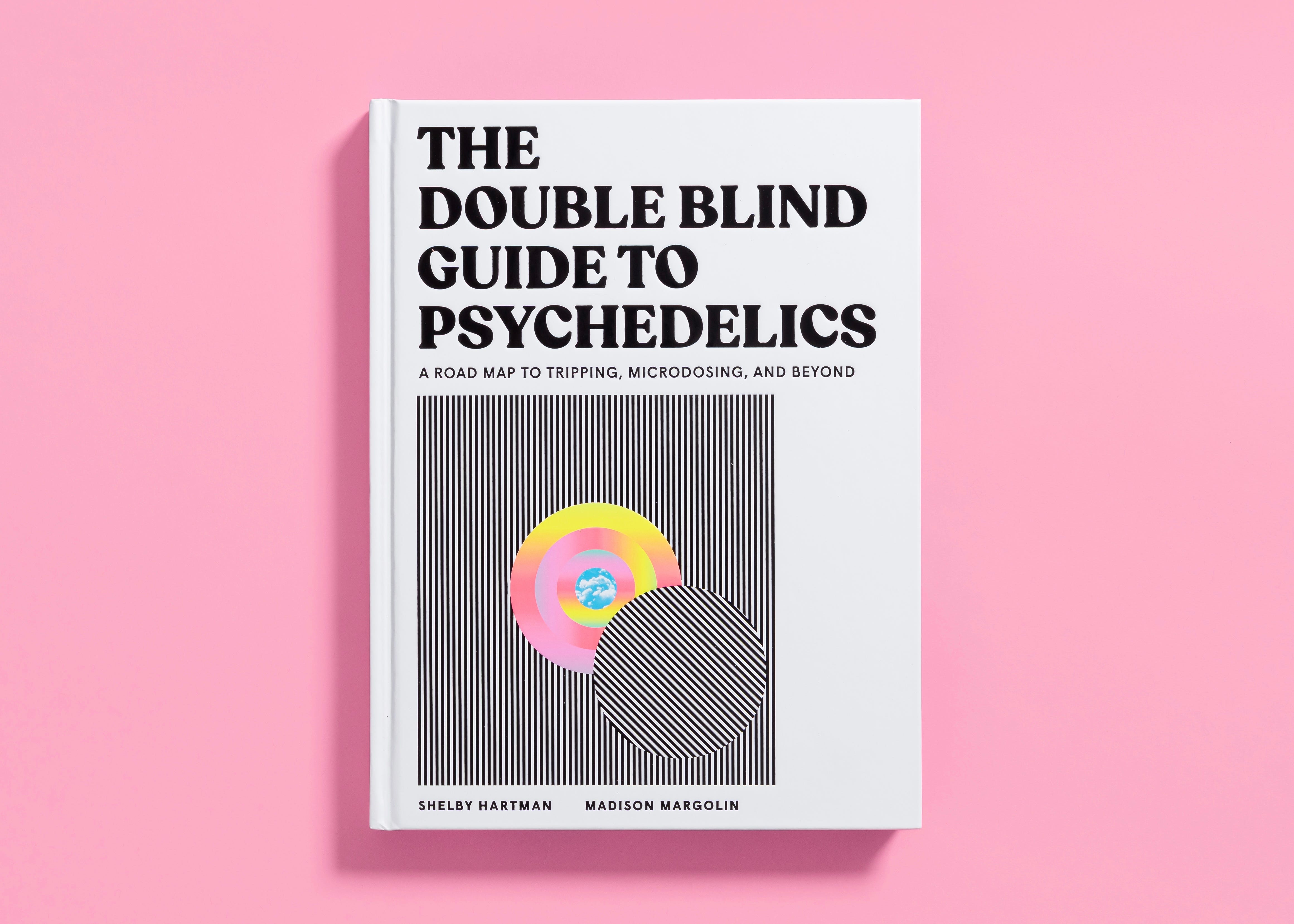
The DoubleBlind Guide to Psychedelics is their first book on the subject, three years in the making. Madison describes it as capturing both the history of where the field is right now and the evergreen information people need to engage with these substances with intentionality — not just dosage guides, but lineage, reciprocity, context. “If you’re doing ayahuasca, there are people who have been stewarding this medicine for so long. How can someone have a relationship of reciprocity with them?”
Shelby puts it plainly: “No algorithm can kill that one.” The print magazine was always partly a response to the distraction economy — the sense that reading on a screen is already an altered state, one that pulls you away rather than into the material. A book that people keep, that they return to, that looks beautiful next to a cup of coffee or a bouquet of flowers — it serves a different purpose. It’s a commitment, not a scroll.
From the beginning, DoubleBlind operated with a clear aesthetic mandate: no fractals. Not stereotypically psychedelic, not stereotypically clinical. “Professional but fun, colourful but not too neon.” The creative vision that made this possible belongs in large part to their designer David Good, who Madison describes as foundational to the magazine’s identity, and who is one of this year’s judges in the Visual Design category! “The design really elevates and shifts the way people think about psychedelics. It positions it in a different cultural milieu.”
The book extends this: alongside more clinical chapters, it includes visionary art — work from Indigenous traditions of South America that the Western eye tends to label “psychedelic art” but that those communities would simply call the art of people who have been influential in their culture. Putting that in conversation with artists like Alex Grey, within the same book, is its own kind of statement.
Madison has a second book coming — a Jewish psychedelic practical guide, using Jewish practice, ritual, and philosophy as the set and setting for navigating psychedelic experience. Her first, Exile and Ecstasy, is a journalistic memoir about growing up in the movement surrounding Ram Dass. Shelby, as it turns out, is also a singer-songwriter. You can find her on Spotify.
Find Madison and Shelpy on:
madisonmargolin.com • shelbyannehartman.com • The Book
🎙️ PODCAST
This interview was recorded as part of the Psychedelics Design podcast. Listen to the full conversation → Psy*Design Podcast
NEWS FROM PSYCHEDELICS DESIGN
PSYCHEDELIC CREATIVITY RESEARCH
Have you ever experienced a creative breakthrough during a psychedelic journey?
We are inviting healthy volunteers (18+) to take part in an online survey study exploring the connection between psychedelics and creativity. If you’ve had such an experience and would like to contribute to cutting-edge research, we’d love to hear from you.
FROM OUR PARTNERS
The World Mushroom Forum is a multi-day online gathering co-organised by Mycopreneur founder Dennis Walker and Oli Genn-Bash of The Fungi Consultant. Bringing together voices from across the global mushroom industry, it covers everything from indigenous perspectives and medicinal potential to biotechnology, psychedelic research, cultivation, and policy reform.
The inaugural forum runs August 21st–23rd, with speakers and attendees joining from across North America, Europe, Latin America, Africa, Asia, and Oceania.
Get your ticket here → dandelion.events/e/worldmushroomforum
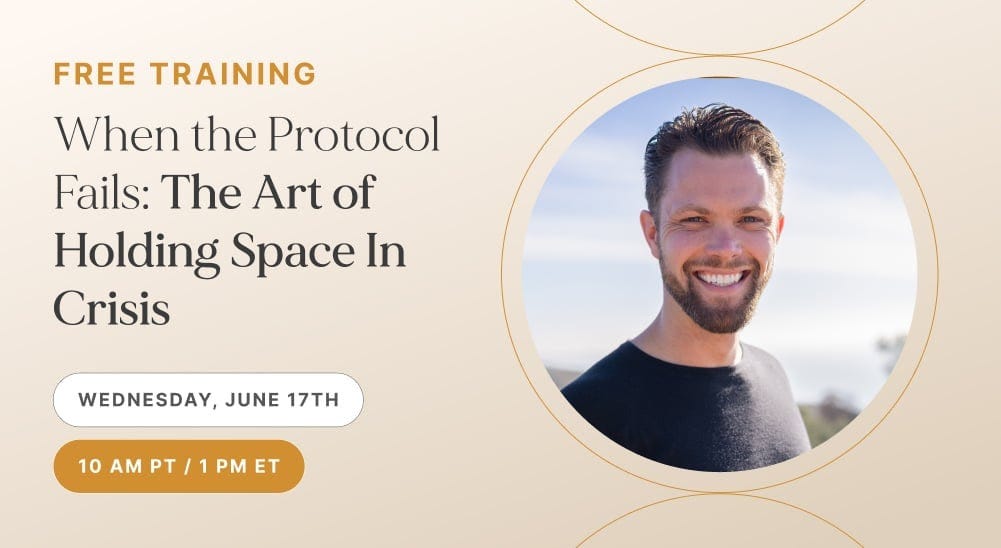
Paul F. Austin, founder of Third Wave and the Psychedelic Coaching Institute, is hosting a free live training on Wednesday June 17 for practitioners navigating the moments no checklist prepares you for. When the Protocol Fails: The Art of Holding Space in Crisis covers how to read nervous system warning signs in real time, when to step in versus hold back, and how to know when a situation exceeds your scope. Built for coaches, clinicians, and aspiring practitioners who want to stay grounded when a session goes off-script.
Psychedelic Alpha’s job board is the go-to for roles across biotech, clinical research, policy, care delivery, and advocacy. Whether you’re job-seeking or hiring, it’s the most comprehensive talent network in the field.
“Books break the shackles of time, proof that humans can work magic.”
– Carl Sagan
Enjoying the free newsletter of ours?
Forward this to one person who should be reading it.
Comments
Nothing yet. Say the first thing.
Sign in to join the conversation.