
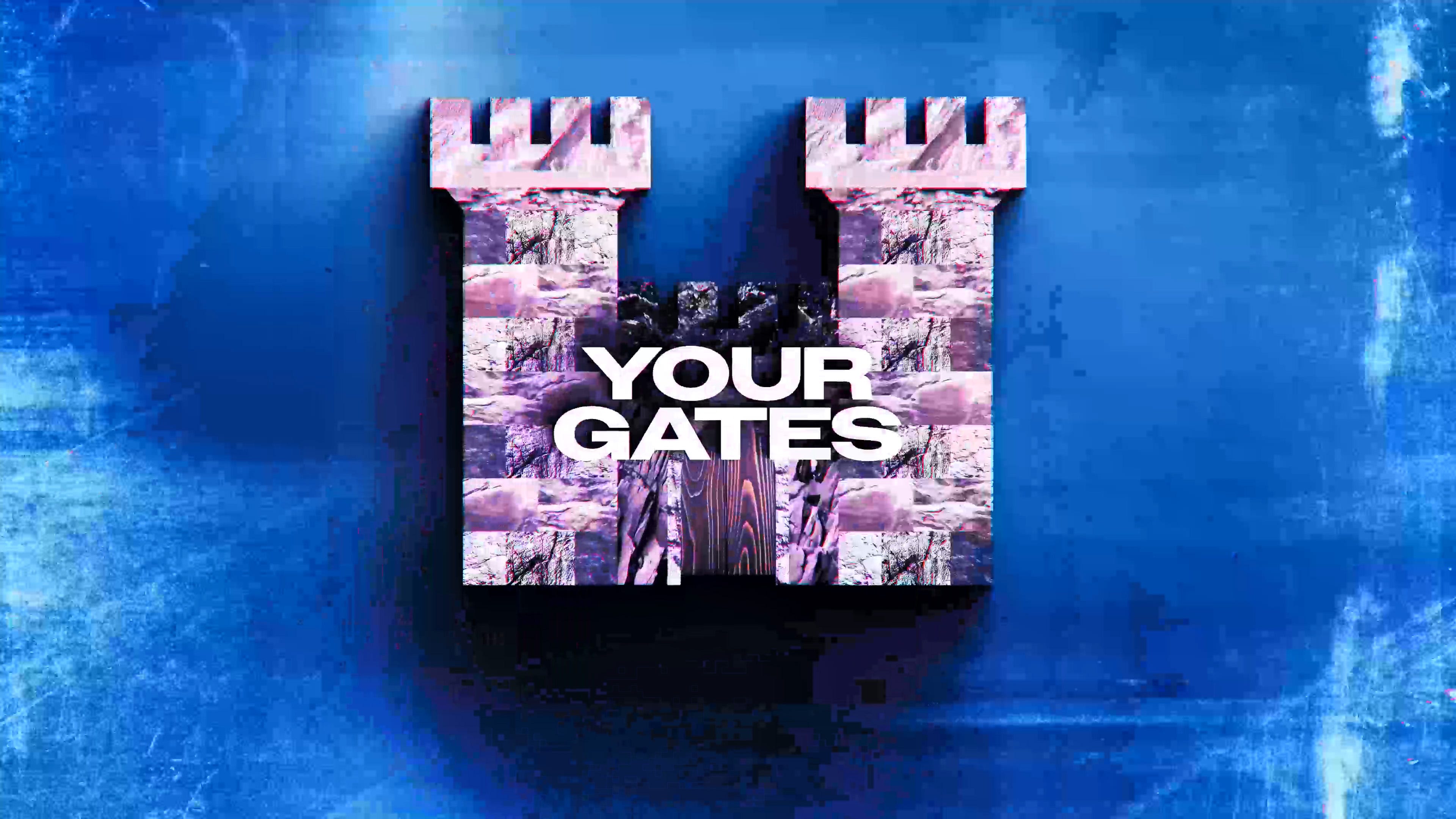
Lift up your gates, O ye princes, and be ye lifted up, O eternal gates: and the King of Glory shall enter in. (Psalm 23:9 DR)
If you ever read through the Roman Martyrology—and you should—you will, through the course of the year, come across some rather curious entries. One of my favorites is found on July 17, the feast of St. Alexius. The Martyrology’s reading is as follows:
At Rome, St. Alexius, confessor, son of the senator Euphemian. Leaving his spouse untouched the night of his marriage, he withdrew from his house, and after a long pilgrimage returned to Rome, where he was for seventeen years harbored in his father’s house as an unknown beggar, thus deluding the world by a new device. But after his death, becoming known through a voice heard in the churches of the city, and by his own writing, he was, under the Sovereign Pontiff, Innocent I, translated to the church of St. Boniface, where he wrought many miracles. (Roman Martyrology, July 17)
A few other details are that he lived for some time in Edessa, but gained—to his chagrin—a reputation for holiness that forced him to leave. He wished to sail to Tarsus, but the wind took him to Ostia, and from there he returned to his father’s house. At his father’s house he presented himself as a beggar and was given shelter under a staircase. A portion of this staircase, incidentally, is said to be preserved in the chapel of the church of Sts. Boniface and Alexius, along with a well that is from his father’s house.
Alexius lived in these conditions and under this staircase for seventeen years without being recognized. Days before his death, a voice was heard during the papal Mass extolling them to seek for the man of God who would pray for Rome, but would die on Friday. The inhabitants of the city searched in vain. However, he had written his life story on a parchment which was found with his body, at which point his family learned the truth about this rather odd and unfamiliar beggar who was actually part of their family.
The final two passages of this Psalm are nearly verbatim repetitions of the previous two, and this one exactly a repetition of verse seven. Many commentators therefore roll the commentary of the final verses into one extended exposition, but others see in the repetition itself a more poignant expression of what has already been spoken.
St. Robert Bellarmine, for example, continues on the theme of the powers of heaven being in awe that the flesh of Christ should ascend with His divinity into the eternal city. And while angels do not discursively reason, in this reading there is a sense in which even their intellectual powers are incapable of comprehending the wonder they behold, and must “make sure,” as it were, as if they cannot perceive in the ascending Christ the Lord of Ages Whom they have worshipped from the first moment of their creation:
The prophet imagines some hesitation on the part of the Angels in opening the gates, and he, therefore, second time thunders. “Lift up your gates, O ye princes, and be ye lifted up, O eternal gates,” thereby giving us to understand the great novelty of the matter, to find a terrestrial rising above celestial bodies—human flesh soaring above the angelic spirits themselves, to the amazement, wonder, and admiration of all nature. (St. Robert Bellarmine, A Commentary on the Book of the Psalms, 23, 9)
Nor is St. Bellarmine alone in seeing this possibility. St. Justin the Martyr anticipates this line of reasoning—this case of mistaken identity, so to speak— over 1000 years earlier:
For when the rulers of heaven saw Him of uncomely and dishonoured appearance, and inglorious, not recognising Him, they inquired, ‘Who is this King of glory?’ And the Holy Spirit, either from the person of His Father, or from His own person, answers them, ‘The Lord of hosts, He is this King of glory.’ For every one will confess that not one of those who presided over the gates of the temple at Jerusalem would venture to say concerning Solomon, though he was so glorious a king, or concerning the ark of testimony, ‘Who is this King of glory?’ (St. Justin Martyr, Dialogue with Trypho, Chapter 36)
St. Justin makes an interesting observation here, in that he seems to imply that the angelic intellect is not capable of perceiving Christ as He is in the Incarnation and in the hypostatic union—fully God and fully man—without being granted some measure of revelation through the Holy Ghost, either from the Father or from Christ Himself. And while he does not quote it here, he perhaps may have in mind or in the background the account of Jesus’ revelation of Himself to some of the disciples on the road to Emmaus. In St. Luke’s Gospel the disciples do not recognize Him as He speaks and walks with them, although His words do pierce into their souls, as they realize later. It is only when He actually reveals Himself to them in the breaking of the bread—the Eucharist—that they finally recognize someone they should have known.
But if even the angels require this interior revelation from the Holy Ghost to perceive Christ in the fullness of His divinity in the Incarnation, how much more for mortal man whose intellect is limited and wounded by the scars of sin? This is no doubt why faith is not simply an exercise of the intellect choosing to accept or believe something, but is a supernatural virtue infused into the soul through Baptism, enabling us to behold with the newly formed eyes of faith what our natural reason cannot perceive.
For even the angels see flesh ascending to heaven, and thus the repeated cry to open the gates:
He comes to the heavenly gates: angels accompany Him: and the gates of heaven were closed. For He has not yet ascended into heaven. Now first does He appear to the powers of heaven as flesh ascending. Therefore to these powers it is said by the angels, who are the couriers of the Saviour and Lord: Lift up your gates, you princes; and be lifted up, you everlasting doors: and the King of glory shall come in. (Hippolytus, Fragments on the Psalms, 23)
This is a mystery beyond description, and perhaps defies description, as our finite language cannot contain the union of the divine and the human, the infinite and the finite, the passible and impassible in our Lord Jesus Christ. But in this mystery is wrapped up the sublimity of man’s redemption, and Christ in His humiliation in the flesh bears us up so that our flesh might be lifted up, that we might pass through the same gates that He—Whom no gate can keep out—now enters in:
But if now for us the Christ is entered into heaven itself, though He was even before and always Lord and Framer of the heavens, for us therefore is that present exaltation written. And as He Himself, who sanctifies all, says also that He sanctifies Himself to the Father for our sakes, not that the Word may become holy, but that He Himself may in Himself sanctify all of us, in like manner we must take the present phrase, ‘He highly exalted Him,’ not that He Himself should be exalted, for He is the highest, but that He may become righteousness for us, and we may be exalted in Him, and that we may enter the gates of heaven, which He has also opened for us, the forerunners saying, ‘Lift up your gates, O you rulers, and be lifted up, you everlasting doors, and the King of Glory shall come in.’ For here also not on Him were shut the gates, as being Lord and Maker of all, but because of us is this too written, to whom the door of paradise was shut. And therefore in a human relation, because of the flesh which He bore, it is said of Him, ‘Lift up your gates,’ and ‘shall come in,’ as if a man were entering; but in a divine relation on the other hand it is said of Him, since ‘the Word was God,’ that He is the ‘Lord’ and the ‘King of Glory.’ (St. Athanasius, Four Discourses Against the Arians, Book 1, 41)
The great and unfathomable mystery of the Body of Christ is duly set forth, for in a real sense those who are united to Christ in His mystical Body “look like” Christ, both in respect to the human nature that He assumed for us, but equally in the likeness to Him in His righteousness which is poured into our souls by the Holy Ghost in Baptism. St. Justin spoke of how the Holy Ghost reveals to the angels the reality of Christ as King and they then behold Him; similarly, the same revelation may be given of the union of man with God in Christ as He is the Head to the Body. It is certainly given to man when he is regenerated in the sacrament of Baptism and receives the supernatural gift of faith.
A similar revelation was given to St. Mary Magdalene on Easter Sunday, when she met our Lord in the garden yet did not yet recognize Him. But in His word to her He revealed Who He was, and she recognized Him, resurrected but not yet ascended. Her natural response was to reach out for Him, but He stops this—noli me tangere—for He had not yet ascended to the Father. Origen admits to finding in this scene a novel interpretation of Christ’s baptism which Christ desired to be baptized with. Most writers of his day, he says, predicate this of Christ’s passion, but he finds this scene to contradict this, locating the baptism in our Lord’s Ascension to the Father. He predicates this interpretation from Old Testament passages from Isaiah and Genesis about the powers of heaven seeing One coming in red garments (Isaiah 63:1), and washing His robes in wine (Genesis 49:2). In this manner the baptism or cleansing of these garments from His passion is effected in the Ascension:
But they ask again, seeing as it were His right hand red with blood and His whole person covered with the marks of His valour, Why are Your garments red, and Your clothes like the treading of the full winefat when it is trodden? And to this He answers, I have crushed them…
[Other writers] say that the greatest baptism, beyond which no greater can be conceived, is His passion. But if this be so, why should He say to Mary after it, Touch Me not? He should rather have offered Himself to her touch, when by His passion He had received His perfect baptism. But if it was the case, as we said before, that after all His deeds of valour done against His enemies, He had need to wash His robe in wine, His garment in the blood of the grape, then He was on His way up to the husbandman of the true vine, the Father, so that having washed there and after having gone up on high, He might lead captivity captive and come down bearing manifold gifts — the tongues, as of fire, which were divided to the Apostles, and the holy angels which are to be present with them in each action and to deliver them. For before these economies they were not yet cleansed and angels could not dwell with them, for they too perhaps do not desire to be with those who have not prepared themselves nor been cleansed by Jesus. For it was of Jesus’ benignity alone that He ate and drank with publicans and sinners, and suffered the penitent woman who was a sinner to wash His feet with her tears, and went down even to death for the ungodly, counting it not robbery to be equal with God, and emptied Himself, assuming the form of a servant. And in accomplishing all this He fulfills rather the will of the Father who gave Him up for sinners than His own. (Origen, Commentary on the Gospel of John, Book 6, 37)
This is, admittedly, a minority report sort of interpretation, yet it nevertheless is intriguing. Origen seems to be conceiving of the powers of heaven who are manning the gates, as it were, as seeing in the ascension of Christ only marks of His valor, the blood stained marks of combat with evil that they cannot perceive as being capable of dwelling in the holiness of the vision of God. Thus, they inquire why Christ appears so, the implication being that they do not behold Him in His glory, but rather are prevented by the bloody remnants of His combat with sin from recognizing the King of Glory.
This is why Origen assigns the baptism of which our Lord spoke to the Ascension, for in ascending to the Father He completes the victory over sin and death; as the Psalmist says, He leads captivity captive and brings that captivity to His Father, and through this consummation of surrendering His will to the Father manifests Himself to the powers of Heaven who now behold Him in His wonder and beauty. The captivity—which marks all others as bound to its dominion—is itself made captive to Him, and in this Ascension He now distributes gifts to men, which Origen identifies with Pentecost and, by extension, the grace and charity of God poured out by the Holy Ghost in Baptism. The gates of heaven which were opened for Christ in his triumphal Ascension now open to those in His mystical Body:
And be lifted up, you doors of everlasting righteousness, of love, and chastity, through which the soul loves the One True God, and goes not a-whoring with the many that are called gods. (St. Augustine, Expositions on the Psalms, 23, 9)
In this manner the Ascension of our Lord is not an anti-climax to the narrative of our Lord’s Incarnation, but in a very real sense the capstone of it, for the promise of Redemption accomplished in His Passion and Death is enlivened in His Resurrection and consummated in His Ascension, for the fruits of that redemption are opened with the gates of Heaven as He enters in as the King of Glory, bestowing upon His children the great and wondrous gifts of His grace.
St. Alexius humbled himself to nothing, and in the seeming nothingness of his poverty was graced with the beauty of holiness. He thus became unrecognizable to even his ow family, for he had already begun to pass through the eternal gates with our Lord, Who Himself humbled Himself to our lowly state, unknown to even the piercing intellect of the Cherubim, and in that lowliness lifted us up to Himself, to know and behold the wonders of His glory and His grace.
And even in our lowliest service, we can be as beggars under the stairs of the King:
The rich man’s halls are nobly furnished;
Therein no nook or corner empty seems;
Here stands the brazen laver burnished,
And there the golden goblet brightly gleams;
Hard by some crock of clumsy earthen ware,
Massive and ample lies a silver plate;
And rough-hewn cups of oak or elm are there
With vases carved of ivory delicate.
Yet every vessel in its place is good,
So be it for the Master’s service meet;
The priceless salver and the bowl of wood
Alike He needs to make His home complete.
Therefore within His Father’s spacious hall
Christ fits me for the service of a day,
Mean though I be, a vessel poor and small, —
And in some lowly corner lets me stay.
Lo in the palace of the King of Kings
I play the earthen pitcher’s humble part;
Yet to have done Him meanest service brings
A thrill of rapture to my thankful heart:
Whate’er the end, this thought will joy afford,
My lips have sung the praises of my Lord.(Prudentius, The Hymns of Prudentius, Epilogus)
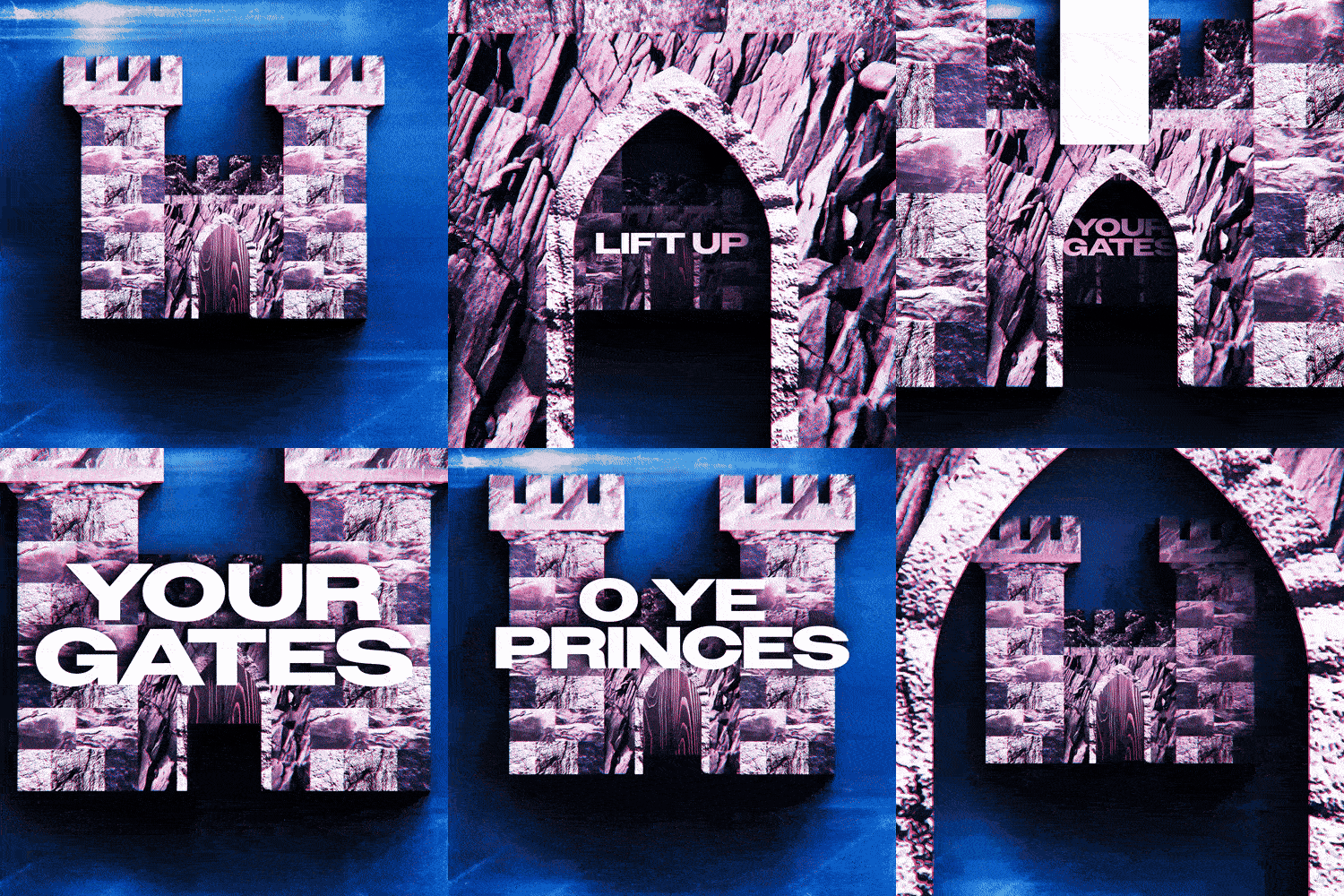
I pieced together this gate in Illustrator and then sent all the illustrated pieces to After Effects. In the main composition I precomped each piece and then overlaid and matted a texture to each piece, and then animated the gate raising up. Back in the main composition I animated the Z position of the gate and timed it to fly past the camera as the gate raised.
I have a matte behind each gate so that as it raises it also reveals the duplicate and text behind it.
I parented the text to the various gates and offset them in Z space so they would parallax as they passed.
Enjoy.
Lift up your gates, O ye princes, and be ye lifted up, O eternal gates: and the King of Glory shall enter in. (Psalm 23:9 DR)
View a higher quality version of this gif here:
Comments
Nothing yet. Say the first thing.
Sign in to join the conversation.