
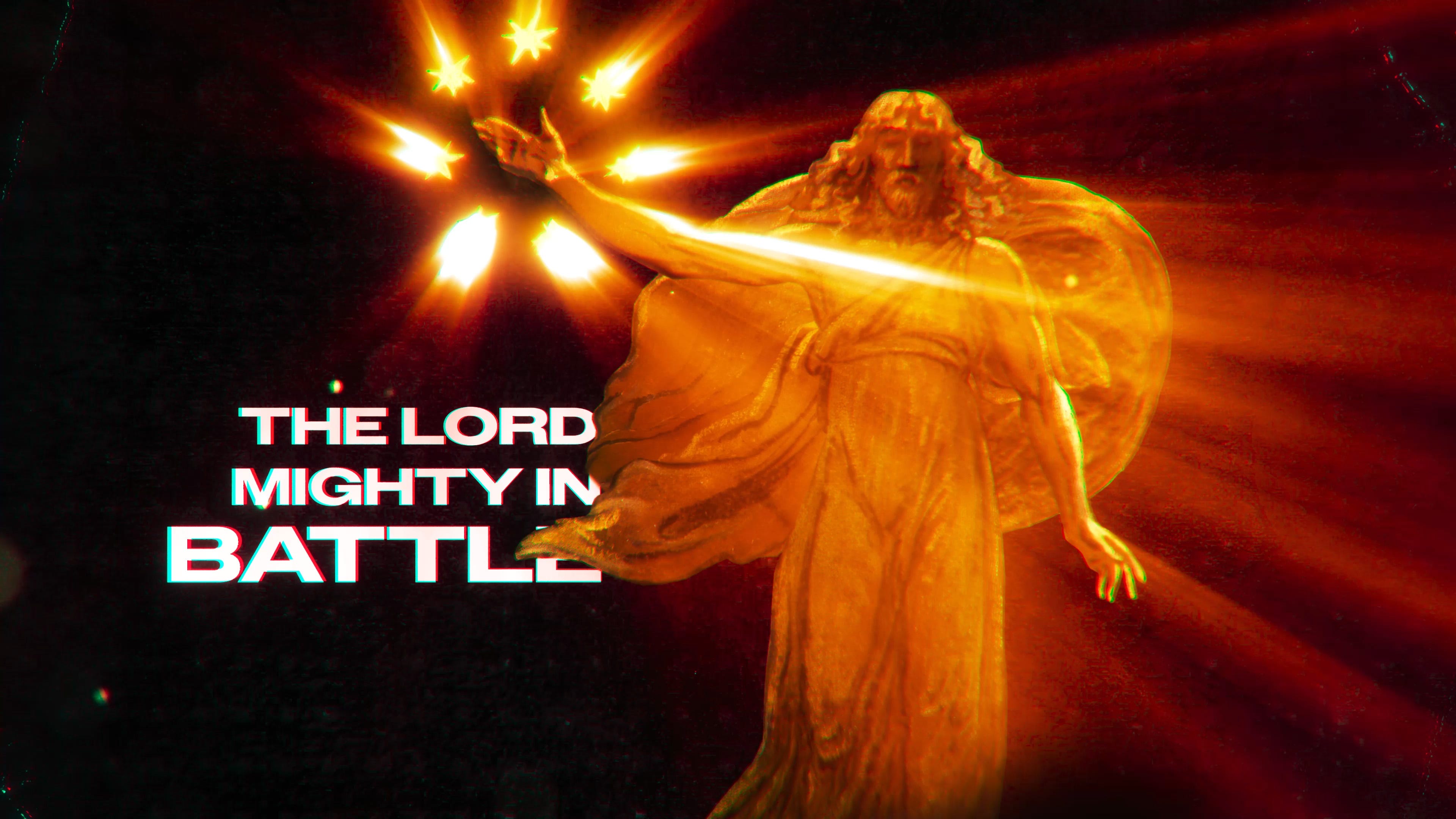
Who is this King of Glory? the Lord who is strong and mighty: the Lord mighty in battle. (Psalm 23:8 DR)
Ancient Republican Rome was steeped in many martial traditions of war and victory, and one of the most notable was the after-party for successful generals and commanders known as the triumph. In Republican times this was technically granted and bestowed by the Senate, as they wanted to keep their victorious generals humble and mindful of their own mortality; or, barring that, at least from getting any wild ideas about, oh, I don’t know, things like crossing the Rubicon with an army and making himself emperor, not that that ever happened…
The triumph itself was more or less a grandiose military parade that began in the Campus Martius—the Field of Mars—usually before dawn, and took a rather plodding route from this place outside of Rome’s sacred boundary through the Porta Triumphalis—the Triumphal Gate. The general technically surrendered command of the army back to the Senate as the procession crossed the sacred boundary of the city, and this procession meandered to other notable sites until finally reaching Capitoline Hill and the Temple of Jupiter. The entire procession was slow and could take around 2-3 days to complete, even though it was only about a two and half mile distance.
The triumphal procession was often led by the Senate and magistrates, followed by musicians and the sacrificial animals, with the captured enemy prisoners behind in chains. The general followed behind in a chariot wearing the garb of royalty and holding a laurel branch in his right hand, and apparently had a slave continually whispering in his ear, reminding him that he was mortal. The rest of the army brought up the rear. Upon reaching the Capitoline Hill the general then offered his laurel to Jupiter along with the thank-offerings in the procession. The general was expected to only wear this kind of regalia during the triumph; Julius Caesar opting to wear it whenever he felt like it portended to some his ambitions for monarchy.
To earn a triumph, some Roman historians have suggested that there were certain laws or conditions that had to be met, such as killing at least 5000 enemy combatants, but it is not clear that this was ever legally the case. Rather, as with any political act, it was full of machinations from the general requesting the triumph to the Senators who may or may not have had the desire to grant him one for various reasons. There were thus often straight up bribes given for a triumph to be declared, and the Senate no doubt perceived a danger in handing them out too easily to generals who might have greater ambitions than serving the Senate.
One of the more spectacular triumphs was that of General Scipio who finally defeated Rome’s greatest nemesis Hannibal and brought the rival city of Carthage to its knees, ending the 2nd Punic War. Scipio was a brilliant military commander and well loved by his troops and the people of Rome, seen by many as literally the savior of Rome against the seemingly unstoppable and equally brilliant Hannibal. It was at this time that he received the title Africanus to honor his astonishing victories.
The Psalmist wrote long before the advent of Roman triumphs, but the concept of a triumphal procession following a military victory was well known within the ancient world, and in Psalm 67 the Psalmist describes this triumphal procession of the Lord:
The chariot of God is attended by ten thousands; thousands of them that rejoice: the Lord is among them in Sina, in the holy place. Thou hast ascended on high, thou hast led captivity captive; thou hast received gifts in men… They have seen thy goings, O God, the goings of my God: of my king who is in his sanctuary. Princes went before joined with singers, in the midst of young damsels playing on timbrels. In the churches bless ye God the Lord, from the fountains of Israel. There is Benjamin a youth, in ecstasy of mind. The princes of Juda are their leaders: the princes of Zabulon, the princes of Nephthali. Command thy strength, O God: confirm, O God, what thou hast wrought in us. From thy temple in Jerusalem, kings shall offer presents to thee. (Psalm 67:18-19; 26-30 DR)
In this passage we see many similar things to a Roman triumph, and the procession is en route to the temple in Jerusalem. Thus, in Psalm 23 in this passage the gates of the holy city have been opened and the King now enters as the question is now asked: Who is this King of Glory?
In some respects this is a rhetorical question, more of a shout of acclimation than something arising out of ignorance. In ancient Roman triumphs the people would should Io, triumphe—Hail, triumph!—as the procession passed, and the question in the first clause of this passage functions in a somewhat similar manner. Often one can be so overcome by wonder and joy—or the answer is so overwhelmingly obvious—that the rhetorical becomes declarative. In St. Michael’s battle with Lucifer, St. Michael takes his name from the question he asked—Quis ut Deus?—Who is like God? It is certainly not that he or Lucifer were unaware of Who God is, but rather that the sheer and inescapable reality of it can perhaps only be expressed in the rhetorical negative.
The same holds for Christ in His triumph over sin and death, ascending on high as the Psalmist declares, taking captivity captive. In His descent from on high our Lord took upon Himself our human nature, our flesh and blood, and in the Ascension retains the same flesh and blood that the powers of hell pierced with nails and crowned with thorns. The wounds which marked His hands and feet in the crucifixion remain, now marking His triumph as He returns to the Father and His glory:
He introduces him to the Princes of the heavenly Jerusalem as King, “Who is this king of glory?” not that the Angels, on the day of his ascension, were ignorant of Christ’s being the King of Glory, but to express their admiration at the novelty of human flesh ascending to the highest heavens, not as a guest or a stranger, but as the Lord of a glorious and everlasting community. The prophet answers, that Christ is the King of Glory, the Lord most valiant and powerful, who showed his power in battle against the prince of darkness, whom he conquered, despoiled, and left in chains. (St. Robert Bellarmine, A Commentary on the Book of the Psalms, 23, 8)
In the second clause a prophetic juxtaposition is set up, for the Lord is strong and mighty, fortis et potens in the Vulgate. These terms certainly and absolutely describe the Lord in His very nature as God, yet paradoxically set in relief the weakness of the human nature that our Lord took upon Himself in the Incarnation. However, the paradox is that in the midst of this weakness, He was fortis et potens, was strong and mighty, for through His death He triumphed over that very death, and the weakness of His flesh became stronger than that which put it to death:
For He is called strong against this: that they thought He could be held with swords and clubs. He is mighty, whom they handed over to Pontius Pilate as if He were powerless. It was also added, mighty in battle, lest they should believe they had prevailed at all in their struggle against Him. (Cassiodorus, Explanation of the Psalms, 23, 9)
This is fully rounded out in the final clause, for the Lord is mighty in battle. The prophetic aspect of this again flows through this passage, for the battle is not merely an assertion of God’s absolute power over creation and all things, including the hosts of darkness, but rather specifically Christ’s victory over sin and death and hell in the triumph of the cross and His glorification in the Ascension:
Handle the scars, and you will find them made whole, and human weakness restored to immortality. The glorifying of the Lord, which was owing to earth, where It warred with death, has been paid. (St. Augustine, Expositions on the Psalms, 23, 8)
This triumph of Christ over the darkness of sin and death and hell is not a cosmic myth that has meaning only in its signification, but is the concrete and historical victory upon the cross. Nor is its triumph limited to Him or to this moment in history, for those who are incorporated into Christ share in His triumph as well:
For in him dwelleth all the fulness of the Godhead corporeally; and you are filled in him, who is the head of all principality and power: In whom also you are circumcised with circumcision not made by hand, in despoiling of the body of the flesh, but in the circumcision of Christ: Buried with him in baptism, in whom also you are risen again by the faith of the operation of God, who hath raised him up from the dead. And you, when you were dead in your sins, and the uncircumcision of your flesh; he hath quickened together with him, forgiving you all offences: Blotting out the handwriting of the decree that was against us, which was contrary to us. And he hath taken the same out of the way, fastening it to the cross: And despoiling the principalities and powers, he hath exposed them confidently in open shew, triumphing over them in himself. (Colossians 2:9-15 DR)
St. Paul would have been familiar with the Roman triumph and thus employs its pomp and pageantry to our Lord’s triumphal procession with the principalities and powers that He has despoiled. This despoiling is both taking from these powers what belonged to them, and distributing them to those whom He will; as St. Paul interprets of Psalm 67: Ascending on high, he led captivity captive; he gave gifts to men. In the Psalm our Lord receives gifts in men, but here He gives gifts to men.
This is easily and beautifully resolved when it is recognized that the spoils of the enemy whom He defeated are men who were in captivity to sin and death. He receives them as the spoils of victory, making them sons of God through baptism and is not ashamed to call them brothers. And because they now share in His triumph, they receive gifts from Him, as the soldiers of the conquering general receive gifts from his hand.
Scipio Africanus gave lavish gifts of 400 asses—bronze coins—to each of his soldiers as part of his triumph, which would have been equivalent to about three months of pay.
But as generous as this outlay was from Scipio’s beneficence, our Lord’s generosity is infinitely greater, for we are incorporated into His very body, made to become partakers of His divinity. As St. Paul notes, in our Lord the fullness of God dwelt corporeally, and we are filled in Him. And as He is the head of all principality and power, whatever “fullness” we may have deemed to have received under the captivity of the principalities and powers of this world are abject emptiness compared to the fullness which comes through Him by being united to Him.
As the King enters the heavenly city, He leads those He has redeemed in triumphal procession, the spoils He has taken from the enemy and made into His family. In this triumph over sin and death His strength and might are revealed, for the battle was won not through the might of arms but through His submission to the Father’s will, prompted by the deep and everlasting charity that issues forth from His sacred heart, the wounds of which stand as trophies of His victory:
You suppose that He is predicted as a military and armed warrior, instead of one who in a figurative and allegorical sense was to wage a spiritual warfare against spiritual enemies, in spiritual campaigns, and with spiritual weapons: come now, when in one man alone you discover a multitude of demons calling itself Legion, of course comprised of spirits, you should learn that Christ also must be understood to be an exterminator of spiritual foes, who wields spiritual arms and fights in spiritual strife; and that it was none other than He, who now had to contend with even a legion of demons. Therefore it is of such a war as this that the Psalm may evidently have spoken: The Lord is strong, The Lord is mighty in battle. For with the last enemy death did He fight, and through the trophy of the cross He triumphed. (Tertullian, Against Marcion, Book IV, Chapter 20)
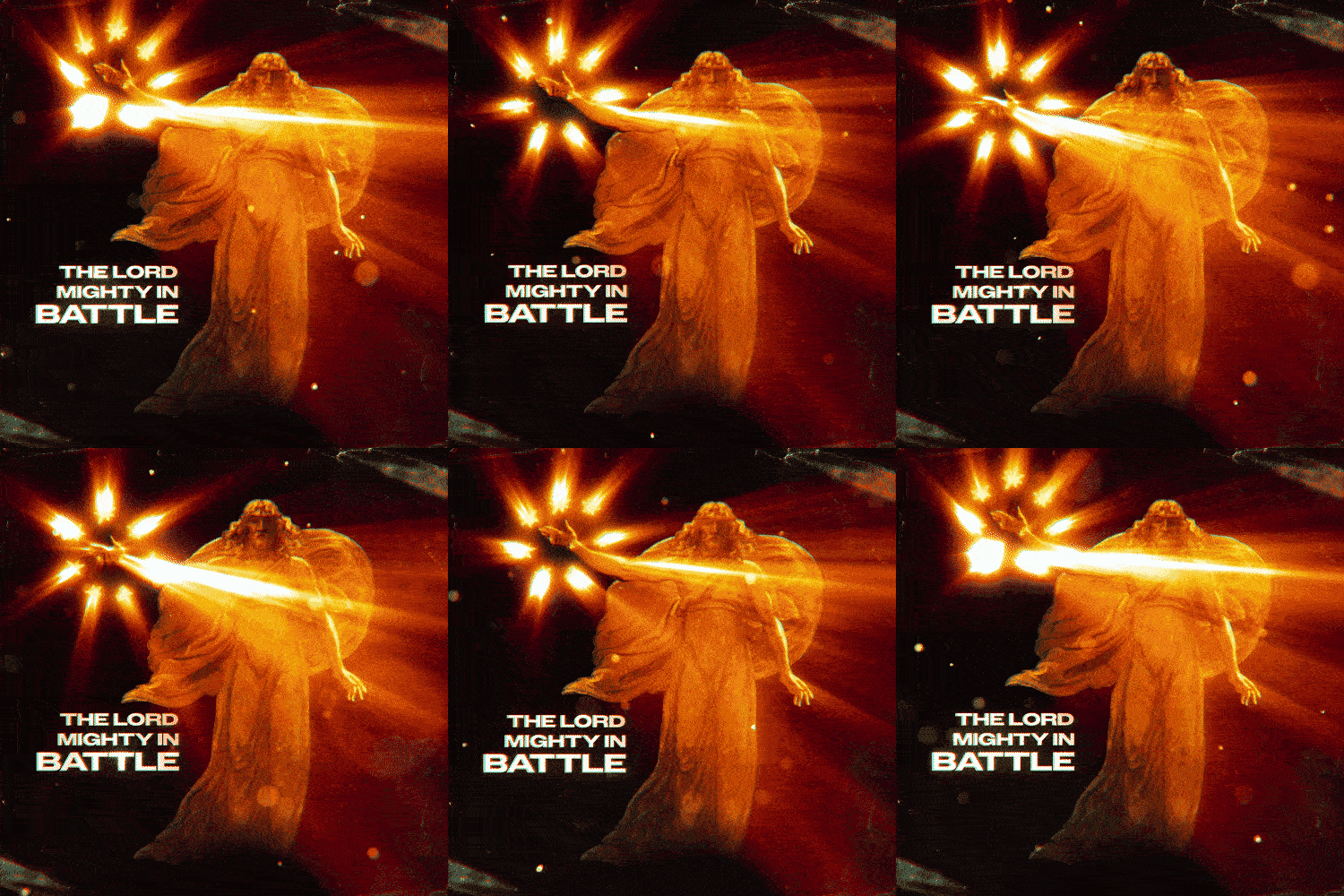
I found an interesting image of Christ drawn from the Apocalypse and isolated it in Photoshop, isolating each star onto its own layer, as well as the robe behind Him. In After Effects I brought all these layers into a precomp and rigged up the main figure with the Puppet Tool and used Puppet Tools 3 to convert the pins to Nulls and animate the main body and arm.
For the cloth behind I used the Puppet Tool and then AutoSway to give it a sort of windy wave effect.
I animated a looping up and down animation for each star and then sequenced them, and then precomped these and applied Shine to get the volumetric rays.
I finally added in some floating particles that more or less go along with the flow of the cloth to give it more of a windy feel overall, along with some camera shake.
Enjoy.
Who is this King of Glory? the Lord who is strong and mighty: the Lord mighty in battle. (Psalm 23:8 DR)
View a higher quality version of this gif here:
Comments
Nothing yet. Say the first thing.
Sign in to join the conversation.