
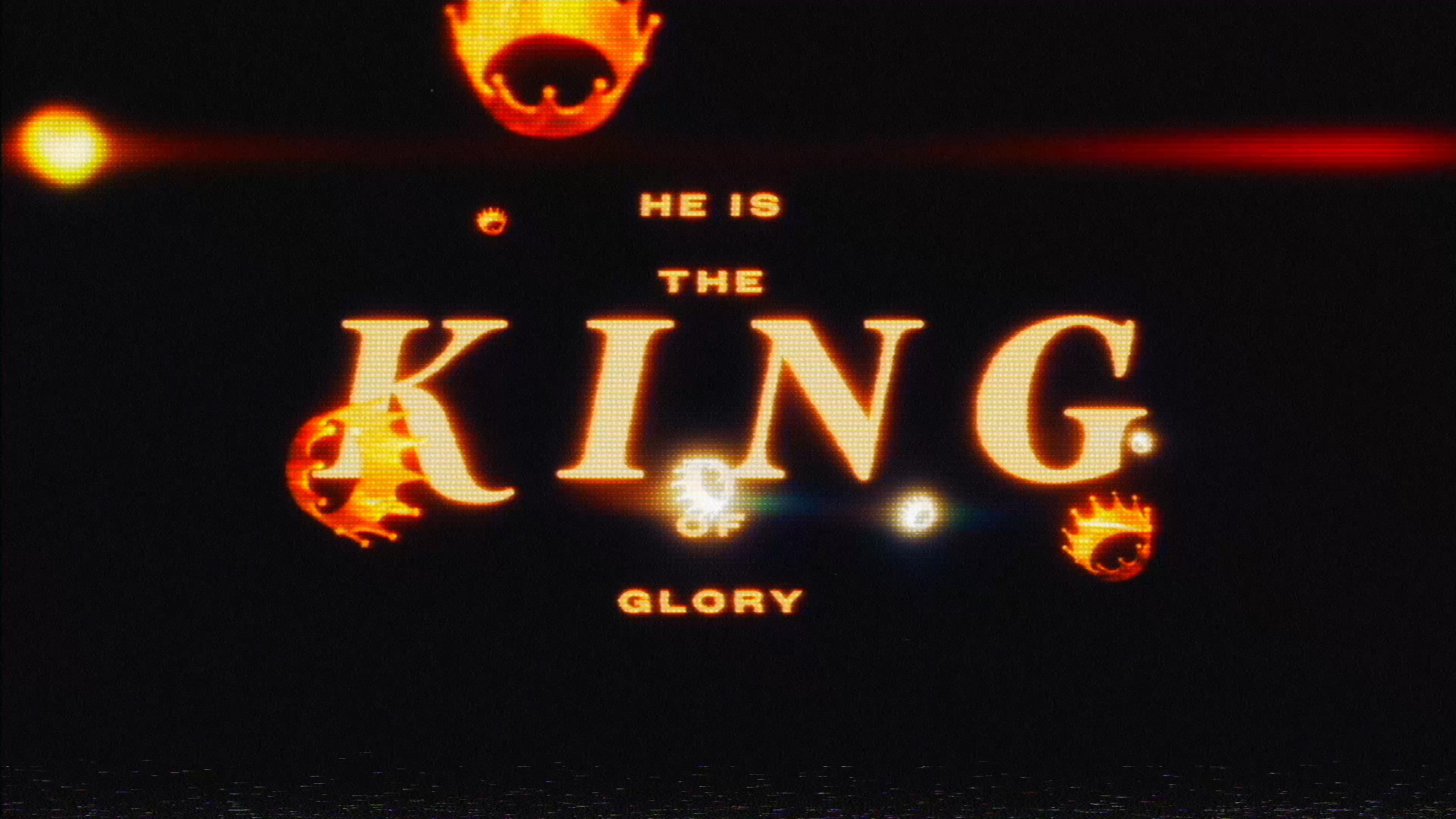
Who is this King of Glory? the Lord of hosts, he is the King of Glory. (Psalm 23:10 DR)
One of the more famous accounts in all of the Gospels is St. Peter’s confession of Who Jesus is, which, as Jesus tells him explicitly, is not something he came up with on his own but was rather revealed to him by the Father. Jesus then immediately changes his name and announces the establishment of the Church:
And I say to thee: That thou art Peter; and upon this rock I will build my church, and the gates of hell shall not prevail against it. (Matthew 16:18 DR)
The use of the word “gates” (portae in the Vulgate) is often taken to situate these gates of hell in a defensive light, for gates generally serve the purpose of keeping something out or only admitting certain things. Understood in this light, the Church is situated as being on offense, laying siege to the gates of hell.
Interestingly, in the book of the Apocalypse Christ Himself—Who is said to be “alive, and was dead…and living for ever and ever” is depicted as holding the keys of death and hell, wth the implication, it would seem, that His decent into Hell on Holy Saturday was the first sortie against the gates of hell, Himself plundering it completely of the holy souls held within and holding the spoils of the keys of its gates. But not only are the gates of hell laid powerless through our Lord’s descent into hell. The gates of heaven are also opened—through His death and resurrection—to the Church He has redeemed. And following Jesus’ declaration of St. Peter as the Rock and the promise that the gates of hell will not prevail, He also entrusts to St. Peter the keys of the kingdom of heaven. Jesus thus despoils hell of its keys and possesses them, but also opens the gates of heaven and grants its keys to His vicar on earth.
In this manner His Church incarnates our Lord’s victory over death and hell. Those who have been redeemed and brought into the Body of Christ have been rescued from the gates of hell. But it is through her proclamation of the Gospel, distribution of the sacraments and all the rest that the graces of conversion and sanctification are normally realized, united in one body under one head our Lord Jesus Christ, visibly bound together in union with His vicar and the successors of the apostles.
This intimately bound union between Christ and His Church—which is mirrored and imaged even in the possession of “keys” between the two—perhaps fittingly situates the final passage of Psalm 23, which is a slight rephrasing of verse 8. In verse 8 the Lord was described in that language pertaining to His own power, as it were—the Lord Who is strong and mighty, the Lord mighty in battle. In this final verse we in a sense zoom out to see the entire retinue of the Lord which accompanies Him in His triumph, for He is described here as the Lord of hosts:
The Angels ask again, Who is this King of Glory? “The Lord of Hosts is the King of Glory,” is the reply. At the sound of that most familiar name, they at once open, and with joy receive the King of Glory. “Lord of hosts” is the peculiar title of the Creator, and never applied to any one in the Scriptures, but to God exclusively. The Hebrew word has been sometimes translated God of armies, as God really is, presiding over his armies of Angels, that are innumerable and most powerful; and besides, having all created beings serving under him, as we read in Psalm 148, “Fire, hail, snow, ice, stormy winds which fulfill his word.” (St. Robert Bellarmine, A Commentary on the Book of the Psalms, 23, 10)
The Hebrew word for hosts—Sabaoth—is retained untranslated in the Mass at the Sanctus: Dominus Deus Sabaoth, which comes directly from Isaiah 6:3. I say “directly” in a qualified sense, as the Vulgate has exercituum, which more or less directly translates Sabaoth. However, ancient versions of the Septuagint often transliterated Sabaoth into Greek rather than translating it, such as in Isaiah 6:3. Origen notes that in Psalm 23:10 the Hebrew does have Sabaoth, which the Septuagint chooses to render as δυνάμεων.
Additionally, even though Sabaoth was easily translatable into Greek or Latin, it might be that this particular title had taken on a more transcendent meaning which couldn’t be captured in the word itself. The other Hebrew word in the Sanctus—Hosanna—is another word that took on far more meaning that its component terms; literally “Save now.” There were already centuries of deeply structured meaning layered upon it that were more intuited than understood by the earliest Christians, whose Jewish heritage immersed them in these numinous meanings from birth.
This speaks also to the antiquity of the Sanctus itself. It is scriptural in all its components, drawing together both Old and New Testaments, but also perhaps was an adaptation of an already much older Jewish tradition. The use of the Sanctus in the liturgy is attested before the end of the first century with St. Clement of Rome, making it probably of apostolic origin.
Earlier English translations like the Douay-Rheims and the King James Version tended to render Sabaoth as “hosts.” The Douay-Rheims does so here even though its normative source is the Vulgate, which has virtutum rather than exercituum, the latter being how St. Jerome translated Sabaoth in his Hebrew Psalter. But since the Douay-Rheims does not strictly follow the Vulgate at all times, it chooses to take the Hebrew reading here over the Latin and Greek.
Virtutum can be translated as powers or as virtues, with each meaning having a far closer affinity in Latin than they do in modern English, as we tend to treat power primarily as a capacity for something and virtue in a generally moral sense.
St. Augustine understands these powers to be the powers over the administration of the world, which would encompass both the good and the bad powers. In this repetition of verse 8, St. Augustine imagines that the prince of the power of this air is the interlocutor, questioning Who is the King of Glory entering into the gates of heaven:
Who is this King of glory? What! Do you too, prince of the power of this air, marvel and ask, Who is this King of glory? The Lord of powers, He is the King of glory. Yea, His Body now quickened, He who was tempted marches above you; He who was tempted by the angel, the deceiver, goes above all angels. Let none of you put himself before us and stop our way, that he may be worshipped as a god by us: neither principality, nor angel, nor power, separates us from the love of Christ. It is good to trust in the Lord, rather than to trust in a prince; that he who glories, should glory in the Lord. These indeed are powers in the administration of this world, but the Lord of powers, He is the King of glory. (St. Augustine, Exposition on the Psalms, 23, 10)
The powers that Christ is the Lord over are under His dominion and rule, even if they are foolishly opposed to Him. In St. Augustine’s reading this prince of this world sees Christ in His flesh ascending to heaven and wonders at how such a thing can be possible, not realizing that this self-same God-man will lead him and all his servants captive. St. Augustine observes that Christ allowed Himself to be tempted by an angel—that is, the devil—but now is seen by this same fallen angel to ascend above all angels. In the end the deceiver ended up deceiving himself, for his temptations are trampled upon as the Lord marches triumphantly into the gates of heaven.
It is this victory of the Lord over temptation which becomes the source of our victory over temptation. This triumph of Christ which He leads holds the devil and his angels captive and led as prisoners, which means that temptation need not overpower us. If Christ is Lord over all the powers, then that is true of the powers who seek to lead us into sin. The devil tempted Christ because he did not recognize His divinity; he thought he had another victim to drag into captivity to sin. But now he sees this same Jesus exalted as Lord of powers over all powers, and the grace which Christ distributes to His Church, His Body, enables the members of this Church to likewise follow Him in victory over sin. As the Psalmist exclaims elsewhere:
For the Lord will not leave the rod of sinners upon the lot of the just: that the just may not stretch forth their hands to iniquity. Do good, O Lord, to those that are good, and to the upright of heart. (Psalm 124:3-4 DR)
Cassiodorus understands this final clause as extolling Jesus Christ as not just possessing these qualities or attributes, but being the Lord and source of them all, such that all power, all virtue, etc., flow forth from Him as He wills:
[H]e now calls him not only strong, not [only] powerful, not [only] great in battle, but the Lord of virtues themselves. Now he is the King of glory, who certainly makes those who glorify him glorious, just as is said through the Lord: Those who glorify me, I will glorify (1 Sam 2:30). He bestows power, virtue, and other gifts upon each one as he wills. For “glory” is said to be a celebrated proclamation and repeated praise. Indeed, by the Lord’s granting, the angels, Powers, Thrones, Dominions, and other most powerful creatures are also glorious; but none is the King of glory except the one who founded and holds together these very summits. Stupendous praise, wondrous conclusion! Nor could anything worthy be said by another, except by him alone who is able to recount his own power. (Cassiodorus, Explanation of the Psalms, 23, 11)
Even the highest Seraphim who burn for charity of God are themselves only so exalted because they receive their glory and charity and exaltation from the Lord of virtues, the Lord of powers, the Lord of hosts. In Isaiah’s vision the Seraphim intone the beginning of the Sanctus, setting forth the prophetic expectation of the Blessed One Who will come in the name of Lord. The Church then takes up the remainder of the Sanctus, following Christ with loud Hosannas as He ascends into Heaven as the King of Glory. And because He is the Lord of hosts in the unity of God and man in the Incarnation, His Holy Catholic Church shares in His triumph and receives from Him power and virtue and all that is good.
The powers of darkness cannot bear to behold the flesh of man ascend to the Father united to the very divinity of the Son; less still can they bear to see man—who was by nature created lower than the angels—united to Christ in that same Body and by supernatural grace now lifted above them. The gates of hell truly tremble, for not only has the God-man taken their own keys, but in an absurdity to their conceptions of power now places in the hand of a man the keys of the kingdom of heaven as the Church now begins its assault on their powerless gates:
Take away, therefore, the gates of your prince; just as we have borne the image of the earthly, let us also bear the image of the heavenly (1 Cor 15:49). Who is this King of glory? Christ the Son of God, he is the King of glory, shutting out the prince of ignominy. He who, having cast down the temples of idols as if they were the gates of the prince devil, lifted up the eternal gates of the holy Catholic Church, in which the King of glory reigns. If you ask who is this King of glory?, the Apostle will answer: Christ the Son of God, the King of all unto salvation, who reigns forever and ever. Amen. (Arnobius the Younger, Commentary on the Psalms, 23)

I obtained a nice 3D model of a crown and used that as a sprite for Trapcode Particular. The rest was a bunch of glows and streaks.
Enjoy.
Who is this King of Glory? the Lord of hosts, he is the King of Glory. (Psalm 23:10 DR)
View a higher quality version of this gif here:
Comments
Nothing yet. Say the first thing.
Sign in to join the conversation.