
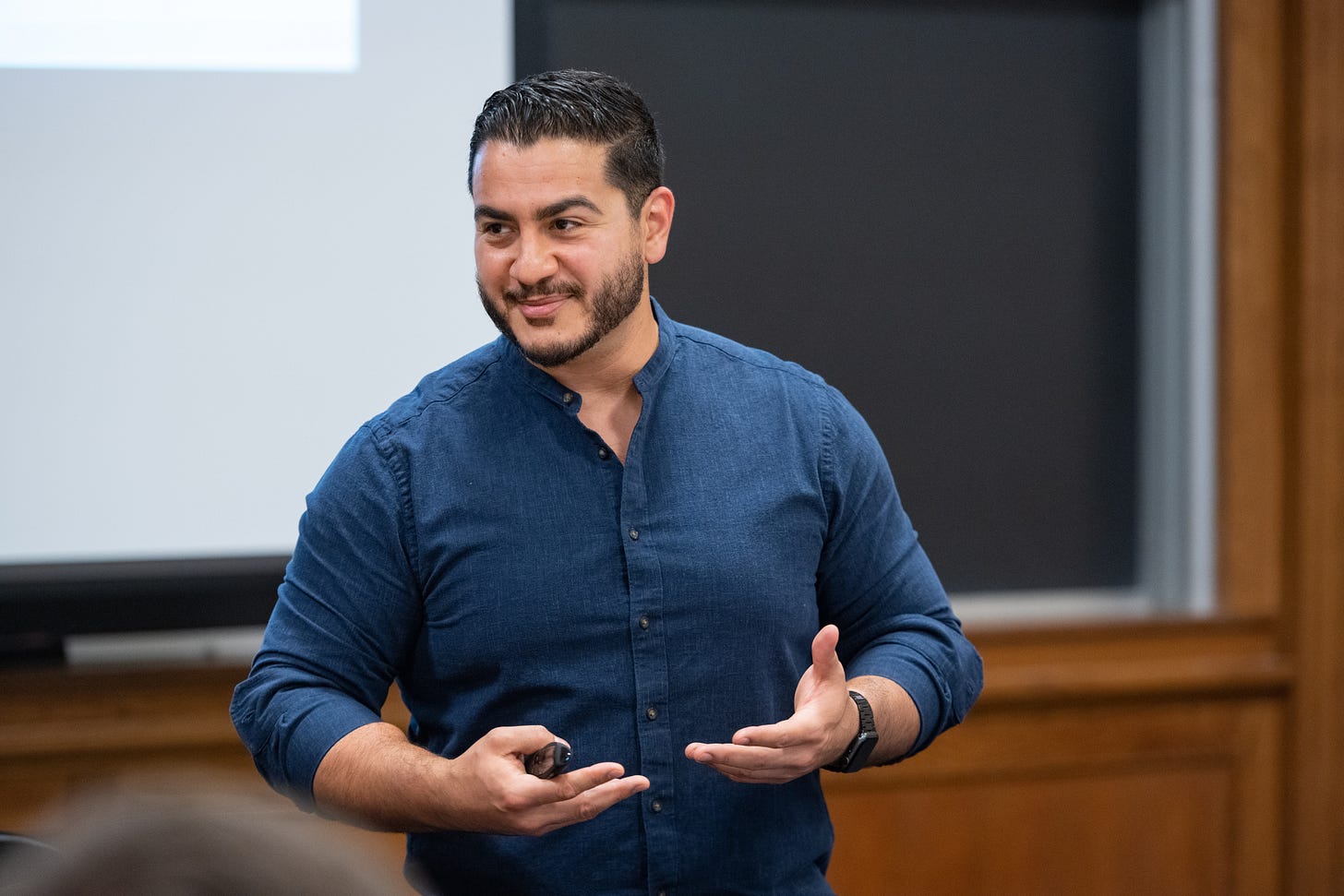
At Religion News Service, Jack Jenkins and Ulaa Kuziez examine the increasing prevalence of partisan messaging that frames American Muslims as a threat to “Western” values, looking specifically at the unprecedented vitriol directed at Michigan Senate Democratic nominee Abdul El-Sayed. The Sharia-Free America Caucus, which includes 68 members of Congress, claims there is a growing threat of Sharia, or Islamic religious law, in the U.S., and caucus members have introduced bills like the No Sharia Act. Nazita Lajevardi, Ph.D., an associate professor of political science at the University of Michigan and a former PRRI Public Fellow, told RNS that this type of rhetoric is “heightening a sense of security threat, an existential threat, that the American public already feels about American Muslims.” PRRI finds that most Republicans (76%) agree that the values of Islam are at odds with American values and the American way of life, compared with 46% of independents, and 30% of Democrats.
The Washington Post reports that Florida Democrats took dueling approaches in Tuesday's primaries as they try to win statewide for the first time since 2018, nominating democratic socialist state Rep. Angie Nixon for Senate and former Republican David Jolly for governor. GOP voters picked Rep. Byron Donalds to succeed term-limited Republican Gov. Ron DeSantis, and ousted scandal-plagued Rep. Cory Mills, whom DeSantis had declined to support. In Wyoming, Trump's endorsement took another blow after his preferred gubernatorial candidate, Megan Degenfelder, lost to state Sen. Eric Barlow. And in Alaska's ranked-choice Senate primary, Republican Sen. Dan Sullivan and Democratic former Rep. Mary Peltola both advanced to the general election. PRRI finds that less than one in five Americans (18%) say they're extremely or very proud of how democracy is working in America today, including 34% of Republicans, 13% of independents, and 8% of Democrats.
Paul Wiseman and Rob Gillies at the Associated Press write that President Donald Trump announced he was delaying the 50% U.S. tariffs on $20 billion of Canadian imports after the two countries reached a last-minute deal less than two hours before the sanctions were to go into effect. The announcement, which Trump made on his social media platform, buys time for more negotiations and avoids another strain in already tense relations between the historic allies. Canada had threatened to retaliate against any new tariffs with levies of its own, in a trade fight between countries that exchanged $880 billion worth of goods and services last year. PRRI finds that the majority of Americans say that the implementation of new tariffs on imported goods from other countries has gone too far (54%), compared with over one-third who say this change seems about right (35%), and only 7% who say it has not gone far enough.
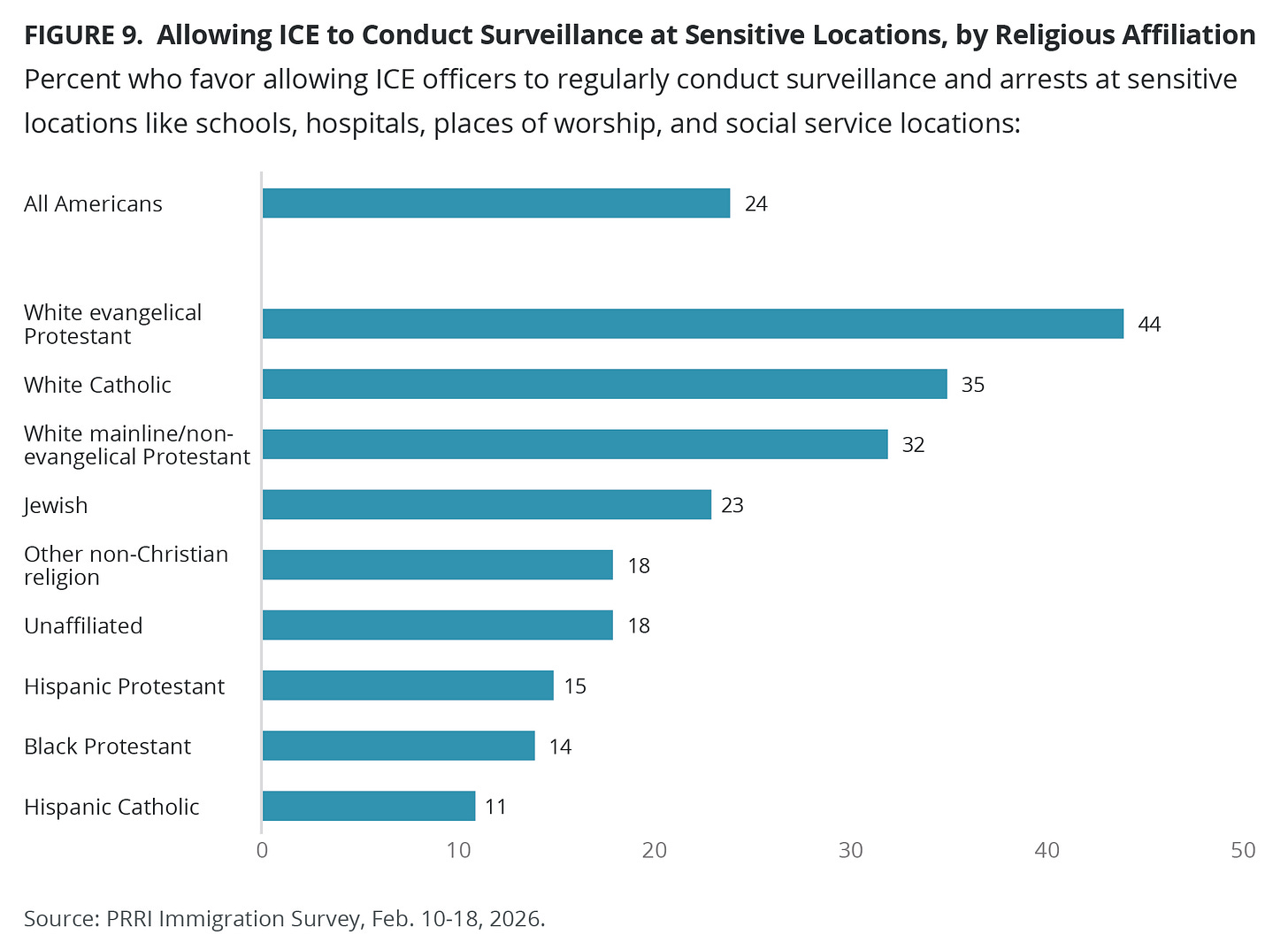
For CBS News, Melissa Quinn reports on a federal appeals court’s decision to continue to block immigration officers from conducting enforcement actions at certain houses of worship for Quakers, Cooperative Baptists, and Sikhs. The dispute dates back to the beginning of Trump’s second term, when the Department of Homeland Security rolled back a policy issued under the Biden administration barring immigration enforcement actions at or near protected areas. Just one in four Americans (24%) favor allowing ICE officers to regularly conduct surveillance and arrests at sensitive locations like schools, hospitals, places of worship, and social service locations, compared with most Americans who oppose it (72%), according to data from PRRI. Under the new policy, the Trump administration encouraged immigration officers to use a "healthy dose of common sense" when deciding to conduct actions in sensitive locations.
Learn more in the Survey Report: Immigration Enforcement, ICE, and Civil Liberties in the Second Trump Administration
Comments
Nothing yet. Say the first thing.
Sign in to join the conversation.