
Hello friends.
I get asked a lot why I got into narrative audio journalism. The answer I usually give involves an awful internship, having no friends, and making up for loss of human contact by mainlining the entire archive of This American Life.
But the real answer is more complicated. It’s not just that I was lonely and needed Ira Glass to be my friend. It’s that up until then, my internal narrator had been MIA, and during that awful internship summer, for the first time, I was hearing a voice in my head that was telling stories. Squeezing meaning out of events. Making jokes.
After a lifetime of quiet up there, I wanted to hear more of that voice. So I started making stories, forcing my narrator to come out and play on a Google doc and into a microphone.
For better or for worse, podcasting has become my primary vehicle for making meaning out of my life and the world.
Jonathan Adler helped me realize all this and much more, in the latest bonus episode for paying Patreon subscribers.
You might remember Jonathan as our proxy from last week’s episode. He’s a psychology professor at Olin College of Engineering who studies narrative identity, a theory for how we develop a sense of self, by constructing an evolving story to make sense of our life.
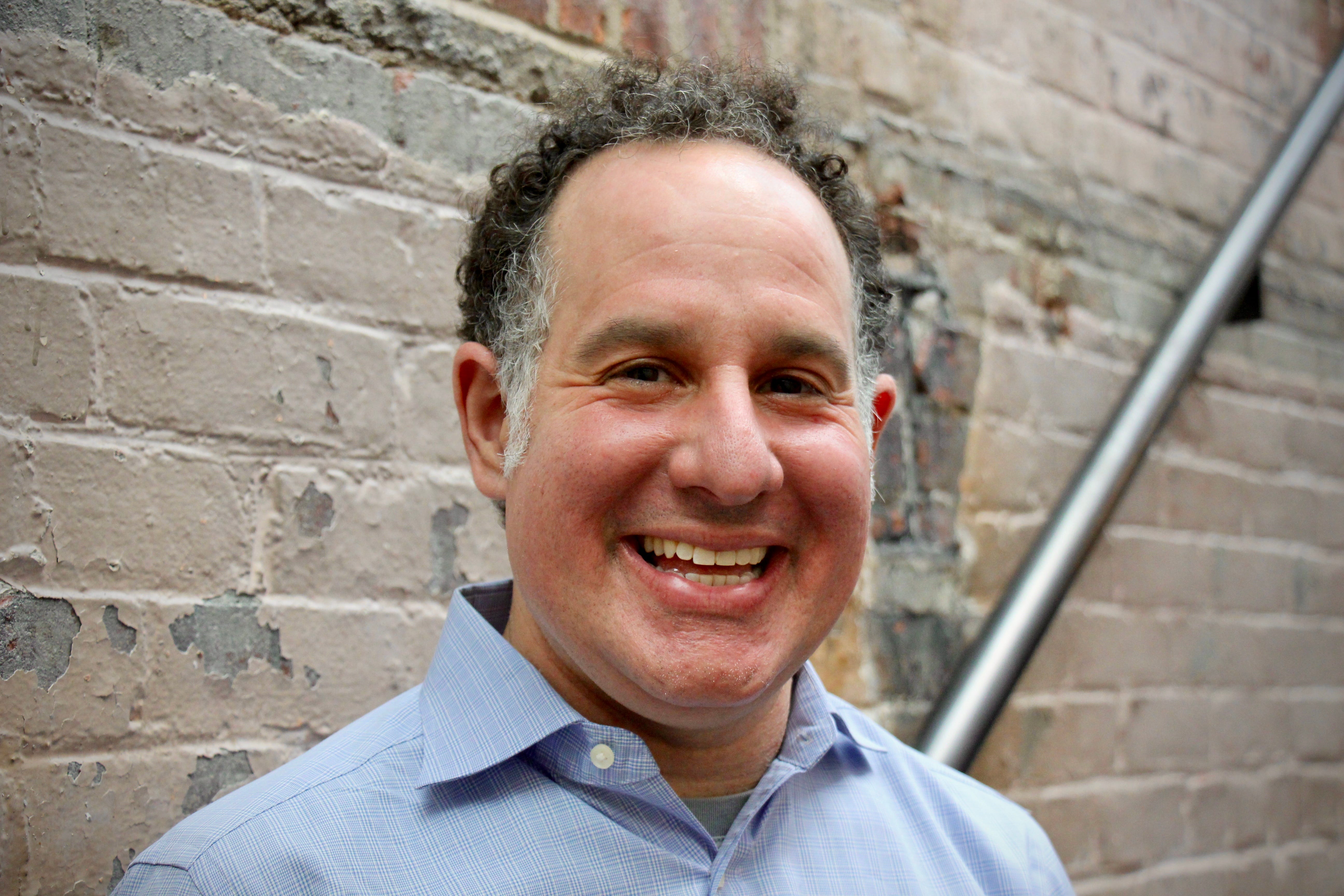
In the conversation, Jonathan helps piece together how narrative identities form, what being on “narrative autopilot” can lead to, and how I can help my self-narrator get swole at the gym. Jonathan also does a lightning round of answering listener questions.
Thank you to our wonderful subscribers! And if you’re not a paying Patreon member yet, you can subscribe here starting at $5/month. You’ll get access to our library of bonus interviews (12 and counting!), ad-free episodes, and other goodies.
Simply ask yourself the question on a regular basis: How do I make sense of what just happened? Instead of just floating along and experiencing things, which, again, that's a hugely beneficial way of being in the world too. Pros and cons. But if you're trying to increase your self narrative, then I would pause every once in a while and ask yourself, what's the story that I am telling about this experience? From the most micro, like, what happened today? to the most macro.
And I bet you are doing that. I bet whoever you're having dinner with is asking you about your day, and you're telling stories about your day, and you're talking to friends about movies, or TV shows, or whatever. And then scaling that up to the more sophisticated narrative questions like, so how does the thing that happened today relate to who I am, who I've been, and who I want to be? We call those ‘self event connections.’ So getting some practice with what we also call ‘autobiographical reasoning’ is the way to get better at it.
In narrative terms, I think of the autopilot as: You're continuing to live out the story line that you've been on without really thinking about whether it's the story line you want to be living in. There's a theory from developmental psychology, specifically about identity, where one of the pathways people take is called ‘foreclosure,’ where you just never explore the story you've been living and you just commit to it without thinking about it.
I really do believe that people can change their stories, but I also think that stories are upheld. Stories don't just live in our heads. One of my colleagues writes about us living in a narrative ecology, and that ecology is comprised of two other kinds of stories. One are the interpersonal stories, stories that your family and your friends tell about you. And the other are the broad cultural stories about people like you.
So it's not that you can just all of a sudden say, ‘I'm gonna have a totally different story,’ and it's like, snap, now you've got a totally different story. Because your story is supported by and fed by this dynamic interaction with the narrative ecology around you. So other people have to be willing to revise their story of you, and the culture has to have story lines that permit you to be the kind of person that you want to be.
Look, another podcaster who does not introspect! I’m in good company.
This social scientist is trying to help you have healthier conversations with yourself.
Your emotional investigative journalist,
Yowei
Edited by Juliana Feliciano Reyes.
No posts
Comments
Nothing yet. Say the first thing.
Sign in to join the conversation.