
First things first: The events in Minnesota, where I grew up, are almost too horrific for words. I don’t know a single person among my family and friends who has been unaffected. The activities of daily life have become sinister. Suburban parents are suddenly standing guard at schools and school buses to protect teachers and students. A Catholic church is swarmed with ICE vehicles. A peaceful protester was pepper-sprayed in the face — while complying with instructions to lie down. An empty car rolls down a residential street because its driver was just yanked out of it. No matter your skin color, political persuasion, or level of activism, no one feels safe. (And by the way, the vast majority, more than 95 percent, of Somalis in Minnesota are citizens.)
This could happen anywhere. It’s happening in smaller ways here in Seattle, where ICE has been taking people from the Home Depots closest to my house. There is no reason to think that the federal government wouldn’t surge its forces into this or any other city or state. As one friend said to me today, “Stay safe, stay smart, stay strong.”
For this month’s post, I was going to write about Walter Quigley’s brief, eventful time in 1934 as the state boxing commissioner in Minnesota. Boxing was legal, but the illegal gambling that surrounded it made it a murky undertaking. Quigley lasted less than a month in the job. He claimed he tried to clean things up; his opponents saw it differently. It’s a picaresque tale that doesn’t feel quite right for this moment.
Instead, I want to dig a bit into Quigley’s appearance and personality. I recently gathered all the photos I have of Quigley and laid them out in chronological order. A few things stood out as I studied them.
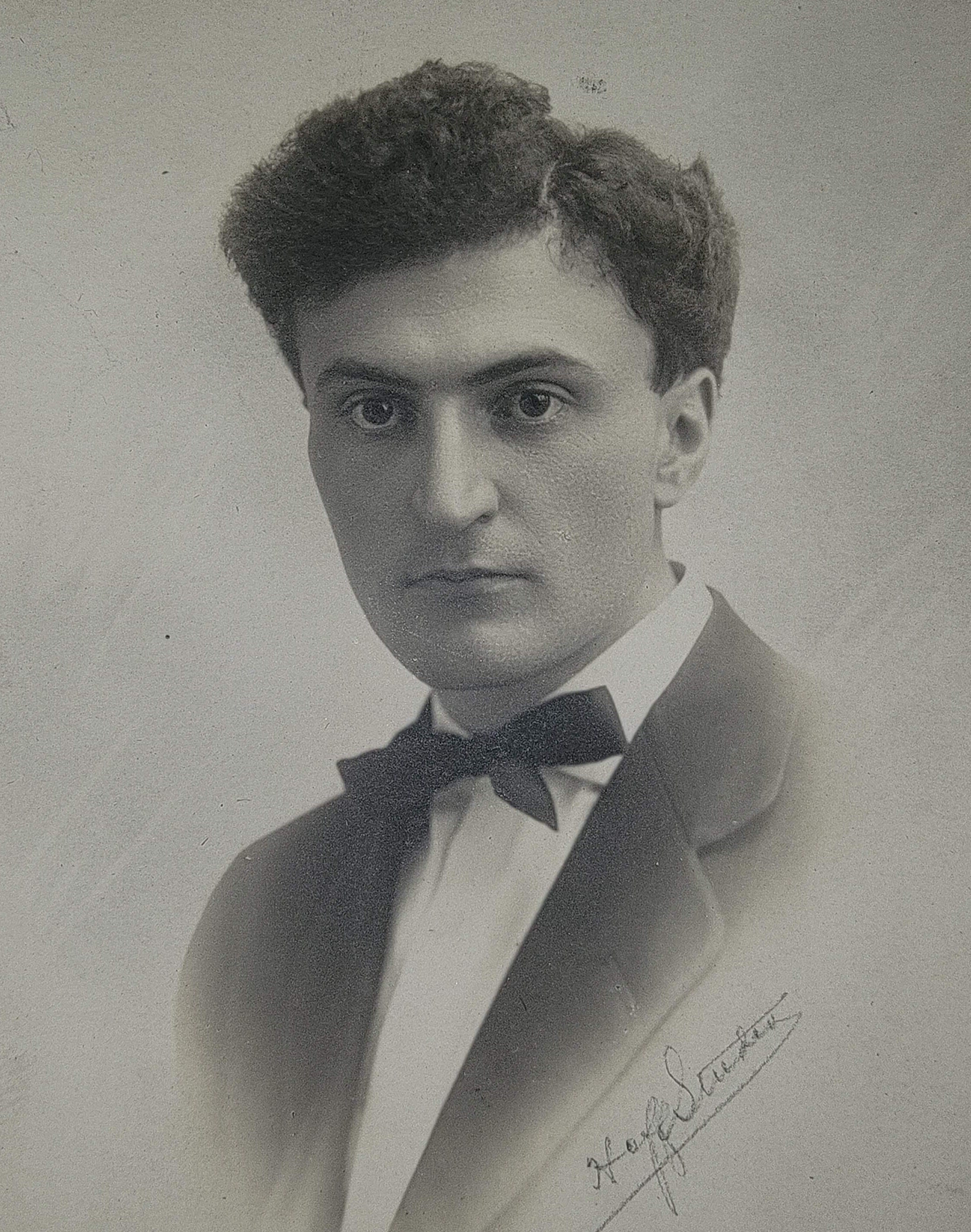
In his prime, Quigley stood a trim and wiry five-foot-seven and played college football. He was always pale, tubercular, with a high forehead that emphasized his small, intense eyes. If he could look down his nose at you, he would appear like a bird of prey. Given his short stature, though, this was unlikely. He kept his tightly curled hair short on the sides and back, but it stood up straight from the top of his head like a black hedge. Despite his lungs, he smoked, drank, and did not follow his doctors’ advice to seek physical work out of doors.
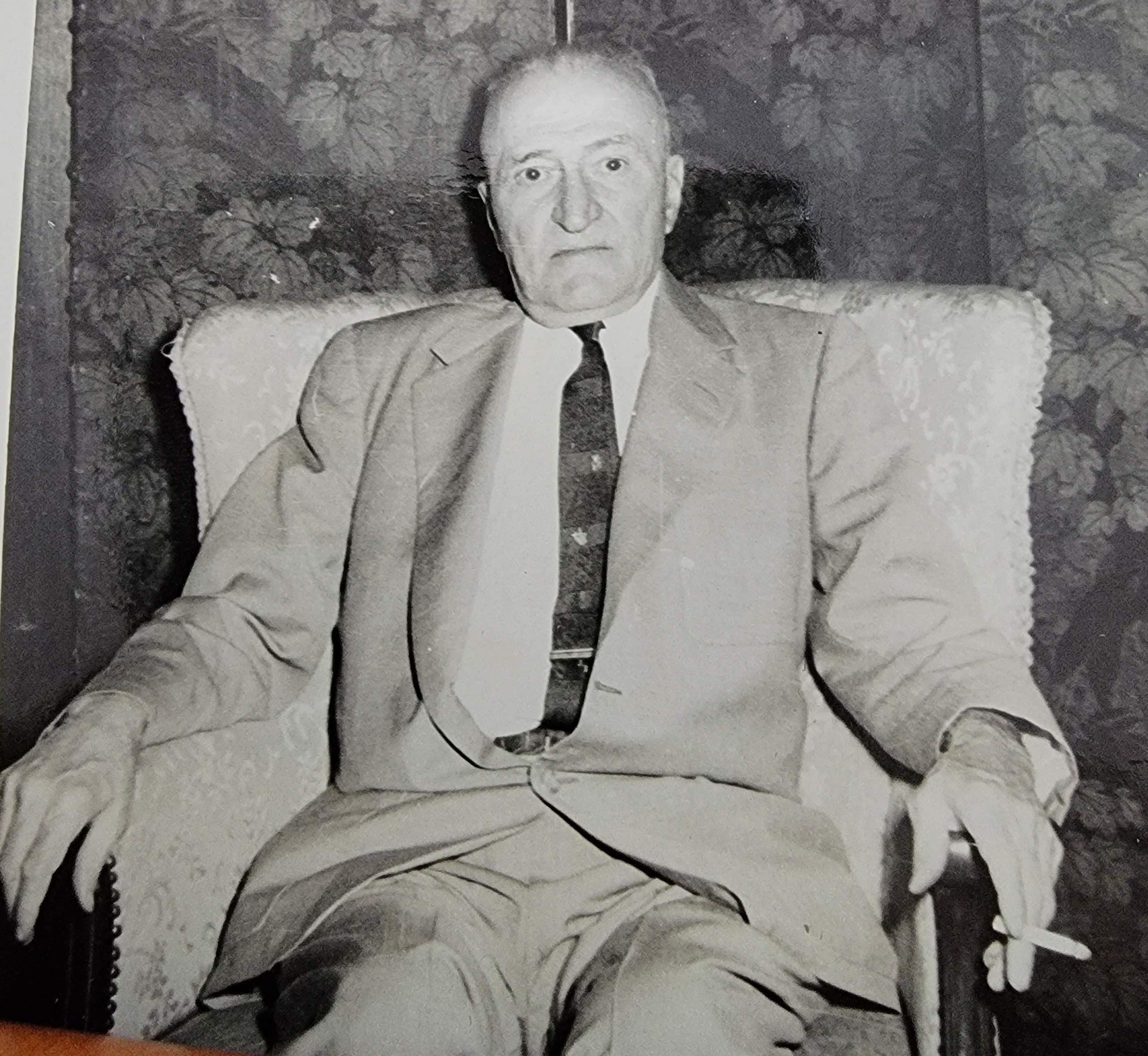
At the end of his life, Quigley still wore a suit every day, and his weight had barely changed from his college football days. But his hair was white and nearly gone from the top of his head. This photo was taken in the front room of Quigley’s home address on Humboldt Avenue South, in a fourplex rental in a tony neighborhood of lakeside mansions. For most of his career, Quigley had worked out of office towers in Minneapolis and hotels in places like Chicago, Salt Lake City and Beeville, Texas. By 1960, his business did not justify keeping a separate office, but he was not secure enough to retire.
In 1936, Quigley won a newspaper contest to write a clever poem about football. The prize, offered by the Minneapolis Tribune: a trip to Chicago to watch a team of college all-stars play the NFL champion Detroit Lions at Soldier Field.
Quigley was one of 10 winners who flew Northwest Airlines from Minneapolis to Chicago. All 10 are pictured in the Tribune on September 1 as they embark on their trip.
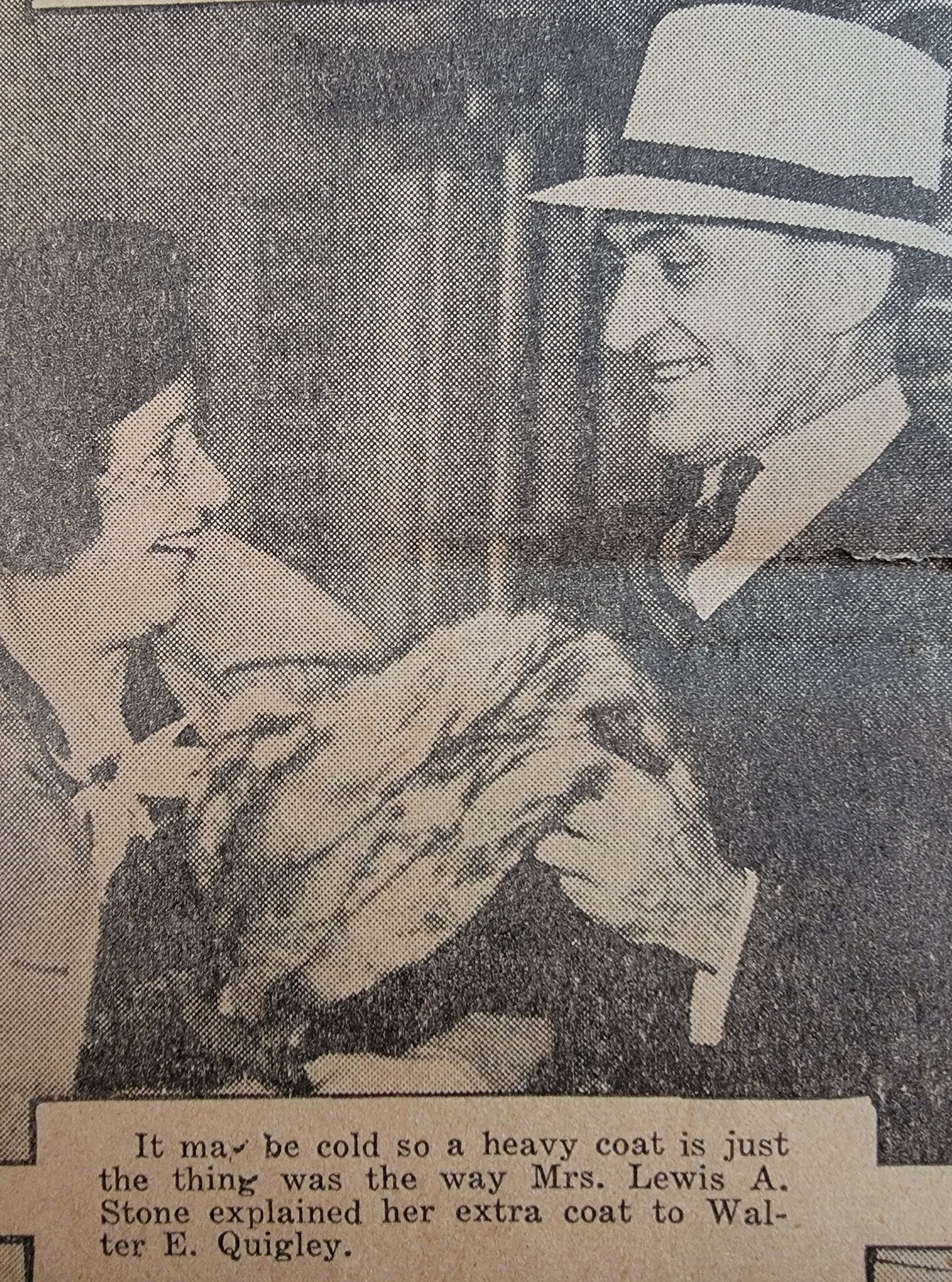
Something seemed off about this picture. It did not look like him. In fact, I wondered if it really was him. It took me a few minutes to figure out why. The picture showed Quigley in profile, examining another winner’s coat. It was the only known picture of Quigley’s face from the side.
The main reason that he looked so different was his nose. Straight on, Quigley’s nose was flat and unremarkable. It appeared to have a small knob at the bottom that gave his face a downward cast and slightly severe expression. But seen from the side, Quigley’s nose, I now saw, was a Venetian mask; it was a camel’s hump, the contour of a haystack or the edge of a pyramid. It pointed down as if to connect his brow with his toes.1
It was suddenly conspicuous that in every other photograph, from 1906 to 1961, he faced the camera head-on. I started to wonder if I was imagining it, if the figure in the football photo was not Quigley after all.
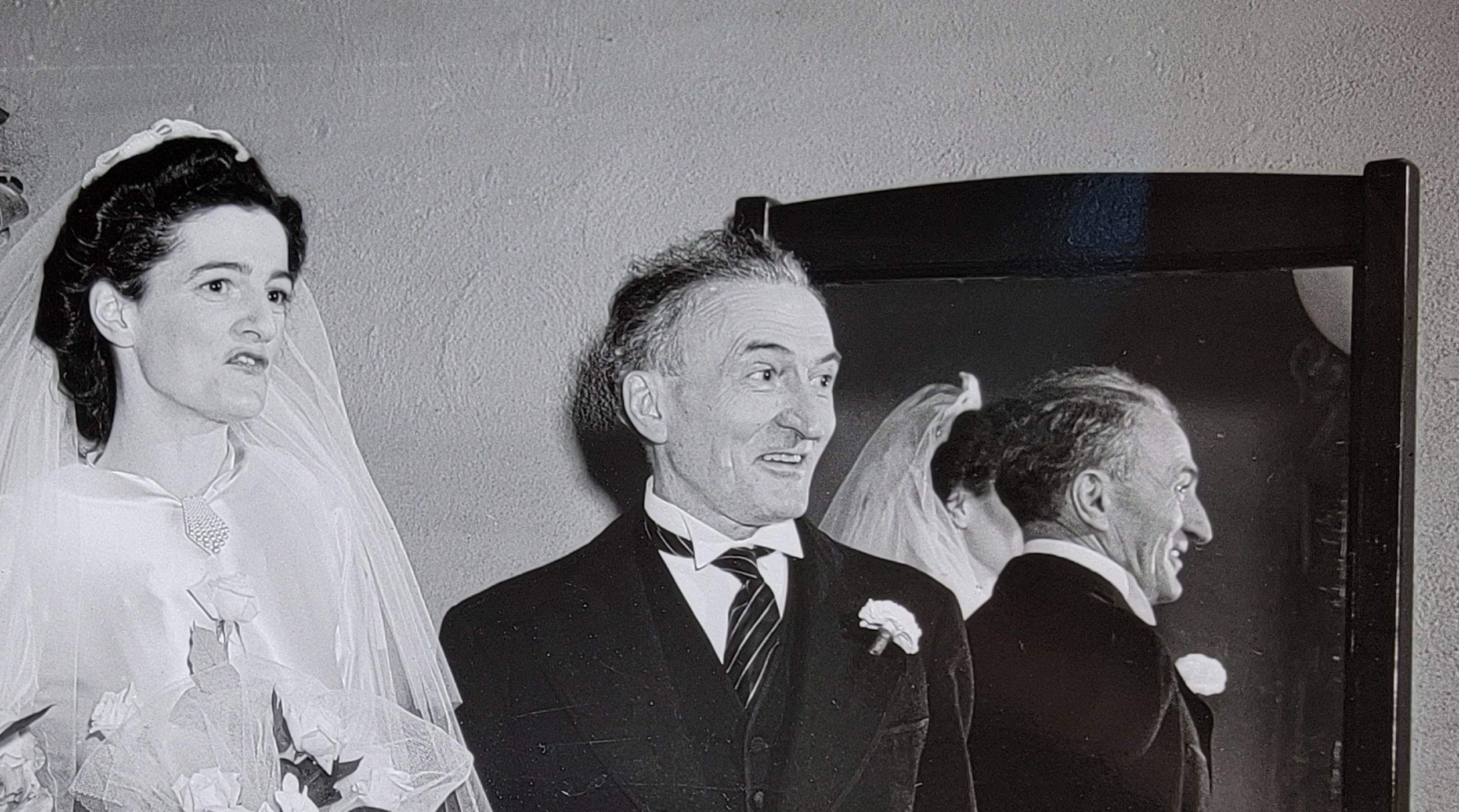
Then I noticed another photo from 1945, taken at his daughter’s wedding. (The photo was taken at a church in Minneapolis that in 2026 has been raided by ICE.) As usual, Quigley’s face was turned partially toward the camera. But behind him, over his left shoulder, was a full-length mirror, and in the mirror was Quigley, in 90-degree profile, and sticking out, like the Old Man of the Mountain, was Quigley’s nose.
In a further coincidence, his daughter’s white veil, flowing down off the top of her head, appeared in the reflection to be emerging from Quigley’s back. Set against Quigley’s black tuxedo jacket, the veil created the appearance of white, feathered wings. He was a dapper angel, or perhaps a winged monkey.
What I am tiptoeing around here is that Quigley, in profile, looks Jewish. I only feel comfortable saying that aloud because my father was Jewish. A long, almost hook-ended nose is the central anti-Semitic stereotype.
There is no reason to believe that Quigley has Jewish ancestry. His parents on both sides came from Canada, and before that, Ireland and France. They were Catholic — Quigley was one of eight children.
But Quigley also aspired to mainstream success — wealth and fame, American-style. In his time, that meant a WASP version of success that would protect him from the persecution that faced Jews, Catholics, Germans, Irish, Italians and, of course, people of color. He saw bias against these groups, including violence, throughout his career. He harnessed it himself, tarring his opponents as anti-Catholic or pro-Jewish. It would explain why, in the presence of a camera, he would so often turn and face it as directly as he could.
Would this interest someone you know? Why not:
There was one other difference between football-Quigley and nearly all the others: Quigley was smiling. His smile, like his daughters’ and many of their children’s, usually lay dormant behind a permanently set, thin-lipped grimace. The sharp nose, the thin lips, and his small, dark eyes gave him a serious mien. Even in the rare portrait when his eyes might have twinkled, his mouth did not stir.
What joke is he sharing with the woman in this football picture? Something about bad poetry, perhaps? Quigley played football at Carleton College and the University of North Dakota, where, in a typically improbable claim, he said he was on the squad that pioneered the forward pass. After school, he coached the high school team in East Grand Forks, Minnesota.
In case you were curious, Quigley’s winning poem was lost to history. But when told of his victory, Quigley composed a limerick on the spot:
The Trib’s sending me to the game
To see football players of fame;
I’ll cheer for the Gophers,
None of them loafers,
The best in the nation, I claim.
Also in case you were curious: The game was postponed for one day due to bad weather, then played to a tie.
Comments
Nothing yet. Say the first thing.
Sign in to join the conversation.