
2025 was a big year for AI. We got reasoning models, Chinese open-source labs landed on the scene, and programming surged as a dominant use case. A lot has changed.
I just finished digging through OpenRouter’s State of AI report, which analyzes usage across 100 trillion tokens. I pulled out the most interesting data below, but in general the core trends are:
Total usage is waaaaay up
The gap between open-source and closed-source models is narrowing
Programming was not the number one use case
Specific models have better retention than I would’ve guessed
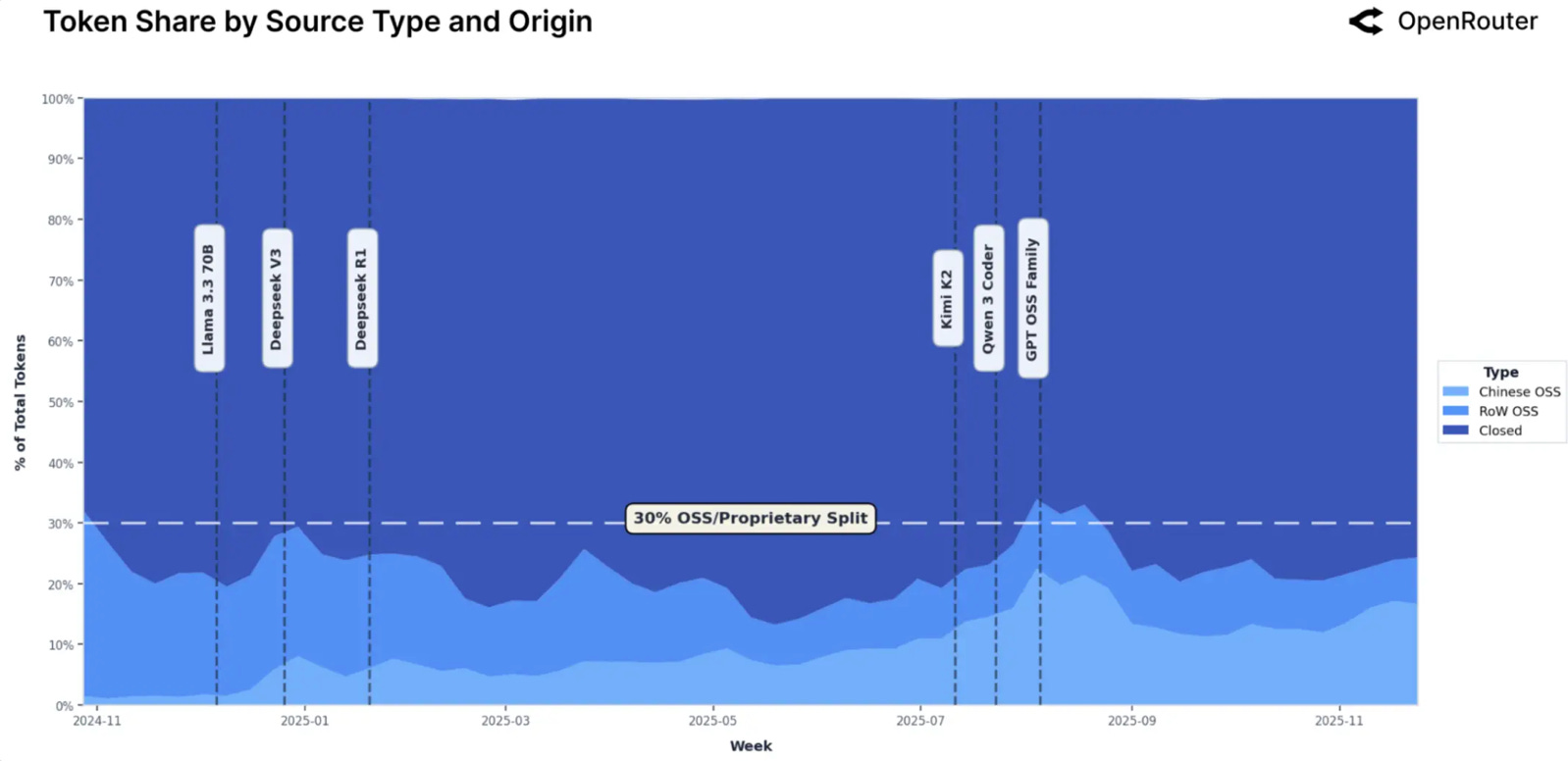
The split stayed consistent
But it went from 0% Chinese to mostly Chinese (Meta falls off, Mistral is meh)
The fact that it was above 30% for portions of the year is wild
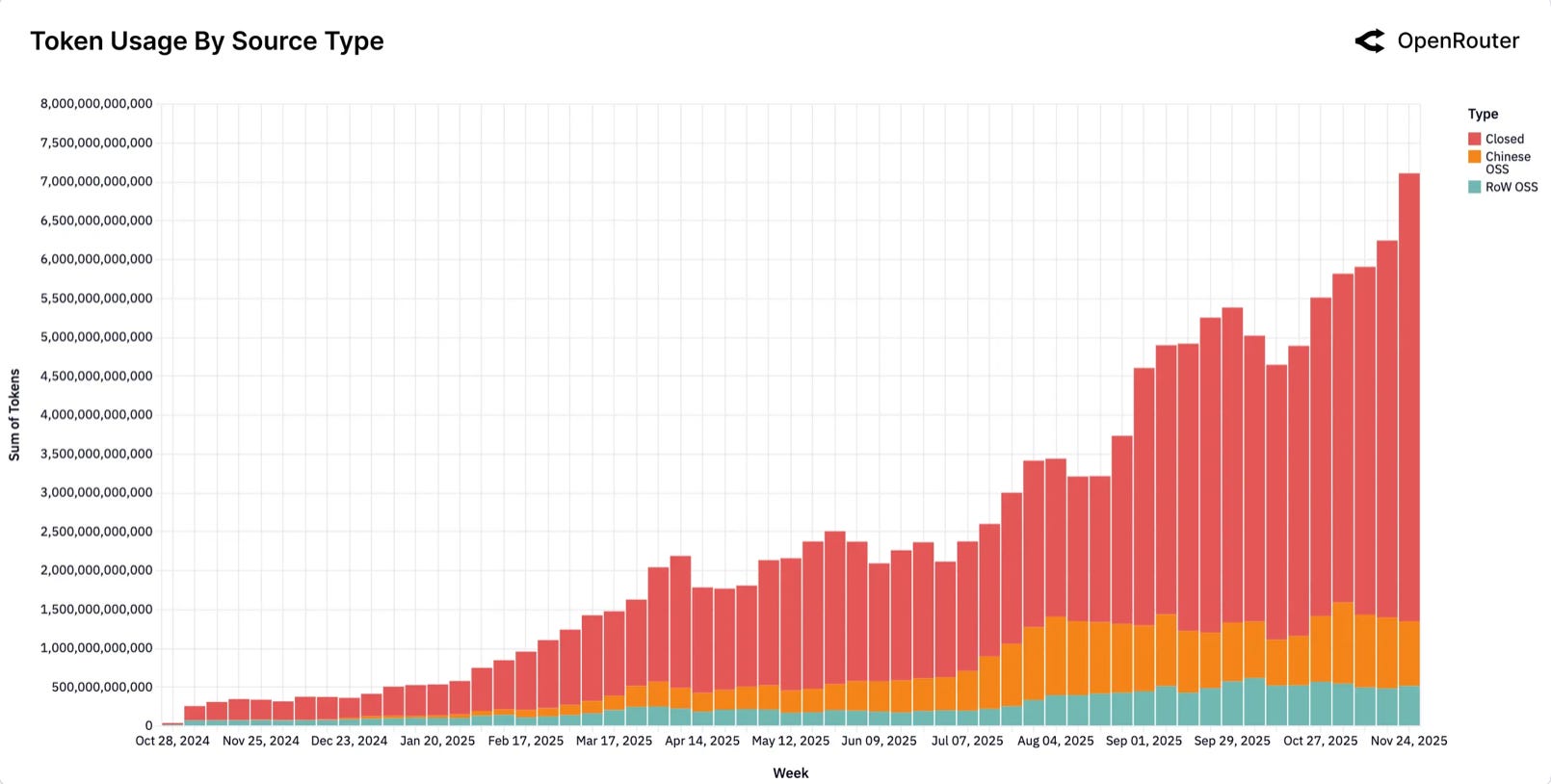
Weekly token usage grew roughly 70× year-over-year, from ~100 billion to over 7 trillion tokens per week, with closed models driving most volume
Open-source models quietly capturing ~¼ of total usage by the end of the period.
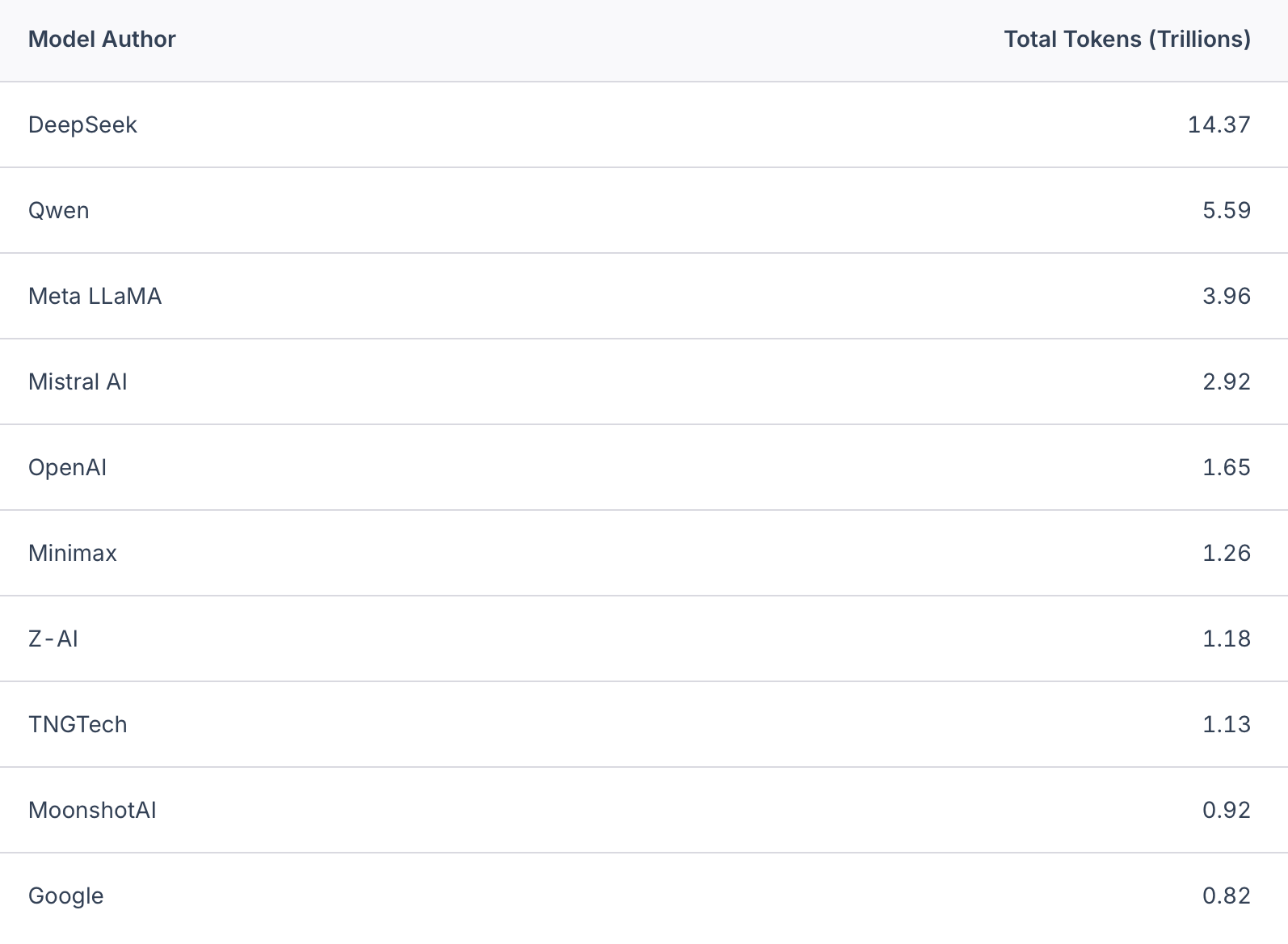
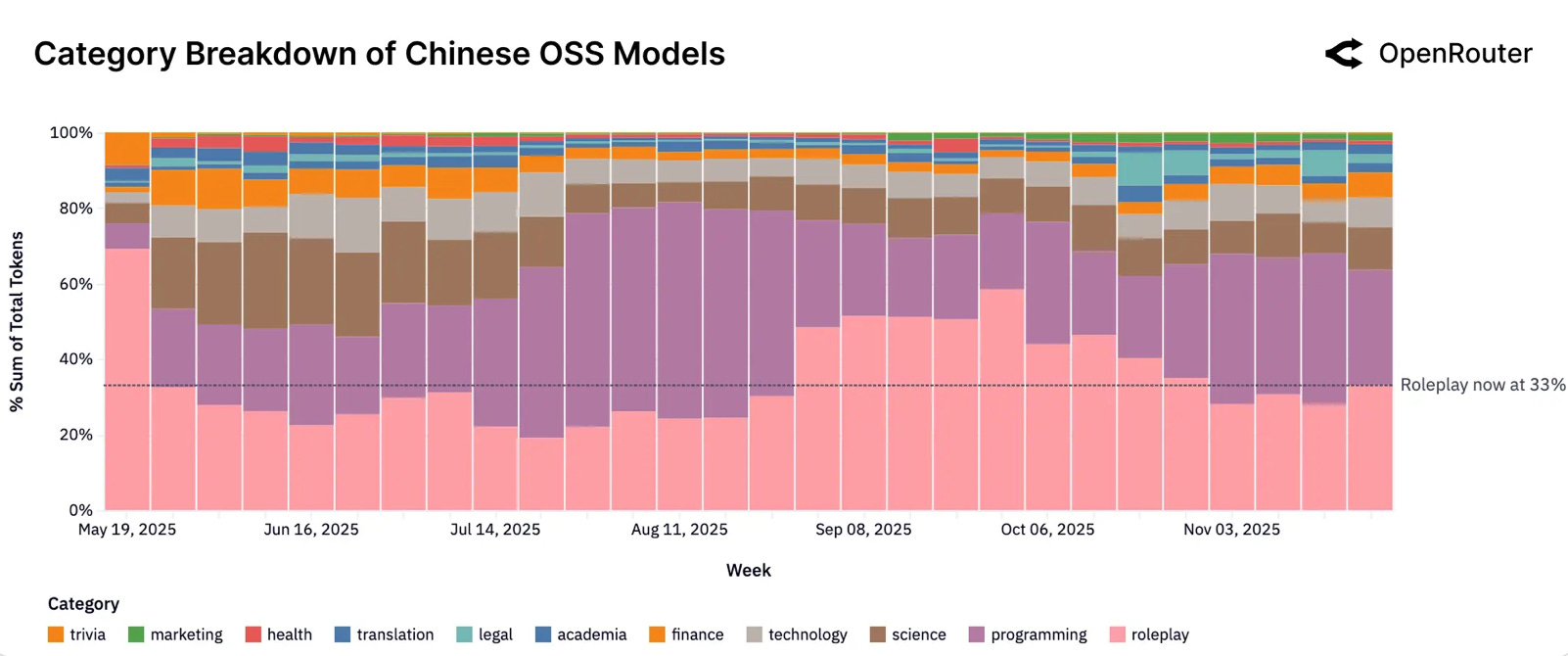
One of the most surprising graphs, I would’ve guessed that the top use case would’ve been programming
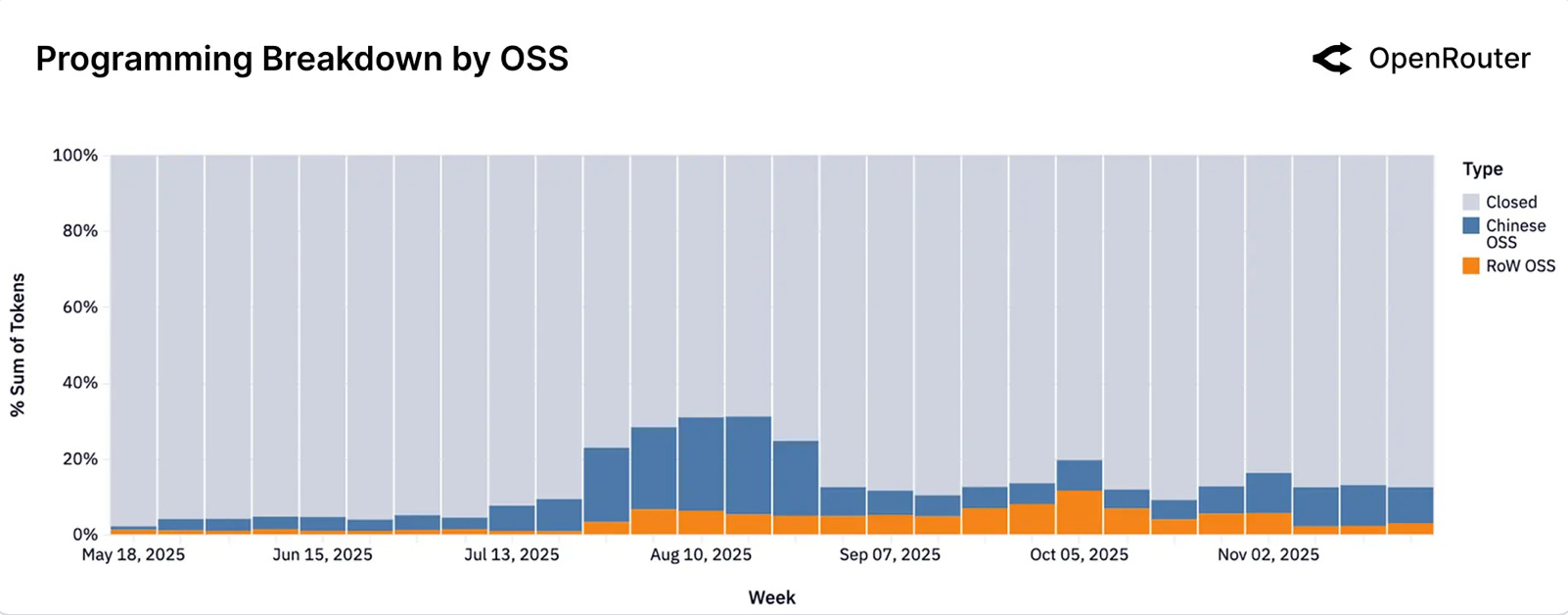
Closed-source still dominates programming usage, but open source grew from ~2% to ~15% over the year (5–7× increase, ~500% growth), peaking at ~30% of programming tokens at its high point.
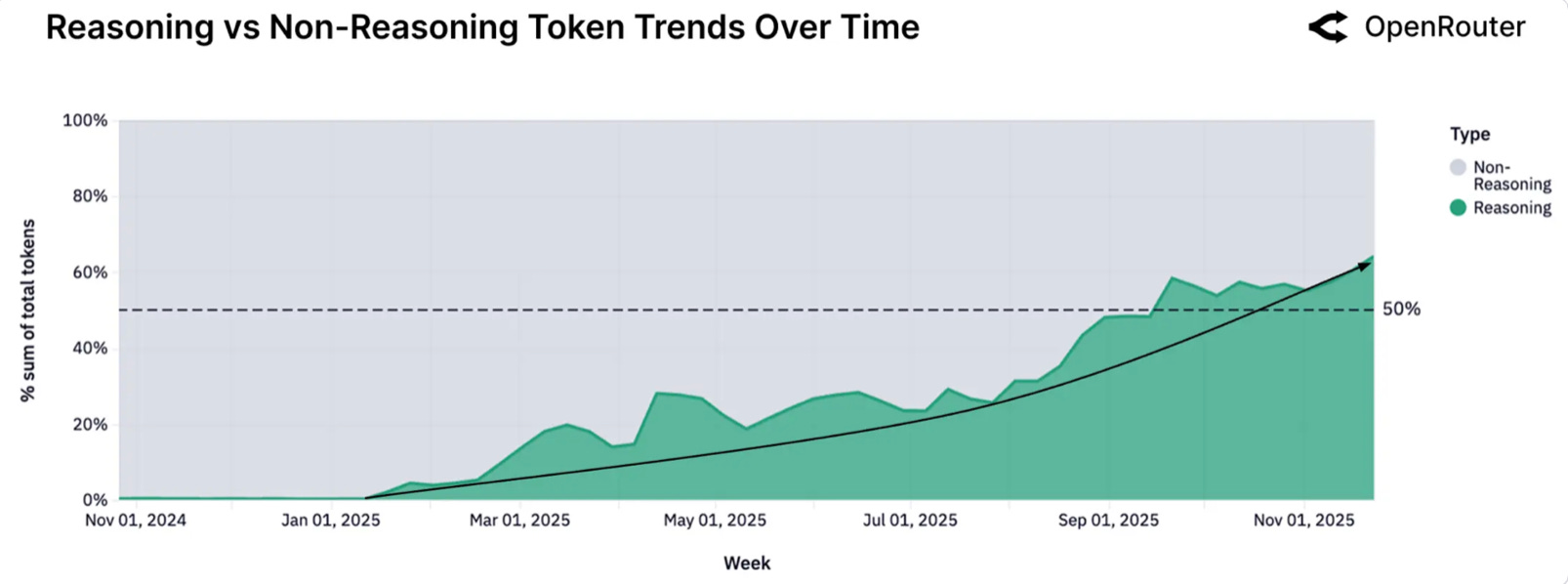
Reasoning tokens were introduced with OpenAI’s o1, followed by DeepSeek’s R1
Reasoning has led to much better performance, but at the cost of burning many more tokens (more on this ratio later)
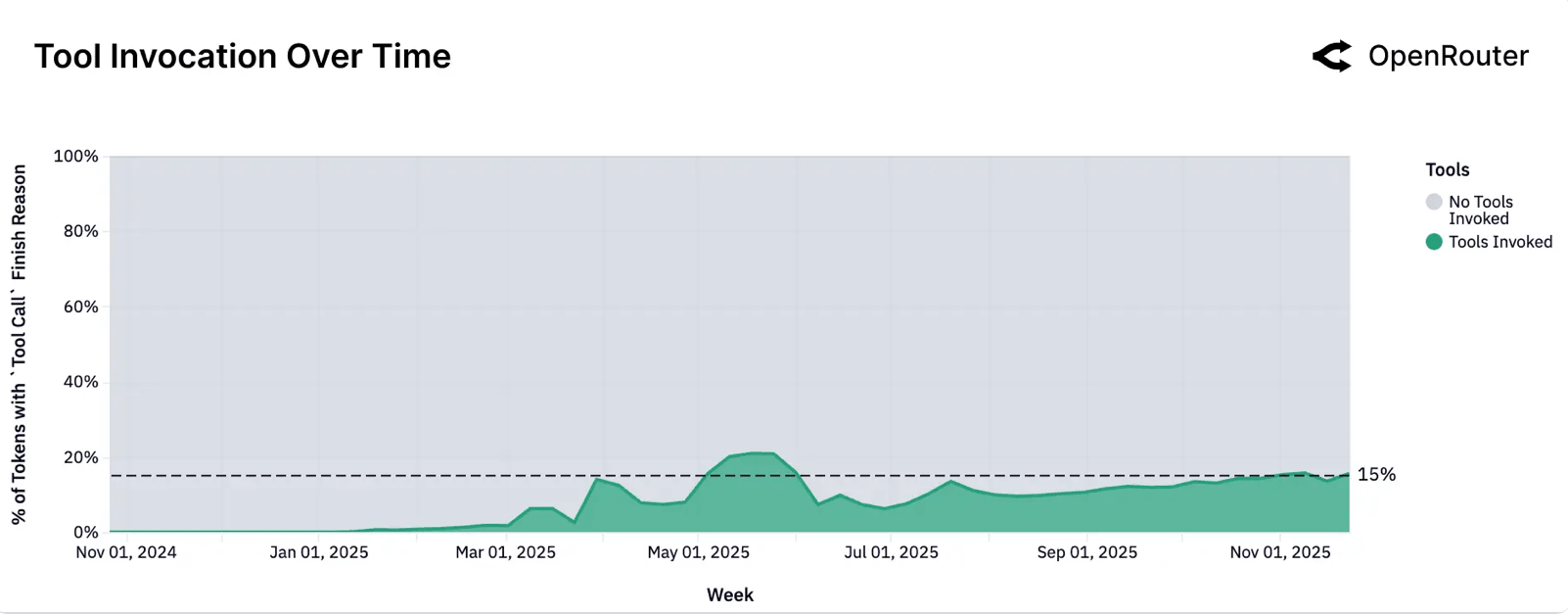
Being proficient at calling tools is now table stakes for modern LLMs
A larger green portion = the more we’re using LLMs beyond a search replacement
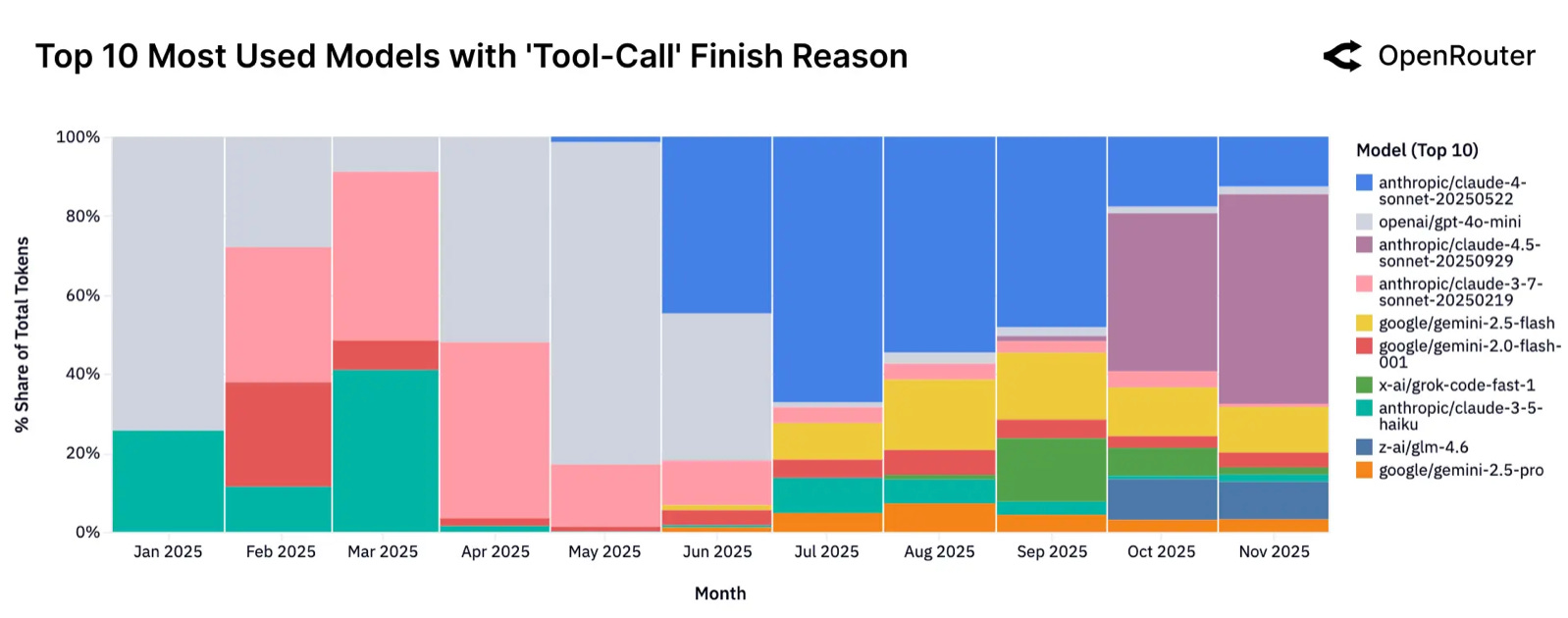
OpenAI and Anthropic were the first to ship models that could reliably call tools, with Claude Sonnet 3.5 clearly ahead for an extended period.
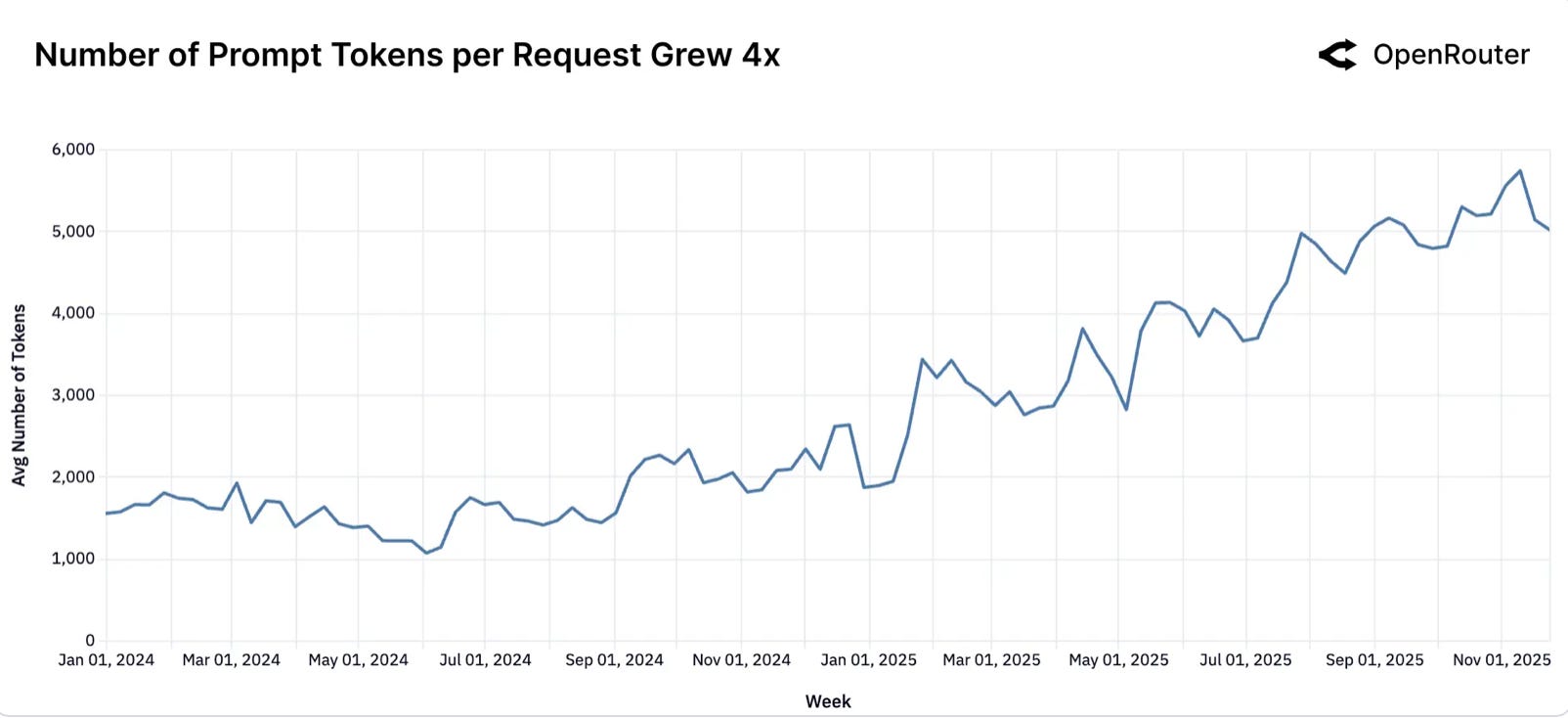
Larger prompt tokens mean users are probably sending more complex prompts, expecting models to be able to handle such complexity
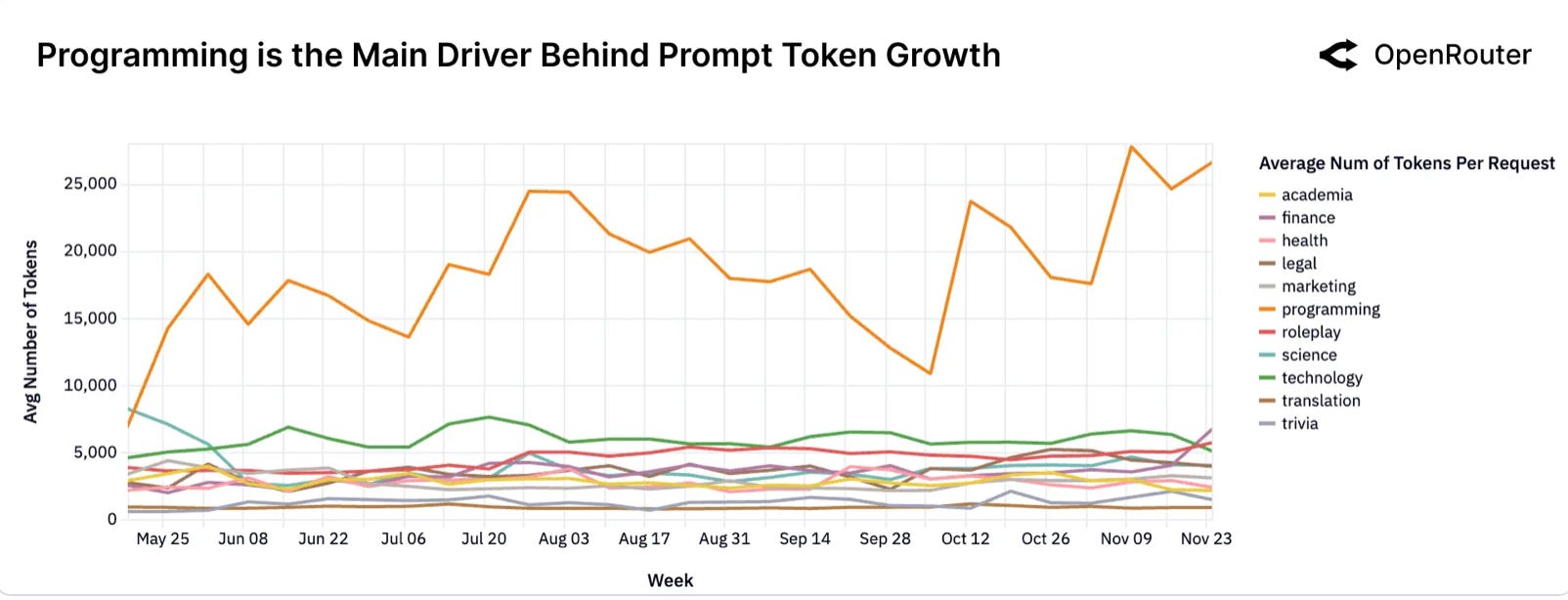
Everything is flat except coding
In programming prompts, users are more likely to paste large pieces of documentation, code examples, or files
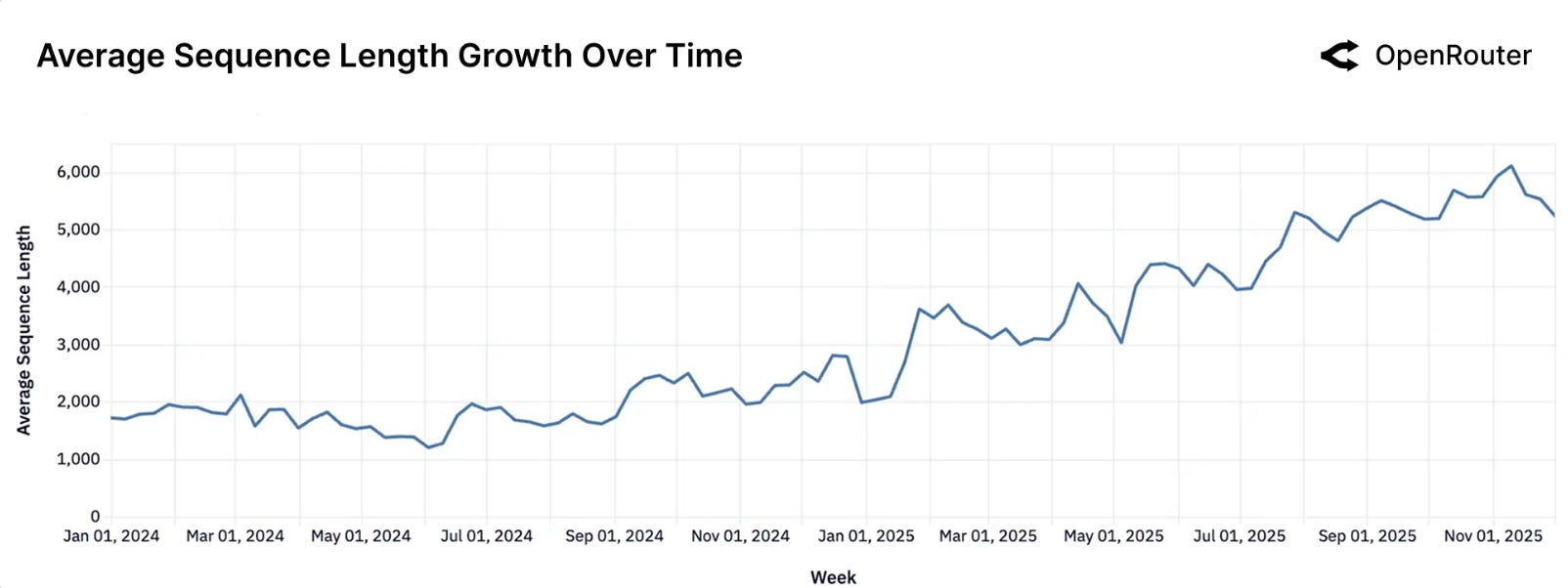
Average sequence length has more than tripled over ~12–14 months, increasing from ~1,700–1,900 tokens in early/late 2024 to over 5,400 tokens by December 2025.
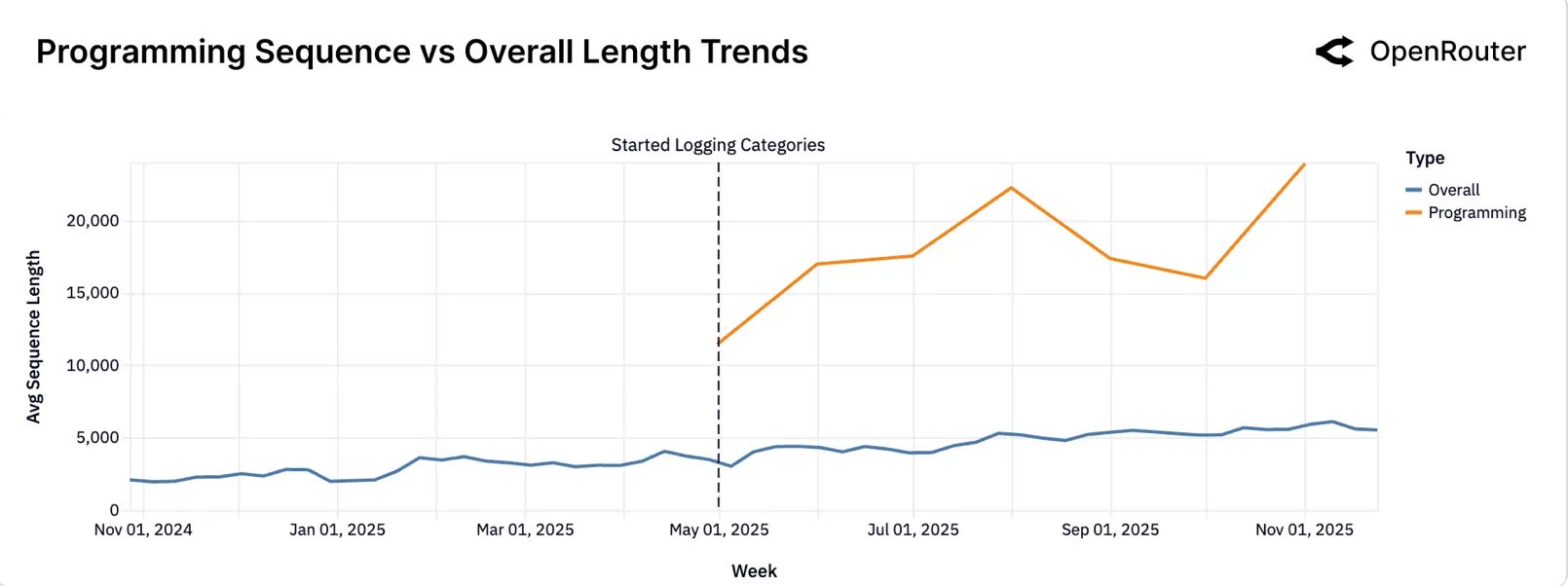
The increase in sequence length is driven mostly by programming LLM calls
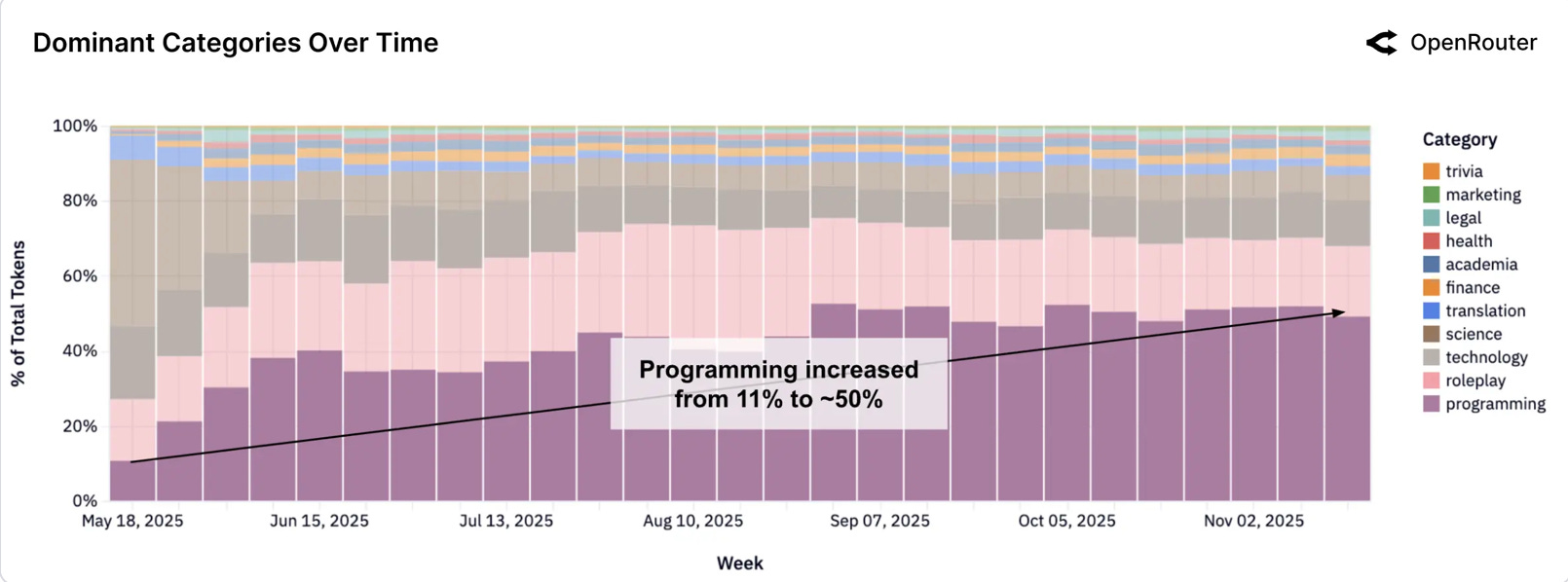
2025 is the year LLM coding really started to work and work consistently
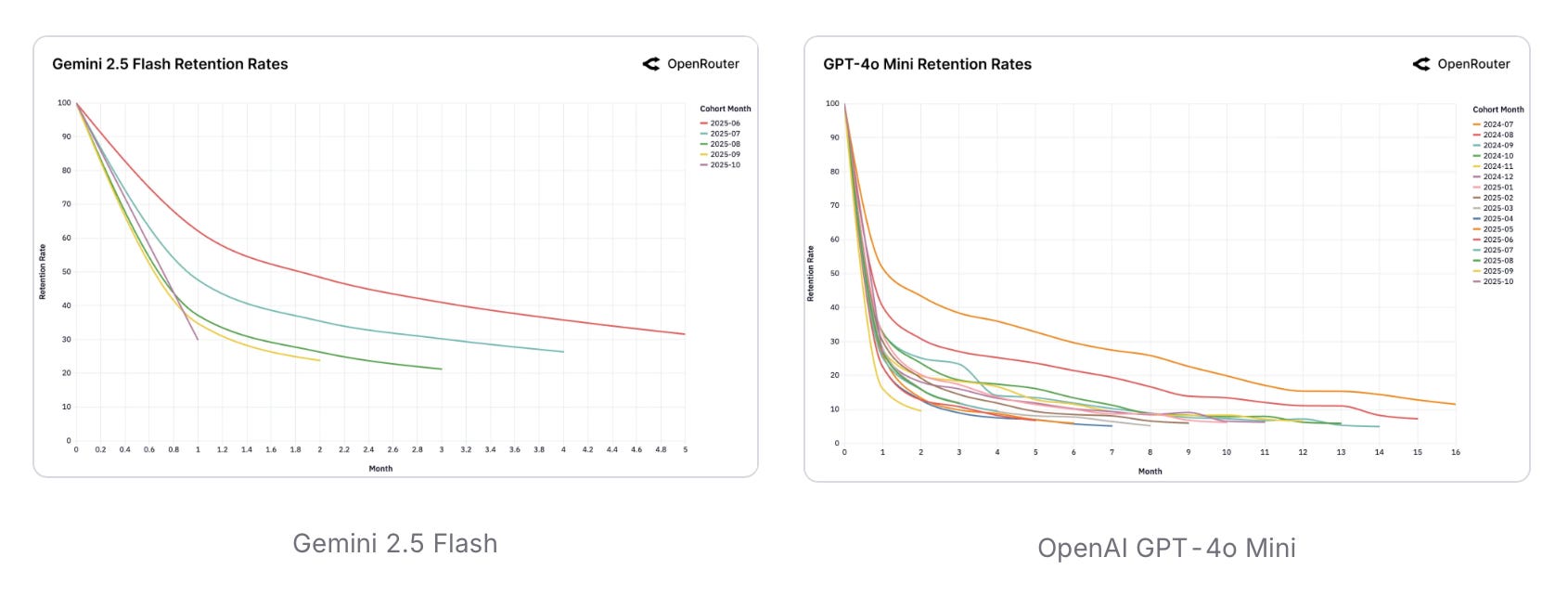
Most LLM users churn quickly, testing and moving on
A small number of early cohorts show durable retention. These cohorts emerge when a model achieves strong workload–model fit. i.e., they had tasks that were finally achievable at a reasonable price–performance balance.
The researchers call this the Cinderella Glass Slipper effect: when a model is the first to solve a previously unmet, high-value workload, users lock in.
Once embedded in workflows and infrastructure, there isn’t a need to switch. Switching costs are often much higher than just replacing the model name string. If it’s not broken, don’t fix it.
No posts
Comments
Nothing yet. Say the first thing.
Sign in to join the conversation.