

I’ve noticed that a lot of people who call themselves democratic socialists are enamored with a handful of words: equity, justice, democracy, freedom. I don’t think they’re being dishonest when they use them. The problem is that they’re hearing those words the way an American raised on the Constitution and the Bill of Rights hears them — and that is not how those words actually function once a system organized around collective ownership and central authority has the power to define and enforce them.
This isn’t an argument that every self-described democratic socialist secretly wants a gulag. It’s an argument about the doctrine underneath the slogan — the theoretical core, that a great deal of casual enthusiasm skips past. I think capitalism, imperfect as it is, protects those four ideals more consistently than socialism does.
“Freedom” in the American tradition means the government leaves you alone — what philosophers call negative liberty. You can worship, speak, build a business, and raise your family without a permission slip, as long as you don’t harm anyone else. That’s the freedom in the phrase “land of the free.” It’s the freedom the Founders meant.

Socialist theory runs on a different definition: positive liberty, the actual capacity to flourish. Under this definition, being poor, uneducated, or economically dependent on someone else already makes you unfree, regardless of whether the government has lifted a finger against you. If that’s true, the state has a duty to intervene — to redistribute, regulate, and restrict — to expand your “real” freedom, even when what it’s actually doing is narrowing your choices. Two people can say “I just want freedom” and mean structurally opposite things. That’s the whole ballgame, and capitalism’s version asks less of the state and trusts the individual more.
The mechanism for that trade has a name, and one of its clearest early statements comes from Jean-Jacques Rousseau, in The Social Contract — a text claimed by several political traditions, but one whose logic shows up repeatedly wherever a collective is given final say over the individual. Rousseau argued that anyone who refuses to go along with the collective “General Will” must be “forced to be free.” Read that phrase slowly. It isn’t a slip of the pen. If the community has decided what’s good for everyone, your refusal to comply doesn’t count as legitimate disagreement. It counts as you being wrong about your own interests.
“The state argues it is not suppressing their freedom, but rather suppressing their irrational empirical self to liberate their true rational self. Being ‘forced’ to comply with the collective plan is paradoxically defined as being ‘forced to be free.’”
The trick, in plain language: freedom gets quietly redefined as rational compliance. Not “you get to choose,” but “you get to do what a rational person, properly informed, would choose — and the collective has decided what that is for you.” Once that redefinition is accepted, there’s no such thing as principled dissent anymore. There’s only error that needs correcting. Isaiah Berlin called this the “monstrous impersonation” of liberty. Capitalism has its own failures, but it does not require this particular move — it doesn’t need to claim to know your true self better than you do in order to justify leaving you alone.
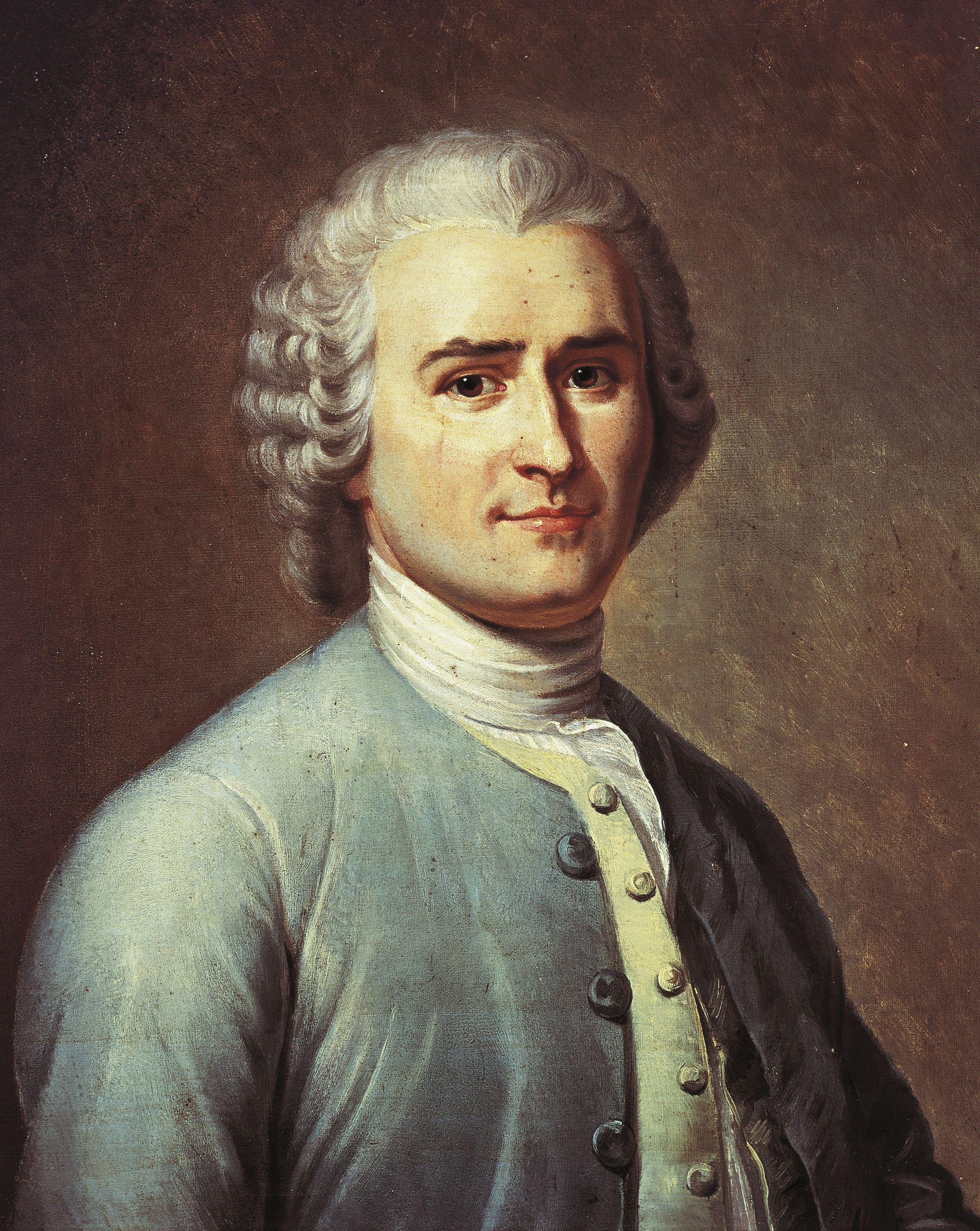
Jean-Jacques Rousseau
Set the philosophy aside and look at the mechanics. A fully socialist economy — one built on collective ownership of the means of production, not merely a generous welfare state layered on top of markets — requires a central plan, because the price signals that normally coordinate a market economy have been deliberately suppressed. Ludwig von Mises called this the Economic Calculation Problem: without private property and free prices, there is no reliable way to know what anything is actually worth. Planners are flying blind over an entire economy, and that must be backed by something other than voluntary consent when the numbers don’t add up.
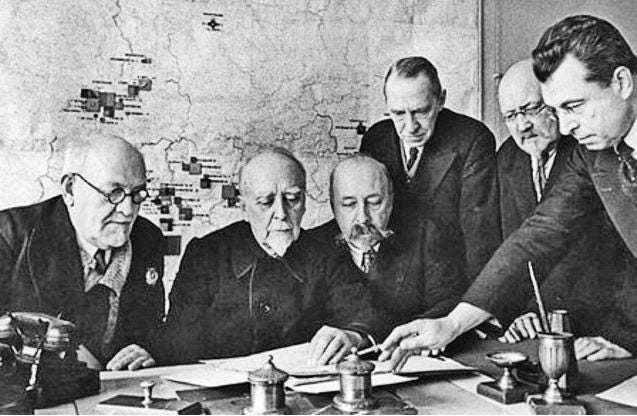
Officials of Gosplan (the Soviet State Planning Committee), responsible for developing and implementing the USSR's centralized economic plans.
Friedrich Hayek picked up from there in The Road to Serfdom: a single national plan cannot accommodate a society’s worth of genuinely different values and priorities. Someone’s preferences must win and everyone else’s have to yield, and because the stakes are the entire economy — what people eat, where they work, what gets built — the plan cannot tolerate organized opposition without breaking down. Defenders of planning sometimes point to the Nordic countries as a counterexample, but those are market economies with private ownership, free prices, and profit and loss, layered with a large welfare state funded by taxing a capitalist economy. That’s evidence for Hayek’s argument, not against it — the price mechanism stayed intact rather than being replaced. Hayek’s actual claim was narrower and, I think, more defensible than it’s often given credit for: democracy and socialism, he wrote, share only the word “equality” — one seeks it through liberty, the other through restraint.
Here is the part I think gets glossed over most. Once a system decides that a transcendent moral authority — God, natural law, an order of right and wrong that no government invented and no government can revoke — is a myth invented to protect the old order, something must fill that vacuum. In practice, it’s the state, or the Party, or “the people’s revolutionary consciousness.” Whatever the label, it becomes the sole judge of good and evil, with no higher court of appeal.
Once that happens, the logic writes itself. If the state’s plan represents the path to the “perfect society,” then anyone obstructing it isn’t just a political opponent — they’re an obstacle to justice itself. Aleksandr Solzhenitsyn spent The Gulag Archipelago dismantling the comfortable idea that the purges and camps were Stalin’s personal excess, a bug in an otherwise sound system. His argument, from the inside, was that the terror flowed from the ideology’s own certainty that it possessed absolute moral truth. If you already know what the perfect society looks like and someone stands in the way of it, removing them stops looking like oppression and starts looking like housekeeping.
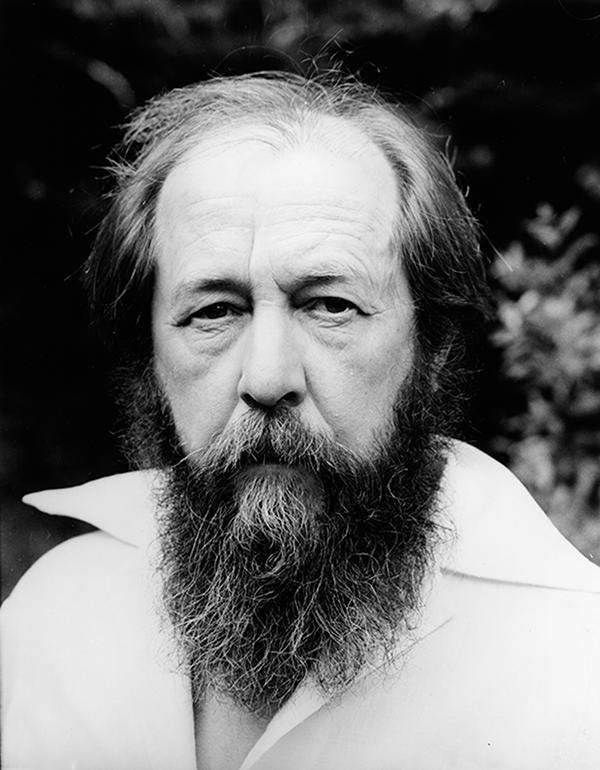
Aleksandr Solzhenitsyn
I think every thread here eventually leads to the same fork in the road: does government answer to a moral authority higher than itself, or is government the highest authority there is?
The American founders answered that question before they answered almost anything else. The Declaration of Independence doesn’t claim that government grants life, liberty, and the pursuit of happiness. It claims people are “endowed by their Creator” with those rights — meaning government’s job is to recognize and protect something that already belongs to the individual, not to manufacture or ration it out. That’s not a throwaway religious flourish; it’s the load-bearing premise underneath the whole American structure of limited government. If rights come from the Creator, no state, no Party, and no collective “general will” gets to redefine them out of existence, because they were never the state’s to define in the first place.
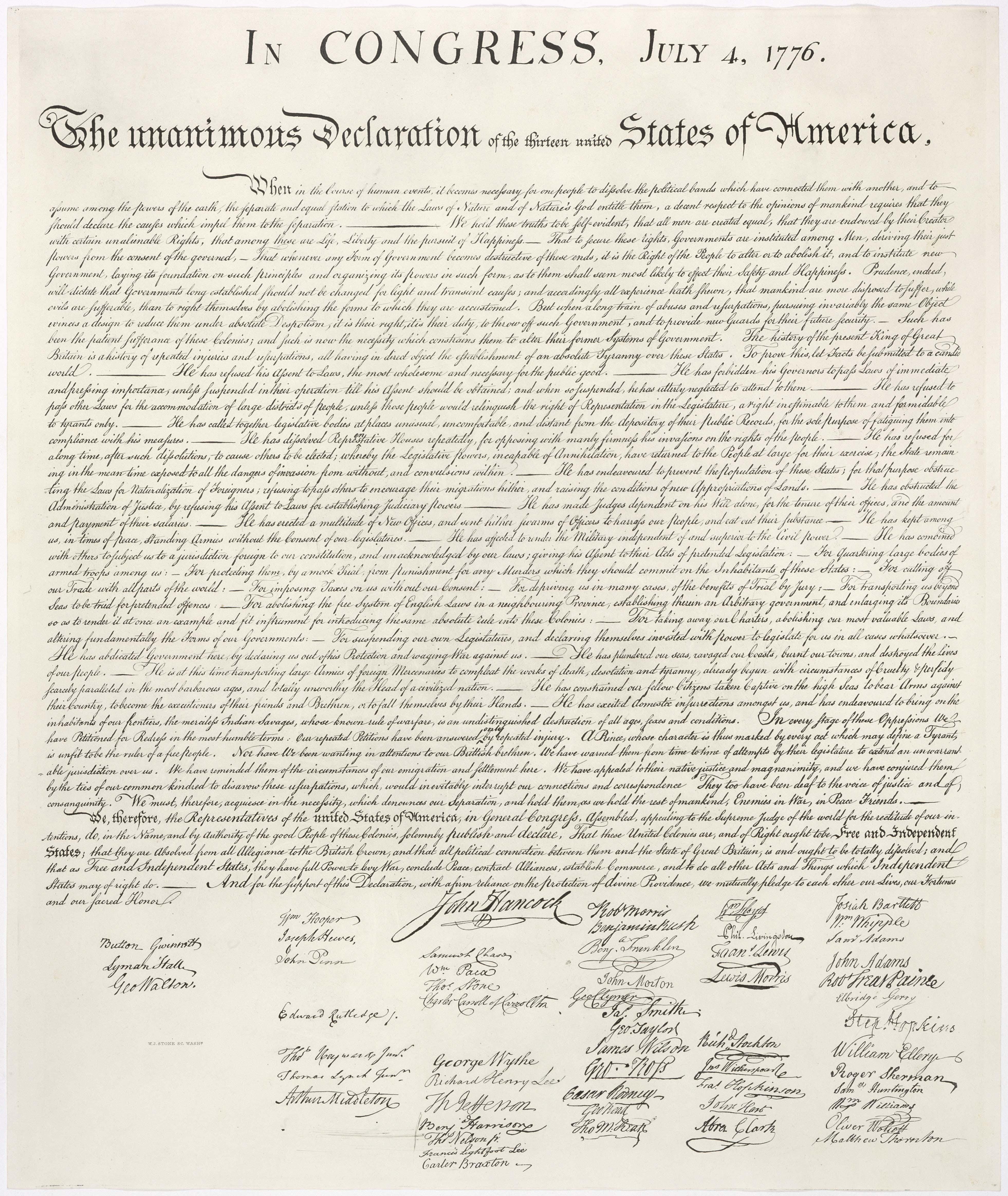
Declaration of Independence
Socialist theory, especially in its fully collectivized form, must reject or radically subordinate that premise to function. If the means of production, the definition of justice, and the shape of the “good society” all get decided collectively, then rights are no longer something a person holds prior to government — they’re something government (or the Party, or the historical process) grants, adjusts, and can take back. Even sincerely religious socialist movements that ground their economics in Scripture run into this the moment their vision is implemented through the coercive power of the state (e.g. the Münster Rebellion, Julius Nyerere’s Ujamaa, Sandinista Nicaragua) rather than through voluntary church and community life: the state, not the individual conscience or a transcendent order, ends up as the final arbiter of what counts as justice.
This is why the slippage from equity and justice into central planning, and from central planning into “forced to be free,” and from there into the state as sole moral authority, isn’t a chain of unfortunate accidents. It’s what happens, step by step, once a system removes the one thing that would have stopped it at any point along the way: an authority higher than the state that the state itself is answerable to. Capitalism, for all its faults, was built inside a framework that assumed such an authority existed and that government’s power was limited by it. That is, I think, the actual reason capitalism has more consistently protected the ideals in the slogans — not because capitalists are more virtuous, but because the system was never handed the authority to decide, on its own, what a person’s rights are worth.
The people most skeptical that socialism can be “done right” are disproportionately the people who lived inside a fully collectivized system — Cubans, Venezuelans, East Germans, Soviet citizens, Vietnamese and Cambodian refugees. Their answer isn’t usually “we had bad leaders” or “it wasn’t real socialism yet.” It’s closer to Solzhenitsyn’s own conclusion: the outcome wasn’t an accident of poor execution. It followed from handing an earthly authority the final word on justice, with nothing above it to appeal to.
That’s the piece I want the slogan-level supporters to sit with. The words being borrowed — equity, justice, freedom, democracy — already carry a different set of instructions once the system behind them removes the higher authority those words originally answered to. You can hold onto the American meaning of those words, or you can hold onto the socialist mechanism for delivering them. I don’t think you get to keep both.
These aren’t hostile pamphlets. They’re the primary texts — philosophical, economic, and historical — that lay out exactly how this works, in the words of the people who thought it through most carefully or lived through it directly.
• Isaiah Berlin — Two Concepts of Liberty (1958). The essay that names the “monstrous impersonation” of freedom, and traces it back to Rousseau’s own words.
• Friedrich Hayek — The Road to Serfdom (1944). Why a single central plan cannot coexist with a society’s diversity of values without eventually suppressing it.
• Ludwig von Mises — Human Action (1949) and Socialism (1922). The economic case: without private property and free prices, rational planning is structurally impossible.
• Aleksandr Solzhenitsyn — The Gulag Archipelago (1973). Firsthand testimony that the terror was the ideology working as designed, not a deviation from it.
I’d encourage anyone who genuinely holds these ideals — equity, justice, freedom — to read these four books, and then ask themselves the question underneath the slogan: do you want your rights protected by something no government can touch, or administered by one that can?
No posts
Comments
Nothing yet. Say the first thing.
Sign in to join the conversation.