
Welcome to The Youth Jobs Scorecard. This monthly release provides a recurring, data-driven audit of how Canada’s provincial leaders are managing the economic future of the next generation.
The good news is that the national youth unemployment rate is trending downward. The bad news is that most of the net job gains were found in part-time work rather than career-track opportunities.
This is largely to be expected as students wrap up exams and work to earn money over the summer. However, some members of that cohort graduated this spring and will be on the hunt for full-time opportunities. Those who successfully did so in June total just 7,200 people.
This measures the percentage of the youth population who are working or actively looking for work, as a share of the overall youth population, not all of whom are looking or able to work. When this number drops, it suggests young people have become discouraged workers and have given up on the job market entirely.
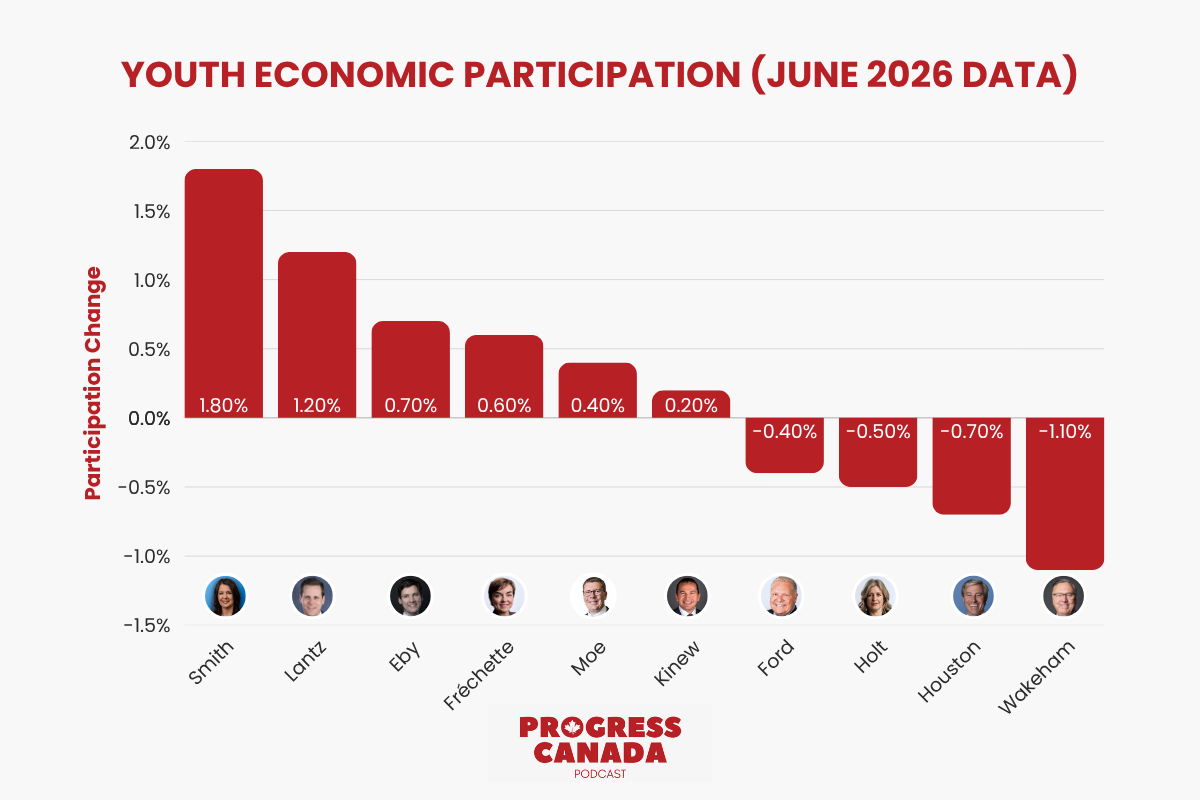
A majority of Canadian provinces saw their youth economic participation rate improve in June. However, Canada’s largest province, Ontario, saw a decline, as did three of the four Atlantic provinces, suggesting a slump in Eastern Canada.
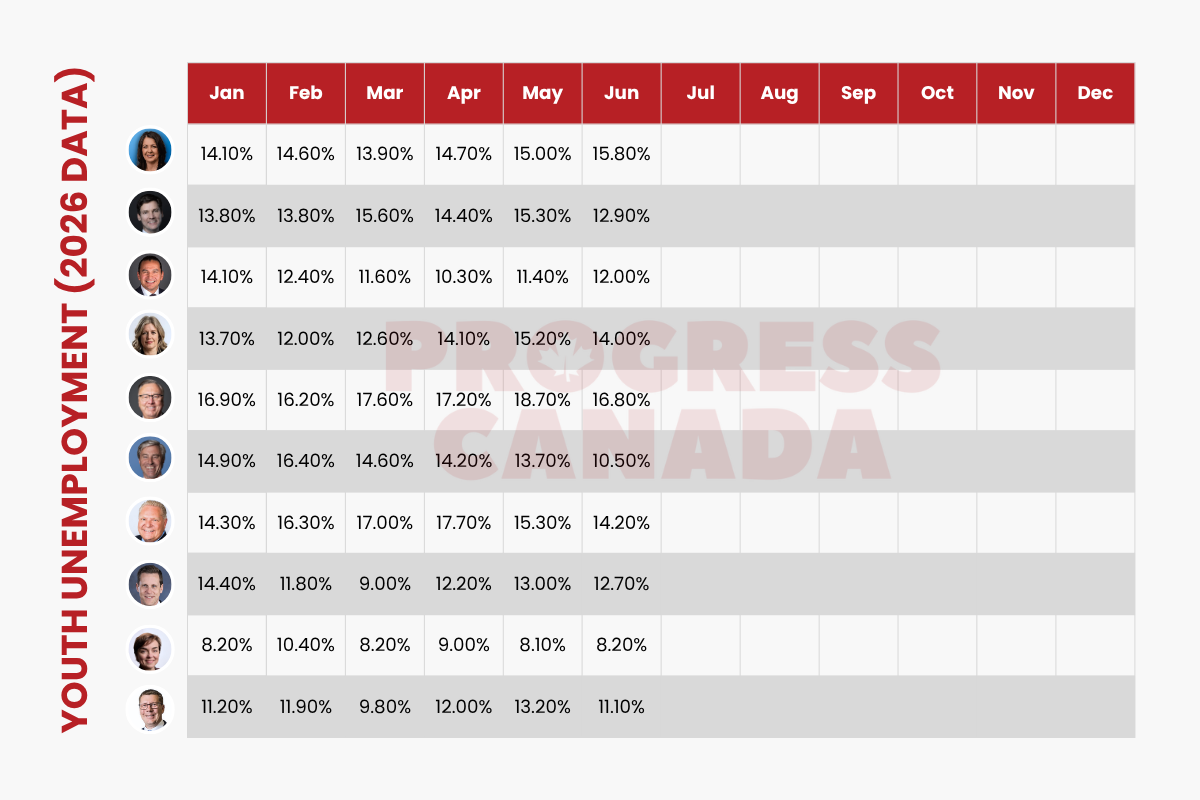
This measures the percentage of young people already in the workforce who are unemployed. For Statistics Canada’s purposes, they are people who are without work, have looked for work in the past four weeks, and are available to work. This number can be deceptive: if thousands of people stop looking for work out of frustration, the unemployment rate can improve even as the economy is actually getting worse.
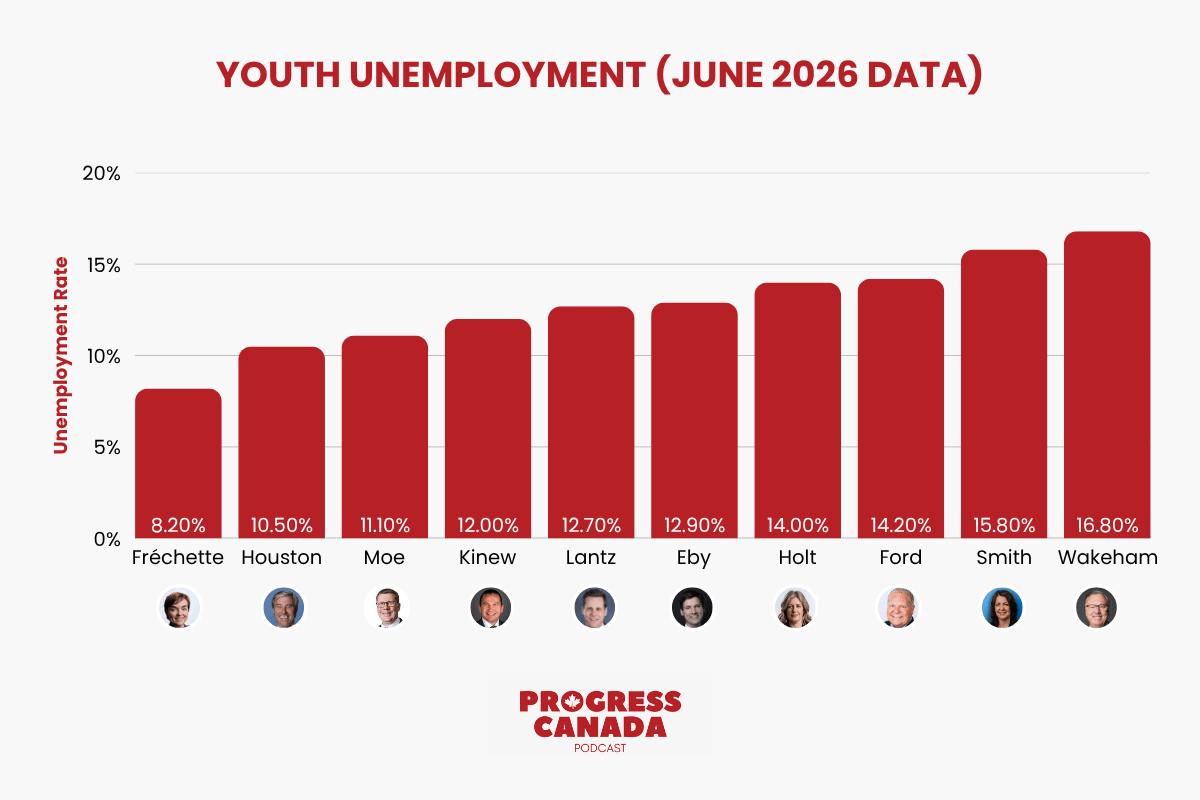
Quebec continues to lead in youth employment and is the only province to boast an unemployment rate in the single digits. Despite this, Quebec joins Manitoba and Alberta as the only three provinces to experience a slight month-over-month increase in unemployment.
Youth population growth or decline is a useful indicator of the economic opportunity available in a given place. Large influxes or departures of young people can signal increases or decreases in local entry-level job opportunities.
Leader: Alberta and Smith. Alberta continues to expand its base of young workers. The province's 15–24 population grew by another 1,100 young people in June.
Loser: Ontario and Ford. Ontario continues to experience an unprecedented youth drain. The province's youth population contracted by another 5,200 young people this month.
A healthy economy builds full-time careers, while a struggling one relies on stringing together enough part-time and gig roles to stay afloat. Full-time job numbers can signal an improving economy, while an increase in part-time job numbers, as full-time jobs decline, can signal the opposite.
Leader: British Columbia and Eby. Canada’s westernmost province gained 12,200 jobs, losing 400 part-time roles but making up for it by gaining 12,600 full-time roles for young people in June.
Loser: Manitoba and Kinew. Manitoba was the only province to shed youth jobs in June, gaining 2,000 full-time positions but losing 2,500 part-time positions, resulting in a net loss of 500.
Each month, our Provincial Spotlight focuses on the province with the highest net youth job losses over the last month.
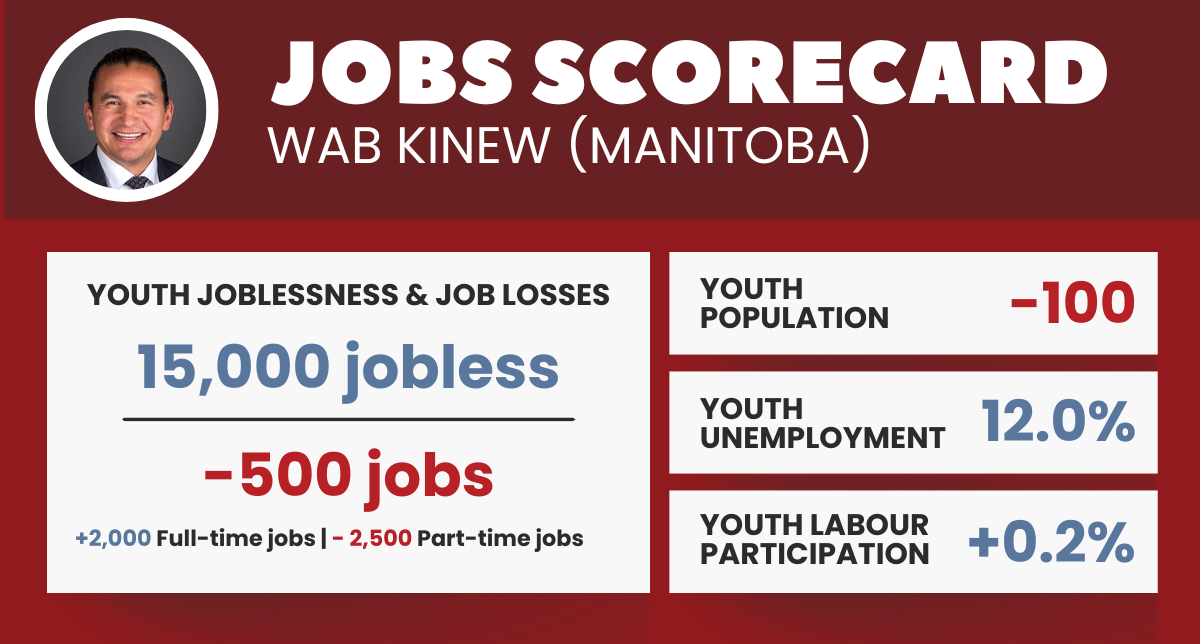
While Manitoba is the only province to experience a net job loss in June, the province’s numbers are the best we’ve been able to highlight in this section of the newsletter so far. The province’s youth labour participation rate has improved since May, and part-time job losses have been almost entirely offset by the addition of 2,000 full-time positions.
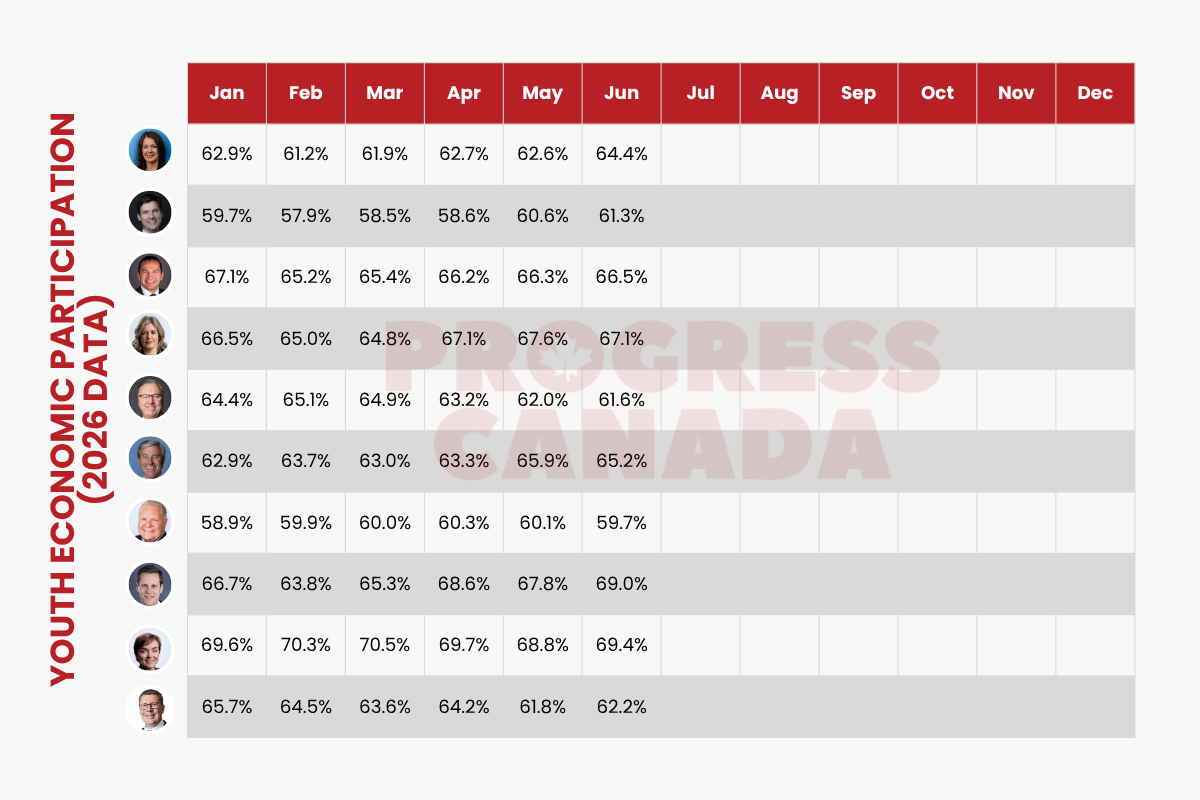
To get a sense of how the youth labour market is performing overall, we trace the year-long trends across the country. Tracking historical rates of unemployment and economic participation side by side reveals the structural health of each province's economy.
Progress Canada is audience-supported by people like you who care about carving out a space for progressive political analysis in Canada. Here are two quick ways you can help us keep delivering these conversations.
Subscribe to our Substack:
Get notified about new episodes and deep-dive articles delivered in-app or directly to your inbox so you never miss an update.
Subscribe to our YouTube Channel:
Watch our full episodes, catch exclusive video clips, and drop your takes in the comments to help drive the algorithm.
No posts
Comments
Nothing yet. Say the first thing.
Sign in to join the conversation.