
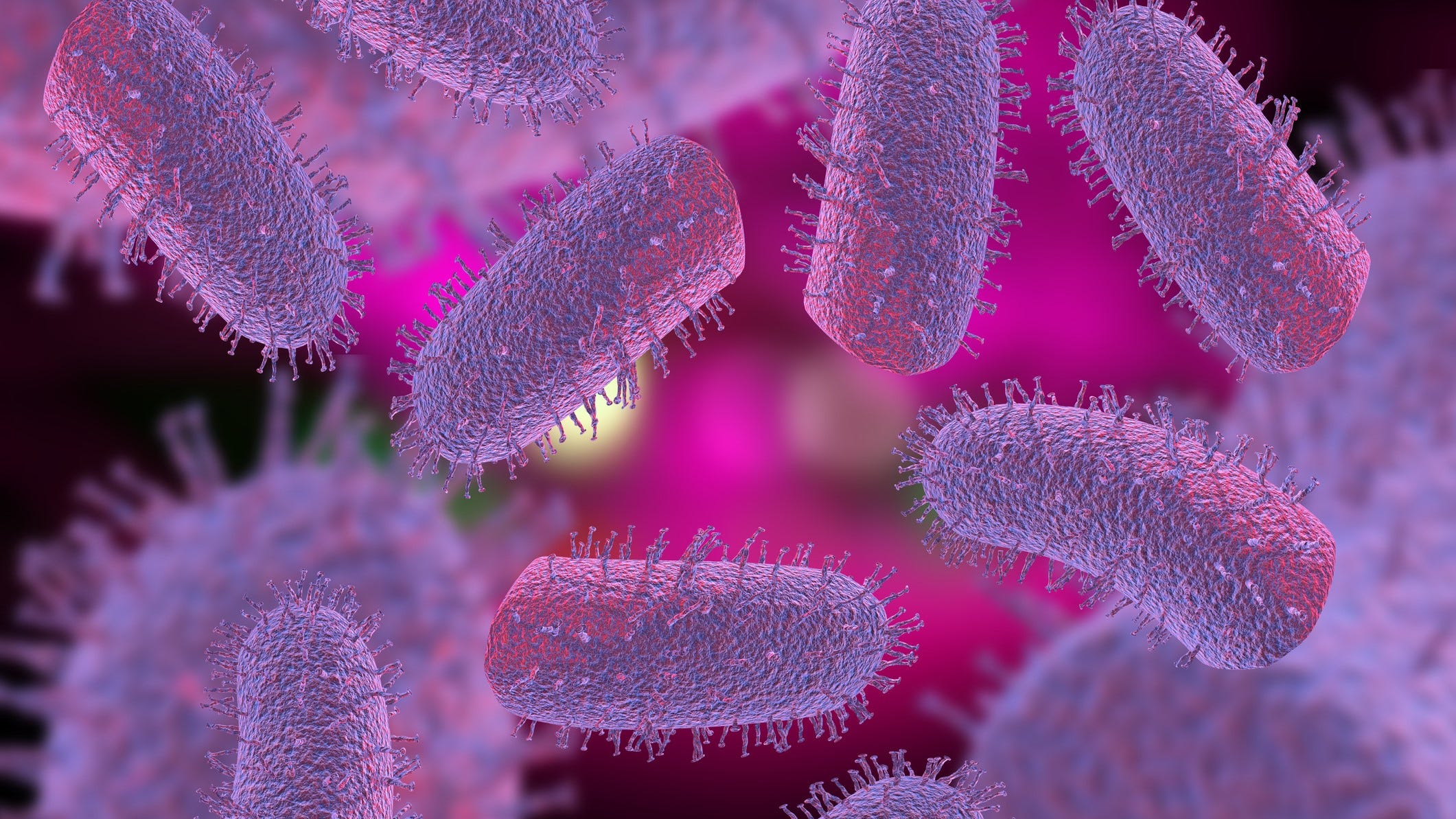
Rabies, or hydrophobia, has been a feared (and rightly so) horrific viral disease, that up until the turn of the century had no cure. If you read Ole Yeller, and the heroic acts of the family dog to save them from a rabid wolf, sacrificing himself for the family, you will feel the agony of rabies.1 Rabies is the basis of the plot of modern biohorror movies, like 28 Days Later (2002)2 and Quarantine (2008)3 to name just a few of many.
Rabies remains today the most lethal disease known to man and this author is not aware of any other disease for which—once the disease is declared—modern medicine has offered no tangible improvement.4
During the Iraq War, a biologist who received her biology degree from MIT, was arrested in Afghanistan and had plans in her purse to develop a rabies-chicken pox chimera as a biological weapon. (She was convicted in 2010 and is serving an 86-year sentence, but for attempting to shoot and kill federal officers.)5
A published study done in 2022 showed there were reports of rabies in 54 states and territories, for a total of 3,579 animal rabies cases. Six states accounted for 50% of the cases: Texas (395 [11.0%]), Virginia (337 [9.4%]), Pennsylvania (329 [9.2%]), New York (267 [7.5%]), North Carolina (264 [7.4%]), and California (241 [6.7%]).6 Of the cases, 90% came from wildlife: bats (1,218 [34.0%]), raccoons (1,014 [28.3%]), skunks (660 [18.4%]), and foxes (269 [7.5%]). The remaining 10% or so of cases came from domestic animals and were from cats (222 [6.2%]), cattle (42 [1.2%]), and dogs (50 [1.4%]).7
Researchers claim that rabies was introduced to the New World through colonists and settlers bringing dogs and dogs with rabies.8 (The incubation period for rabies is 21-80 days; but once symptoms appear there is usually only 7-10 days before death,9 which makes it a good candidate disease to travel across the Atlantic Ocean and spread.) In 2007, the CDC declared the elimination of rabies in dogs, which was a huge milestone made possible by cooperation with state and local governments in vaccination and tagging.10
March 29, 1977, Jerome Andrulonis, a bacteriologist working for the state of New York’s Public Health Department, contracted rabies while conducting a federally supervised experiment in a N.Y. State laboratory. The experiment was to develop method of inoculating wildlife against rabies.11
Jerome was one of only three people known in recent time to have survived rabies after symptoms appeared. He and his wife sued the federal government and the manufacturer of the faulty equipment that leaked the deadly rabies virus during the experiment. This is an interesting case for many reasons, and procedurally, it is interesting because he has sued the federal government under the Federal Tort Claims Act, a statute that allows a harmed individual to recover damages from the federal government where there is gross negligence. The State of New York had liability even though the plaintiff was an employee of the state and estopped from suing the state because he was mandated to use workers’ compensation insurance for his damages; because the federal government cross-claimed New York for their role in the accident. Further, the vaccine manufacturer was also liable for a defective product. Because there is no federal tort law, there is only state law in tort, the Federal Tort Claims Act applies the appropriate state tort law, in this case, New York. Further, New York law uses the negligence model where the court apportions the percentage of fault to each of the defendants, including New York, so the court had to determine who was liable and to what extent?
The federal district court assessed damages at $6,424,641 (including $2,417,238 for future custodial care), apportioned 30% United States, 65% NYSDOH, 5% Lilly/Thompson. After a 5% ($321,232) reduction for Lilly/Thompson and a $125,000 credit for the other settling defendants, the United States was primarily liable for $5,978,409, recovering 68.42% (65/95ths) from the State.12
Unfortunately, it was reported that Jerome Andrulonius was so injured by the rabies infection that he was unable to understand his win.
But the federal government and New York appealed the award. After failing to reverse the award at the Federal Circuit level, New York petitioned the U.S. Supreme Court to vacate the award. The U.S. Supreme Court vacated the judgment and remanded back to the lower court. The U.S. 2d Circuit federal court reconsidered the case in accord with the U.S. Supreme Court instructions and reinstated the judgment. New York petitioned the U.S. Supreme Court a second time and this time, the U.S. Supreme Court denied certiorari— making this case one that was not settled until 1992.
The proper Bluebook citation for this entire case would be a challenging question on a law school legal writing exam:
Andrulonis v. United States, 724 F. Supp. 1421 (N.D.N.Y. 1989), aff'd in part, rev'd in part, 924 F.2d 1210 (2d Cir.), vacated sub nom. New York State Dep't of Health v. Andrulonis, 502 U.S. 801 (1991), prior opinion reinstated, 952 F.2d 652 (2d Cir. 1991), cert. denied, 505 U.S. 1204 (1992), subsequent appeal, 26 F.3d 1224 (2d Cir. 1994).
Laboratory accidents are among the most frequent pathways of exposure for highly dangerous pathogens. Before the biological safety laboratory standards were established, highly dangerous viruses and bacteria were handled without safety standards. In 1974, the CDC published Classification of Etiologic Agents on the Basis of Hazard, which first established levels of containment. The Centers for Disease Control and Prevention (CDC) began working on the Biosafety in Microbiological and Biomedical Laboratories (BMBL) manual in the 1980s and borrowed the laboratory biosafety levels established for experiments with recombinant DNA in 1979.13 The BMBL Manual was published in 1984 with safety standards for levels of pathogens based on their infectiousness, lethality and exposure pathways.14
According to the New York Times, this is what happened in the laboratory accident:
In preparation for the virus-coating experiment, Dr. Debbie asked Dr. Baer to prepare a solution of highly concentrated rabies virus. It was this virus that was used in the experiment.
In the laboratory, Mr. Andulonis worked with an apparatus that used a stream of air to suspend the tablets while a solution of the powerful rabies virus was sprayed onto them.
But the apparatus was not airtight, according to the evidence in the trial. When the solution was sprayed inside the apparatus, some of the virus escaped into the laboratory, and Mr. Andrulonis inhaled it.
His rabies inoculations did not work. The rabies virus made direct contact with his olfactory nerve, traveling the short distance from the nose to the brain without ever coming into significant contact with the antibodies in his blood.15
The lack of biocontainment and safety equipment and facilities is shocking, even for 1977. The federal government was relying on the one question in the case that made their decisions for the experiment all “discretionary” giving them a defense. This test is to protect government employees from the consequences of every day decisions made based on policy, for example. The court in this case used this test to find the government liable in this case: “In sum, the discretionary function exception insulates the Government from liability if the action challenged in the case involves the permissible exercise of policy judgment.” The government argued it was a policy decision not to disrupt the experiment to have a good federal state relationship, which the court rejected finding no stated policy. Whereas, conducting an unsafe experiment was not a discretionary act.
In another case decided by the 9th Circuit in 1983, from acts by the military in the 1950s, the federal government conducted a bioterrorism experiment using the bacteria serratia marcesens, in city-wide dispersals of the bacteria in several cities including San Francisco, California. These experiments were classified, and the bacteria was selected for the experiment due to its color that could make it easily detectable (red). The military in selecting this bacteria believed it was completely harmless to humans, but in anerobic conditions (closed up in a body after surgery without oxygen, for example) could be deadly.16 In fact, eleven people in a San Francisco hospital all developed infections from this bacteria, who had surgery there. One man, suffered a fatal infection and the family sued the federal government almost 20 years later when the experiments were declassified. In Nevin v. United States17 the court found that under the Federal Tort Claims Act, the choice of the selection of the bacteria was a discretionary act, thus the government was not liable for these experiments.
Different federal courts can have different statutory interpretations, and unless it is resolved in a case accepted by the U.S. Supreme Court, these different interpretations may stand.
Final thoughts
Laboratory biosafety for dangerous pathogens has changes dramatically, not only with the standards that are now implemented but with a regulatory framework that encompasses individuals with access, containment levels and safety protocols for each experiment. Strictly enforcing these protocols and standards with the increase in work with dangerous pathogens in laboratories, is imperative. Now, not only are accidents tracked by CDC, but “near misses” are also required to be reported so that lessons can be learned to prevent future accidents. Laboratory exposures can still happen. Rabies testing of humans is limited to special public health laboratories and no commercial laboratories.18 Working or manipulating the live rabies virus or handling infected animals generally requires Biosafety Level 2 (BSL-2) or Animal BSL-2 containment, complete with engineering controls like certified biosafety cabinets and sealed centrifuge rotors.19 This provides a sealed compartment for working with the virus. Comparing this to the unsafe conditions of the Andrulonis case, is heartbreaking.
Biosafety has to always be a primary consideration every time one walks into the laboratory.
https://en.wikipedia.org/wiki/Old_Yeller_(film)
https://www.imdb.com/title/tt0289043/
https://www.imdb.com/title/tt1082868/
https://archives.fbi.gov/archives/newyork/press-releases/2010/nyfo092310.htm
https://avmajournals.avma.org/view/journals/javma/262/11/javma.24.05.0354.xml
https://avmajournals.avma.org/view/journals/javma/262/11/javma.24.05.0354.xml
https://link.springer.com/chapter/10.1007/978-3-031-25405-5_2
https://vcahospitals.com/know-your-pet/rabies-in-dogs
https://stacks.cdc.gov/view/cdc/155517
https://www.nytimes.com/1989/11/24/nyregion/judge-orders-us-to-pay-5.98-million-to-rabies-survivor.html
https://law.justia.com/cases/federal/district-courts/FSupp/724/1421/1467978/
https://policies.unc.edu/TDClient/2833/Portal/KB/Article/131876/Biological-Safety-Manual-Chapter-01-Introduction
https://stacks.cdc.gov/view/cdc/7656
https://www.nytimes.com/1989/11/24/nyregion/judge-orders-us-to-pay-5.98-million-to-rabies-survivor.html
https://pmc.ncbi.nlm.nih.gov/articles/PMC3194826/
https://law.justia.com/cases/federal/appellate-courts/F2/696/1229/328999/
https://www.cdc.gov/rabies/hcp/suspected-human-rabies/index.html
https://ipo.rutgers.edu/rehs/biosafety-program/sops/rabies
Comments
Nothing yet. Say the first thing.
Sign in to join the conversation.