
Double-entry bookkeeping was developed in Venice in the 1200s. It spread across Europe when it was popularized by the monk Luca Pacioli after the invention of the Gutenberg Press. His simple explanation was that:
‘All the creditors must appear in the Ledger at the right-hand side, and all the debtors at the left. All entries made in the Ledger have to be double entries—that is, if you make one creditor, you must make someone debtor.’ {Gleeson-White, 2011 #4185`, p. 93}
Knowing which entries to record as Debits (DR) and which to record as Credits (CR is challenging. I developed a far simpler means to achieve the same ends. For each transaction:
Record an increase in an account balance as a positive entry;
Record a decrease in an account balance as a negative entry; and
Ensure that the equation Assets minus Liabilities equals Equity is obeyed
“Equity” here means the net worth of the entity being considered. If your Assets exceed your Liabilities, than your net worth is positive; if your Liabilities exceed your Assets, then your net worth is negative.
I have implemented these rules in the simulation and data analysis program Ravel, in what I call Godley Tables. Figure 10 shows a blank Godley Table. An entity’s Assets are shown on the left, as Pacioli recommended, and its Liabilities are shown on the right. The gap between them is the net worth or Equity of the entity, and the final “A-L-E” column checks whether the transaction is entered properly. If it is, each row will sum to zero. If it is not, the sum of the row will not be zero, which shows that an accounting error has been made.
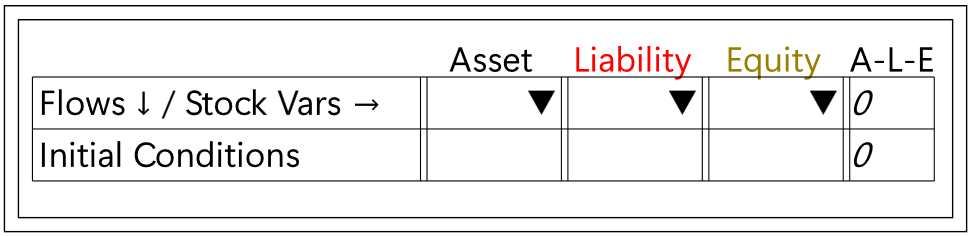
Figure 11: A blank Godley Table with its A-L-E=0 check to ensure transactions are properly recorded
It takes two or more Godley Tables to show a transaction fully: one shows the perspective of one party in a transaction—say the seller; the other shows the perspective of the other party in a transaction—say the buyer. A simple transaction of buying a product from a shop requires three tables: the Buyer’s, the Seller’s, and the Bank’s.64F[1]
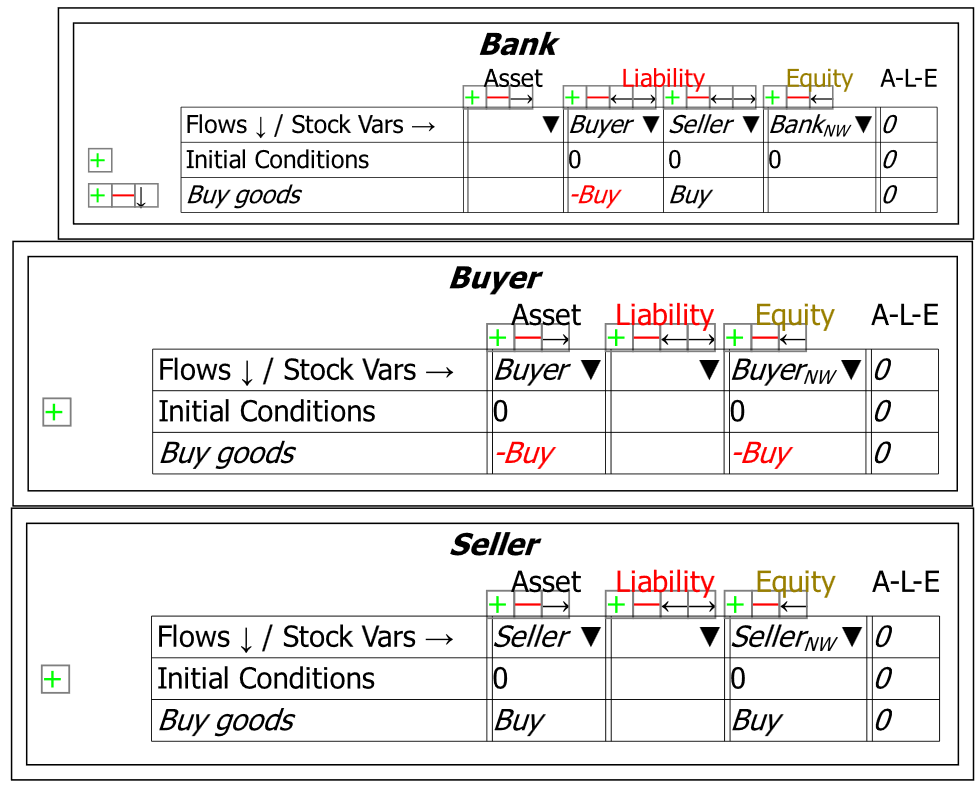
Figure 12: Showing a simple sale using Godley Tables
This simple framework destroys the models that economists use to describe banking, but I’ll first use it to describe real world banking.
The fundamentals of how bank loans create money are extremely simple. When a bank and a borrower agree to and execute a loan contract, the bank adds the specified amount of the loan to the borrower’s deposit account at that bank, and records the identical sum as the borrower’s debt to that bank. The increase in debt and the increase in the borrower’s deposit account are identical to the penny, as Figure 12 illustrates numerically.
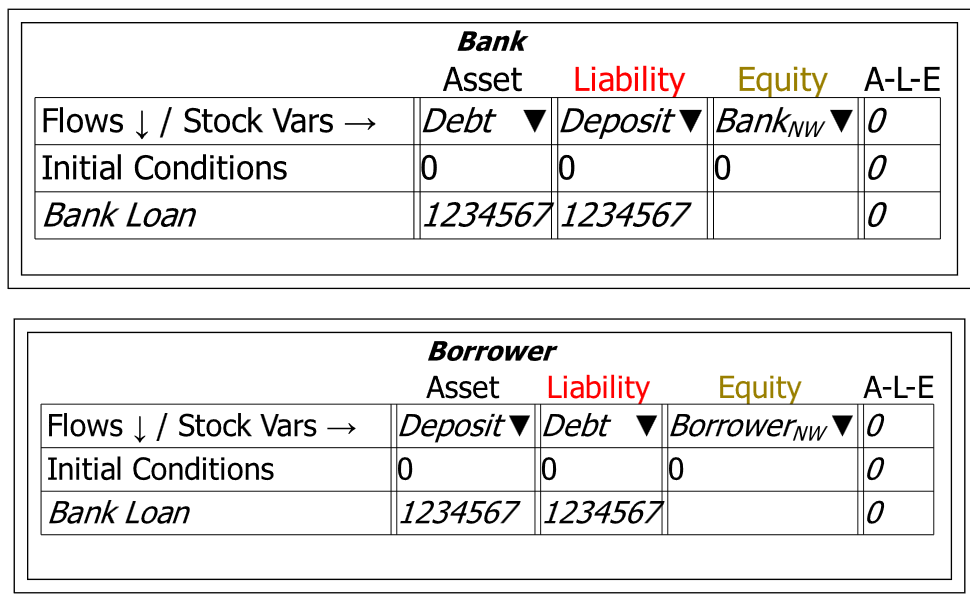
Figure 13: An arithmetic example of loans creating deposits
There are of course numerous banks, and a complex machinery of interbank settlement. But at the level of an entire national economy, the aggregate effect of many banks making many new loans, and many debtors repaying old ones, is the same as this numerical example. Net new lending—which is normally positive, but can be negative, if borrowers are in the aggregate repaying debt—adds Credit dollars per year to Loans, and the same to Deposits. In this sense, though people who understand this normally say “Loans create Deposits”, the correct statement is that “Credit increases both Loans and Deposits”.
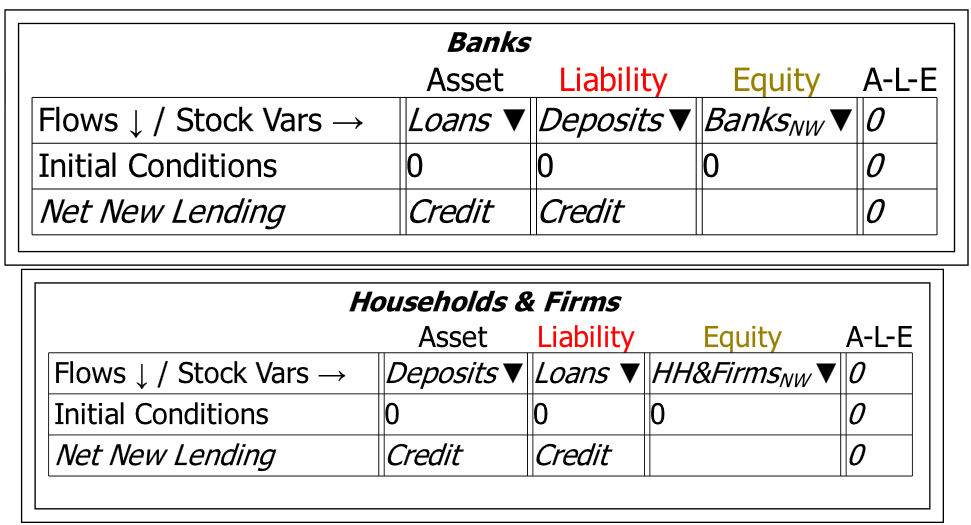
Figure 14: Credit creates both Loans and Deposits
Comments
Nothing yet. Say the first thing.
Sign in to join the conversation.