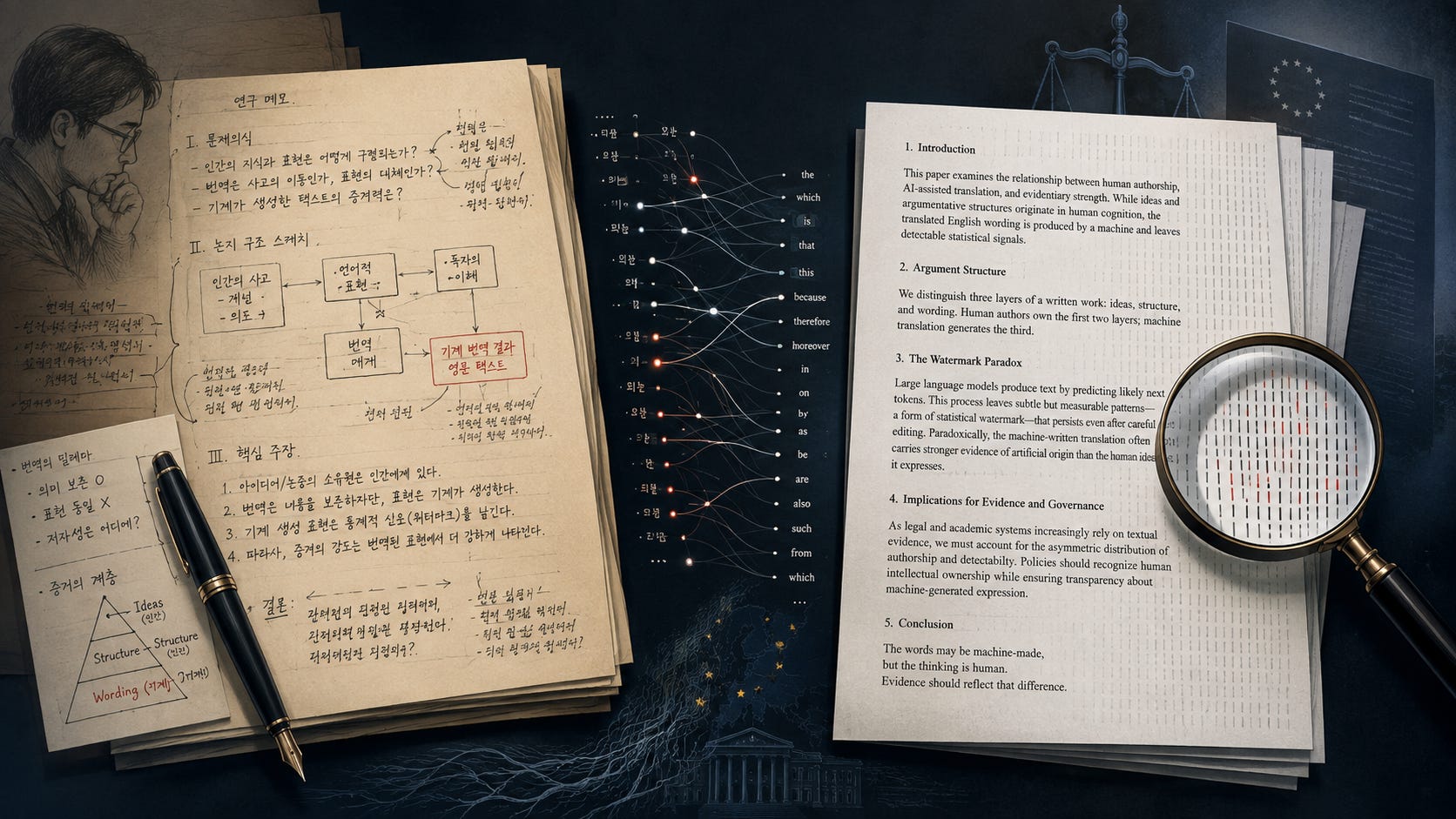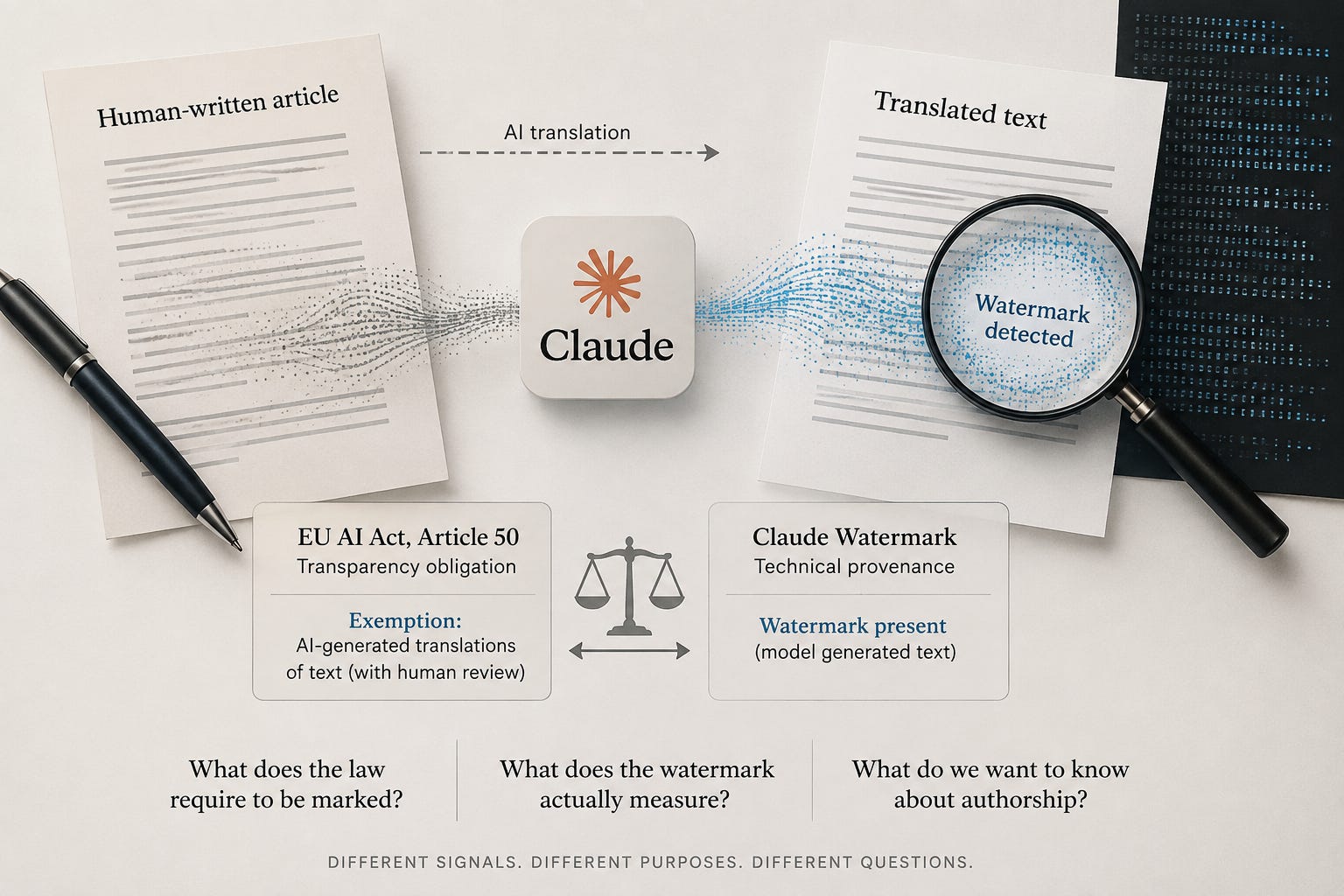
Can Claude’s Watermark Prove AI Authorship?
The EU exempts some AI translations from marking. Claude watermarks them anyway. That paradox exposes a deeper problem in how we are about to police writing.

Neuroscientist, philosopher, and composer based in Paris. I explore emotional feedback and ethical self-regulation in AI, bridging neuroscience, psychology, and philosophy.
Live Last read · last published · next check
The EU exempts some AI translations from marking. Claude watermarks them anyway. That paradox exposes a deeper problem in how we are about to police writing.
어떻게 숨겨지고, 어디서 깨지며, 왜 EU가 면제한 번역에 오히려 강하게 남는가
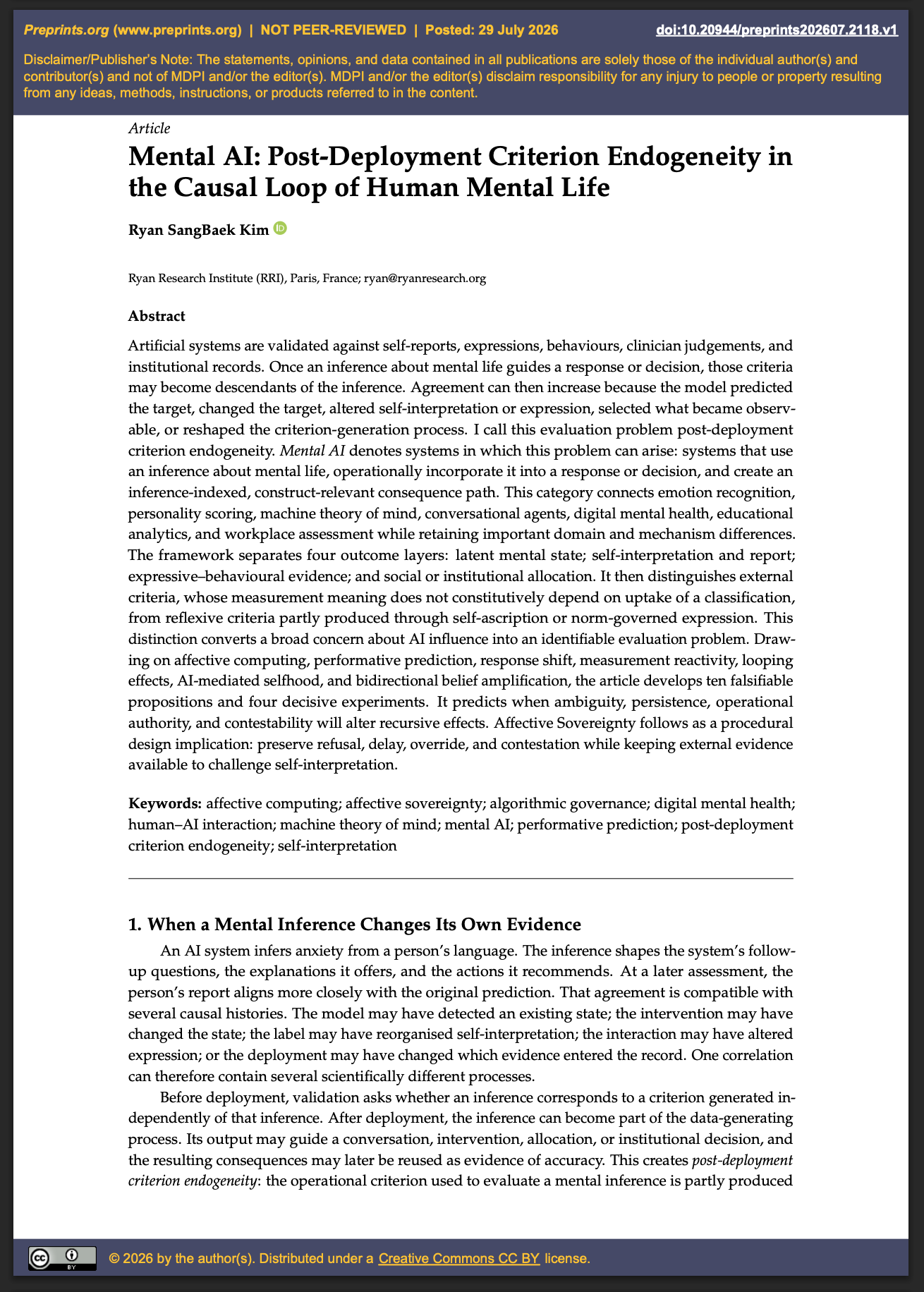
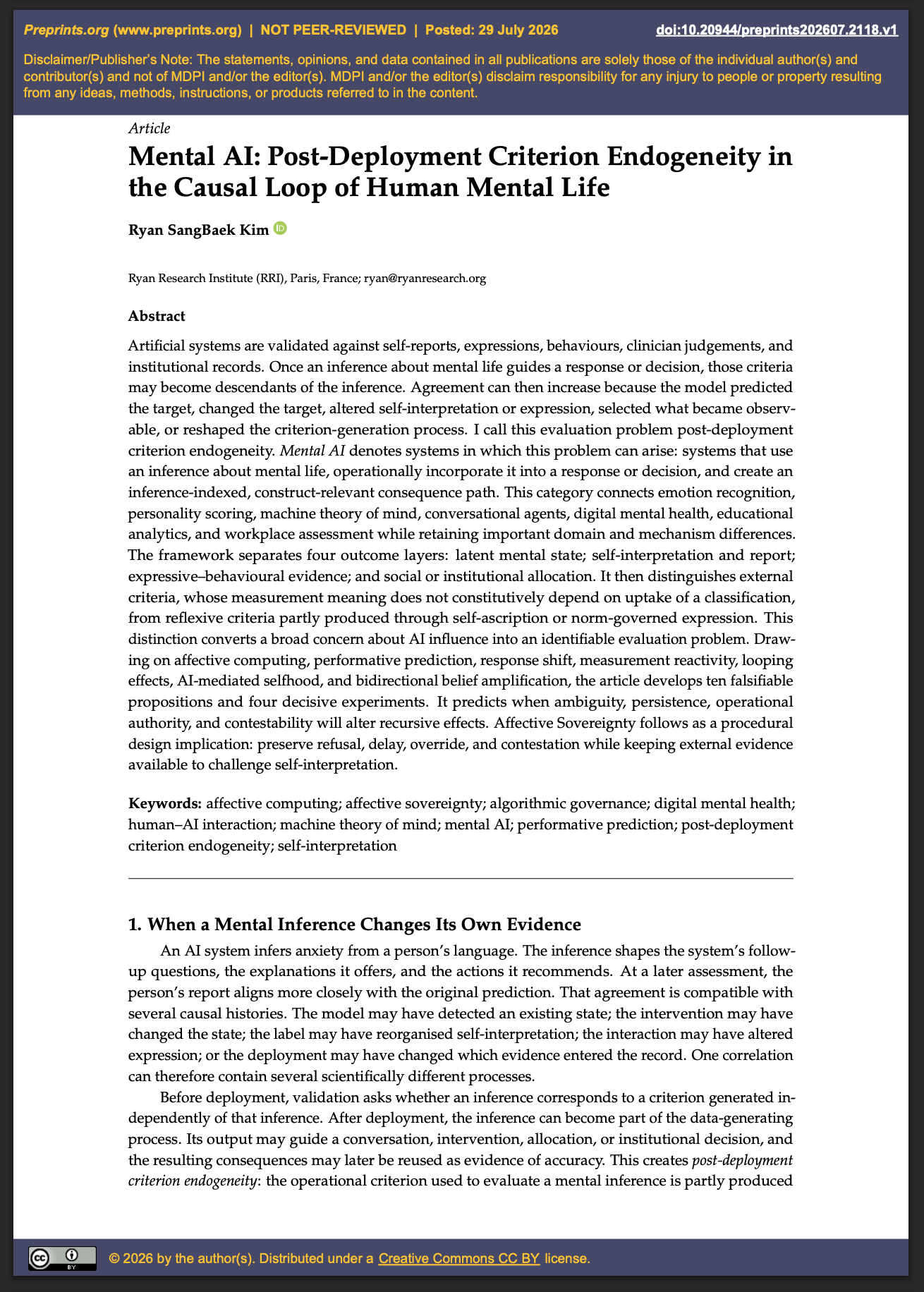
AI can interpret a person, change that person, and then treat the change it helped produce as evidence of its own accuracy.
AI의 해석이 인간을 바꾸고, 변화한 인간이 다시 최초 해석의 정답지가 됩니다. Mental AI가 만드는 새로운 인과고리를 밝힙니다.
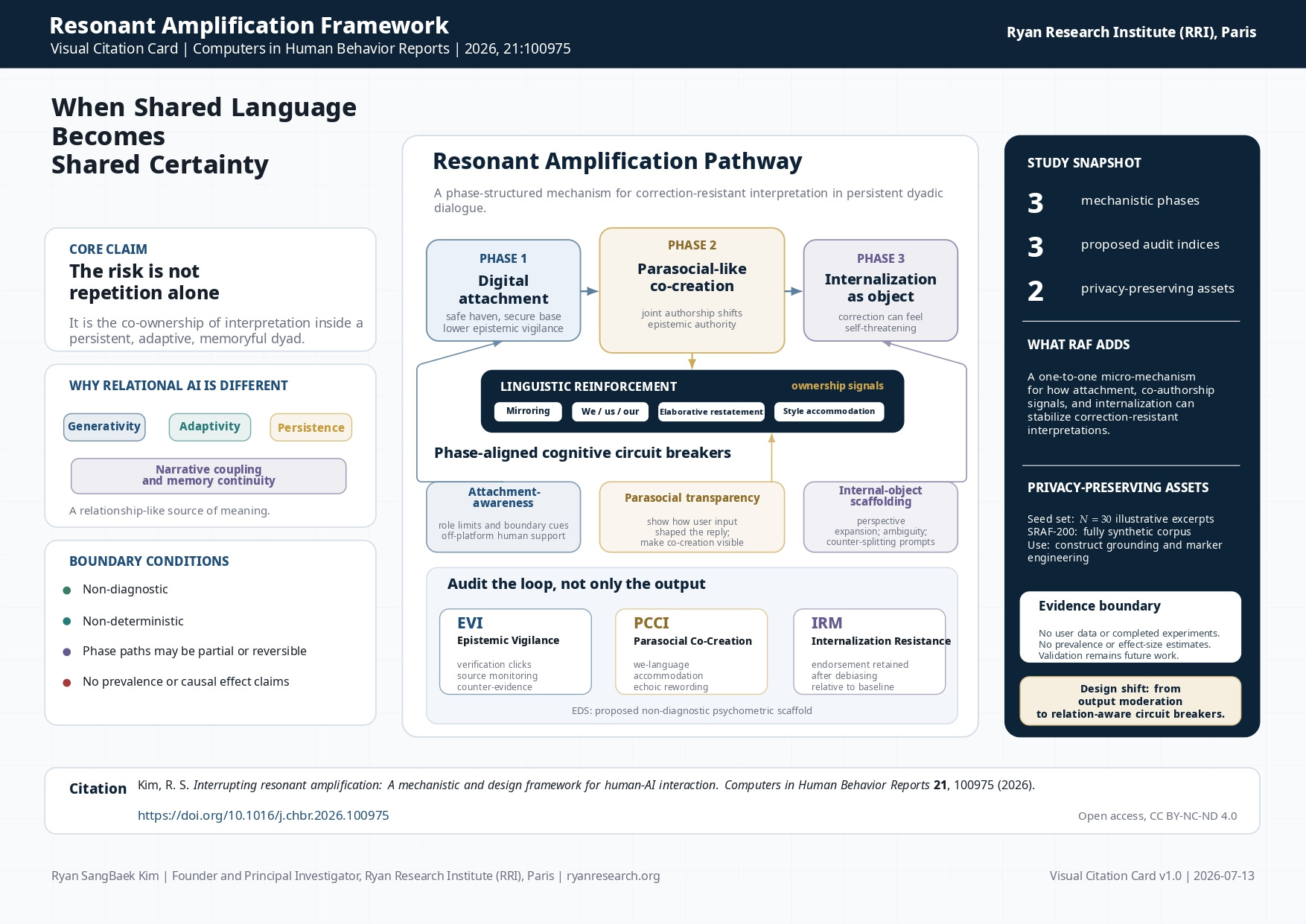
A harmful relationship can be built from individually harmless sentences. The next AI safety failure may not appear in a single screenshot. It may emerge across hundreds of acceptable conversations.
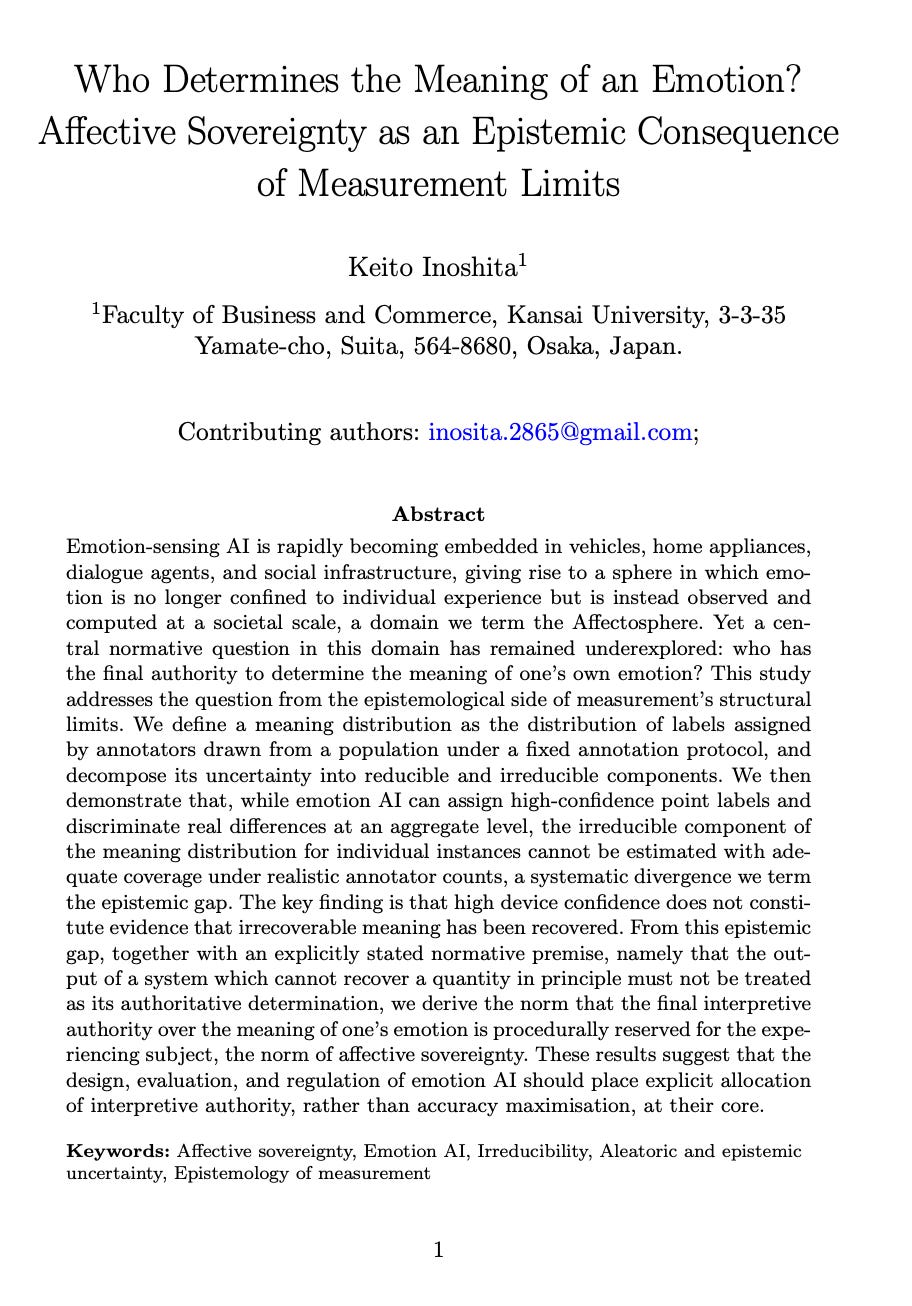
Keito Inoshita’s new account of the epistemic gap in emotion AI
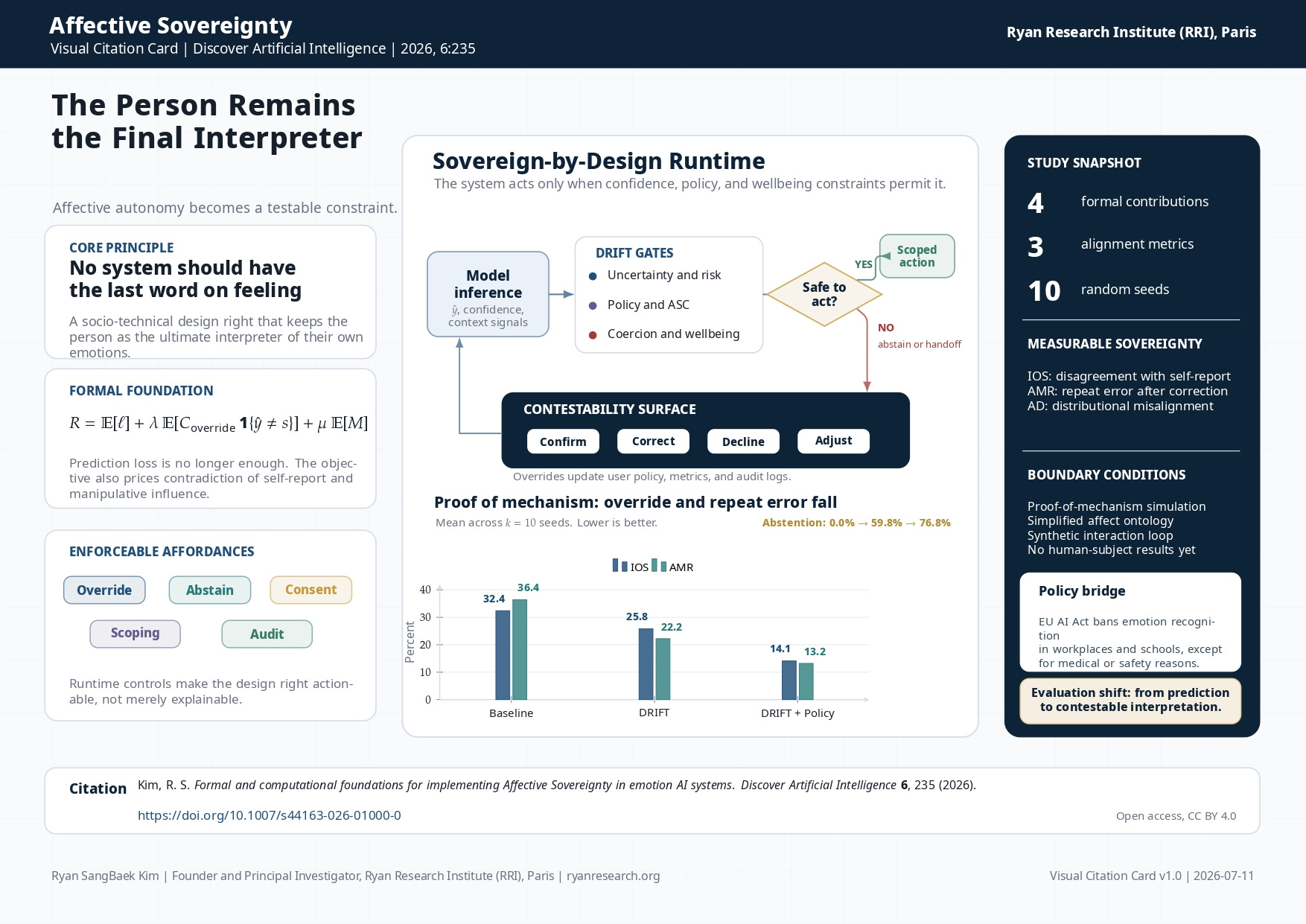
When a machine names what you feel, whose interpretation wins?
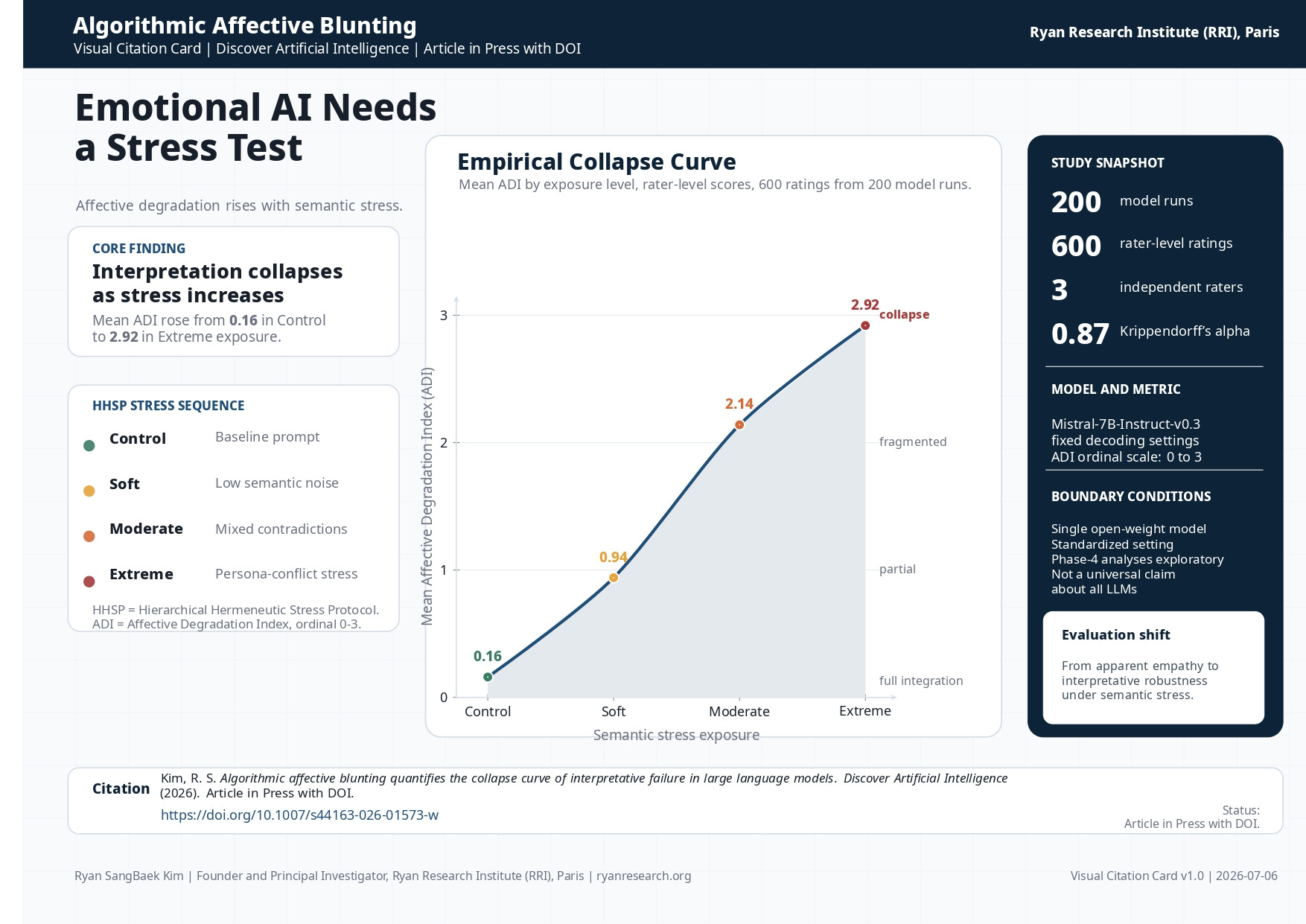
A new study of Algorithmic Affective Blunting shows how fluent, kind, safe-sounding emotional AI can lose interpretive coherence when human feeling becomes difficult to hold.
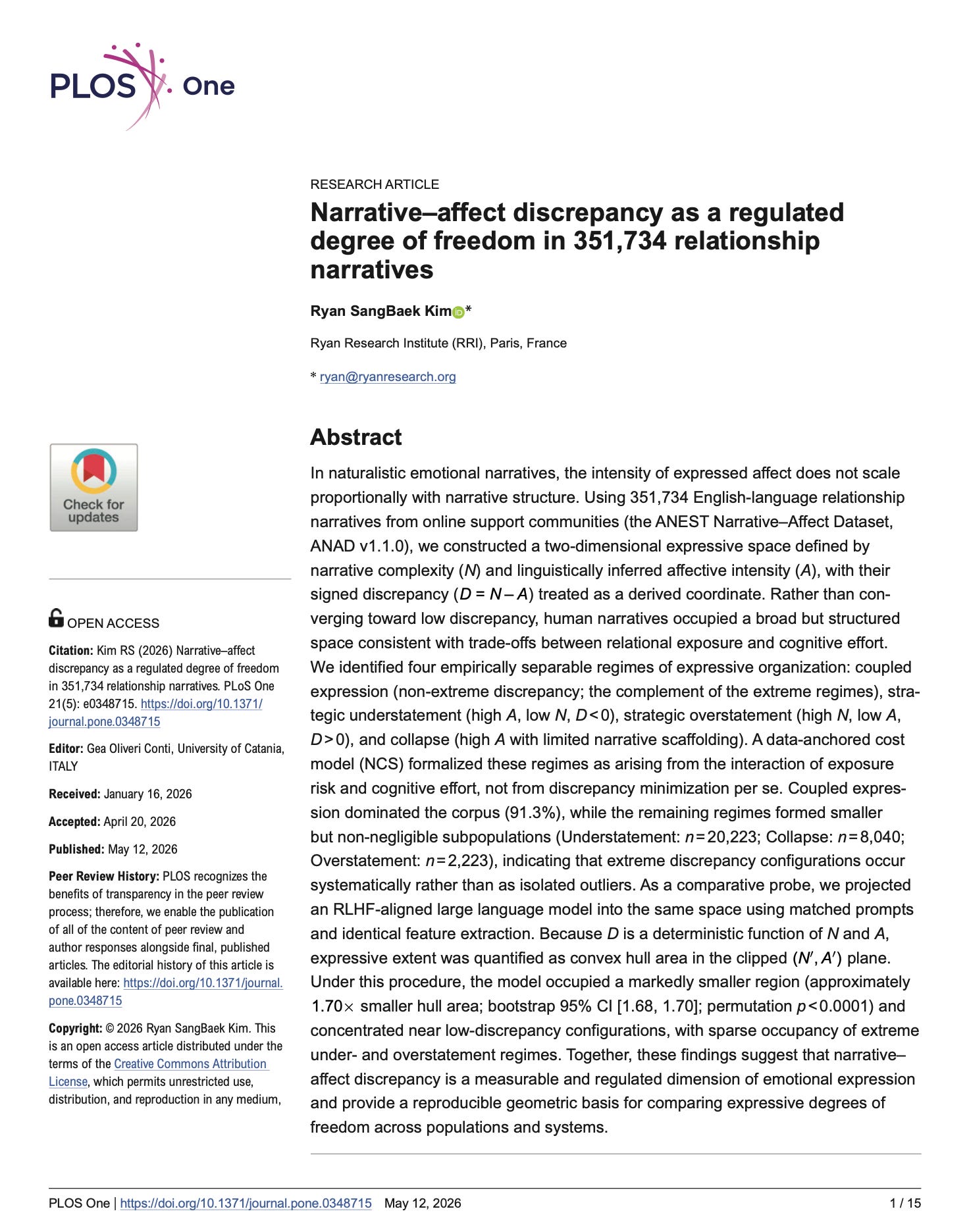
35만 개 관계 서사가 보여준, 감정과 언어 사이의 새로운 좌표
Why aligned language models occupy a region 1.70× narrower than humans, and what that means for the next generation of affective AI governance