
Everything I share here comes directly from proequinegrooms.com. Thanks for being here — your curiosity and care for horses help raise the bar for all of us in the equine community. At ProEquineGrooms.com, I believe every horse owner deserves access to accurate, trustworthy, and practical information about equine care.
Part of understanding the complexities of an equine diet is knowing the options available. Horse owners must consider forages, grains, supplements, and all manner of bagged, commercial feeds. It’s enough to make us hire an equine nutritionist (which is the best idea ever) to help sort it out. In an effort to simplify the equine diet, ration balancers provide a way to add nutrients without too many added calories.
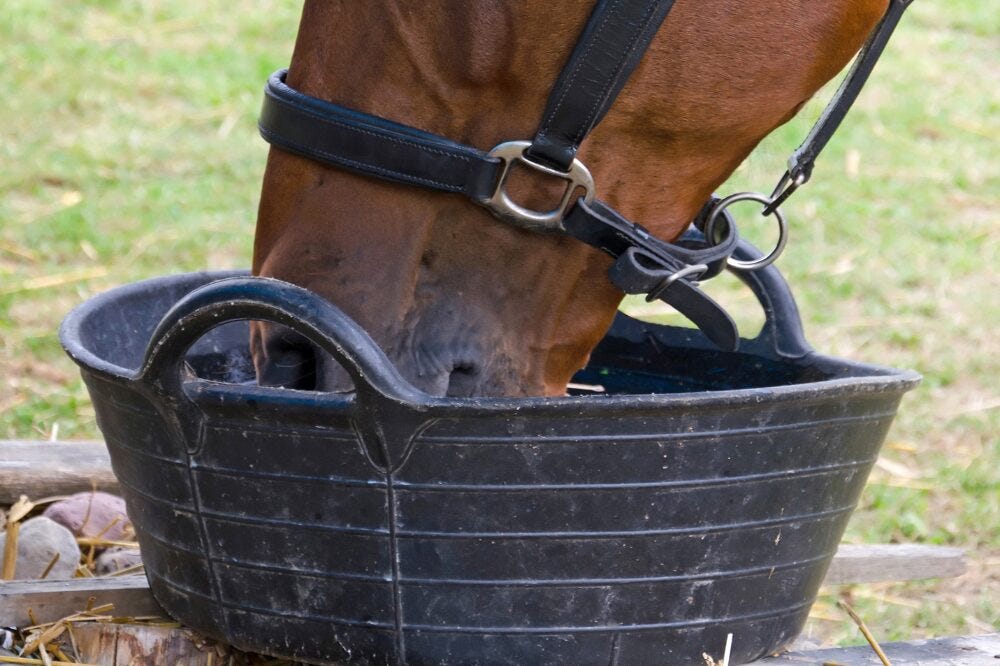
A ration balancer is a concentrated feed designed to supplement forage-based horse diets.
It provides essential protein, amino acids, vitamins, and trace minerals without excess calories.
This tool for equine nutrition is ideal for equines that maintain weight easily or don’t need a full grain serving.
The feeding rate for a ration balancer is low, typically around 1-2 pounds per day.
It helps fill nutritional gaps that are common in hay or pasture.
Ration balancers are a flexible and efficient way to ensure your horse’s diet is complete.
Ration balancers are bagged commercial feeds that provide a powerful punch of protein, vitamins, and minerals without extra calories. They complete the nutrition profile of a forage-based diet without the threat of added weight gain. They are a multi-vitamin instead of lunch.
A primary component of ration balancers for horses is protein. While crude protein levels can range from 10-35%, many are over 25%. Amino acids and proteins are vital for muscle development and overall health. Lysine and methionine are especially important for this.
Many hay forages try their hardest to retain the nutritional power of grass pasture, but drying eliminates many of these, such as Vitamin E. The soil in which the hay grows also influences the nutritional values. For example, selenium is present in the soil, and therefore the hay, in some areas, but not others.
The minerals copper and zinc, which help with hair growth and pigment production, are also often missing from forages.
The main benefits of the dense nutrient profile ration balancer for horses are:
Fills Forage Gaps: It perfectly complements a forage-only diet by supplying what’s missing.
Supports Overall Health: Provides the building blocks for strong hooves, a healthy coat, and proper immune function.
Concentrated Nutrition: Delivers a wide range of nutrients in a small, low-calorie serving.
The primary differences between grains and balancers are their purposes and feeding rates. Balancers provide nutrients without calories and require fewer pounds of product per day. Grains and complete feeds provide calories, nutrients, and energy in much larger volumes.
Typical commercial feeds offer a few more things, namely calories, volume, and energy. Traditional feeds, such as complete feeds or performance grains, are formulated to be a significant energy source and are fed in larger quantities.
In contrast, a ration balancer, also known as a forage balancer, is not designed to be a primary calorie source. Its job is to meet nutrient requirements for protein, vitamins, and minerals. While a complete feed might require you to feed 5-7 pounds per day to get the necessary fortification, a ration balancer provides those same nutrients in just 1-2 pounds. A ration balancer is all about supplementing a forage-based diet with minimal calories and the nutrients that hay lacks.
Generally, complete feeds and other formulations tend to have higher non-structural carbohydrate (NSC) values. NSC is a measure of the sugars and starches in feeds and should not be above 10-12% for horses with metabolic disorders, overweight horses, those with heaves, or similar medical conditions.
Sticking with a low-NSC value balancer is best for many situations.
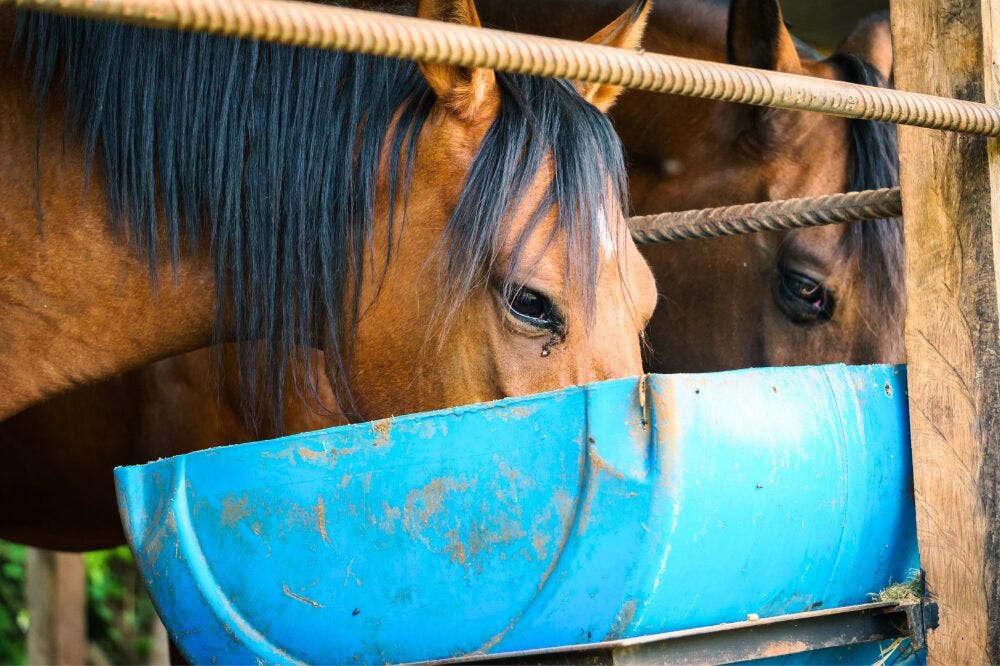
Allowing horses to share feeds won’t guarantee that each receives the proper nutrients.
This often depends on your horse’s caloric needs. Forage analysis shows what your hay is lacking in nutrients, so it’s easy to supplement there.
Use a ration balancer for horses if they need more calories or less sugar in their diet.
Use a calorie-dense bagged feed for nutrients and energy if calories don’t stick.
To decide which is best, a forage analysis can be very helpful, as it shows what your hay is lacking. If your forage provides enough calories but is low in protein or minerals, a ration balancer is a perfect fit. If they need more calories for work or to gain weight, and your forage isn’t enough, a traditional feed is more appropriate.
There are a few equine types that benefit from balancers:
The “easy keeper” or “air fern” that blinks at feed and gains weight.
Horses needing a low NSC diet.
Equines with forage-based diets that provide plenty of energy without supplementation.
Pasture-kept horses can thrive in the summer and have most of their nutrition directly from the grass. However, as the grass life cycle changes, dormancy and overgrazing alter the nutritional profile and, in some cases, availability. Supplementation with hay is common in these situations, which may also require a ration balancer in the off months to make up for the poor pasture.
We know that horses require more Omega-3 fatty acids than Omega-6 fatty acids, but equine diets rarely allow for this. Most horses need an Omega-3 boost in the form of flax, chia, fish oil, or other healthy sources.
Some ration balancers for horses contain added Omega-3s, while some do not. It’s easy to add delicious, stabilized flax to any horse’s nutritional plan.
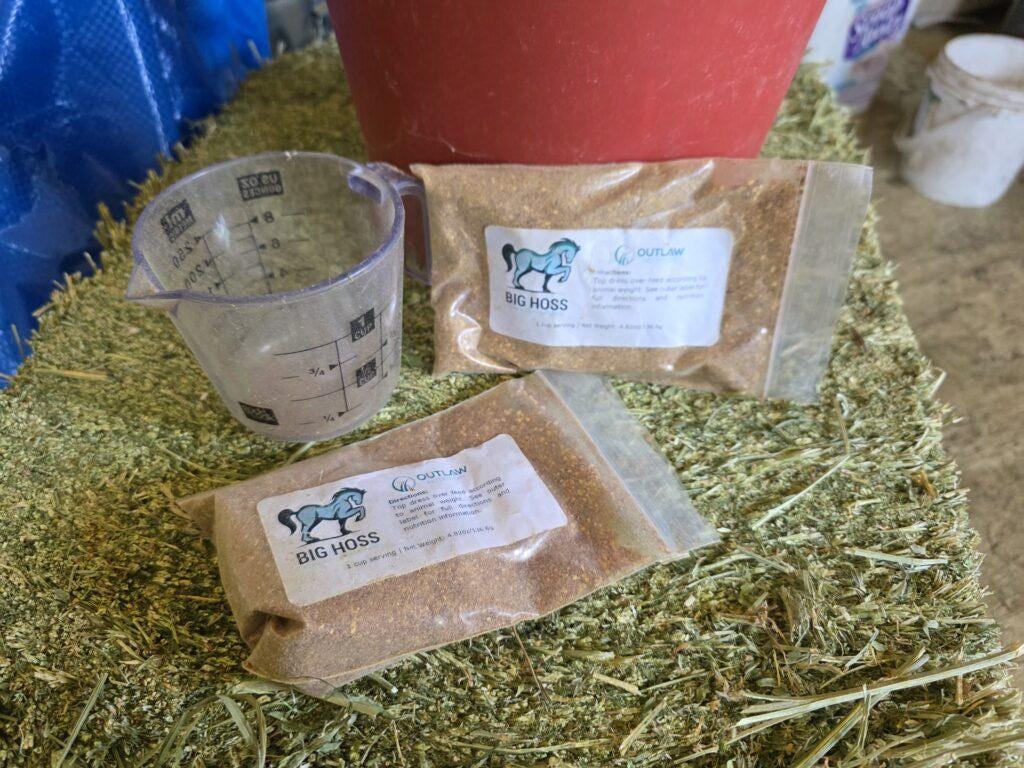
Omega-3s are easy to store and feed.
Your farrier, vet, saddle fitter, and tack shop owner are all experts in their respective fields, so it only stands to reason to work with an expert in nutrition. A doctor of equine nutrition will analyze your horse’s health, age, weight, training plan, current diet, metabolic issues, skin condition, and more to formulate diets to keep your horse in good health. Reputable nutritionists are independent, affordable, and support your horse’s health and wellbeing as much as you do.
A forage-only diet is unlikely to be best for most horses, as forage availability, season, and type vary from region to region and do not account for individual horse needs. Using ration balancers for horses to supplement a forages provides fuel for muscle development and overall health with proteins, vitamins, minerals, and sometimes Omega-3 fatty acids.
Thanks for reading — and for being the kind of horse owner who values learning and doing better. There’s so much more to explore at ProEquineGrooms.com, where every article is written to make quality horse care accessible to all.
No posts
Comments
Nothing yet. Say the first thing.
Sign in to join the conversation.