
In this edition:
A case study on iterative transformation
When research kills the vibe
Join us!
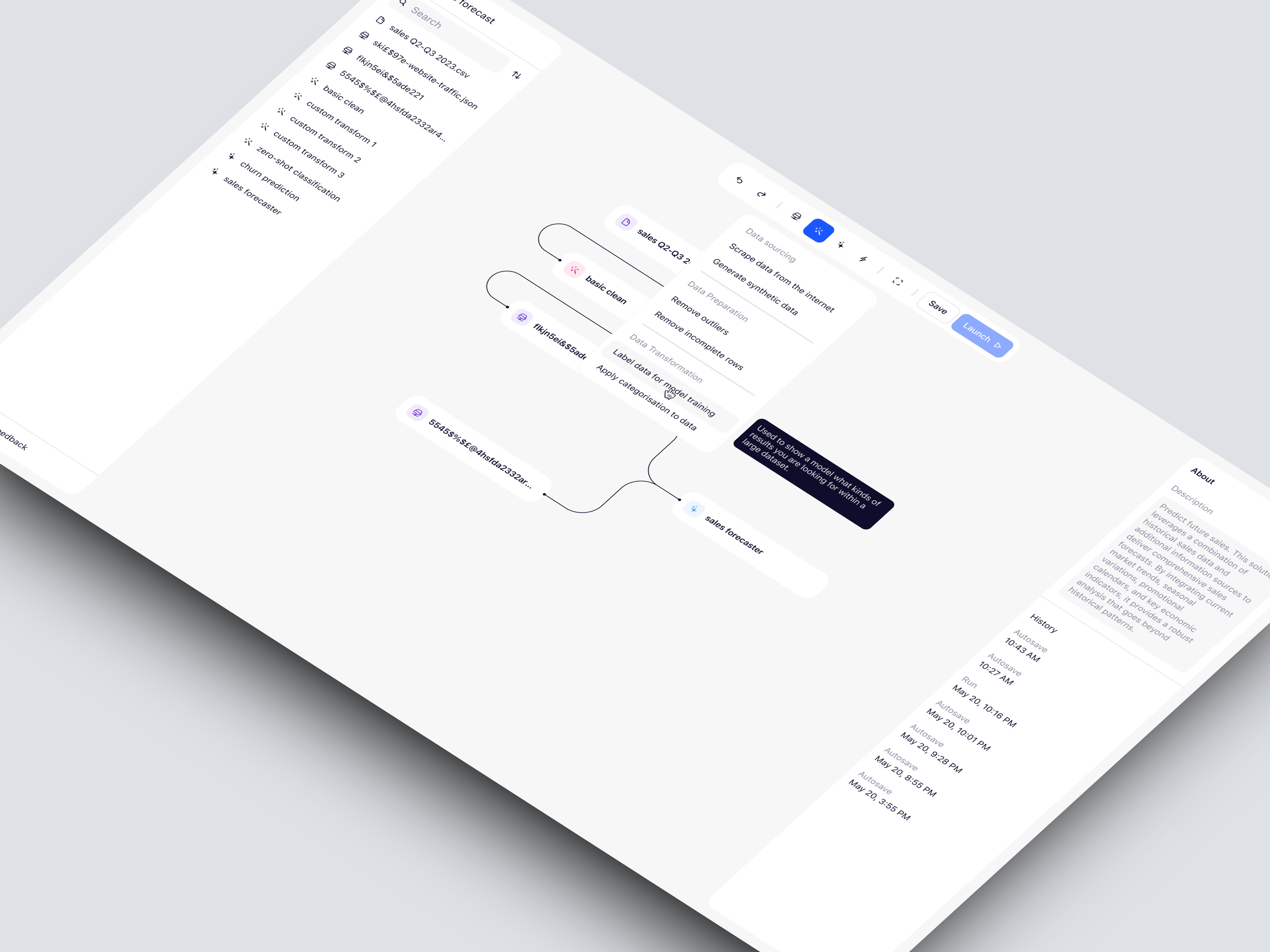
When you look at the landscape of AI solutions, most fall into either of two camps: point solutions that seem cool but don’t solve a valuable problem in an integrated way or AI consultancies only companies with the deepest pockets can afford. Our client, TrueState, thinks there should be a middle ground.
They set out to “make AI easy” for the thousands of small and medium-sized businesses out there. Today, their platform makes custom Generative AI solutions quick and easy to create for any business, from online retailers to private equity funds. They also recently announced raising a $1.5M pre-seed round.
We can't claim credit for all their success, but we like to think we made a difference: When they reached out, they had the technical parts in place, but their platform wasn't user-friendly for the non-technical target audience. This meant a lot of manual work for each client, slowing down their ability to further scale and develop the platform.
But this wasn’t a case of a mere redesign. They had customers on their platform whose experience needed to improve now. At the same time, they were shooting for the most innovative, top-notch experiences in a future version of the platform. Along the way, we would evolve their engineering culture too.
To tick all these boxes, we embarked on a programme of Iterative Transformation. See how we did and what TrueState’s CEO has to say about it in our case study.
Case studies like the one above always prompt reflection on why they were successful and what could be done differently next time. Over the next few issues, I'll occasionally share such reflections.
One such topic is the disruption caused by poorly introducing design and research to an engineering team. Too often, 'doing design' (which includes research in this context) is perceived as a disruptive force: everyone must halt their work until insights from week-long user interviews provide direction.
There's a time and place for the academic approach encapsulated in ideas like the (in-) famous Double Diamond, particularly when tackling a new problem area for the first time, or when creating physical products or hard-to-iterate-on services. In most other situations, it can destroy goodwill, slow the team down, and produce findings that merely confirm what the engineering team would have done anyway.
So what's the alternative?
Keeping things going - When engaging with an established team, trust their work and their instincts on what to do next. Leave roadmaps as they are until proven otherwise. While the engineering team focuses on delivering the next previously agreed milestone, you might focus on...
Identifying quick wins - By conducting a UX Surgery on a live product, you can build a backlog of fast and easy modifications to implement. Depending on engineering velocity and other priorities, this allows for measurable user experience improvements within a week or two. This approach also buys time for...
Establishing a shared knowledge base with a user lens - Founders, engineers, and other stakeholders possess a wealth of knowledge about the problem area. They also have numerous documents or Miro boards outlining their thinking. Gather and synthesise all this information into assets with a user lens: a blueprint or journey map of the desired end-to-end experience, pen portraits or personas, etc.
Prioritising assumptions to test - Distinguish between proven facts and assumptions or hypotheses. Identify what, if proven true, would make or break the business. From this, co-create a roadmap of design and research objectives. Begin recruiting research participants who match the desired target profiles. Create a research and design plan, choose appropriate methods, and prepare for them by writing discussion guides or surveys or setting up ad campaigns for vapour tests.
Kicking off discovery sprints - Set things in motion. Conduct and synthesise interviews. Gather data from various experiments. Convert actionable insights into user journeys and wireframes, ensuring that information isn’t just gathered for its own sake but used to produce tangible results.
All this can be as fast and rigorous as required. Whether it involves a week of casual discussions and a survey with friends and family, or three weeks of mapping an entirely new health service and one-hour interviews with a representative sample of London's population (as we’ve just done with our latest client), it’s all possible.
Remember, the engineering team is still focused on their previous goals and delivering those UX improvements specified in Week One. So, while this process may take time, none of it should act as a blocker (except for the time needed with stakeholders for feedback sessions and workshops).
Also, avoid discouraging engineers from developing prototypes before 'completed' research. Instead, challenge them to think of alternatives. Speed to insight is crucial when it comes to testing concept ideas. If a passionate team member can quickly prototype ideas, use these prototypes for testing. However, you will get better data by comparing alternative proposals rather than just getting a thumbs-up on one idea. In any case, encourage team members to join or even moderate research at every opportunity.
At the end of this process, the outcomes include:
An almost instantly improved experience for customers.
A backlog of opportunities to prioritise for sprints towards overall goals.
Increased confidence and nuance in core hypotheses, leading to lower risk.
Strong knowledge foundations for 'bigger picture' ambitions.
Fully aligned stakeholders and product teams.
An engaged product and engineering team.
Convincing data for investors and other stakeholders.
Far from being a costly hindrance that confirms what you already knew, customer research can be the best investment you’ll ever make.
Designers and engineers: While our careers pages have yet to come online, we have set up a direct channel for you to register your interest in working with us. Whether you are looking for a career change or want to be informed about future openings, whether you are a contractor or only open to permanent roles, we want to hear from all of you.
We review every single submission.
Comments
Nothing yet. Say the first thing.
Sign in to join the conversation.