
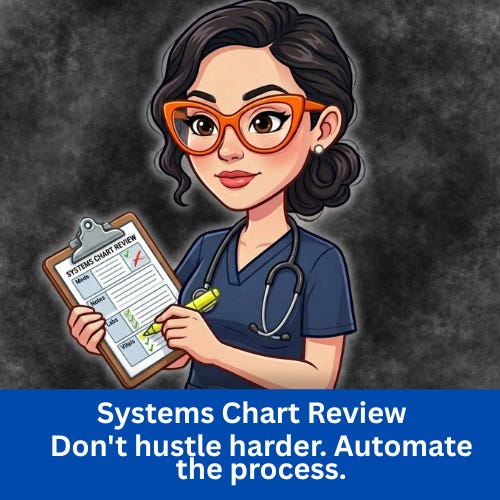
Who: Liz Goodman, business owner
Challenge: Traditional time blocking did not work with a schedule impacted by chronic pain and unpredictable daily capacity
Goal: Create a planning and execution system that adapts to variable energy and time windows, without dropping tasks or relying on constant mental load
Approach: Start with time blocking principles, iterate a custom workflow, then add ClickUp automations and AI agents to reduce manual effort
Result (early): A centralized Owner’s OS that captures, routes, and executes work through repeatable workflows, reducing decision fatigue and rework
Time blocking is often recommended as the solution for focus and productivity, but it assumes one key ingredient: stable, predictable hours.
For Liz, that assumption was not true. With a chronic pain condition, the amount of usable time in a day can shift, and energy is not guaranteed at the same time each day. That made rigid schedules feel like a system that worked on paper, but broke in real life.
Liz needed a way to run the business that:
Did not depend on fixed hours or perfect consistency
Reduced the mental burden of remembering everything
Prevented tasks and ideas from getting lost across notes, email, and scattered documents
Continued moving projects forward even when she was not “pushing” constantly
Over the last 4 to 5 months, Liz designed a personal operating system called the Owner’s OS — a system of AI automations, lists, folders, and an AI agent built to help her carry out her duties as a business owner.
Owner’s OS functions as:
Capture hub: A single place to quickly collect ideas, requests, and loose ends.
Routing system: Each item is sorted once into the right destination, with clear next steps.
Execution engine: Work moves forward through repeatable checklists and workflows, instead of re-deciding how to do the same tasks every time.
This replaces the constant context-switching between notes, email, and random docs with one consistent path: capture once, sort once, execute consistently.
Start with time blocking as the core idea
Liz did not throw out the concept; she used it as a foundation.
Iterate the system to fit real life
She adjusted and refined the approach little by little until it “mostly worked” on paper and felt compatible with fluctuating capacity.
Add automation and AI to reduce manual work
Once the workflow was solid, she layered in ClickUp automations and AI agents to make the Owner’s OS easier to run day-to-day, especially on low-capacity days.
The Owner’s OS is designed to save time, money, and energy by targeting the real drains on execution:
Less decision fatigue: fewer repeated choices about what to do next and how to do it
Less rework: clearer, repeatable processes reduce “reinventing the wheel”
Less searching: information and project plans live in a consistent format
More momentum without constant pushing: ownership, priorities, and “what’s next” are easier to see, so work keeps moving
You do not need more hustle. You need automation baked into the process before you ever touch it again.
For Liz, building a flexible Owner’s OS first, then automating it, created a more sustainable way to run the business with an unpredictable schedule.
Comments
Nothing yet. Say the first thing.
Sign in to join the conversation.