
Disclaimer: This is an opinion piece by a layman which covers interesting books and writings by men holier than I. Please consult these sources (and your priest) which can be found in the footnotes if you find these topics interesting. This is simply my opinion relating to these books and nothing more.
War is something that Christians tend to get wrong. The central conundrum is: are we crusaders or pacifists? Some would like to tell you that waging war is a suitable answer to many of the problems of the modern day, war may even be the only solution to an anti-Christ led world or something along those lines. The other side has it that we should be perfect pacifists and martyrs, after all look at how Christ and the apostles responded to persecution.
The answer as it turns out is closer to the ways of peace than it is to total war, however it is also much closer to war than many might expect! I know that I certainly did not have clarity on this issue before I read the text which I will lean most on in this article: On Resistance to Evil by Force. How was I to reconcile Christ’s humility and martyrdom at the hands of evil with the holy martyrdom of soldier and general saints? Not to mention the righteous wars fought by Christian countries, especially in the scenarios of defense or liberation from anti-Christian powers. Well, this article explains my answer to these questions.
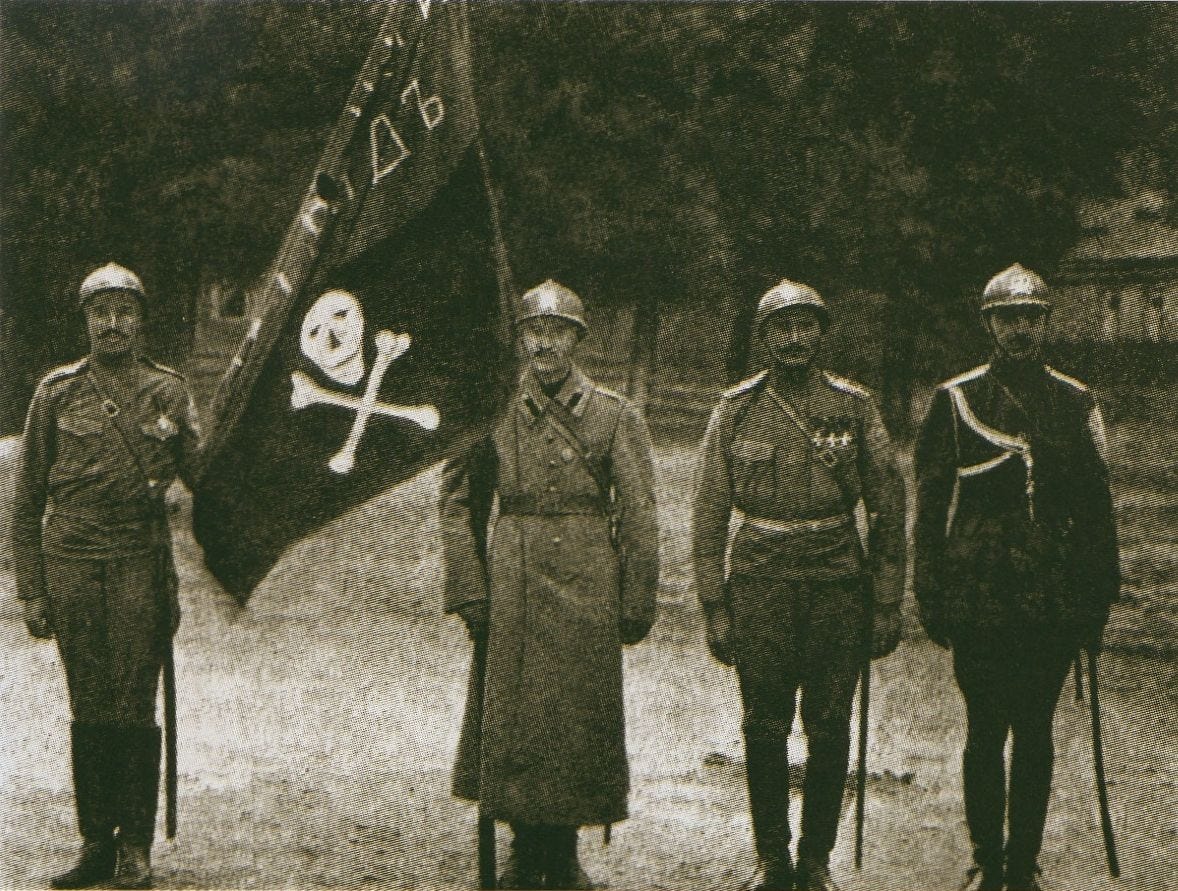
Ivan Alexandrovich Ilyin was born a Russian-German aristocrat and became an important philosopher of the early twentieth century. His philosophical coverage importantly included explaining Hegel to the Russian world. Funnily enough as a result of this Vladimir Lenin was a huge fan of his despite their immense ideological differences. But why is the theology of Ilyin important to us in our discussion of war? As an Orthodox Christian who lived through the October revolution and supported the White Russian army, naturally one would be obliged to come to an understanding of how Christians should respond to violent anti-Christian hostility. In addition to this, the notable author Leo Tolstoy had become a heretic and cult leader in his later years where he advocated pacificism among other spiritual and moral teachings.
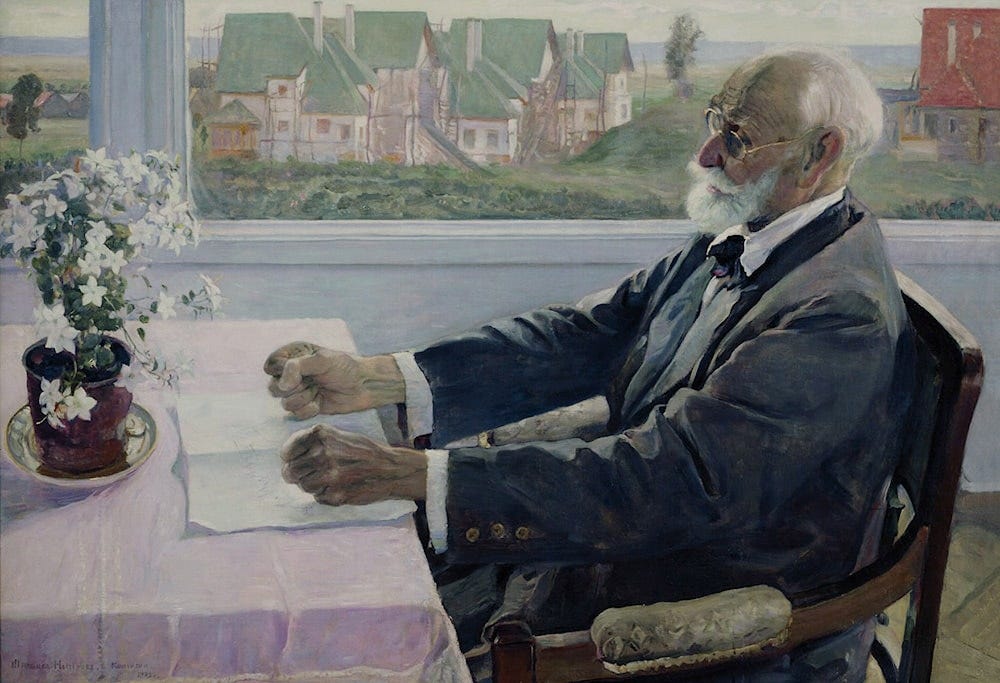
His work On Resistance to Evil by Force is primarily a criticism of the many detailed writings produced by Tolstoy in favor of his pacifist philosophy. It is also a broad philosophical exploration of the Christian duty towards violence. As an intellectual and an academic student of philosophy, the work treats the matter of violence not with platitudes, generalizations or vague aphorisms but rather systematically and seriously —much in the fashion of Kant or Hegel. For this reason the answers this work provides are particularly prescient and practical, appealing both to the mystical and rational Christianity.
Here’s the headline: violence by men is morally imperfect, yet at times us imperfect men have a duty to employ it.
Let’s begin with why Christians cannot be pacifists, why such a position would be an embrace and support of evil. The pacifist proposition is as follows: violence is inherently wrong in all cases and therefore should never be undertaken by a moral agent. Let us consider this proposition in light of some probing examples.
In a simplistic case, there is a man who robs others and thereby does evil towards them, towards himself and in an affront to God. Knowing that this is the case, how is one to respond? The pacifist would suggest a strongly worded reproach. Yet, if this does no good and the villain insists on his robbing, the pacifist has no further escalation that he may employ. So he weakly disengages or impotently stands by in protest. Is this a morally acceptable outcome?
No it is not, this is for the reason that one is abetting in the victimization of innocents by neglecting to restrain the villain. If it were instead a scenario where only the robber and you existed perhaps then it would fair to assert that the best course of action is to allow oneself to be robbed and victimized (Matthew 5:40-44). But if it becomes an issue of allowing such a man who has a tendency to rob to be loose upon others, then it has become your moral failing for neglecting to prevent his evil unto others —especially for those who are strong and able.
That being said, violence is not to be employed automatically but instead only by absolute necessity, coercion remains by its nature a sad thing that is only to be employed due to the presence of some already greater evil. That said a proper escalation should always be employed along with recognizing that any use of violence, institutional or individual, will have associated moral harms. Even with all those recognition there is indeed a time and a place, in fact a necessity and duty for Christians to employ violence. The Christian doctrine can never be misconstrued as one of pacifism.
Before discussing Christ’s relation to violence itself, let me turn to a different sort of warfare that inextricably related to physical coercion: spiritual violence and war along with spiritual war waged against the self.
There is a fundamental orientation that we must always have in mind when discussing subjects such as this. Which is our ultimate end remains spiritual purification and theosis. This goal serves for oneself and that we might help one another, as humanity, achieve these things as well. Knowing that death will be the end of our repentance and spiritual preparation we understand the sadness and evil associated with death in our discussion of violence and war.
What then is this inner war and how does outer war reflect it? The outer war which takes place in this world should only be undertaken by men who have mastered themselves through self-war for otherwise there is a great risk of irresponsible and evil employment of coercion. There is no point in subduing one devil just to raise up another. In the Philokalia, the subject of inner war is dealt with extensively through the writings of monks who have spent their lives immersed in this struggle. This is a topic with unlimited depth, but allow me to mention one aspect that is most relevant to the subject.
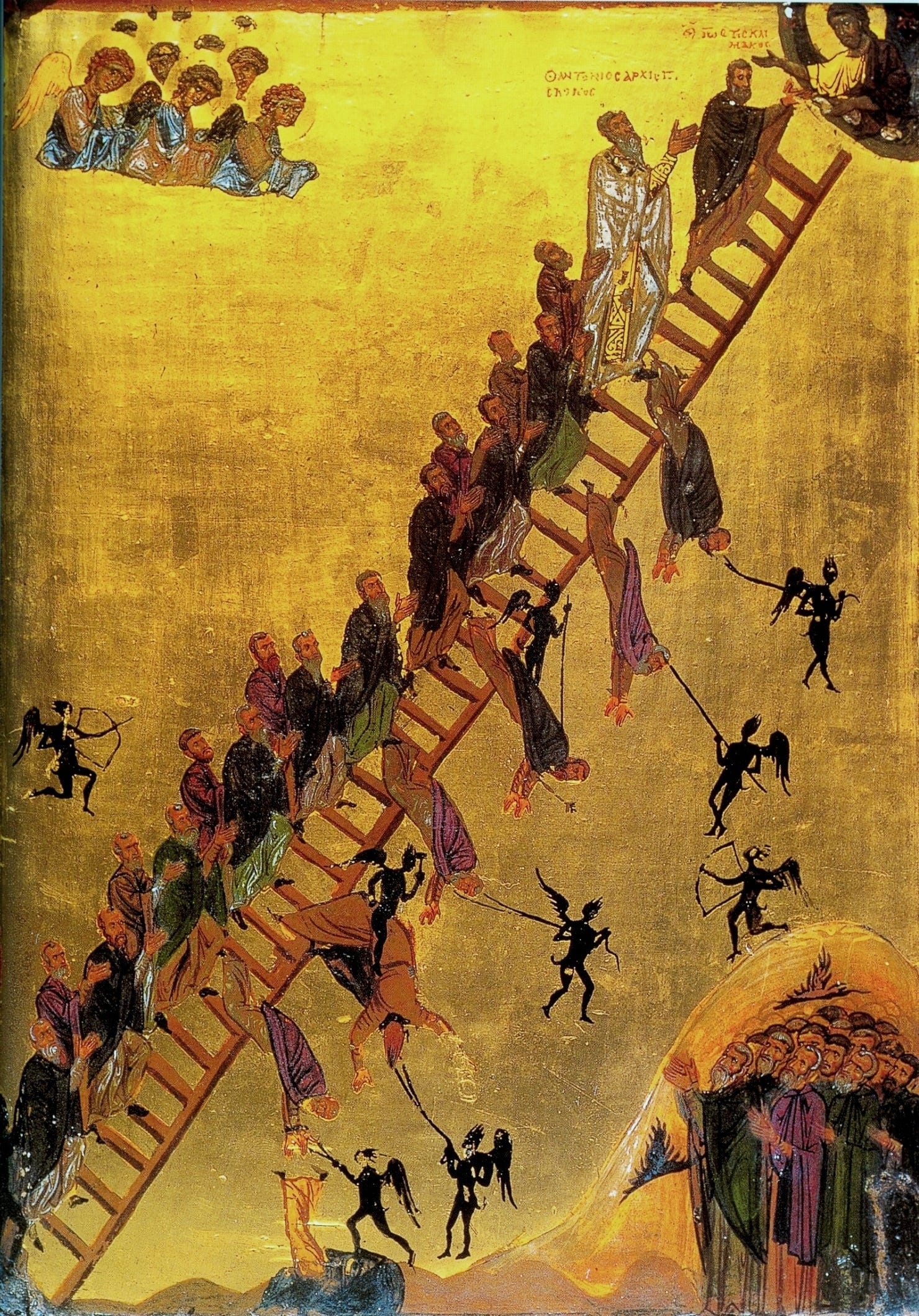
If ever one is to enact coercion, he must rid himself of all ill-will towards others first and foremost. Nothing can be out of pride, wrath, revenge or lust for power. Violence can only be properly undertaken by men who totally forgive those who they coerce and wish them nothing but to be led to heaven. This is no small task, the matter of seeing the face of Christ in every man, even those who have been taken in and corrupted by the enemy, requires and incredible discipline and strength. But it is precisely this discipline that must be undertaken among those who wage external war should that war not be for the ruin of all but rather to some profit.
Naturally no one can be perfect, nor can they be masters of themselves at all times and especially at times when they are needed. Therefore at least soldiers in Christ must be humble enough to always ask for forgiveness in their misdeeds and never be so prideful as to assume Christ gives them the sword as men who are worthy of it.
So the knights of Christ must be primarily knights in spiritual warfare along with all the rest of the Church militant as we are so aptly called.
While monks rarely wage war externally —although they sometimes do— often they are better spiritual warriors than those on the front lines. By conquering themselves through ceaseless attack and constant combating of the demons, they train themselves in the same way which soldier must so that they be ready to battle with all love, forgiveness and righteousness.
In the book of Mathew, during the sermon on the mount, Christ teaches his disciples to be meek (Matthew 5:5). What then is this meekness? Should we cower with fear, be defenseless, be willingly victimized as our Lord ultimately was. This is not at all the meaning of meekness, for to be meek entails great strength along with great restraint in its employment. In this way Christ was truly meek, the most humble, for he could have destroyed all evil doers in an instant. Yet he did not and rather allowed himself to be persecuted.
Yet there are those instances where the wrath of God was provoked and Christ himself in his meekness saw coercion to be necessary. Famously employed to chase the money changers from the temple Christ brandished a whip and threatened the robbers out of the holy place (John 2:15).
Christ advised that those who would mislead and corrupt children are better dead than allowed to let live and continue their evil (Matthew 18:6).
What’s interesting is that people know these verses and yet they are often forgotten by us who are afraid to take every bit of Christ seriously. That Christianity is far more than a religion of kindness as C.S Lewis complained. We still face this issue today, perhaps more than ever as we have become cowards who, like Tolstoy, prefer to hide our unwillingness to fight evil behind a philosophical system or moral high ground. In reality there is only immorality to be found in pacifism.
To round off my mentioning of Christ in the Gospels, Ilyin’s presentation of a system of just coercion for Christians appears to be much in line with what is observed in the bible. There is in fact scarcely employed coercion but rather a proper escalation with the end of bringing humanity unto heaven. Never is violence employed flippantly or in excess but rather only in the appropriate amount.
How then does one live as a knight of Orthodoxy? It is not something that is undertaken in an ideal world, however in one rife with evil it becomes necessary for those who are willing and able to first undertake their internal spiritual struggle but also to be physically strong enough to undertake worldly struggle. Therefore, prepare early and with the intent of acquiring meekness. That one makes himself powerful, ready and totally under control.
Then one must exercise great discernment in the use of coercion, always knowing that both himself and his enemy are prone to imperfection. Employing a proper escalation of force always with the objective of bringing his opponent to heaven and if this is impossible, with forgiveness, protecting the innocent.
When all is done, one must reflect, confess and ask for forgiveness. There is rarely a morally perfect application of violence. Unless perhaps against demons themselves or the explicit enemies of God. But even then all men are mislead by demons, the difference is only in degrees.
In all these things one must remember that he who lives by the sword shall die by it. The knight of Christ must always be ready to die at the hand of his enemy (Matthew 26:52). If he can not accept this then he should not take war unto evil.
The practical application of war and violence is not as a zealous crusader may wish and yet it is equally utterly different from the pacifist’s non-violence. This is an under treated subject which I have simply covered with words and yet I myself hardly live these principles. That is the most important practical consideration: to, in action and life, become meek and be unafraid to resist evil where it appears. Of course if the only resistance that can be offered is to accept martyrdom than this too must be taken up with joy.
The demands I make here are by no means easy, but of course it was never meant to be easy and yet for those who understand this will seem the easiest task possible.
I hope this article was informative, interesting or motivating. Please let me know what you think.
Blessed Lent, Tarasios.
Ilyin, Ivan (1925 ) On Resistance to Evil by Force p 189
Ilyin, Ivan (1925 ) On Resistance to Evil by Force p 166
(1782) Philokalia. The topic is dealt with throughout many writings, perhaps most relevant is Two Hundred Texts by St. Mark the Ascetic
Commentary on Mathew 5 from Orthodox Study Bible (2008)
Lewis, C.S. (1940) The Problem of Pain
No posts
Comments
Nothing yet. Say the first thing.
Sign in to join the conversation.