
Imagine this: You’re a law-abiding citizen in London or Berlin, minding your own business, opening a simple bank account. No international flights on your horizon, no shady dealings—just a paycheck deposit and maybe a mortgage down the line. But suddenly, you’re funneled toward downloading a government app, scanning your face, and handing over your biometric data. “It’s voluntary,” they say. “For your convenience.” Yet, opt out, and that “traditional” passport route? It takes days longer, with suspicious glances from the teller. Welcome to the creeping world of mandatory digital IDs, where efficiency is the carrot and exclusion the stick.
In the EU and UK, this isn’t dystopian fiction—it’s policy rolling out now. As of late 2025, the European Digital Identity Wallet (EUDI) is hitting pilots across 26 member states, promising seamless access to everything from healthcare to job applications. Across the Channel, the UK’s “BritCard” scheme—announced just last month—mandates digital verification for work checks, ostensibly to curb illegal immigration. Passports, those trusty blue booklets once synonymous with freedom, are being recast as relics, while national apps become the new gatekeepers. But here’s the rub: If you never cross a border, do you really need this? And more importantly, should you?
As someone who’s watched this unfold—from e-passports’ biometric chips in the mid-2000s to today’s app-based ecosystems—I’ve grown wary. It feels less like empowerment and more like a velvet-gloved authoritarianism. Citizens should choose their verification method: Whip out a passport for that bank visit if you want, or endure the “slow lane” without Big Brother’s app breathing down your neck. Yet governments push on, citing fraud reduction and economic perks. Fine, but at what cost to privacy? Enter a radical alternative: decentralized digital identities (DIDs) anchored in Bitcoin’s unassailable network. No state overlords, no central databases—just you, your keys, and the blockchain’s cold, hard truth.
Let’s start with the basics. In most Western countries (think EU heavyweights like Germany and France, or the UK, Canada, and Australia), passports have long doubled as “digital IDs” thanks to embedded RFID chips loaded with biometrics. Since the ICAO standards kicked in around 2006, these e-passports scan like a contactless card, proving your identity at borders or banks. Handy? Sure. But they’re travel-focused. Stay domestic, and you can often skip them entirely—until now.
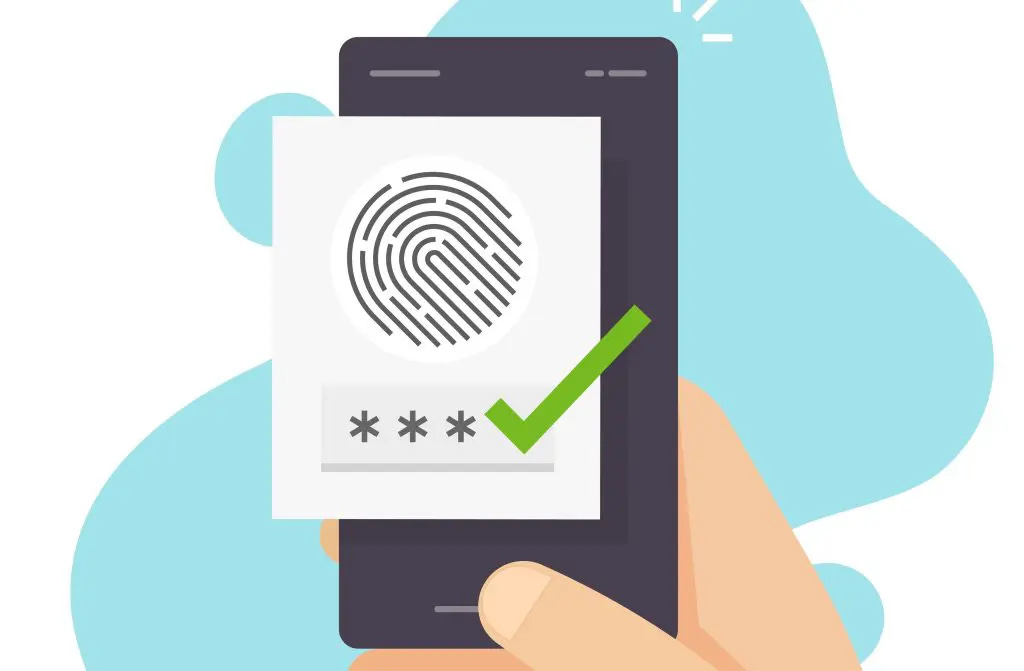
National digital IDs are the real game-changer. Denmark’s MitID app? It’s basically compulsory for taxes or banking, with 90% adoption. Estonia’s e-ID powers 99% of public services, a digital utopia born from Soviet-era scars. The EU’s EUDI Wallet, set for full rollout by December 2026, lets you store credentials in your phone—driver’s licenses, diplomas, even vaccine proofs—for cross-border zaps. Private sectors like banks must accept it by 2027, but here’s the opt-out illusion: Traditional methods (passports, in-person checks) remain valid. Just slower. More hassle. And in an always-on economy, who has time for that?
The UK’s BritCard amps the pressure. Mandatory for employment verifications by 2029, it’s sold as a fraud-buster against “small boat” migrants and fake docs. Labour’s pitch: A “state that works,” cutting bureaucracy for jobs and benefits. Noble on paper, but critics like Big Brother Watch scream surveillance state. Once it’s in your phone for work, why not healthcare? Voting? Suddenly, “voluntary” feels like a trapdoor.
Why the rush? Governments tout three pillars: convenience (one app for all), security (biometrics beat forged papers), and economics (fewer manual checks save billions). Post-COVID remote services accelerated this; the EU sees it as a “human right” for digital nomads. Fair enough—but it’s top-down. No vote on whether your faceprint ends up in a national vault, GDPR be damned. And for the unbanked or tech-averse? Digital exclusion looms, widening divides.
My beef? Choice. If I want to flash a passport at the bank—scanned manually, no app required—let me. The “traditional way” might drag (1-3 extra days for verification), but it’s my drag. Force the digital path, and you’re not streamlining society; you’re scripting it.
What if identity wasn’t a government gift, but a personal fortress? Enter self-sovereign identity (SSI), where you control the keys. No more begging states for access; prove what you need, when you need it, via cryptography. And the killer app? Anchoring it to Bitcoin’s Layer 1 (L1) network—the most battle-tested, decentralized ledger on Earth.
Picture this: Your DID is a cryptographic keypair, like a Bitcoin address but for you. Public key for sharing proofs; private key in your hardware wallet. No central server means no hacks, no revocations. Reveal “I’m over 18” with a zero-knowledge proof (ZKP)—math magic that verifies without spilling your birthdate. Revoke access? Your call. It’s the antithesis of EUDI’s federated trust.
Bitcoin’s L1 provides the anchor: Immutable, censorship-resistant. Hash your credentials and etch them via OP_RETURN (tiny data embeds in transactions)—tamper-evident forever. For scalability, Layer 2s (L2s) turbocharge it:
Stacks: Bitcoin’s smart-contract L2, with the Bitcoin Name System (BNS) for human-readable DIDs like “yourname.btc.” Multi-sig recoveries if you lose keys; attestations for qualifications.
Rootstock or Merlin Chain: Scalable verifications settling to L1, ideal for high-volume proofs like job apps.
Liquid Federation: Blockstream’s sidechain hybrid, pegging L-BTC for 1-minute confirms and confidential transactions. Issue credentials as privacy-wrapped assets via Simplicity (its new smart-contract lang, live since July 2025). Semi-trusted (15 federators like exchanges), but multisig-secured—perfect for banks wanting speed without full decentralization. Zap a Lightning payment as “proof of funds,” all Bitcoin-native.
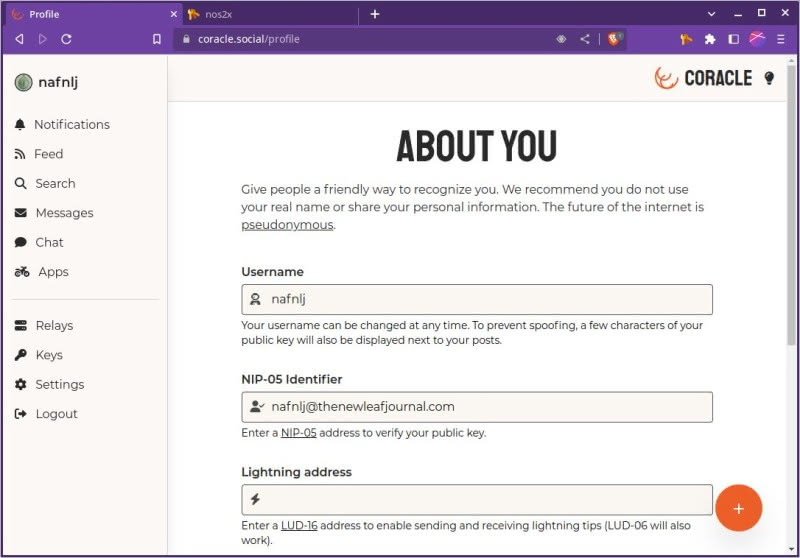
Nostr ties it together. This relay-based protocol (think decentralized Twitter) uses NIP-01 for key-based identities: Your “npub” handle is your DID. Store verifiable credentials (VCs) off-chain, share via ZKPs. It’s exploding—10x user growth in 2025—because it’s resilient: Relays dodge bans, Lightning zaps add economics (tip for verified chats?).
In action: Opening that bank account? App-scan your Nostr DID, ZKP your age/address, verify against Bitcoin’s ledger. Instant. Private. Yours. No state middleman. Projects like ION (Bitcoin-anchored DIDs) and @billions_ntwk are piloting this, with SSI market share eyeing 50% by 2030.
Of course, hurdles exist. Key loss? Catastrophic without backups (social recovery helps). Usability? Crypto’s UX is clunky—only 1-2% of Westerners wallet-up. Regs? EU’s eIDAS 2.0 favors centralized proofs; UK’s BritCard might snub “unverified” DIDs for jobs. But hybrids bridge: Accept Bitcoin proofs alongside passports, easing the shift.
We’re at a pivot. Centralized IDs promise a frictionless world but risk a surveilled one—your data, their rules. Decentralized? Messier, but yours. Bitcoin doesn’t just store value; it stores trustlessness. As one dev quipped on Nostr: “Dispense with ownership? Nah, —eschew centralization.”
If this resonates, start small: Grab a Trezor wallet, mint a Nostr key, experiment with Stacks names. Push your reps—demand opt-in laws, passport parity.
The future of identity isn’t a handout from Brussels or Westminster. It’s a key in your pocket, forged in code. Will you claim it?
No posts
Comments
Nothing yet. Say the first thing.
Sign in to join the conversation.