
In the last edition, I presented the thesis behind the memory shortage, which has delivered a return of more than 829% for one of the portfolios we published on Altis.finance.
In fact, it is currently the best-performing portfolio among the more than 100 portfolios published on the platform.
On August 18, I published a full edition presenting both the thesis and the portfolio. If you haven’t read it yet, I recommend starting there before coming back to today’s edition:
Today, we are going to look at another subject connected to that thesis, but one that is much less obvious.
The memory thesis has already been largely validated. It follows a pattern that has become familiar: an explosion in demand driven by the construction of AI infrastructure.
On one side, hyperscalers are spending massive amounts of money to remain in the race because AI is changing the economics of the technology industry. On the other side are the companies supplying everything required to build AI data centers: cooling systems, memory, copper, fiber optics and many other critical components.
And it is no longer only hyperscalers competing for this infrastructure. Governments have now entered the race as well.
We recently published a Macro Notes edition dedicated to this development and the emerging sovereign AI infrastructure market:
Today, however, we are going to focus on a less obvious consequence of increasingly scarce and expensive memory.
The most visible consequence of the memory shortage has been the increase in the price of one of the most important components of AI infrastructure. In our previous edition, we examined this increase, the evolution of supply contracts and how competition for memory capacity has created a structural change in the market.
But when the price and value of a component increase, something else also becomes more expensive: making a mistake.
When several rare and expensive HBM stacks are assembled around an AI accelerator, every defect discovered too late becomes much more costly.
A single failure can compromise an entire advanced package containing some of the most valuable and difficult-to-source components in the AI supply chain.
In other words, the more valuable AI chips become, the more expensive it becomes not to know whether they work.
This is what we are going to discuss today.
We created a portfolio on Altis.finance around the companies supplying the equipment and services required to test these increasingly complex systems. That portfolio has returned 127% since October 29, 2025.
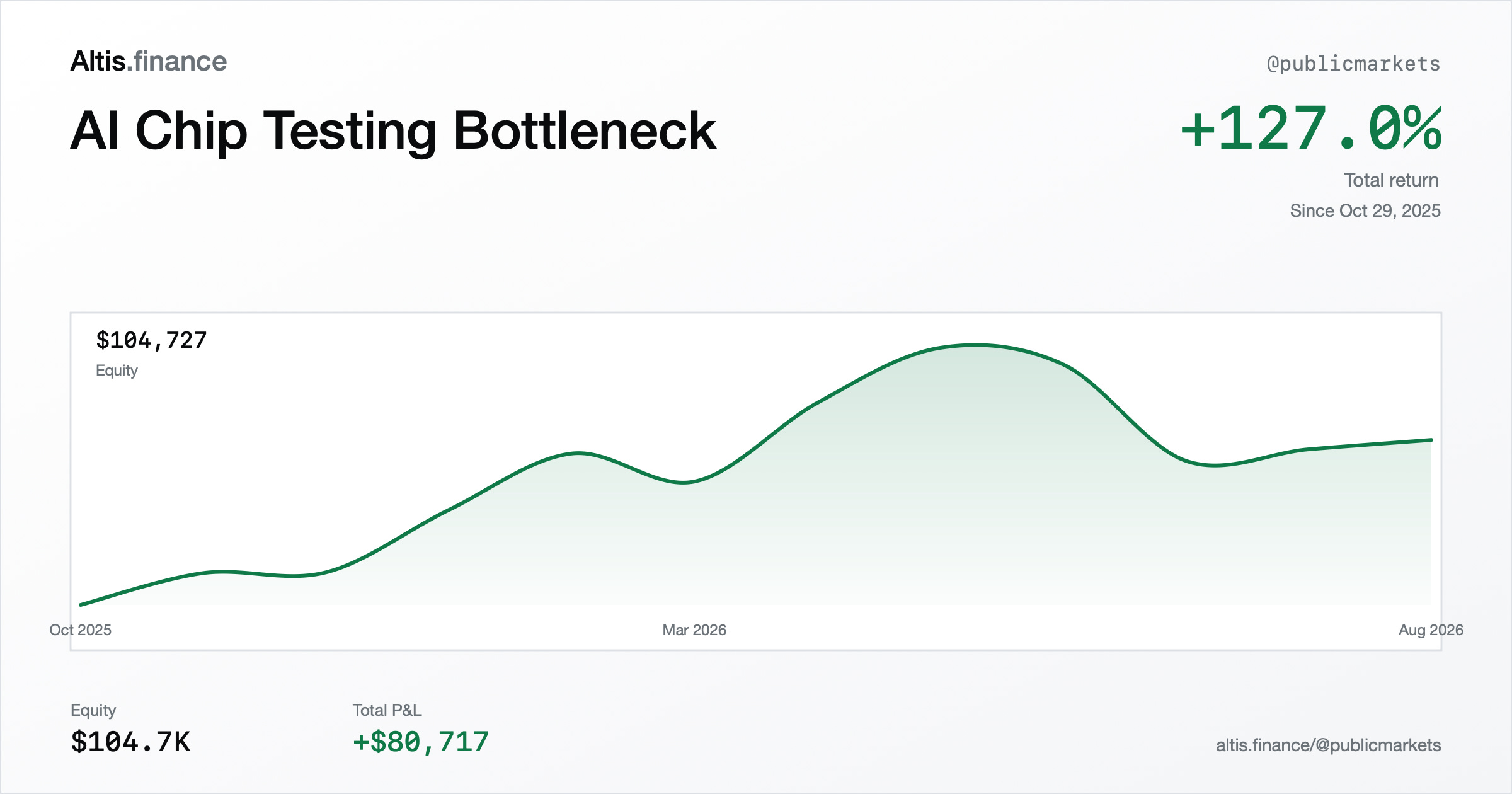
That return is less spectacular than the performance of our Memory and Storage Shortage Portfolio, but the timing and the investment setup are also different.
In memory, the valuations of many suppliers have already increased dramatically. The thesis may remain valid, but the entry price inevitably changes the investment strategy. A valid thesis does not automatically make every valuation attractive.
This testing thesis is interesting for a different reason.
Every new generation of AI chips promises higher performance. But that performance comes with a cost that is rarely visible in presentations about the AI industry.
More transistors, more chiplets, more layers of HBM and more interconnections also mean more potential points of failure. Every architectural improvement therefore increases the number, duration and difficulty of the tests required before a chip can be sold.
Testing is, in a sense, the industrial tax imposed by complexity.
Testing is the tax that complexity imposes on every new generation of AI chips.
In the Premium section of today’s edition, we will examine:
Why AI accelerators, HBM and advanced packaging require more testing at every stage of production
Every position currently included in the portfolio and the role each company plays in the semiconductor testing ecosystem
The equipment suppliers exposed to wafer-level testing, probe cards, handlers, thermal control and system-level testing
The complete trade history, including the positions on which we have already taken partial profits
Which companies have contributed the most to the portfolio’s 127% return
Whether earnings can continue to catch up with the rerating in these stocks
The valuations, catalysts and risks we are monitoring from here
What could invalidate the thesis or indicate that the testing bottleneck is beginning to normalize
To access the AI Chip Testing Bottleneck Portfolio and follow its future trades and updates, you must be a Public Markets Premium subscriber.
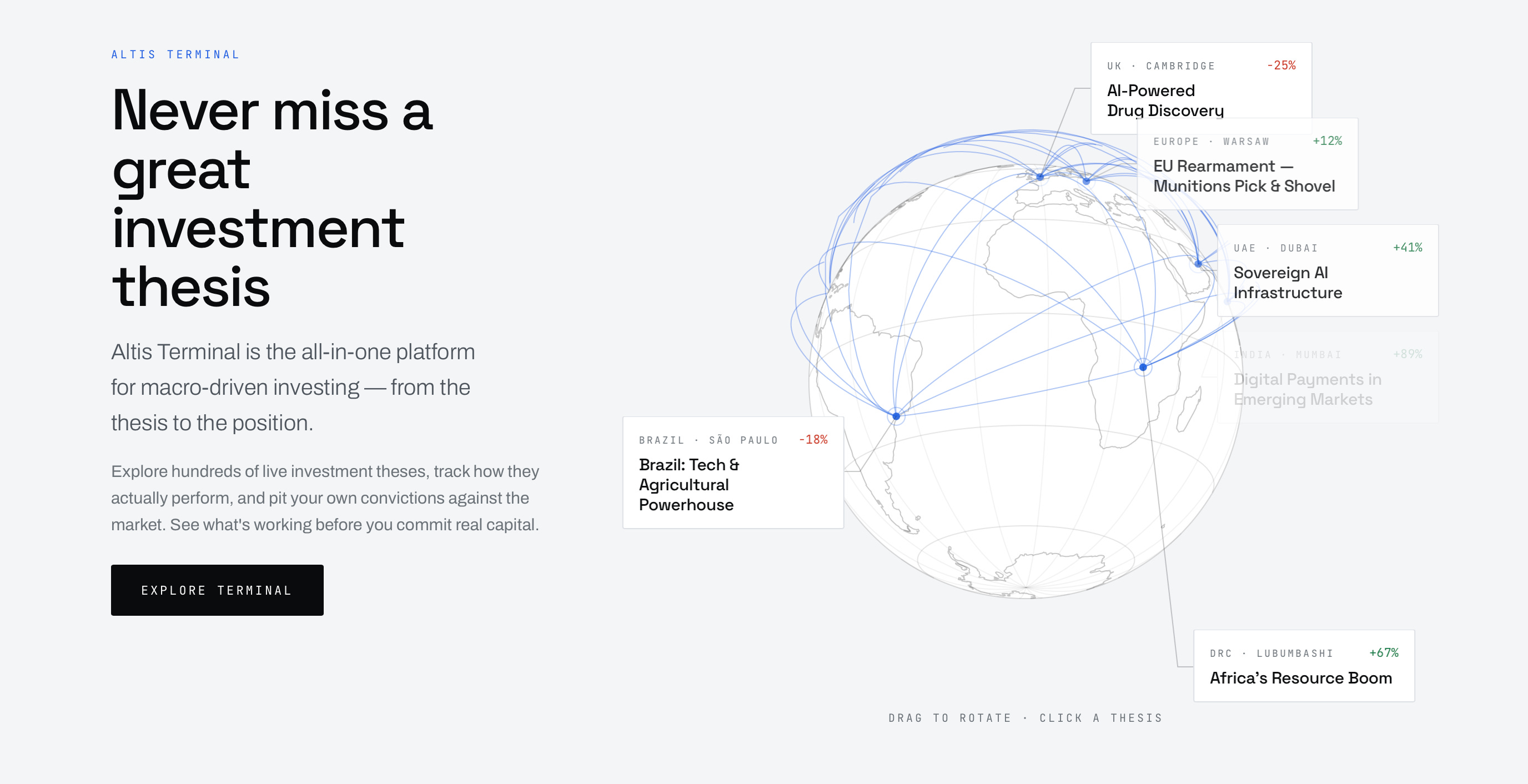
But Altis Terminal is not limited to this portfolio.
The platform already brings together more than 100 investment portfolios published by Public Markets, Macro Notes and more than ten independent contributors. Each portfolio is built around a specific investment thesis that you can discover, understand and follow as it evolves.
On Altis Terminal, you can:
Discover new investment theses across AI, semiconductors, energy, commodities, healthcare and other markets
See the positions used to express each thesis
Review complete trade histories and the reasoning behind individual decisions
Track performance from the original entry date
Follow new trades and important portfolio updates
Receive email alerts when a trade is recorded or a major update is published
Explore portfolios from Public Markets, Macro Notes and a growing network of external contributors
Altis Terminal normally costs $499 per year as a standalone subscription.
However, full Terminal access is included with Public Markets Premium for $300 per year, at no additional cost. Your subscription also unlocks today’s complete analysis, our previous Premium research and all future Public Markets editions.
Subscribe to Public Markets Premium today to unlock the full edition and start exploring Altis Terminal.
Comments
Nothing yet. Say the first thing.
Sign in to join the conversation.