
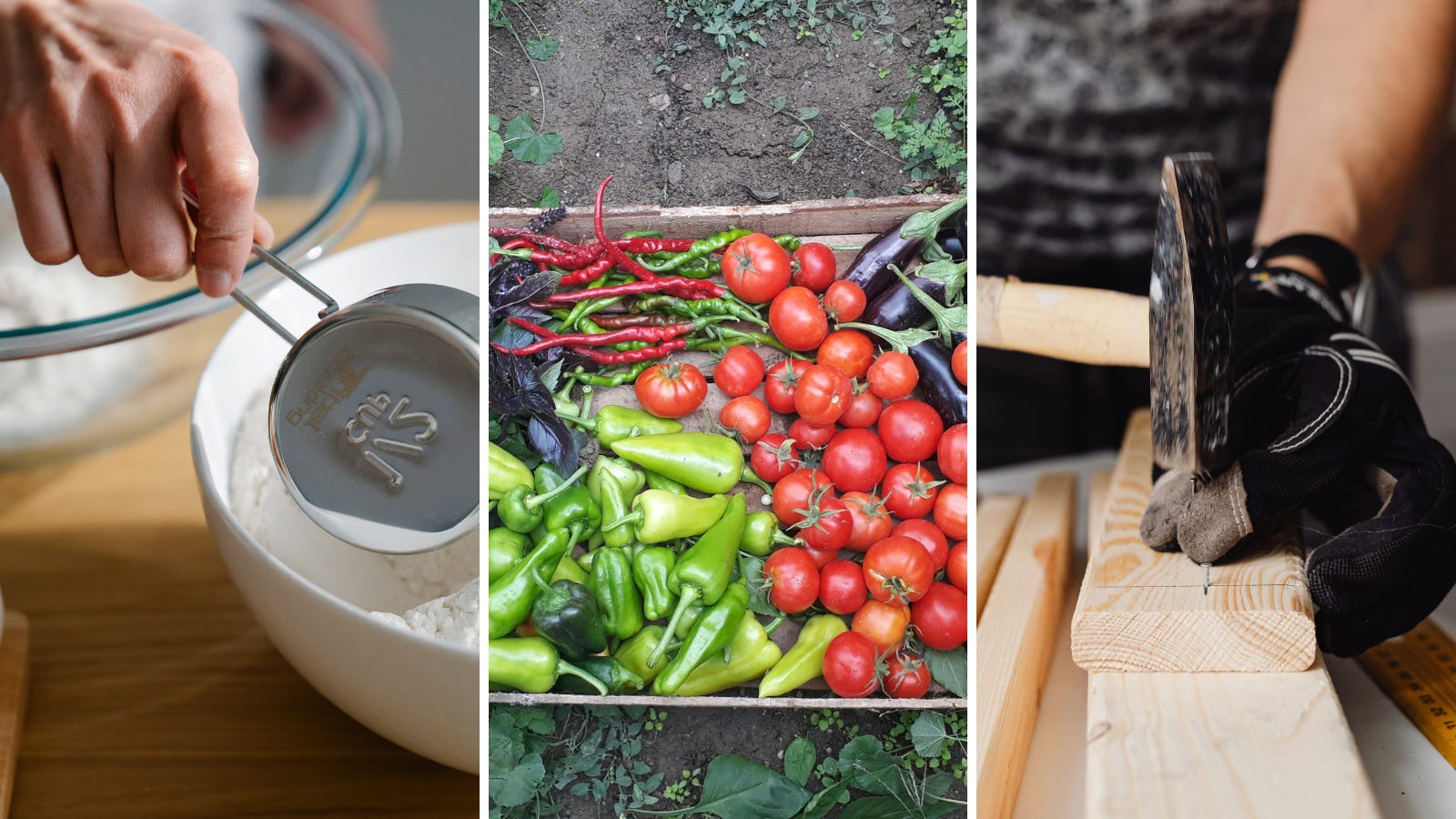
Life is different when you know how to handle things yourself, like when the power goes out but you can still cook dinner., when money gets tight but you can turn ingredients into meals, when something rips, breaks, leaks, stains, wilts, or wears down and your first thought is, “I can fix that,” instead of “Let’s go shopping.”
So many people today were never taught basic life skills. Convenience replaced knowledge. Whole generations were raised to depend on stores, subscriptions, delivery services, disposable products, and professionals for things past generations handled on their own in their kitchens, gardens, workshops, and laundry rooms.
There’s nothing wrong with modern convenience. I love a good shortcut as much as anyone but dependence is dangerous when you no longer know how to function without the system constantly holding your hand.
Basic know-how matters because every small thing you learn gives you another layer of freedom, resilience, and peace. Independence is built one skill at a time.
So today, I want to talk about the practical, everyday things I believe every person should know. These are the kinds of things that save money, reduce stress, make life easier, and reconnect us to a slower, more capable way of living. You do not need to master all of them immediately. You just need to start.
This one comes first because it affects your health, finances, and independence all at once. If you can cook basic meals from scratch, you already have a massive advantage in life.
I’m not talking about becoming a gourmet chef. I mean knowing how to make simple nourishing meals without relying on boxed mixes, frozen dinners, or takeout every night.
Can you:
Roast a chicken?
Make soup?
Cook rice without instructions?
Bake potatoes?
Make bread?
Use leftovers creatively?
Cook with basic pantry staples?
Stretch ingredients into multiple meals?
People spend unbelievable amounts of money because they never learned to cook beyond convenience food. Aside from saving money, when you cook meals yourself, it slows you down, connects you to your home, and teaches resourcefulness.
Cooking also teaches adaptability. Once you understand the basics, you stop panicking when you’re missing ingredients. You learn substitutions and ratios. You learn how to “make do,” which is one of the most important life skills anyone can develop.
Some of the best cooks I know barely use recipes. They know how food works. And that knowledge creates freedom.
So many people buy food without knowing how to store it properly. Learning how to preserve food and reduce waste is one of the easiest ways to save money.
Basic food storage skills include:
Knowing how to freeze leftovers correctly
Understanding pantry organization
Rotating older food first
Learning refrigerator zones
Storing produce properly
Keeping dry goods pest-free
Reading expiration dates realistically
Preserving seasonal foods
You don’t have to jump straight into pressure canning if that feels overwhelming. Start small. Learn how to keep herbs fresh longer, how to freeze vegetables, how to make broth from scraps. Learn how to dehydrate fruit slices in your oven. Learn how to store onions separately from potatoes.
These little things add up. Our grandparents wasted very little because they understood the value of food. Today, many homes throw away hundreds or even thousands of dollars in spoiled groceries every year. Food independence begins with stewarding what you already have.
Even if you only have an apartment balcony, learning to grow something is beneficial. It teaches patience, responsibility, observation, and gratitude.
When you grow food yourself, you stop seeing tomatoes as cheap objects sitting in a grocery store. You understand the work behind them, the weather, the timing, the care. You also gain a small but meaningful level of independence. You do not need acres of land to begin gardening.
Start with:
Herbs in a window
Lettuce in containers
Green onions in water
Cherry tomatoes in pots
A single raised bed
Learn the basics first:
Soil quality
Sunlight needs
Watering correctly
Mulching
Composting
Seed starting
Pest management
The goal is not perfection. Every gardener kills plants at some point. Every single one. I’ve been doing this for many years and I can’t begin to tell you how many I’ve killed.
Gardening teaches resilience because nature rarely goes according to plan. But over time, you develop instincts you cannot learn from reading alone.
And there is nothing like feeding yourself food you grew with your own hands.
We’ve become so used to replacing things that many people no longer realize how fixable most items actually are. A missing button used to be a five-minute repair. Now people throw away entire shirts. Basic sewing skills are incredibly underrated.
You should know how to:
Sew on a button
Fix a hem
Repair small tears
Patch jeans
Hand stitch seams
Thread a needle
Use basic sewing supplies
You don’t need a fancy sewing machine to start. A small repair kit alone can save you hundreds of dollars over time. It teaches care instead of disposal and stewardship instead of waste. Fixing what you already own usually makes more sense than throwing it away. It also reconnects us to an older way of homemaking that valued durability and maintenance instead of endless consumption.
Every adult should know how to handle simple household problems without immediately calling someone else. Again, this doesn’t mean you need to become a contractor. But basic competence matters.
You should know how to:
Shut off your water
Reset a breaker
Unclog a drain
Change air filters
Use basic tools
Patch tiny wall holes
Hang shelves correctly
Find wall studs
Stop a running toilet
Check smoke detector batteries
These things sound small until something goes wrong. And when something does go wrong, panic decreases when you know the basics. One of the biggest confidence builders in life is realizing you are more capable than you thought. A simple toolkit and a willingness to learn go a long way.
YouTube tutorials have made this easier than ever. Our grandparents learned from family members and experience. We have entire libraries of free information available instantly. Use them.
A large number of adults were never taught practical money management.
You should know how to:
Create a simple budget
Track spending
Avoid unnecessary debt
Build an emergency fund
Compare prices
Meal plan to save money
Understand interest
Read bills carefully
Spot subscription creep
Differentiate wants from needs
Financial independence has less to do with income and more to do with habits. I know people who make good money but live in constant stress because they spend automatically without awareness. And I know families with modest incomes who live peacefully because they’ve learned contentment, planning, and discipline.
One of the most freeing things you can do is reduce your dependence on constant consumption because you don’t need to buy things all the time to feel fulfilled.
Every home should have at least one person who knows how to handle simple medical situations calmly. You do not need advanced medical training to learn useful first aid skills.
You should know how to:
Clean and bandage wounds
Recognize dehydration
Treat minor burns
Handle fevers safely
Use a thermometer correctly
Build a first aid kit
Identify emergency warning signs
Perform CPR basics
Respond to allergic reactions
Care for common illnesses
Preparedness reduces fear. And, knowing basic care skills makes you feel less helpless in emergencies.
This is especially important for parents, caregivers, and anyone living in rural areas where immediate medical help may not always be close. You don’t realize how valuable calm competence is until you’re the person everyone turns toward in a stressful moment.
One skill that has become increasingly important today is learning how to actually read what you’re buying. Most people never look past marketing.
“Natural.”
“Healthy.”
“Low fat.”
“Organic.”
Labels can be very misleading. Learning to read ingredient lists and nutrition information helps you make informed decisions.
Start paying attention to:
Ingredient order
Added sugars
Artificial dyes
Preservatives
Seed oils
Serving sizes
Hidden additives
This doesn’t mean you need to become obsessive. It just means being aware. Awareness is a form of independence. The more informed you are, the less easily manipulated you become by advertising.
This is one of the most important skills on this list. Life is a lot harder when people cannot communicate clearly.
You should know how to:
Speak respectfully during conflict
Ask questions
Admit mistakes
Set boundaries
Listen well
Explain yourself calmly
Handle disagreements maturely
Say no without guilt
These skills affect marriages, friendships, parenting, work, and community life. Strong communication creates stability.
A clean home is not about perfection. It’s about stewardship. You don’t need expensive products or complicated routines. Some of the best homemakers I know clean very simply and consistently.
Basic cleaning skills include:
Laundry care
Removing stains
Cleaning efficiently
Preventing mold
Maintaining appliances
Organizing spaces
Deep cleaning seasonally
Caring for different surfaces properly
One thing I’ve learned over the years is that maintenance is easier than repair. Tiny daily habits prevent massive messes later. And there’s peace in knowing how to care for your environment well. Your home affects your nervous system more than you realize. A reasonably cared-for space creates calm.
This might be the single most important skill in the entire article. Resourcefulness. Because resourceful people can figure things out. They adapt, improvise, and solve problems instead of immediately giving up.
Resourcefulness looks like:
Repairing instead of replacing
Using what you already have
Learning new skills willingly
Thinking creatively
Staying calm under pressure
Finding solutions instead of excuses
This mindset used to be normal. Previous generations had to make things work because they didn’t have endless conveniences available. Today, many people have lost confidence in their own ability to solve problems. But confidence returns through practice. Every time you figure something out yourself, even something tiny, your capability grows.
Now before anyone twists this section into something extreme, let me be clear: modern medicine absolutely has its place. But I also believe people benefit tremendously from understanding simple traditional remedies and natural wellness basics.
Things like:
Herbal teas for common discomforts
Steam for congestion
Honey for sore throats
Salves for dry skin
Epsom salt baths
Rest and hydration
Simple immune-supporting foods
For generations, families cared for many everyday issues at home before running to the drug store for every small thing. There’s wisdom in learning both approaches.
Herbal knowledge reconnects people to plants, seasons, and slower rhythms of care that many modern lifestyles have lost. You do not need to become an herbalist overnight. Just start learning one plant at a time.
This one may sound strange beside gardening and sewing, but hear me out. Many people today do not know how to be still. Constant stimulation has become normal.
Phones.
Notifications.
Streaming.
Noise.
Scrolling.
Endless consumption.
One of the most valuable skills you can develop is learning how to create peace inside your own home and mind.
That may look like:
Cooking slowly
Reading books
Spending time outside
Gardening
Praying
Journaling
Making things by hand
Sitting quietly without needing entertainment
Independence is not only physical. It’s mental and emotional too. If your peace depends entirely on distraction, consumption, or constant validation, life becomes exhausting very quickly.
The world has changed dramatically in the last hundred years. Even in the last two years. Most people used to know how to cook, mend, grow food, preserve harvests, repair things, and manage homes because they had to.
Now many of those skills are treated like hobbies instead of essentials. But modern systems are convenient until they fail. And even when they don’t fail, dependence is expensive. The more helpless people become, the more vulnerable they are financially and emotionally.
Every skill you learn reduces that vulnerability a little more. You become less intimidated by problems, less dependent on outside systems, and less panicked when things go wrong. Most importantly, you begin rebuilding trust in yourself.
Somehow people started believing ordinary life skills were too hard for them. They aren’t. You are capable of far more than you think.
If reading this list feels overwhelming, please don’t turn it into pressure. You do not need to transform your entire life this month. Choose one thing. Just one.
Learn how to bake bread.
Grow herbs.
Sew a button.
Make soup from scratch.
Start a budget binder.
Learn basic first aid.
Build a pantry slowly.
A year from now, you could know a lot more than you do today just by staying curious and consistent. There’s peace in knowing you can handle more than you thought. That kind of peace can’t be purchased. Maybe what people are wanting right now is a life where their hands and minds know how to do things again.
Self-sufficiency is not about doing everything perfectly or becoming completely independent overnight. It is built through small skills practiced consistently. Every loaf of bread you bake, jar of food you preserve, seed you plant, and household system you create adds another layer of confidence and capability.
If you want to continue building practical skills for a more prepared and intentional home, these resources will help you keep learning:
→ How to Start a Garden Even If You’re Broke and Unprepared
→ How to Stock a Simple Pantry on a Budget
→ Homemade Solid Dish Soap Recipe: How to Make Plastic-Free Dish Soap From Scratch
Ready to keep building your skills?
Inside the Members Library, I share printable planners, seasonal guides, skill-building workbooks, and practical resources designed to help you create a more organized, prepared, and self-sufficient home.
Learn the foundations of growing your own food, from planning your garden space to choosing crops that work for your home.
Until next time,
Melissa
Comments
Nothing yet. Say the first thing.
Sign in to join the conversation.