
Last week, I flew to New York to see John Proctor is the Villain. This Broadway show has been all over my algorithm ever since it opened, and anyone that I knew who had seen it said it’s the best play they’ve ever seen.

Now that I’ve seen it, I can confidently say it’s the best play I’ve ever seen.
The play, written by Kimberly Bellflower, takes place in one setting: an Honors English classroom in a tiny one-stoplight town in rural Georgia in 2018. The teacher, Mr. Smith, leads students through a unit on The Crucible, Arthur Miller’s 1953 play about the Salem Witch Trials. Amid an ever-growing "Me Too” dialogue, the female students start to realize that John Proctor, so-called protagonist of The Crucible, is not really the hero they have been told he is. Both hijinks and catharsis ensue.
It’s the kind of play that leaves you breathless, as you move from laughing to gasping in shock constantly throughout the 1 hour 45 minute run time (no intermission). I cried hard during the final scene, and by the time the cast took their bows, I leaned over to my friend and said, “Again!”
My time as an Honors English student was back in 2006, not 2018, but everything felt so similar: the closeness you have with your classmates, the feverish worry about college applications, the interpersonal drama that inevitably bleeds into everything, and feelings so big and so potent you’re afraid of your own power. I’ve never seen the raw emotion of teenagedom portrayed so accurately before.
I still think about the conversations I had in my Honors and AP classrooms about various works, like The Scarlet Letter, Great Expectations, and The Taming of the Shrew. I can still quote most of Emily Dickinson’s poem “Because I could not stop for Death” by memory. My vocabulary expanded to include words like '“progeny,” “magnanimous,” “epithet,” and “verdant.” Those classes remain the most important ones I ever took in high school.
There’s another person who has recently been credited with expanding people’s vocabulary: Taylor Swift. When her eleventh studio album, The Tortured Poets Department was released in April 2024, memes sprung up everywhere. One woman even posted a TikTok saying “I’m afraid I’m not smart enough for Taylor Swift’s new album.”
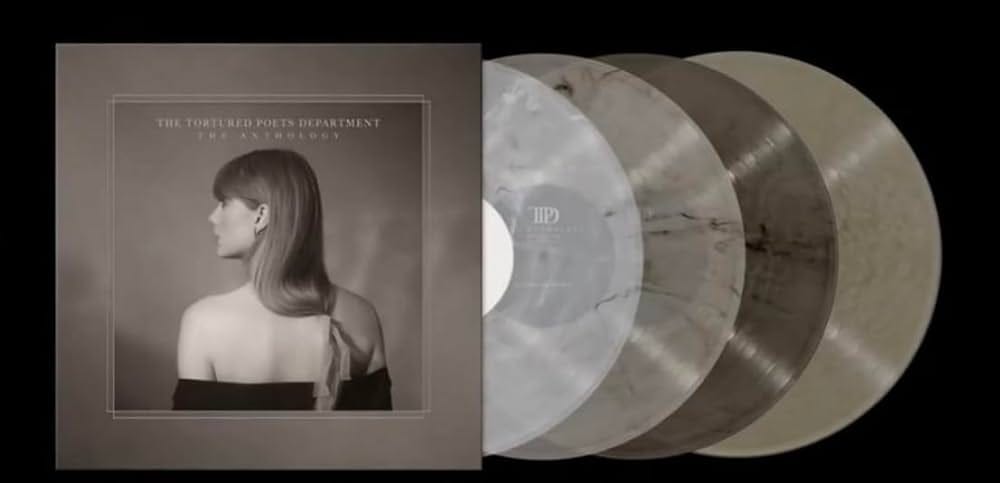
Multiple media outlets ran stories giving definitions for some of the words that listeners were hearing for the first time, like “fortnight,” “litany,” “petulance,” and “bereft.” When I saw all of these vocabulary articles and videos, it made me profoundly happy. I hadn’t seen a discussion like this since my Honors English days.
Taylor Swift’s lyrics have always been full of literary and poetry references. She can’t stop invoking The Great Gatsby, she loves referencing Romantic poets, and the song that turned her into a bonafide pop star is a retelling of Romeo and Juliet.
The truth is that Taylor Swift is bringing all the elements of AP Literature to her fans with every single album. She has fans reading the liner notes and the lyrics along to each song, looking up definitions to words they don’t know, and tattooing their favorite lyrics on their arms. And as with any great text, there are multiple interpretations.
I learned a lot of new words from reading Shakespeare and Austen, and now there are teens learning them from Taylor Swift. Some people might scoff at that, but I find it promising. “Media literacy is dead” is something that gets thrown around a lot, mostly to disparage the lack of funding for the humanities or the increased reliance on screens over page.
And while I agree that these are both problems, I also think that we are entering into a new era where there is less gatekeeping around what good media analysis looks like. Because lately, it’s been great to analyze the themes of a Taylor Swift album or take in a feminist critique of The Crucible via a Broadway play.
I went to a session at my library last month called “Taylor Swift's Literary Lyrics” where we spent an hour identifying all of the literary references in her work. Even as an accomplished AP Lit nerd, there were several references that I wasn’t familiar with. I left with a new list of reading material, and an even deeper appreciation of Swift’s songwriting acumen.
After that library session, I sat with my vinyl copy of The Tortured Poets Department and read along the lyrics while listening to the album. It’s the kind of exercise that I haven’t done since those Honors classes in high school. And witnessing John Proctor is the Villain brought all those feelings up for me again.
The life of an Honors kid is filled with tension, because you constantly feel like you’re at a tipping point. You’re precociously intelligent but are still looking to the adults in your life for reassurance, guidance, and answers. Finding your voice takes time.
I loved sitting and reading those lyrics and remembering a time when it was about finding patterns, not having answers. The nuance of discovery is the most satisfying part, and I had forgotten just how important that part was.
Now, a bit of housekeeping.
Since deciding to plunge in to freelancing full-time, I’ve had precious little energy to write for myself. Which is a bummer, to be sure! But I am grateful for all of you who subscribed to Princess Influencers and patiently await my handful of posts.
I’ve decided that I’ll keep to my current standard of writing whenever I see a big pattern emerge and I can’t stop thinking about it. I have hopes that they will be more frequent in the future, but that’s all I have for right now: hope.
In the meantime, please let me know if there is anything interesting you want me to cover! Any patterns you’re seeing with princesses, influencers, or other big cultural phenomenons? Let me know! <3
No posts
Comments
Nothing yet. Say the first thing.
Sign in to join the conversation.