
The Invite: Olivia Wilde’s Comeback?
Olivia Wilde’s third directorial effort landed last weekend and made a bigger splash – mostly thanks to excellent word of mouth – than most predicted. Nicolas James reviews The Invite and laments the coming of our AI overlords.
What We’re Watching
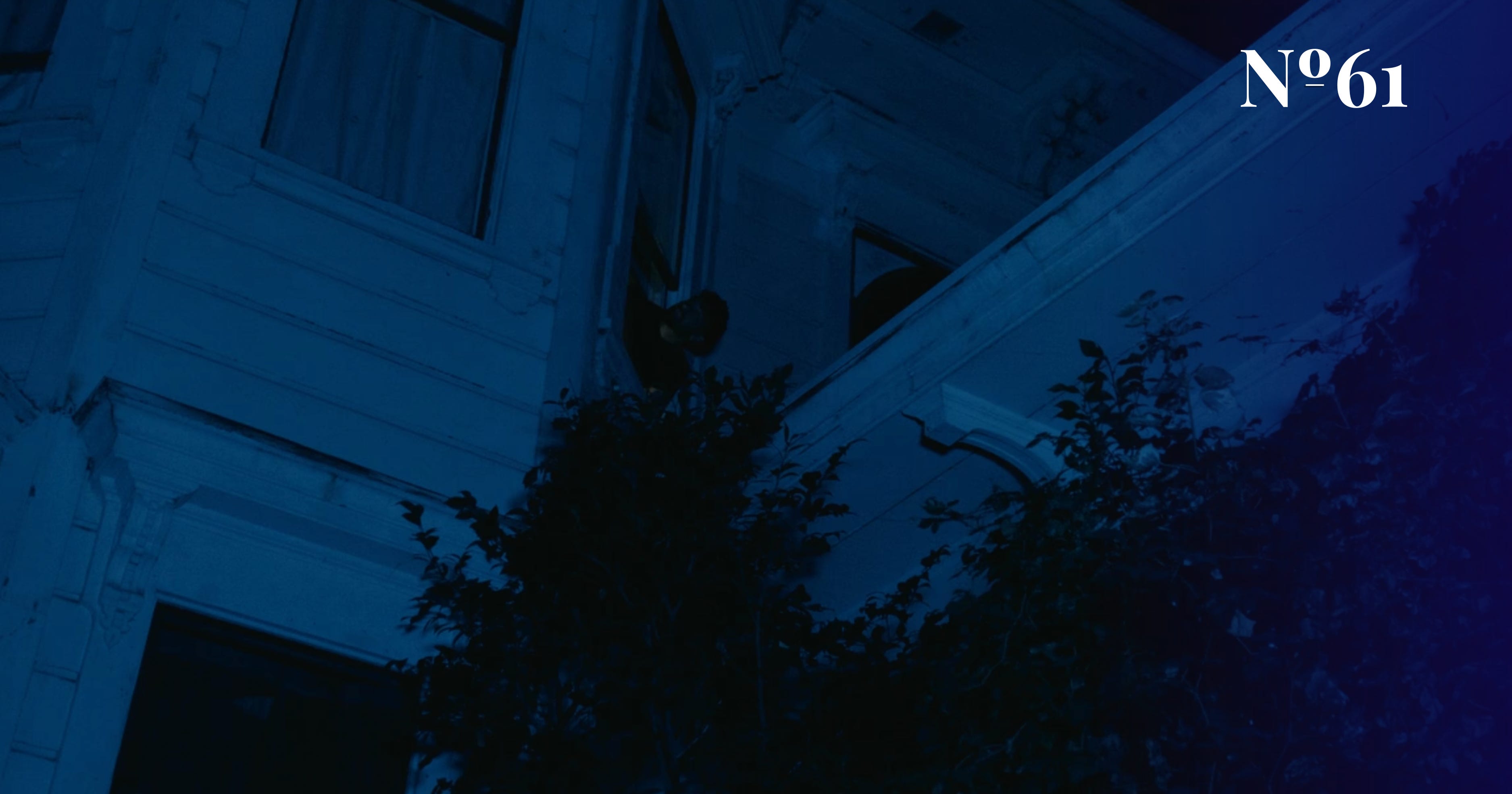
Sleep, directed by Logan Kishi, is an eight-minute film that keeps you guessing until the very end. We’re not even saying what genre it is. Read more about it below, then watch it on PREVO.
Read Receipts, Vol. 8
As you probably know, this weekend saw Christopher Nolan’s biggest box office opening since 2012’s The Dark Knight Rises. But how’s the rest of the box office faring? Find out below.
By Ryder McNeal
Chances are that, as this issue lands in your inbox, you’re doing one of two things: either watching The Odyssey, or watching the World Cup final. So we’re keeping this one punchier and more digestible than usual.
If you can spare a few minutes between the group chats and the extra time, here’s what’s waiting below. Nicolas James reviews The Invite, Olivia Wilde’s whip-smart new comedy – and uses the occasion to raise an eyebrow at A24’s new AI deal.
In What We’re Watching, we spotlight Sleep, an eight-minute PREVO premiere from Logan Kishi that could hold its own against Mike Flanagan’s best work. And Read Receipts breaks down a box office weekend that was decisively handed to Christopher Nolan, whose Odyssey just posted the biggest global opening of his career.
While the World Cup basks in the spotlight this weekend, we’re heading into our very own competition season. Voting in the Summer Showcase opens next week – with a fresh slate of PREVO premieres, an entirely redesigned voting experience, and more. Stay tuned over the next week as we finalize the slate.
That’s all for now.
What We’re Watching:
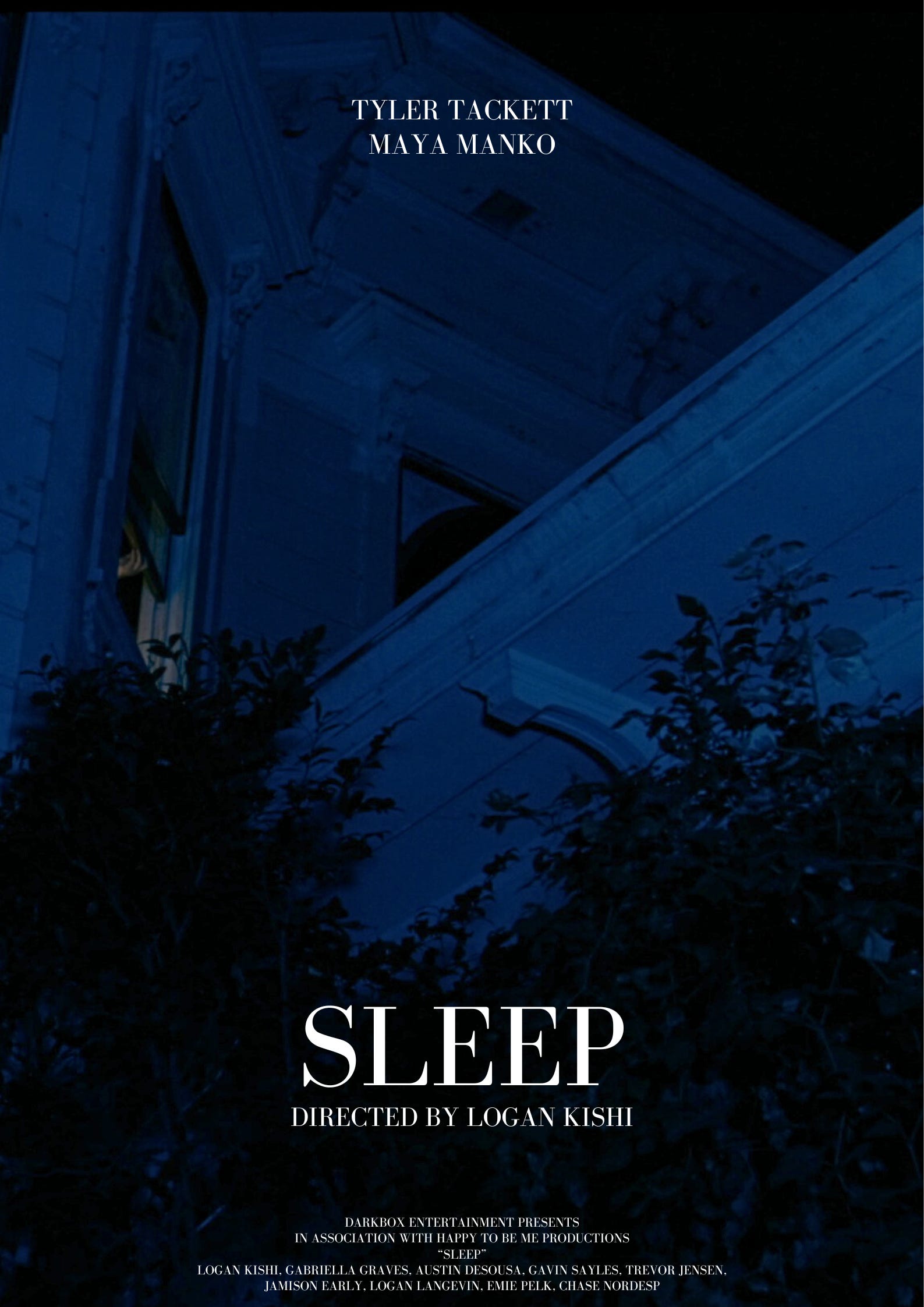
Sleep, directed by Logan Kishi
Have you missed your yearly fill of the mysterious, haunted, familial dramas that Mike Flanagan traffics in so successfully — think The Haunting of Hill House or The Fall of the House of Usher (both excellent)? If so, we have just the thing this week: director Logan Kishi’s Sleep, an eight-minute short and one of PREVO’s most recent premieres.
Set in an old, creaky home, the film looks like it might’ve borrowed its set from a Flanagan production — there’s even a shot or two of a grandfather clock. It tells a simple story: in the dead of night, a father attempts to console his young daughter, who believes her deceased mother is tapping at her window. What makes the film stand out, perhaps even more than its excellent performances and screenplay, is its technical craft — especially the cinematography and sound design. DP Austin DeSousa shoots the moonlit house beautifully, as if it were a character of its own, letting shots linger in empty rooms even after the characters have left.
Complementing this slower, methodical style is the sound design, which lends each scene an air of mystery and unease even in the film’s most tender moments.
But the film would be nothing without its two central performances, from Tyler Tackett and Maya Manko as father and daughter, who make the whole film land emotionally and play their roles with a terrific naturalness. As we’ve written over and over, films that rest entirely on a pair of performances place enormous trust in their actors — and here, at least, the trust is well-earned.
To avoid spoilers, we won’t even classify it as a horror, thriller, drama, or something else entirely. Sleep keeps its audience in the dark until the very last moments, demanding a rewatch and provoking a thousand more questions.
Go give it a watch. And best of all: Sleep and another of Kishi’s films, Candy Shop, will both be competing in our Summer Showcase. So when voting opens soon, remember to come back and cast your vote — we have a feeling Sleep may earn a Best Cinematography nomination at the very least.
By Nicolas James
Last weekend, A24 and director Olivia Wilde debuted their latest comedy-drama, The Invite. Not only has the film received rave reviews from critics and audiences, but the film has become a prime example of the potential of low-budget films, earning over $18 million in box office compared to its $12 million budget. Everything that makes The Invite fantastic is yet another example of why moviegoers love A24, so my question for the esteemed company is, why risk altering your beloved formula for AI?
Before I rant about A24’s future business formula, I wanted to commend everything I adored about The Invite. First and foremost, the acting was incredible. Edward Norton and Penélope Cruz deliver quirky, sexy supporting performances. Norton in particular delivers a standout monologue in the final act that is rich with awkward hilarity and a surprising amount of poignancy. Penélope Cruz subtly unfolds her character through the progression of the story, from a cultured seductress to an emotionally brilliant emergency couples counselor. Cruz and Norton are the perfect comedic foils to the other two main actors.
Seth Rogen is by far the funniest performance in this film. His character, Joe, serves as the tense, reluctant host to the wacky group of four. When faced with the unconventional, Joe retorts with either sharp sarcasm, loud protest, or physical anguish, all delivered with exquisite comedic timing. However, behind the comedy, Joe’s defensive, blunt attitude masks obvious self-pity and insecurity. Rogen’s performance has little subtlety, but his role serves as the lightning rod for all of the comedy, so subtlety is reserved for the other characters.
Without further ado, the greatest performance in the film is undoubtedly actress-director Olivia Wilde. Not only does she carry the film behind the camera, but her character, Angela, delivers strong and consistent social stress, an aggressive passion for homemaking, and a yearning for acceptance. Angela’s desire to host a pleasant evening with her neighbors drives the plot forward, while her insistence on burying unspoken tension within the group carries the hilarious conflict. Her awkward self-degradation starts off humorous, but gradually devolves into a key component of the major crisis within her and Joe’s marriage. Wilde’s multilayered performance enhances every great aspect of the film, from her symbiotic relationship with her home to her electric dynamic with the rest of the actors. Overall, this is Olivia Wilde’s movie.
Since the movie is based on a play, it’s only natural that the acting performances receive the most praise, and for good reason, but every other filmmaking aspect was unforgettable. The set design was intricate, the cinematography was clever, and the directing was particular and purposeful. However, if you know me personally, you know I believe that the writing makes or breaks a film. I’m pleased to say that this small-scale story was thoroughly thought-provoking. The brutally honest dissection of a romantic relationship’s longevity forces you to reevaluate the very idea of marriage, and whether or not Joe and Angela should stay together as a couple. The ambiguous ending is bittersweet, but the overall message is actually a positive one – it’s up to you alone to choose happiness over self-pity.
A film with this much relatable human emotion can only be made by humans, so why does it seem A24 thinks it’s a good idea to incorporate artificial intelligence? For those unfamiliar, Google has recently invested $75 million into A24 through its DeepMind division to use AI tools in the pre-production process, starting with an AI storyboard generator. It’s the first time Google has taken an equity stake in a movie studio, and A24 serving as Google’s beachhead into filmmaking is a baffling choice – one that’s already made a lot of the studio’s own fans uneasy.
The up-and-coming directors of 2026 like Curry Barker and Kane Parsons, ages 26 and 21 respectively, have been vocal about rejecting AI; Parsons, who directed A24’s own Backrooms, has said he’d erase generative AI “forever” if he could. In terms of filmmaking, I’d rather trust the new generation’s judgment than that of some older filmmakers (George Lucas, Scorsese) who have recently championed AI as a savior of filmmaking.
But for now, we can still enjoy the fact that The Invite is a movie about humans, made by humans, and for humans. Everything that makes this film great contradicts all of the false promises that AI companies are trying to sell us. Authentic filmmakers like Olivia Wilde and Kane Parsons are proving that AI is not invited.
Weekend of July 17-19th, 2026
#1: The Odyssey is the biggest global opening of Christopher Nolan’s career. Universal’s $250 million, R-rated, three-hour adaptation of Homer opened to an estimated $124.5 million domestic and $264 million worldwide – Nolan’s largest worldwide debut ever, past The Dark Knight Rises; his biggest domestic opening since that same film in 2012; and the year’s biggest live-action opening, behind only Toy Story 5 and The Super Mario Galaxy Movie overall. It earned an A CinemaScore and reviews that have it in the Best Picture conversation. 70mm showings had sold out in major cities a year in advance. Every other studio, sensibly, cleared the weekend.
#2: Moana is still taking on water. Disney’s live-action remake fell 56% in its second weekend to roughly $19 million, a ten-day total near $82 million against a $250 million budget. The hold isn’t catastrophic for a family title, but the numbers certainly are: two $250 million movies opened three weeks apart this month, and the one adapting a 2,800-year-old poem is outgrossing the one adapting a nine-year-old cartoon by a factor of six.
The holdovers held, barely: Toy Story 5 and Minions & Monsters effectively tied for third around $14.8 million each – Pixar’s sequel now past $420 million domestic, Illumination’s up to roughly $137 million. Evil Dead Burn slipped to fifth with about $5 million; the horror sequel Nicolas championed in last week’s issue never found the audience its reviews deserved.
The cautionary tale: Supergirl has fallen to ninth in its fourth weekend, scraping together $1.5 million for a domestic total of roughly $70 million. Against a $170 million budget, it’s now projected to lose north of $120 million – Warner Bros.’ second nine-figure superhero write-off of the year. The summer’s biggest flop has officially finished flopping.
The quiet one: A24’s The Invite added another $3.9 million on its widest footprint yet (2,110 screens) and has now grown to roughly $15 million on a $12 million budget. It won’t top a chart, but on a return-on-investment basis, it’s having a better summer than Moana.
No posts
Comments
Nothing yet. Say the first thing.
Sign in to join the conversation.