
Thanks for reading Present Forever. If you’d like to support this exploration of the offbeat and independent, consider subscribing or upgrading:
There are different kinds of opaqueness when it comes to menswear designers, even among those who are runway agnostic. Some indulge in self-mystification. Others rarely give interviews or prefer complete anonymity. The most mysterious category, however, is another one: designers whose presence in menswear feels permanent yet strangely peripheral at the same time. You know the name, but can’t remember when you first (or last) heard it. Perhaps you’ve never really looked into it. But you also know it’s stocked by the right stores and therefore likely worn by people who dress well — though you rarely, if ever, seem to encounter them yourself.
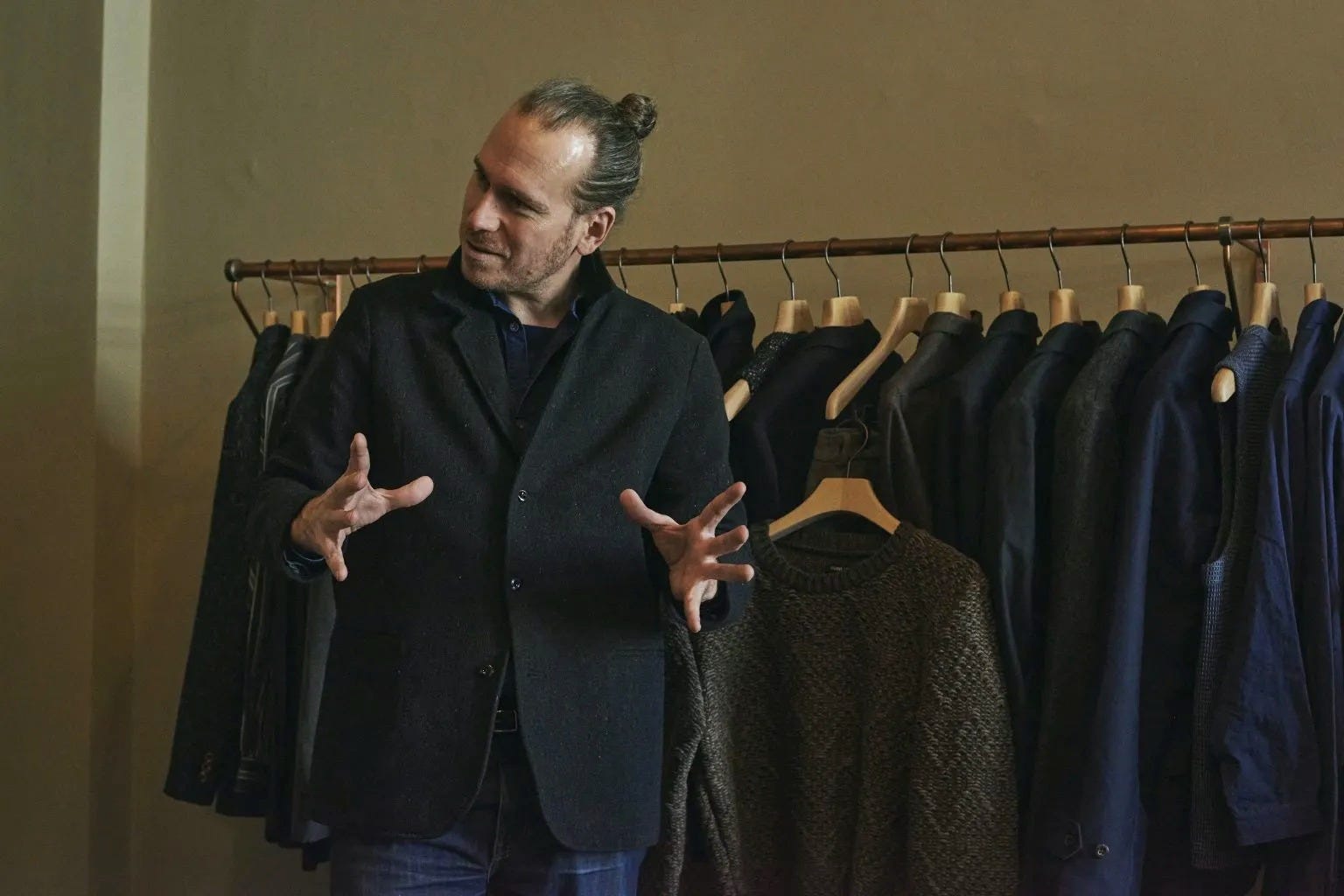
For me, Frank Leder belongs to this category. (Other names I can think of from the top of my head: Jan Machenhauer, Hannoh Wessel, Ludovica Diligu from Labo.Art, and Daniela Gregis, maybe.) A graduate of Central Saint Martins, London, Leder launched a womenswear line more than twenty-five years ago, around 2000. In fashion terms, that’s an eternity. Since he transitioned into his eponymous menswear label, he’s also remained extremely steadfast in his focus: slow fashion rooted in German history, folklore and traditional craftsmanship.
Leder, who’s in his early fifties now, was fabric-first before fabric became the defining language of contemporary menswear — artisanal before every self-respecting label began working with a Japanese mill, and process-oriented long before process became the word used for describing how good clothes get made. Leder even used the Fraktur typeface when the graphic designers who’ve made it cool again were barely in college.
The oddness of Frank Leder, as a label, can be seen in how disparate the stores are that carry it. It’s found at places like Neighbour and Nubes, as well as obscure Japanese boutiques specializing in conceptual avant-garde. The same is true of the pieces themselves. Some, especially the more relaxed ones — like this ‘Zip Washed Wool Jacket’ — sit comfortably among Comoli and Kinori. Others, often sleeker and more narrow-shouldered — like this ‘Wool Vest’ or this ‘Officer’s Coat’ — I’m unable to place.
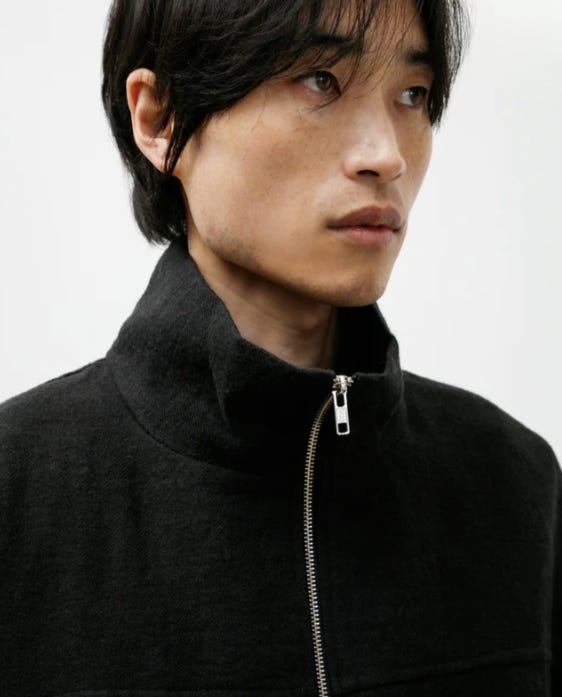
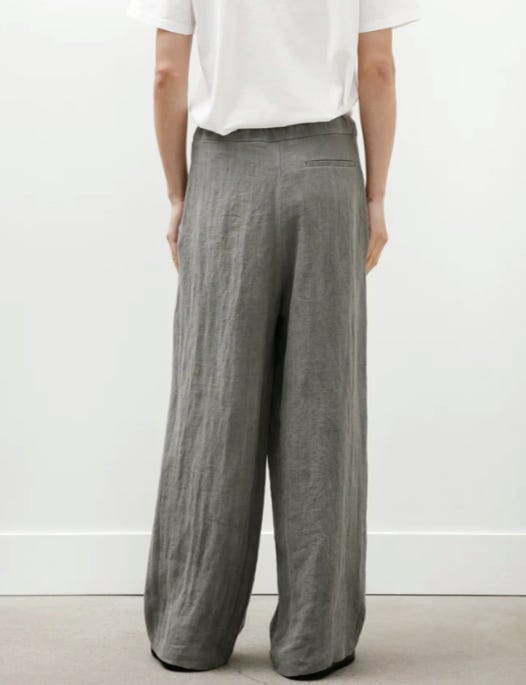
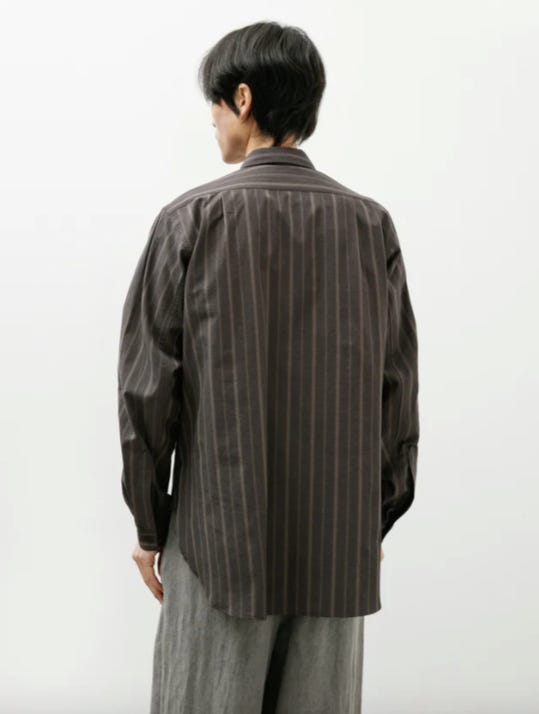
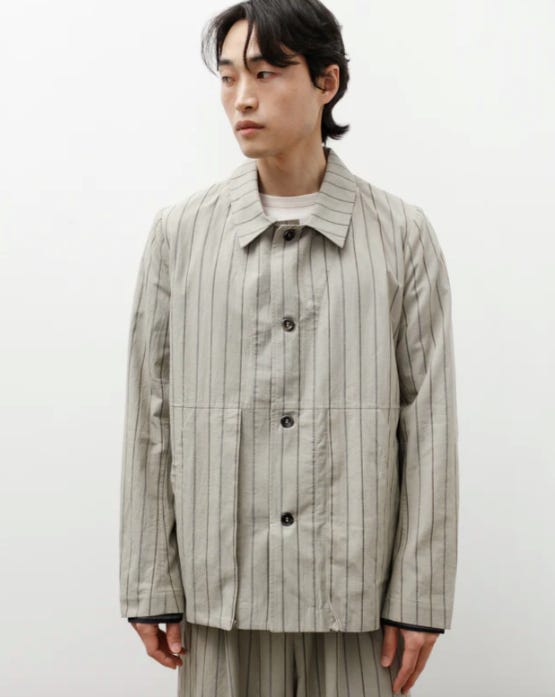
Likewise, there’s the campaign photography. Some of it captures a German-ness much in the way Conkers and John Alexander Skelton capture different kinds of English-nesses: slightly nostalgic, perhaps, but down to earth and pretty appealing. Other bits feel uncomfortably old-world, with models positioned in front of gothic manor houses or standing among displays of stuffed animals. It’s all as fascinating as it’s strangely unsettling.
Frank Leder’s longevity — and wide range, he does soap, wall paint and sculptural objects too — also means he has given dozens of interviews over the years, often touching on the origins, nature and evolution of his label. That’s why, when I contacted him a few weeks ago, I wrote that I didn’t want to do just another profile interview. Instead, I proposed to ask him a couple of questions about the here and now. It speaks to his character that he kindly accepted on the same day. What’s more, his responses weren’t the cut-and-dry kind you sometimes get. They felt considerate and honest, offering an unusually close look into his day-to-day practice in Berlin. He even took the time to take some shots in and around his studio, for you and me to get a sense of where that practice takes place.
The first questions I asked Leder were actually for a feature about Nubes, the store formerly based in Berlin and now settling in Ireland. (They’ve recently collaborated on a shirt made of deadstock German bedsheets.) From there, the conversation expanded naturally: sourcing vintage buttons in Bavaria, drawing inspiration from Alpine towns, the feeling of being in his Berlin studio in springtime, and his perspective on the explosion of good menswear over the past few years.
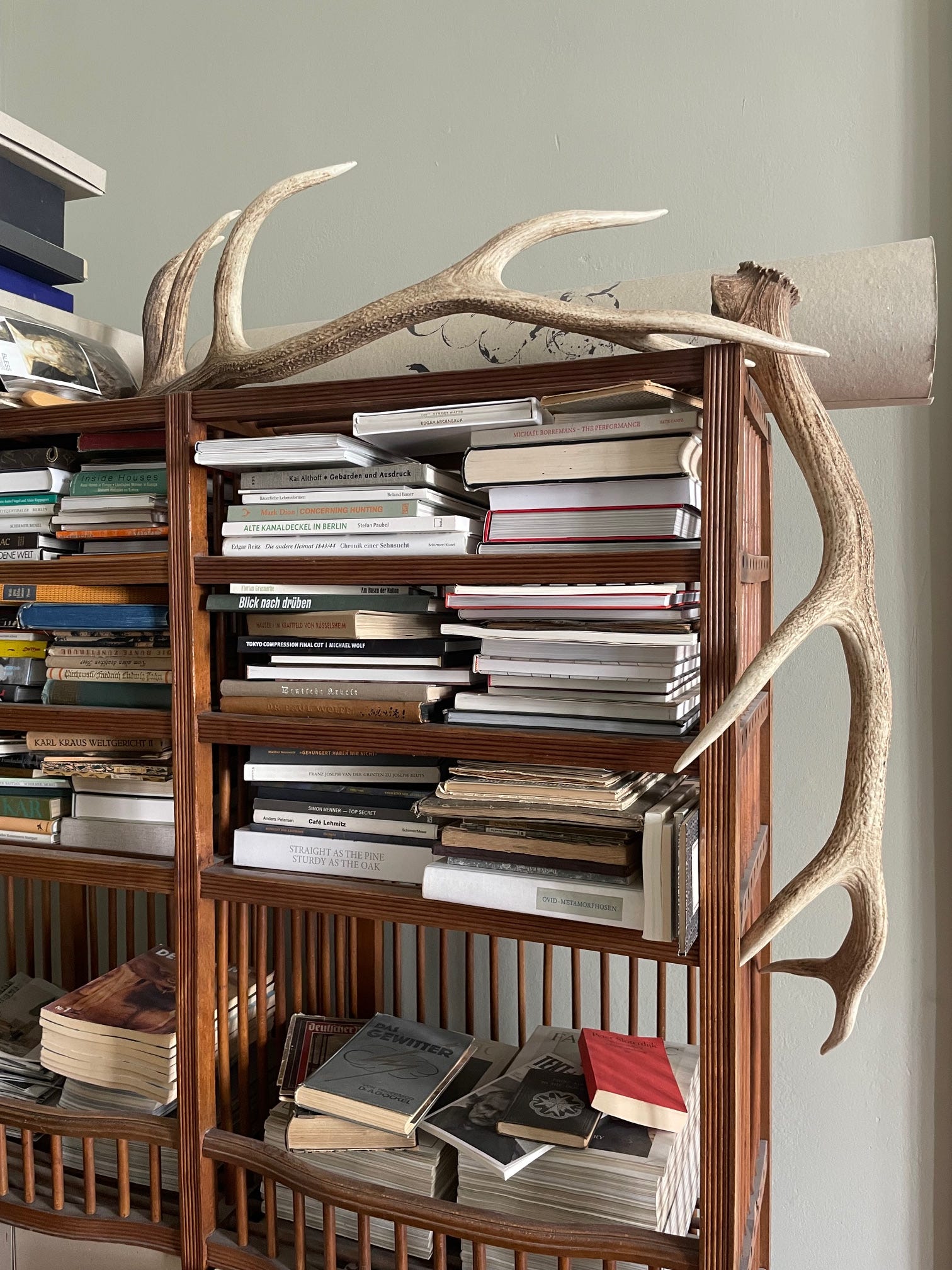
Lukas Mauve: You wrote that you just returned from a trip to southern Bavaria. What have you been up to there?
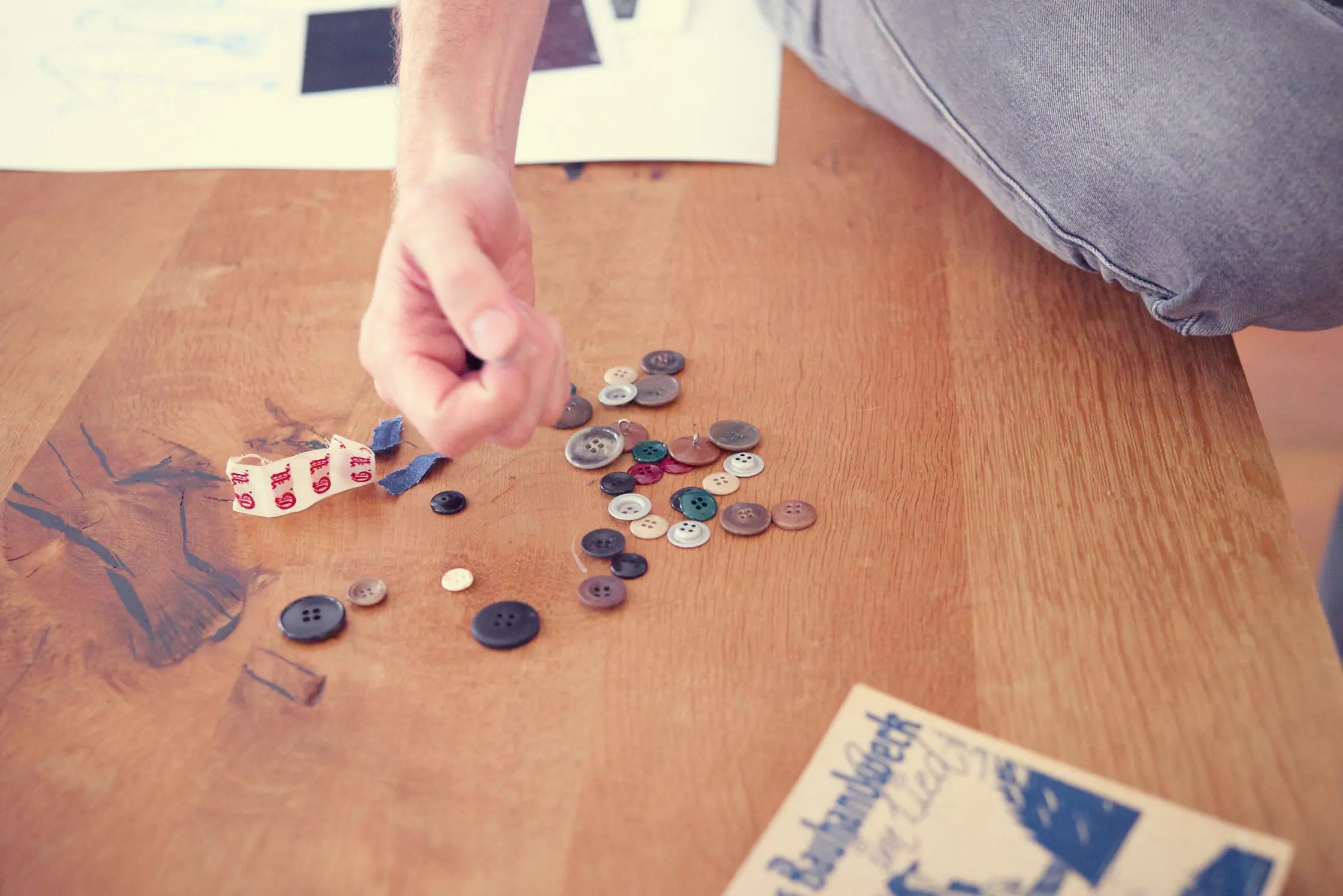
Frank Leder: I went to meet a friend of mine, Peter. He’s retired and lives in Rosenheim, a small market town near the Austrian border. He’s constantly on the lookout for vintage fabrics and buttons across Southern Bavaria, Czechia and Austria. He visits flea markets, old tailor workshops and small factories — especially in smaller Alpine towns — to help me uncover the materials I build my collections around.
I would say around 40 percent of each collection is made from vintage fabrics, though that naturally depends on what I’m able to find and how many pieces I can create from them. Around 80 percent of the garments also use vintage buttons, which I feel give each piece a real sense of depth.
Lukas Mauve: Was there a place that particularly struck you?
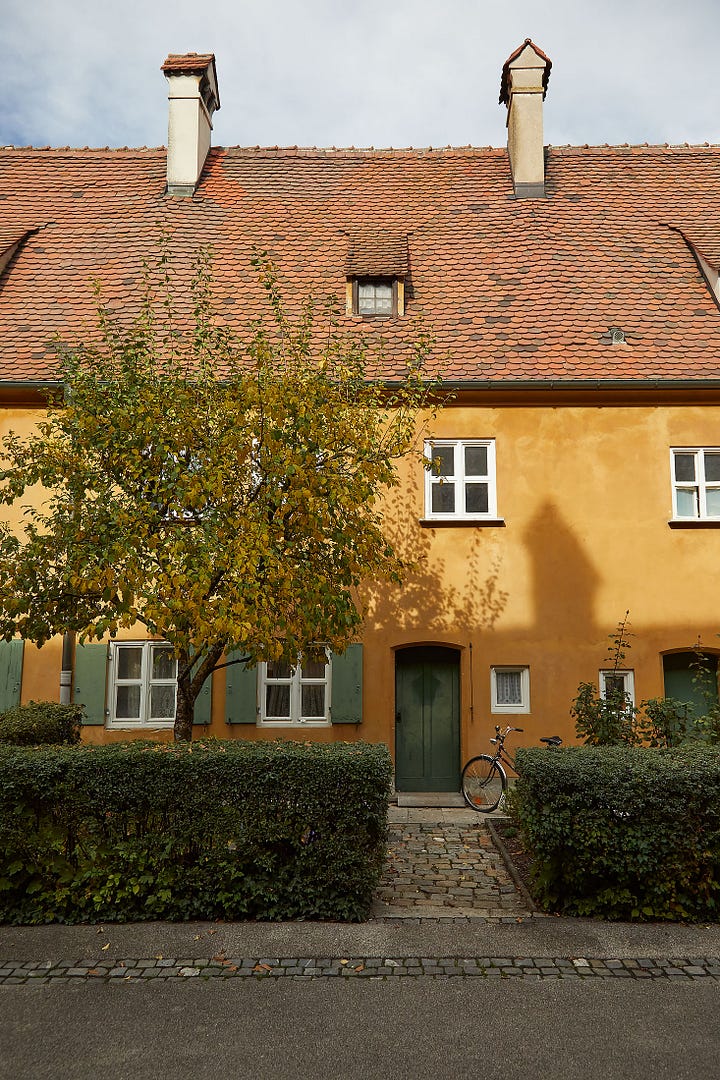
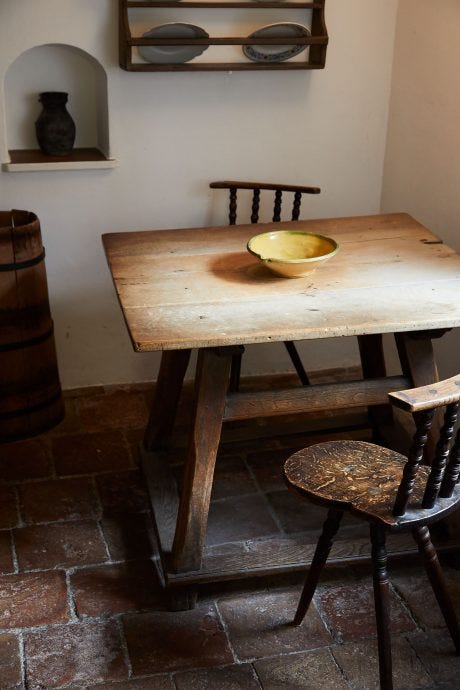
Frank Leder: I went to Augsburg to visit the Fuggerei. It’s the world’s oldest social housing complex still in use, founded by Jakob Fugger in 1521. It provides affordable apartments for needy catholic citizens, in exchange for a symbolic rent of roughly €0,88 per month, an agreement to pray three times a day for the founders. This historic “city within a city” still functions as a living community today. Visiting places like this often gives me inspiration for a new color palette — or sometimes even an entire collection.
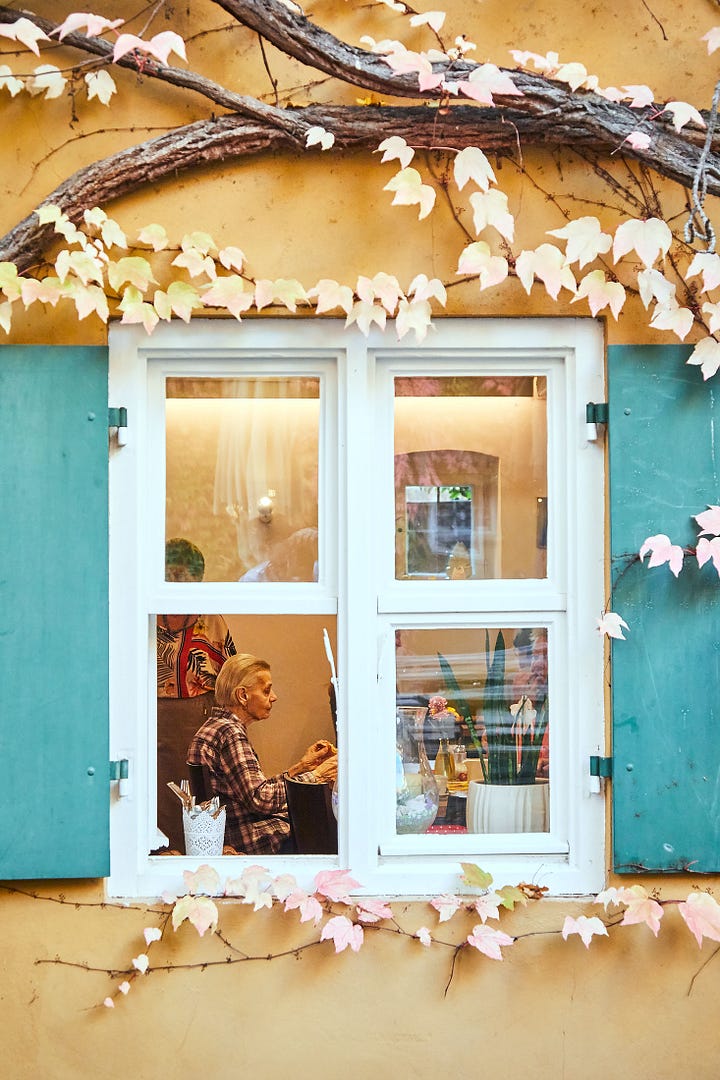
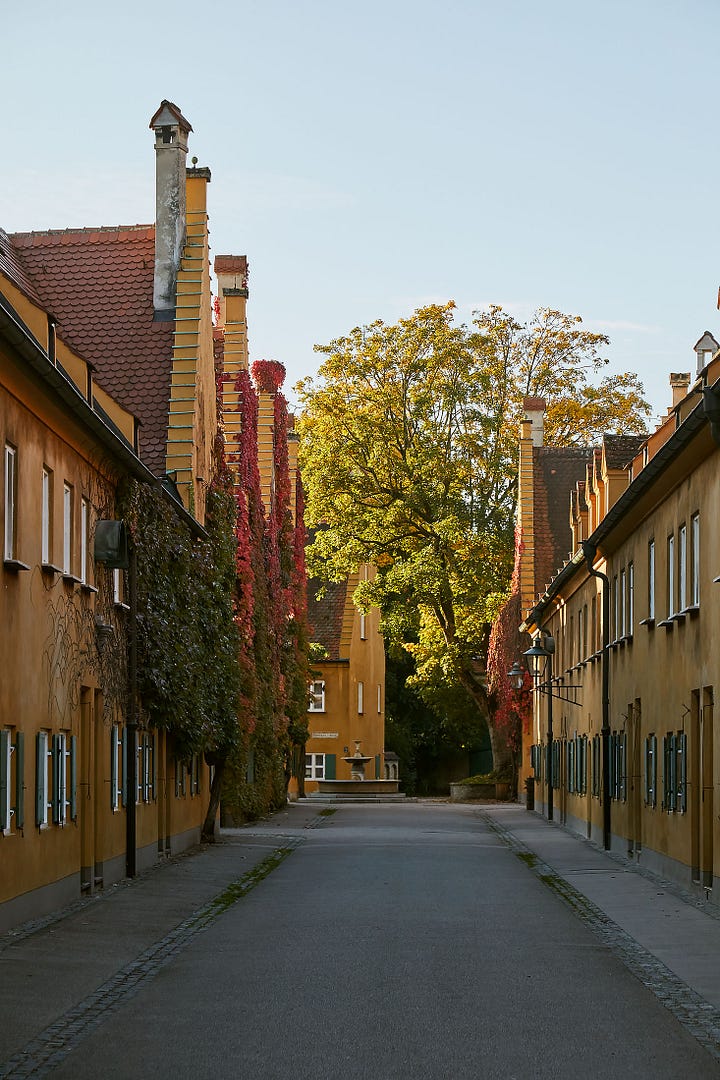
Lukas Mauve: The notion of “tradition” seems crucial to everything you do. What does it mean to you?
Frank Leder: For me, tradition is about a different rhythm — like that of a tightly knit community, where people help each other out, rather than the anonymous and often impersonal atmosphere you find in major cities today. It is also about remembering and carrying forward knowledge about craft, as well as about a certain pride in quality and daily labor.
Lukas Mauve: And what about vintage buttons — why are they such an important leitmotif for your label?
Frank Leder: Vintage buttons carry a certain aura from the past, whether through the materials they’re made of or the fact that many of them are no longer used in contemporary manufacturing — materials like Bakelite or casein.
What strikes me is that buttons are often overlooked in contemporary fashion, which I find strange, because they are the first thing you touch when you open or close a garment. They essentially define its interaction with the body. I would even say a button is like a portal into an entire story: a manufacturing process, a material history, a world that no longer exists.
There were once entire regions in Germany where button factories operates, each specializing in distinct techniques. Some of these buttons can be extremely valuable — silk-covered ones with woven patterns, known as passementerie buttons, came from a factory destroyed during the Second World War. Today they can cost up to €100 each, if you are able to find them. I have used them on tuxedos and evening wear.
Lukas Mauve: You’re back in Berlin now [late April], from your Bavaria trip. What are you working on at the moment?
Frank Leder: Yes, I’m back in my studio this week, alone, as the rest of the team is still on holiday. We have just finished delivering the Spring/Summer 2026 collection to our stores, are currently collecting orders for Fall/Winter 2026, and beginning to source fabrics for the following Spring/Summer season.
Being alone in the studio allows me to focus more intensely on the design process for new samples, which I’m interweaving with other ongoing projects. Alongside building a new collection, we also work on more site-specific commissions — for example, uniforms for a restaurant here in Berlin, as well as pieces for private clients.
Lukas Mauve: What’s Berlin like for you this time of year?
Frank Leder: This time of year is always wonderful — the return of the sun after the long, dark months. I still like the city, even after living here for over 20 years [after his return from London — LM]. But I never really grew to like the harsh winters. Escaping somewhere else not really an option, however, as it’s one of our busiest periods…
Lukas Mauve: Looking at all the different projects you do — clothes, bath products, wall paint, furniture — I’m wondering what made you decide to lead such a polymathic professional existence?
Frank Leder: My way of working is probably quite unique, yes. I have ideas and
Comments
Nothing yet. Say the first thing.
Sign in to join the conversation.