
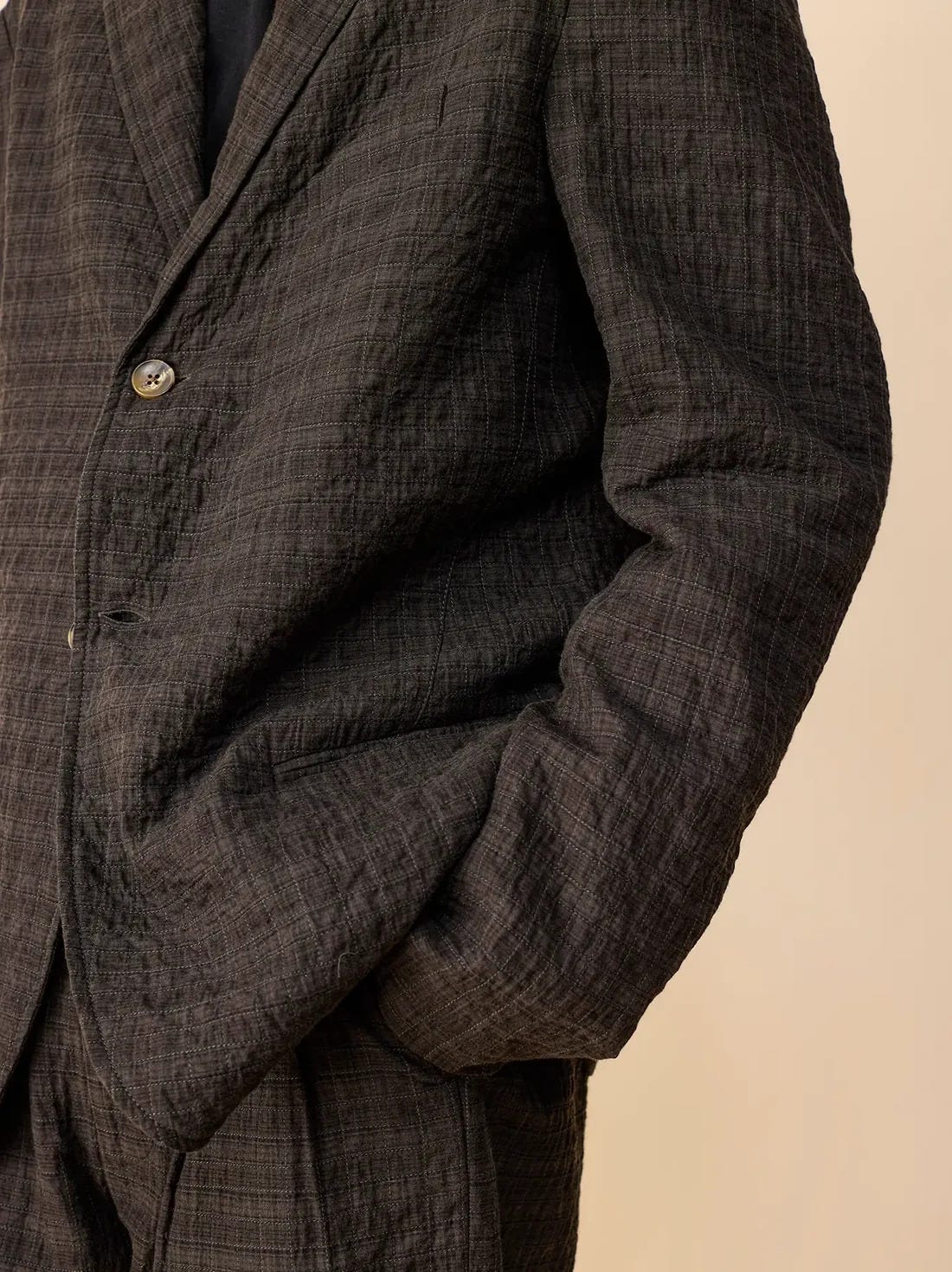
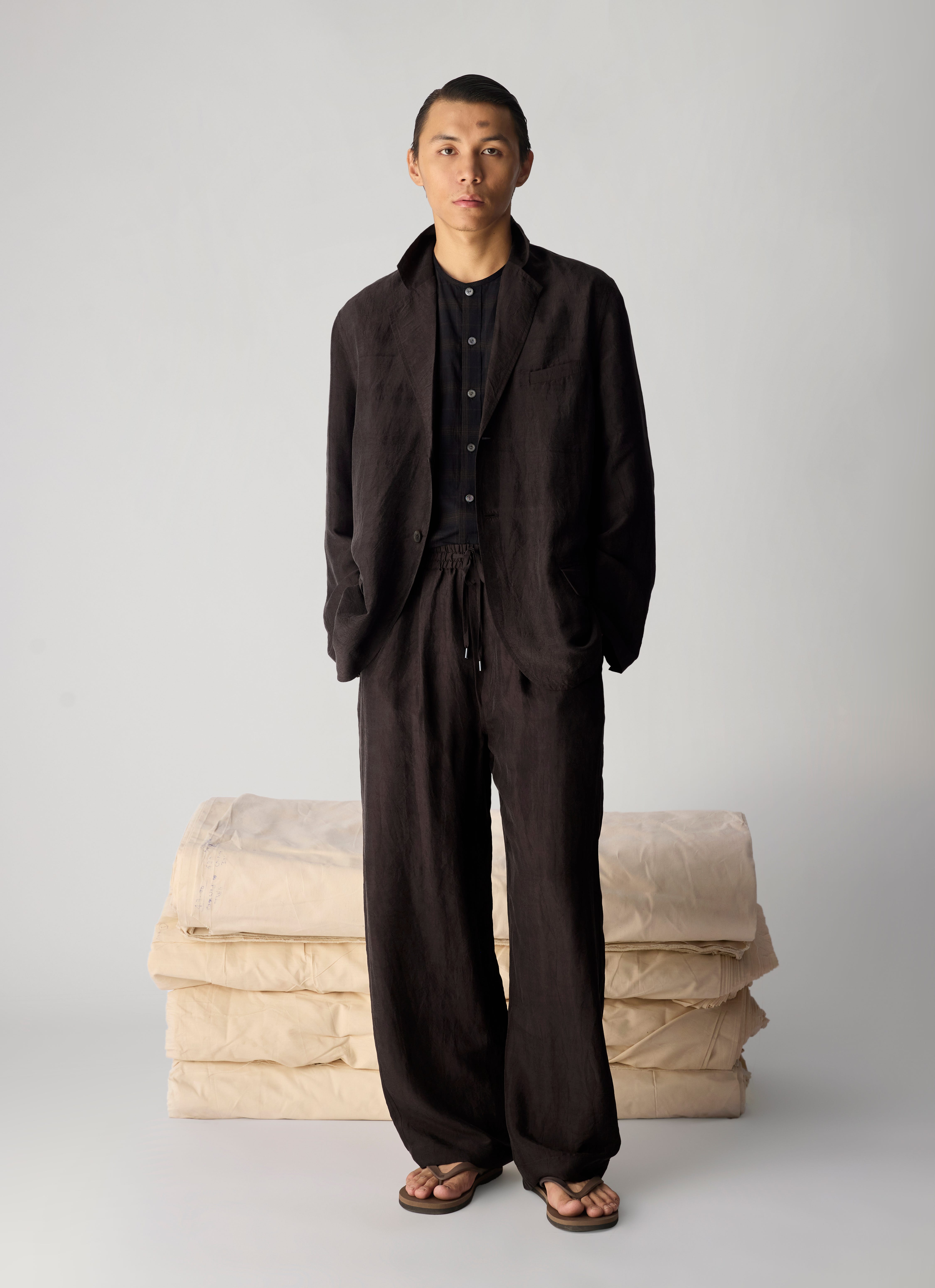
New Delhi-based ITOH was one of the labels that stood out to me when I wrote about how India became an artisanal menswear powerhouse. Speaking with its founder and designer, Amit Babbar, earlier this summer, I quickly understood why. Everything ITOH does seems to begin and end with Babbar’s own experience. Its combination of Indian handwoven textiles with Japanese silhouettes comes from years he spent working between India and Japan. And it’s Babbar himself who somehow makes ITOH’s bridge between the decolonization of Indian fashion — to use academic slang — and the search for a simple, good “Made in India” shirt feel entirely natural.
It’s not that Babbar likes to put himself forward. “I don’t want to be the face of the brand — I’m not interested in that,” he told me in his soft-spoken way. That’s perfectly fine, of course. That attitude didn’t hurt Martin Margiela or Keijiro Komori either. I do feel that hearing Babbar talk about his brand in his own voice makes it come to life like little else can. ITOH has been around for almost ten years, but since it has been building slowly, chances are you haven’t heard of it before. It’s time to change that.
Babbar and I jumped on a call, and here’s our raw, almost unabridged conversation.
Lukas Mauve: Could you tell me about the origins of ITOH, Amit?
Amit Babbar: We started back in 2017. I myself have been working in fashion for more than twenty years, mostly for Japanese clients. Whenever I used to go to Japan or Europe, I noticed that nobody took India seriously, especially Indian fashion. That’s mostly because of the idea that “Made in India” means the product is cheap. My desire to prove people wrong pushed me to create a label that would show that India should be taken seriously when it comes to quality, construction and fabric.
From the start, our focus has been on high-quality fabrics. I felt this was missing in Indian fashion. Most India-based designers try to distinguish themselves through embroidery, bright colors and other “extras.” We wanted to keep it simple. Around 2018, we launched our first collection and started doing retail at a store in Mumbai.
Lukas Mauve: What was your next step?
Amit Babbar: I showed ITOH at Pitti Uomo in 2020, where it resonated with quite a few clients. Yet, pricing was an issue for most of them: a brand from India with a €90 or €100 wholesale price was a bridge too far for them. Some European, American and Asian buyers did see the quality, but seemed hesitant to work with us, also because of concerns over consistency of production quality.
Lukas Mauve: So what you were up against in the beginning were mostly preconceptions about Indian fashion?
Amit Babbar: Yes, including preconceptions about aesthetics. I don’t agree with the idea that India is only about embroidery and color. Look at the 1950s and 1960s and you’ll see that Indians, even maharajas, wore white and blue beautifully. As I see it, it’s just that Rajasthan has always sort of mesmerized the West, and people, including Indian designers, have continued to riff on that.
I have a lot of issues with how the West sees India, but I don’t only blame the West for it. Indian designers have played along with what was being asked or expected of them for many years. If embroidery was celebrated, they did embroidery; if people wanted colorful flowers, that is what they would get. Honestly, almost no one in India was being niche or different in any real sense.
Lukas Mauve: Did buyers actually ever say these things to you?
Amit Babbar: I’ve had a few very big buyers at Pitti Uomo ask me why I’m doing what I’m doing with ITOH. “It looks more Japanese than Indian,” they said. “It doesn’t have any embroidery.” It’s a pretty condescending attitude towards India and Indian designers.
Comments
Nothing yet. Say the first thing.
Sign in to join the conversation.